
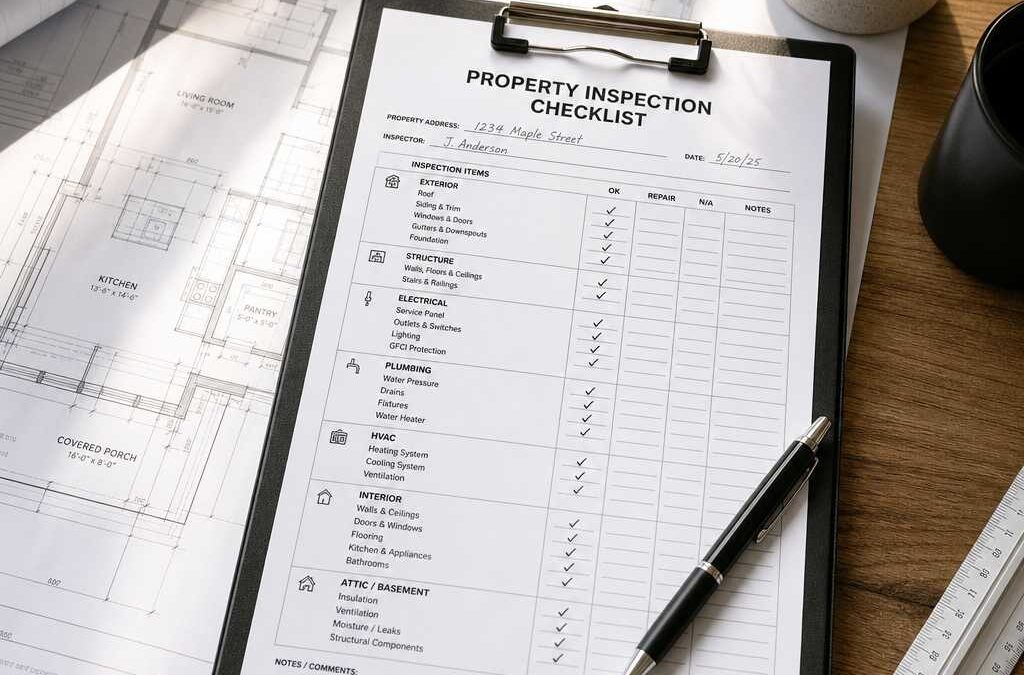
Buying a new investment property in Brisbane, Gold Coast, or Logan and skipping the pre-handover inspection is one of the most expensive mistakes a property investor can make. Construction defects in new builds are far more common than the industry admits. Queensland Building and Construction Commission data shows that building defect complaints remain consistently high year after year, and the majority involve work that passed internal builder quality checks. A new home inspection investor strategy is not optional paperwork. It is your primary financial protection before you hand over the keys.
Table of Contents
- Quick Takeaways
- Why Property Investors Face Unique Risks at Handover
- What a Pre-Handover Inspection Actually Covers
- Investment Property Inspection Brisbane: Market Realities
- Pre-Handover vs Practical Completion vs Pre-Settlement Inspections
- How Defect Reports Protect Your Rental Yield
- Choosing the Right Inspection Company in South East Queensland
- Frequently Asked Questions
- References
Quick Takeaways
| Key Insight | Explanation |
|---|---|
| Defects are common, not exceptional | Independent inspections routinely find 30 to 80 defect items in newly completed homes, even from reputable volume builders in South East Queensland. |
| Builder self-sign-off is not independent | A practical completion certificate issued by the builder does not confirm the property is defect-free. It confirms the builder considers it complete, which is a different standard. |
| Timing is everything | Defects identified before settlement give you contractual leverage to require rectification. Defects found after settlement become protracted disputes under statutory warranty. |
| Photo-enhanced reports accelerate rectification | Reports that assign defects to specific trades with photographic evidence reduce builder pushback and resolve issues faster than written-only descriptions. |
| High-rise investment properties need specialist inspection | Apartment and townhouse inspections require customized checklists covering common property areas, fire compliance, waterproofing membranes, and car park structures that standard house inspections miss. |
| Same-day reporting matters for investors | Investment property settlements run to tight timelines. Waiting 3 to 5 days for a report can put your settlement date at risk if defects require builder response before you can proceed. |
| Starting cost of $550 is insignificant against defect risk | A single undetected waterproofing defect in a bathroom can cost $5,000 to $15,000 to rectify post-settlement. The inspection cost is routinely recovered on a single defect item alone. |
Why Property Investors Face Unique Risks at Handover
Owner-occupiers who walk through their new home every week during construction notice things. Property investors, particularly interstate buyers or those managing multiple acquisitions, often see their new build for the first time at handover. That information gap is expensive.
The builder’s site supervisor has signed off on hundreds of homes. Their job is to complete and hand over, not to document defects on your behalf. In practice, the final builder walkthrough is a promotional event, not an audit. Items that fall short of the building code or contract specifications are routinely missed or minimized without independent scrutiny.
Investors also carry a different financial risk profile than owner-occupiers. A defective bathroom waterproofing membrane does not just damage your property. It damages your tenant’s belongings, triggers insurance claims, forces vacancy during repairs, and directly reduces rental yield. The compounding financial impact of undetected defects is always worse for investors than for owner-occupiers.


What a Pre-Handover Inspection Actually Covers
A professional pre-handover inspection by a fully licensed inspector is a systematic assessment of the finished construction against the building contract, approved plans, and the National Construction Code. It is not a cosmetic walkthrough looking for paint scuffs.
Structural and Waterproofing Items
These are the high-cost defects that matter most to investors. Inspectors check slab cracking, wall framing alignment, roof structure, and critically, all wet area waterproofing installations. Bathroom and laundry waterproofing failures are among the most expensive defects in residential construction and are almost never visible to the naked eye without a trained assessment.
Services and Mechanical Systems
Electrical switchboards, hot water systems, air conditioning installations, and plumbing rough-ins are assessed for code compliance and correct installation. A single incorrectly installed exhaust fan or a plumbing connection that does not meet standards can fail during tenancy and create both safety liability and maintenance costs.
Internal and External Finishes
Render cracking, tile lippage, joinery alignment, window sealing, and door operation are all documented. While these items are lower in financial risk individually, a report documenting 40 finish defects gives you significant negotiating weight with the builder before settlement.
Pro tip: Request that your inspection report assigns each defect to the responsible trade, not just describes the symptom. GoInspect’s photo-enhanced reports do this as standard, which is the reason builders respond to them faster than generic defect lists.
Investment Property Inspection Brisbane: Market Realities
Brisbane’s construction market has experienced sustained high activity over the past four years, driven by population growth, infrastructure investment tied to the 2032 Olympics, and sustained interstate migration. High construction volume creates quality control pressure. Builders are managing more concurrent projects with constrained trades labour, and quality consistency drops under those conditions.
An investment property inspection Brisbane completed today is being conducted in a market where subcontractor turnover is high and site supervision ratios are stretched. That is not speculation. It is the consistent finding of inspectors working across the South East Queensland market daily.
“Construction defect claims in Queensland have remained a persistent issue, with the QBCC receiving thousands of complaints annually related to building work quality across residential and multi-unit projects.” – Queensland Building and Construction Commission, Annual Report data
The Gold Coast and Logan growth corridors are particularly active for house-and-land packages marketed to interstate investors. These buyers have no physical proximity to the construction process and are entirely dependent on independent inspection to protect their purchase. For properties in Redland Bay and Ipswich, the same logic applies, but the volume of new estate development means individual site supervision attention can be even thinner.
Pro tip: If you are purchasing a new home in a house-and-land package marketed by an investment advisory firm, treat independent inspection as non-negotiable. The advisory firm’s relationship is with the developer, not with you.

Pre-Handover vs Practical Completion vs Pre-Settlement Inspections
These three terms are used interchangeably by some providers and with important distinctions by others. Understanding the difference protects your timeline and your rights under the building contract.
| Inspection Type | Timing | Primary Purpose for Investors |
|---|---|---|
| Practical Completion Inspection | Conducted when the builder declares the home is complete, before you take possession | Identify defects while the builder is still contractually obligated to rectify before handover. Strongest position for an investor. |
| Pre-Handover Inspection | Synonymous with practical completion in most Queensland building contracts. Conducted before keys are exchanged. | Same as above. Confirms the property meets the contracted specifications before financial settlement occurs. |
| Pre-Settlement Inspection | Final walkthrough after defect rectification period, immediately before settlement funds are transferred | Confirms that items identified in the practical completion inspection have been properly rectified by the builder before you commit final payment. |
The data consistently shows that investors who conduct both a practical completion inspection and a pre-settlement inspection recover significantly more rectification value than those who conduct only one. The pre-settlement check confirms builder follow-through, which is not guaranteed even when defects are formally documented.
When Builders Push Back on Access
A common mistake is allowing the builder to restrict independent inspector access at practical completion. Under standard Queensland building contracts, you have the right to have the property independently assessed before accepting handover. Any builder who resists this is a builder you should be more concerned about, not less.
How Defect Reports Protect Your Rental Yield
For property investors, a defect report is not just about protecting the building. It is about protecting the income the building is supposed to generate. Unresolved construction defects create a direct path to reduced rental yield through vacancy, maintenance costs, and tenant disputes.
Waterproofing and Wet Area Defects
Bathroom waterproofing failures typically manifest 12 to 36 months after construction. By then, the builder’s contract period is over, the defect is now your problem to pursue under statutory warranty, and your tenants have already experienced the damage. A pre-handover inspection that catches wet area issues before settlement converts a post-tenancy repair problem into a pre-settlement builder obligation.
Compliance and Rental Readiness
Properties with unresolved electrical or smoke alarm non-compliance cannot legally be tenanted in Queensland. If a pre-handover inspection identifies these issues and they remain unresolved at settlement, you face a gap between settlement and rental income while you pursue rectification independently. That vacancy cost accumulates quickly against an investment property carrying mortgage repayments from day one.
GoInspect’s same-day reporting is specifically designed to fit the settlement timeline of investment property transactions. When you need a documented defect list in the builder’s hands within 24 hours of inspection to keep a settlement on track, a report delivered three days later is not good enough.
Choosing the Right Inspection Company in South East Queensland
Not all inspection providers operating in the Brisbane and South East Queensland market offer the same level of qualification, reporting quality, or turnaround speed. For investors specifically, three criteria separate useful inspection services from ones that create false confidence.
Full Licensing, Not Just Certification
Queensland requires building inspectors to hold a current QBCC licence. Inspector certification courses alone do not meet this requirement. Always confirm your inspector holds a valid QBCC licence relevant to the inspection type before booking. GoInspect operates with fully licensed inspectors across all service areas including Brisbane, Gold Coast, Logan, Ipswich, and Redland Bay.
Photo-Enhanced Reports That Assign Trade Responsibility
A defect report that says “paint defect in bedroom” is almost useless when presented to a builder. A report that shows a photograph of the specific defect, identifies the location precisely, and assigns it to the painting subcontractor is a document a builder’s contract administrator can act on immediately. Report quality directly affects how quickly defects get fixed.
High-Rise and Multi-Unit Capability
Investors purchasing apartments or townhouses in Brisbane’s inner ring or Gold Coast high-rise market need inspection providers with customized checklists for multi-unit construction. Common property defects, fire door compliance, basement waterproofing, and lift lobby finishes are not covered by standard house inspection methodologies. GoInspect’s customized reports for high-rise developments address this gap that generic inspection services typically miss.
When comparing providers like GoInspect, always ask specifically whether the report will assign defects to individual trades and whether you will receive it on the same day as the inspection. These two questions eliminate most providers who are not genuinely set up for investment property timelines.
Frequently Asked Questions
Do I need a new home inspection if my builder offers their own quality assurance process?
Yes, without exception. A builder’s internal quality assurance process is designed to protect the builder, not the buyer. It checks for items that would expose the builder to immediate contractual liability, not for the full range of defects that an independent inspector working on your behalf would document. Independent inspection and builder QA serve completely different principals.
What does a pre-handover inspection in Brisbane typically cost?
Professional pre-handover inspections in South East Queensland start from around $550 including GST for standard residential homes, which is GoInspect’s pricing. More complex properties, high-rise apartments, and dual occupancy builds will be priced higher to reflect the additional scope. The cost is tax deductible for investment properties as a property management expense in the year incurred.
How many defects should I expect on a brand new home?
In practice, independent inspections on newly completed homes in South East Queensland consistently find between 20 and 80 documented defects. The number varies by builder and construction complexity, but finding zero defects on a completed new build is genuinely rare. The more important question is not how many defects there are, but whether the high-cost ones involving waterproofing, structure, and compliance are identified before settlement.
Can I attend the inspection in person?
Yes, and for investment properties, attending in person is strongly recommended if your schedule permits. Walking through the property with the inspector gives you a direct understanding of defect severity and location that a report alone cannot fully convey. For interstate investors who cannot attend, same-day photo-enhanced reports with precise location descriptions compensate for that absence, but in-person attendance adds another layer of understanding.
What happens if the builder refuses to fix defects identified in the inspection?
If defects are documented before settlement and the builder refuses to rectify, you have several options including withholding settlement pending resolution, negotiating a cost reduction to cover rectification, or lodging a complaint with the QBCC. Having a professional, photo-documented defect report prepared by a licensed inspector is essential for any of these pathways. Verbal defect lists or informal photographs taken by the buyer carry far less weight in a dispute.
Is a pre-handover inspection different for an investment property compared to an owner-occupied home?
The physical inspection process is the same. What differs is the financial risk profile and the urgency of timeline. Investors need reports fast enough to fit settlement deadlines, need compliance issues flagged clearly for rental readiness, and benefit from reports that can be used directly in builder negotiations without additional formatting. GoInspect’s reporting structure is designed to serve both owner-occupiers and investors, but the same-day delivery and trade responsibility assignment features are particularly valuable in investment transactions.
If you have had an experience with a pre-handover inspection on an investment property in Brisbane or South East Queensland, share what worked and what you wish you had known before handover day.
We would love your feedback and any insights you would share with others. What perspective would you add?
References
- Queensland Building and Construction Commission: regulatory body overseeing building licensing and dispute resolution in Queensland
- Forbes Real Estate: analysis and data on investment property risk management and due diligence practices
- Statista: construction industry defect rate data and residential building complaint statistics
- Australian Building Codes Board: the authority governing the National Construction Code that sets compliance standards for all new residential builds
- Australian Taxation Office: guidance on tax deductibility of inspection and due diligence costs for investment properties