
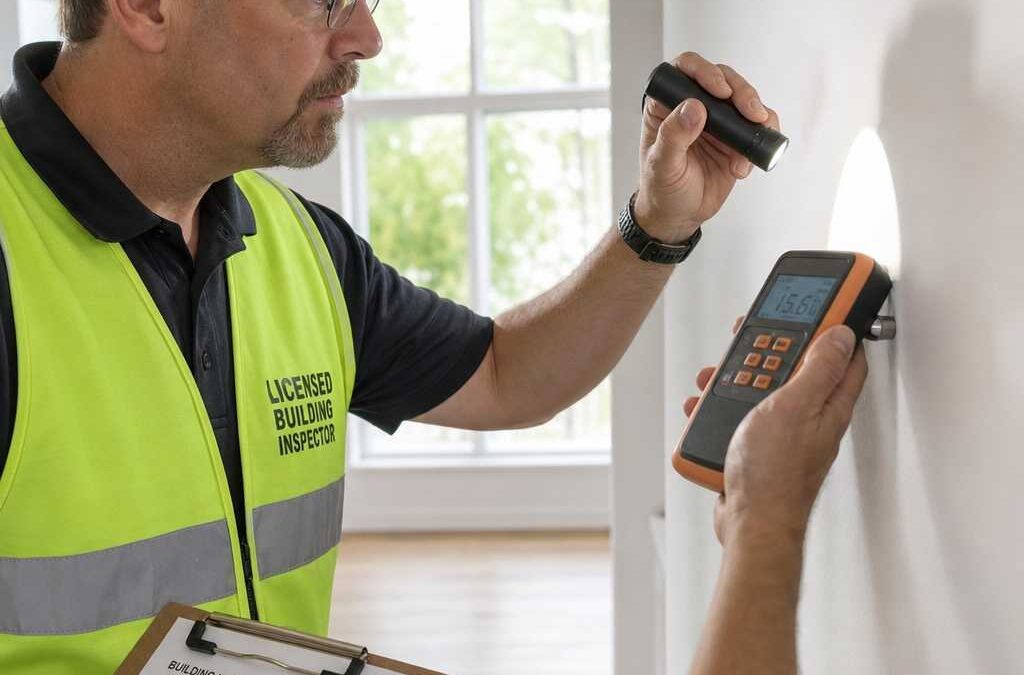
Ipswich is one of the fastest-growing corridors in South East Queensland, with thousands of new homes handed over every year across estates in Springfield Lakes, Ripley Valley, Redbank Plains, and Flagstone. Yet a significant number of those homes are handed over with defects that buyers never detect before signing off. A new home inspection Ipswich buyers commission before their handover appointment is the single most effective step to protect a property investment that often exceeds $600,000. This article explains exactly what that inspection covers, what defects are most common in Ipswich new builds, and how to choose the right inspector before you accept the keys.
Table of Contents
- Quick Takeaways
- Why Ipswich New Builds Need Independent Inspections
- What a Handover Inspection Actually Covers
- Most Common Defects Found in Ipswich New Homes
- Stages of Inspection for New Home Builds
- Choosing the Right Building Inspector in Ipswich
- Comparison of Inspection Approaches
- What Happens After the Report
- Frequently Asked Questions
- References
Quick Takeaways
| Key Insight | Explanation |
|---|---|
| Book before your handover appointment, not after | Once you sign the handover documents and accept the keys, your negotiating position weakens significantly. Commission the inspection at least 5 business days before your scheduled handover date. |
| A builder’s supervisor is not an independent inspector | The pre-handover walkthrough offered by your builder is conducted by their own team. It is not a neutral assessment. An independent building inspection Ipswich buyers arrange themselves carries far more legal weight in defect disputes. |
| Ipswich soil conditions create specific structural risks | Large sections of the Ripley Valley and Springfield growth corridors sit on reactive clay soils. This makes slab cracking, door frame movement, and drainage issues more common than in sandy coastal areas. |
| Photo-enhanced reports speed up rectification | Reports that identify defects with photographs and assign responsibility to the relevant trade allow builders to allocate rectification work without additional site visits, cutting resolution time materially. |
| Same-day reporting matters for settlement deadlines | Many new build contracts have tight settlement windows. A service that delivers the report on the day of inspection prevents delays that could trigger penalty interest or contract breaches. |
| A handover inspection Ipswich starting from $550 inc. GST is a fraction of rectification costs | A single missed defect, such as inadequate waterproofing to a wet area, can cost $5,000 to $20,000 to remediate after you have accepted the property. The inspection fee is not a cost, it is insurance. |
| Defects must be documented before you move furniture in | Once a home is occupied, builders routinely argue that damage was caused by the occupant. An independent inspection report dated before handover removes that argument entirely. |
Why Ipswich New Builds Need Independent Inspections
Ipswich City Council approved more than 4,000 new residential dwellings in the 2022 to 2023 financial year alone, according to council development data. That volume of construction activity puts enormous pressure on subcontractor capacity across the region. Trades are stretched thin, supervision on individual sites decreases, and the rate of defects on new homes rises as a direct result.
In practice, inspectors working in the Ipswich corridor consistently find that framing, waterproofing, and tiling defects appear at higher rates on estates where multiple volume builders are completing large stages simultaneously. This is not speculation. It is an observable pattern across hundreds of inspections in suburbs like Ripley, Redbank Plains, Camira, and Collingwood Park.
The Queensland Building and Construction Commission (QBCC) licensing framework requires builders to deliver homes that comply with the National Construction Code and Australian Standards. But compliance is not automatically verified on every home before handover. That verification is exactly what an independent inspector provides.


What a Handover Inspection Actually Covers
A professional handover inspection Ipswich buyers should commission is not a cosmetic walkthrough looking for paint scuffs. It is a systematic assessment of the entire completed structure against the contract documents, the National Construction Code, and applicable Australian Standards.
Structural and Framing Assessment
The inspector examines roof framing for correct bracing, tie-down connections, and rafter spacing. Wall framing is checked for plumb, straightness, and correct fixing to the slab. In Ipswich’s reactive soil zones, any evidence of differential movement in the slab at this stage is flagged immediately because it can indicate an inadequate design or poor compaction before pour.
Wet Area Waterproofing
Waterproofing failures are among the most expensive defects to fix post-occupancy. The inspector checks that waterproofing membranes in showers, bathrooms, laundries, and any alfresco or balcony areas have been correctly applied, that upstands reach the minimum required height, and that tiling has not been applied over inadequately cured membrane. This is one area where photo documentation is non-negotiable because disputes about waterproofing are common and photographic evidence taken before handover is decisive.
Roof and Drainage
Roof covering, flashings, ridge cappings, valley gutters, downpipe connections, and eaves are all inspected for correct installation. Drainage falls on concrete pads, alfresco areas, and around the perimeter of the slab are checked to ensure water is directed away from the structure, not pooled against it.
Doors, Windows, and Fixtures
Every door and window is opened and closed. Sticking or binding indicates framing issues or incorrect installation. Locks, handles, fly screens, and seals are checked. Cabinetry, benchtops, and fixtures are inspected for damage, incorrect installation, and compliance with contract specifications.
Electrical, Plumbing, and Mechanical Services
While a building inspector does not replace a licensed electrician or plumber, they do check that all power points, light fittings, tapware, toilet suites, hot water systems, and mechanical ventilation are present, operational, and installed in the correct locations as per the contract and plans. Any item that is absent, non-functional, or clearly incorrectly installed is documented.
Most Common Defects Found in Ipswich New Homes
Based on inspection results across the Ipswich growth corridor, the following defect categories appear with the highest frequency. Knowing these in advance helps buyers understand what they are paying an inspector to find, and why finding them before handover matters.
Cracking to internal plasterwork is the most frequently documented defect, but the critical distinction is between cosmetic hairline cracking and structural cracking that indicates movement. An experienced inspector distinguishes between the two immediately. Ipswich’s clay soils make this distinction especially important.
Tiling defects including hollow tiles, lippage exceeding 1mm per AS 3958.1, grout inconsistencies, and incorrect silicone placement at internal corners appear on roughly half of all inspections in volume-built homes. These are trade execution failures that builders are obligated to rectify before handover.
Inadequate roof ventilation and incorrectly installed sarking are regular findings on Ipswich new builds. These defects are invisible to the untrained eye but contribute to long-term moisture problems in the roof cavity, particularly relevant in Queensland’s humid subtropical climate.
Painting defects, including runs, misses, incorrect sheen level, and insufficient coats, are cosmetic but are covered under the builder’s statutory warranty period. Documenting them at handover ensures the builder cannot later argue they existed prior to occupancy.
Pro tip: Ask your inspector specifically about reactive soil indicators during the site inspection. In Ipswich estates on Class M or H soil sites, any slab movement visible at the time of the handover inspection should be investigated further by a structural engineer before you accept the keys.
Stages of Inspection for New Home Builds
A new home build in Ipswich typically progresses through five to six construction stages, and inspections can be commissioned at any or all of them. Most buyers focus on the final handover inspection, but there is a strong argument for commissioning stage inspections at slab, frame, and lockup as well, because some defects become inaccessible once subsequent work is completed over them.
Slab Inspection
Conducted after the concrete slab is poured and cured but before framing begins. The inspector checks the slab dimensions, edge beams, finished surface levels, and whether the slab design is consistent with the site classification. In Ipswich, where reactive soils are prevalent, this stage inspection has particular value.
Frame Inspection
Conducted once framing is complete but before internal linings are installed. This is the only opportunity to inspect structural elements that will be concealed for the life of the building. Bracing, tie-downs, noggings, lintel sizes, and window and door openings are all checked here.
Pre-Handover or Practical Completion Inspection
This is the most commonly commissioned inspection and the one most relevant to buyers receiving a completed home. It covers every accessible element of the finished property and produces the defect report used to negotiate rectification with the builder before the buyer accepts the home.
“The practical completion inspection is the buyer’s last and most powerful opportunity to compel the builder to fix defects at the builder’s cost. Once you accept the home, the burden of proving a defect existed at handover shifts significantly onto you.” – Queensland Building and Construction Commission guidance on new home warranty obligations
Choosing the Right Building Inspector in Ipswich
Not every inspector operating in Ipswich has the same qualifications, experience, or reporting quality. The difference between a competent inspector and a poor one is not always visible from a website, so buyers need to ask the right questions before booking.
The minimum requirement in Queensland is that building inspectors hold a current QBCC licence for building inspection work. Confirm this before booking. A QBCC licence number is verifiable directly on the QBCC public register. Any inspector unwilling to provide their licence number immediately should not be considered.
Report Quality and Trade Responsibility Attribution
A common mistake buyers make is accepting a report that lists defects without specifying which trade is responsible for rectification. When a defect list is handed to a builder without trade attribution, the builder’s project manager must then conduct their own investigation, adding weeks to the rectification timeline. A report that attributes each defect to the relevant trade, whether that is the bricklayer, tiler, painter, or framer, streamlines rectification immediately.
GoInspect’s reports are specifically structured to assign trade responsibility to each identified defect. Combined with photographic documentation, this approach gives builders the information they need to mobilise the correct trade without additional site visits, which is particularly valuable in the high-volume construction environment of Ipswich’s growth corridors.
Same-Day Reporting for Settlement Deadlines
Ipswich new build contracts commonly have handover dates tied to finance approval conditions and fixed settlement dates. If your inspection is conducted on Monday and your report arrives Thursday, you may have lost the window to raise defects formally before your handover appointment. A service that delivers reports on the same day of inspection removes this risk entirely.
Pro tip: When comparing inspection services, request a sample report before you book. If the sample report lists defects as vague descriptions with no photographs and no trade attribution, that report will generate disputes rather than resolve them. GoInspect’s photo-enhanced reports are designed specifically to be actionable, not just descriptive.

Comparison of Inspection Approaches
Buyers in Ipswich commissioning a building inspection Ipswich service have several options. Understanding what differentiates them helps buyers make an informed choice rather than defaulting to the cheapest option available.
| Inspection Approach | What It Typically Includes | Key Limitation to Watch For |
|---|---|---|
| Builder’s own pre-handover walkthrough | Walk of the property with the builder’s supervisor, verbal identification of some cosmetic items, completion checklist signed on the day | Not independent. The supervisor works for the builder. Defects that cost the builder money to fix are frequently not identified or are minimised in significance. |
| Independent inspector with text-only report | Licensed inspector conducts a full inspection, delivers a written report listing defects by category or room | Without photographs and trade attribution, builders can dispute findings, claim defects are cosmetic, or argue about scope. Resolution time is slower. |
| Independent inspector with photo-enhanced, trade-attributed report (GoInspect model) | Licensed inspector conducts a full inspection, same-day report delivery, each defect photographed and assigned to the relevant trade, customised for volume builds and high-rise developments across Brisbane, Gold Coast, Logan, Ipswich, and Redland Bay | Higher value service starting from $550 inc. GST. Buyers who compare on price alone and choose a cheaper text-only report often spend more time and money resolving disputes afterward. |
What Happens After the Report
Receiving a defect report is not the end of the process. It is the beginning of a formal rectification conversation with your builder. Knowing how to use the report effectively determines whether defects are resolved before you move in or drag on for months after settlement.
The correct approach is to provide your builder’s site supervisor and project manager with a copy of the full report, in writing, before your scheduled handover appointment. Do not attend the handover appointment and then hand over the report. The report should precede the appointment so that defects can be formally acknowledged and a rectification schedule agreed in writing before you take possession.
If a builder refuses to acknowledge defects identified in an independent inspection report, the buyer’s next step is to contact the QBCC, which administers the statutory home warranty insurance scheme and has dispute resolution powers. A well-documented inspection report from a licensed inspector is the strongest evidence a buyer can present in a QBCC dispute. Reports that include photographs, trade attribution, and references to specific Australian Standards or the National Construction Code carry the most weight in these proceedings.
For investors purchasing new builds in Ipswich as rental properties, the inspection report also serves a second purpose. It creates a baseline condition record that differentiates builder defects from future tenant-caused damage, which has direct implications for bond disputes and insurance claims during the tenancy lifecycle.
Frequently Asked Questions
When should I book a new home inspection in Ipswich?
Book your inspection as soon as your builder confirms a practical completion or handover date. Aim to have the inspection conducted at least 5 business days before your scheduled handover appointment. This gives the inspector time to deliver the report, gives you time to review it, and gives the builder time to acknowledge defects formally before you are asked to sign anything.
Does a building inspection Ipswich service cover the slab and structural elements?
A practical completion or handover inspection covers all accessible structural elements. The slab surface, visible wall framing where accessible, roof structure, and any exposed structural components are all inspected. For a complete assessment of concealed structural elements, a separate frame stage inspection conducted before internal linings are installed is the recommended approach.
Can I attend the inspection myself?
Yes, and attending is strongly recommended. Walking through the property with the inspector while the inspection is being conducted allows you to ask questions in real time, understand the severity of findings immediately, and gain firsthand knowledge of your new home’s condition before the written report is issued. GoInspect’s licensed inspectors work across the Ipswich region and welcome buyers at the inspection.
What if my builder refuses to fix defects identified in the report?
A defect report from a licensed inspector is formal documentation that the builder is obligated to address under Queensland’s statutory home warranty provisions administered by the QBCC. If the builder refuses to rectify defects, the buyer can lodge a complaint with the QBCC, which has powers to compel rectification or trigger home warranty insurance claims. The inspection report is the evidence base for that complaint, which is why report quality matters significantly.
How much does a handover inspection in Ipswich cost?
GoInspect’s handover inspections start from $550 including GST. The cost varies depending on the size and type of property, with customised pricing available for high-rise developments and larger housing projects. When evaluated against the cost of a single major undetected defect, such as a waterproofing failure or structural movement issue, the inspection fee is consistently one of the most cost-effective purchases a new home buyer in Ipswich can make.
Is a new home inspection different from a pre-purchase inspection on an existing home?
Yes, they are materially different in scope and purpose. A pre-purchase inspection on an existing home assesses the current condition of an older structure and looks for deterioration, prior repairs, and maintenance issues. A new home inspection focuses on construction compliance, workmanship quality against Australian Standards, and contract completeness. The defect categories, the applicable standards, and the rectification process are all different. An inspector experienced in new home inspections, particularly across volume-built estates in areas like Ipswich, brings specific knowledge that a generalist pre-purchase inspector may not have.
Do I need an inspection if the builder has their own quality assurance process?
Yes. A builder’s internal quality assurance process exists to protect the builder’s interests. It is designed to catch defects that would delay handover or generate obvious complaints, not to provide an independent audit of construction quality. An independent new home inspection Ipswich buyers commission is the only way to get an unbiased assessment. In practice, inspectors regularly find significant defects on homes that have passed a builder’s internal QA process, including waterproofing failures, structural bracing omissions, and non-compliant drainage.
If you have recently gone through a new home handover in Ipswich or commissioned a building inspection before settlement, share your experience below so other buyers in the region can benefit from what you learned.
We would love your feedback and any insights you would share with others. What perspective would you add?
References
- Queensland Building and Construction Commission, official regulator for building industry licensing and home warranty insurance in Queensland
- Australian Building Codes Board, the national body responsible for the National Construction Code that governs all new residential construction in Australia
- Forbes, independent business and consumer finance reporting on property investment risk and due diligence strategies
- Statista, data and statistics on Australian residential construction activity, housing approvals, and property market trends
- Ipswich City Council, local government planning and development data for residential construction approvals across the Ipswich growth corridor