
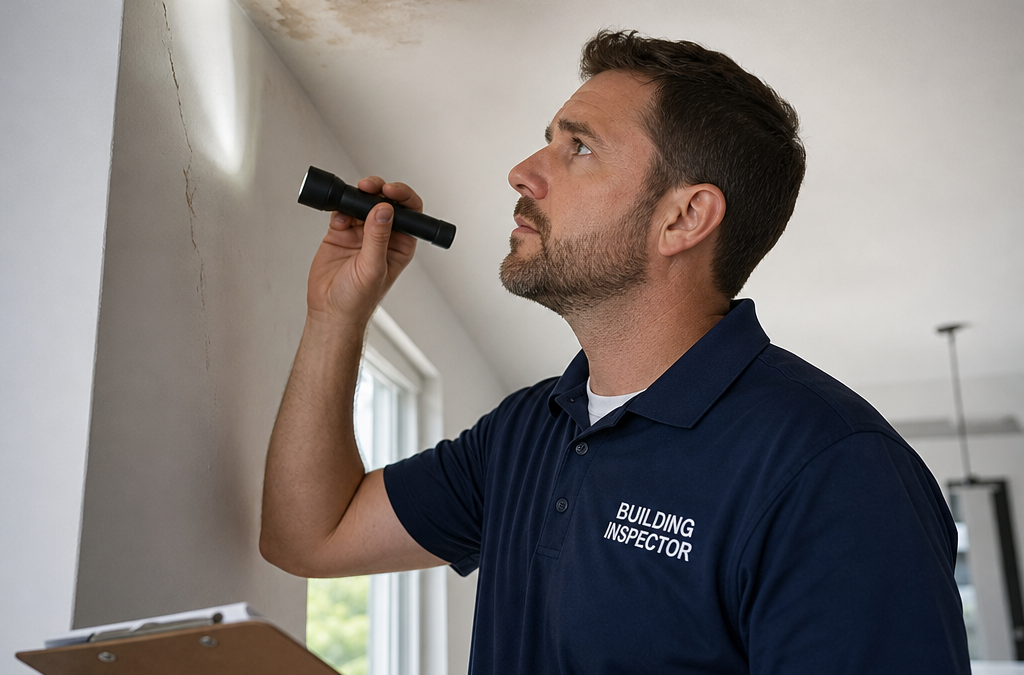
Most property investors do not realise that accepting a new build without a formal pre-settlement inspection is one of the most expensive mistakes they can make. Queensland’s construction industry recorded over 14,000 defect-related disputes in a recent three-year period, and the majority of those defects were identifiable before the keys ever changed hands. If you are buying a new home or investment property in Brisbane, Gold Coast, Logan, Ipswich, or Redland Bay, what you do in the final days before settlement will either protect your asset or cost you thousands in rectification work after handover.
Table of Contents
- What Is a Pre-Settlement Inspection?
- Quick Takeaways
- Why Property Investors Need This More Than Owner-Occupiers
- What Gets Checked During a Pre-Settlement Inspection?
- Common Defects Found in Queensland New Builds
- Comparing Your Inspection Options
- How Photo-Enhanced Reports Change the Defect Rectification Process
- What Happens If You Skip the Inspection?
- Frequently Asked Questions
- References
What Is a Pre-Settlement Inspection?
A pre-settlement inspection is a formal, licensed assessment of a newly constructed property that takes place before the buyer completes the legal transfer of ownership and releases final payment to the builder. It is also referred to as a practical completion inspection or a pre-handover inspection, and all three terms describe the same critical moment in the property purchase timeline.
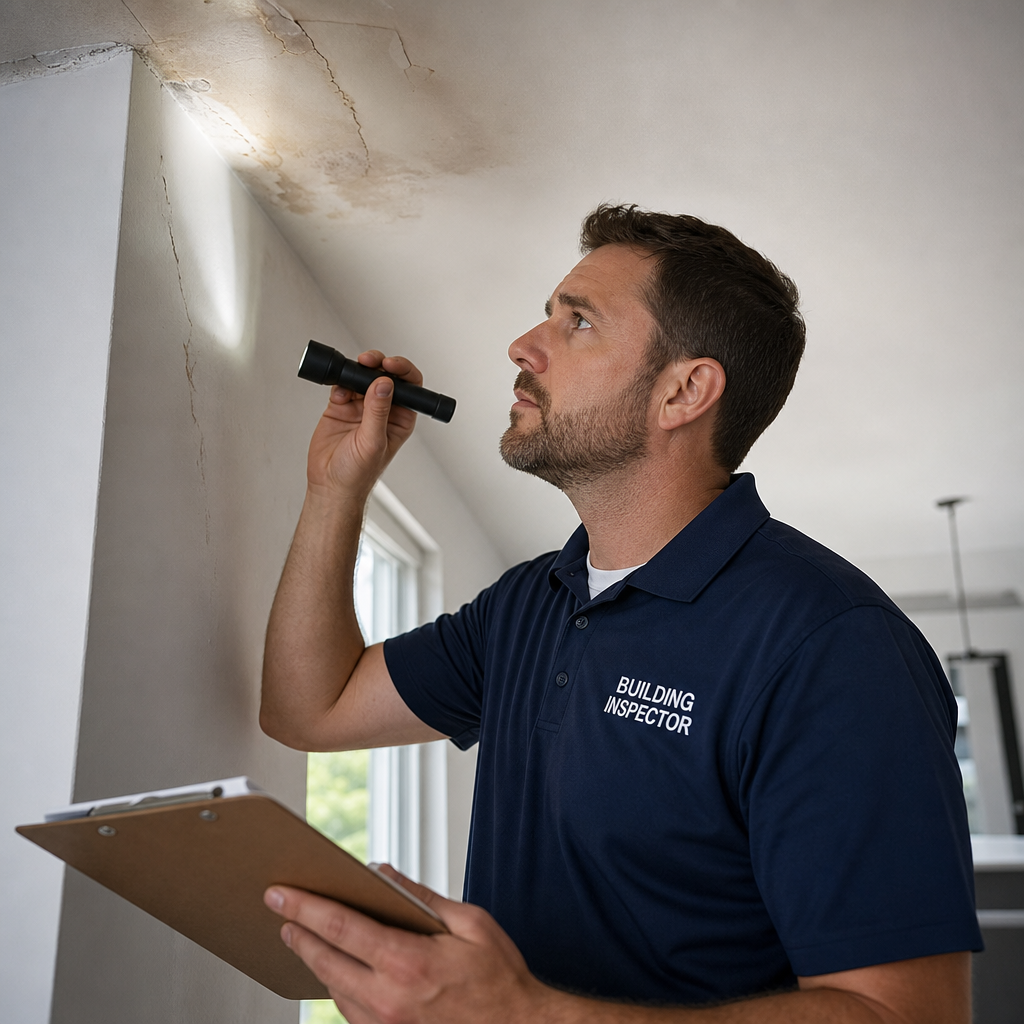
The inspection is carried out by a qualified building inspector, not the builder’s site supervisor and not a friend who works in construction. In Queensland, a licensed inspector reviews every accessible element of the build against the contract specifications, the approved plans, and the relevant Australian Standards. Any items that fall short are documented as defects.
The output is a written defect report, and the quality of that report determines whether you have real leverage at the negotiating table or just a list of complaints the builder can dismiss. A well-structured report identifies each defect, assigns responsibility to the relevant trade, and provides photographic evidence. This is exactly the format that GoInspect produces for investors and homeowners across South East Queensland.
Quick Takeaways
| Key Insight | Explanation |
|---|---|
| Timing is everything | The inspection must happen before you settle. Once final payment is made, your ability to compel a builder to fix defects under the contract drops significantly. |
| Investors face unique exposure | An investor who is not living in the property has no daily opportunity to notice problems. Defects can worsen undetected between handover and the first tenancy inspection. |
| Photo evidence is non-negotiable | A defect report without photographs is largely unenforceable. Builders and their trades can dispute written descriptions. They cannot dispute timestamped photos. |
| Trade responsibility must be assigned | Reports that assign each defect to the responsible trade (plumber, electrician, tiler, etc.) speed up rectification and prevent builders from deflecting accountability. |
| Same-day reporting matters | Delays between the inspection and the report give builders time to make verbal promises and then minimise the scope. Same-day reports lock the record in place immediately. |
| Queensland legislation supports you | The Queensland Building and Construction Commission (QBCC) provides statutory warranties on new builds. A pre-settlement inspection creates the documentation needed to activate those warranties. |
| Cost vs. risk ratio is clear | A professional inspection starting from $550 including GST can identify defects that cost tens of thousands of dollars to fix after settlement. The maths strongly favours the inspection. |
Why Property Investors Need This More Than Owner-Occupiers
An owner-occupier at least has the chance to notice a dripping tap or a stiff door in the first week of living in the property. A property investor in Queensland who is settling remotely or purchasing an investment property they do not plan to occupy has no such safety net. The property often goes straight to a property manager, who conducts a routine ingoing condition report that is not designed to identify construction defects.
By the time a tenant reports a problem or a building issue becomes visible, the statutory responsibility window may have shifted significantly. The QBCC’s statutory warranty period for structural defects runs six years, but for non-structural defects, including waterproofing and finishing defects that are most commonly missed, the window is much shorter.
The Rental Property Risk Multiplier
Defects in a rental property are not just a financial risk, they are a liability risk. A waterproofing failure in a bathroom, for example, can go unnoticed for months in a tenanted property. By the time it becomes visible through mould or water damage, the remediation cost has multiplied significantly beyond what it would have cost to rectify at handover.
Investors purchasing off-the-plan apartments in high-rise developments across Brisbane or the Gold Coast face an additional layer of complexity. These projects involve multiple trades, multiple sub-contractors, and volume production timelines that create consistent pressure to cut finishing quality. GoInspect provides customised reports specifically designed for high-rise developments, addressing the unique defect patterns that appear in these builds.
Pro tip: If you are purchasing an investment property off-the-plan, request that your pre-settlement inspection be booked at least five business days before your scheduled settlement date. This gives your solicitor time to use the defect report to negotiate a settlement extension or rectification undertaking from the builder before funds are released.

What Gets Checked During a Pre-Settlement Inspection?
A thorough new home inspection for investors covers every accessible area and system of the property. The scope is not a visual glance, it is a systematic review against the contract documents, approved plans, and applicable Australian Standards including AS 4349.1.
Structural and Building Envelope
Inspectors check the roof covering, guttering, fascias, and downpipes for installation defects. External walls are reviewed for cracking, render quality, and paint finish. Windows and doors are tested for operation, sealing, and correct installation against the plan specifications.
In Queensland’s climate, waterproofing is a critical focus area. Bathroom wet areas, laundry floors, and any tiled surfaces over a timber or concrete substrate must meet AS 3740 waterproofing standards. Failures here are among the most expensive post-settlement defects and among the most preventable with a proper inspection.
Internal Finishes and Fit-Out
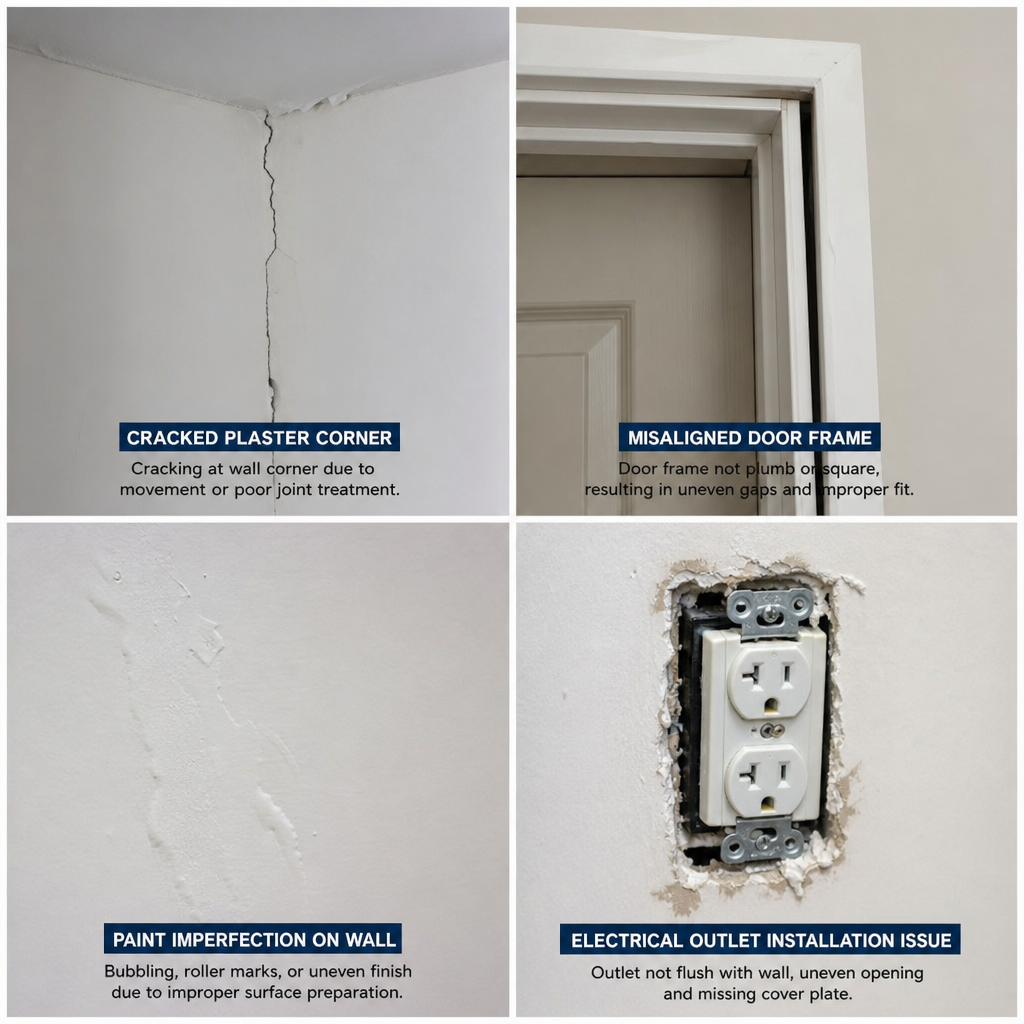
Floor coverings, tiling grout lines, cabinetry alignment, plasterboard finish, and paint quality are all assessed against the building contract and industry tolerances. A common mistake investors make is assuming that minor cosmetic issues are not worth raising. In practice, a defective paint finish on 40 linear metres of wall is a significant rectification cost and is clearly the builder’s responsibility to correct before handover.
Electrical and plumbing fixtures are tested for operation, not just for installation. Power points, light switches, exhaust fans, tapware, showerheads, and toilet cisterns all get tested. The inspector also confirms that the fit-out matches what was specified in the contract, which is particularly relevant for investors who may not have visited the site during construction.
Mechanical and Essential Services
Air conditioning systems, hot water units, and any installed appliances are checked for operation and correct installation. Safety items including smoke alarm placement and switchboard labelling are also reviewed, as non-compliance here creates liability for an investor the moment a tenant moves in.
Common Defects Found in Queensland New Builds
The data consistently shows that certain defect categories appear repeatedly in new builds across Brisbane, Gold Coast, Logan, and Ipswich. Understanding these patterns helps investors know what is at stake before they book an inspection.
“The most common defects we see in new Queensland builds are waterproofing failures, paint and plaster defects, and incomplete or incorrectly installed fixtures. These are not minor cosmetic issues. They represent real financial exposure that a buyer should not accept at settlement.” – GoInspect, Licensed Building Inspectors, South East Queensland
Waterproofing defects are consistently the most costly category. A failed membrane in a shower recess can require full tile removal and reapplication, costing between $3,000 and $8,000 per wet area in most South East Queensland markets. A pre-settlement inspection identifies these failures through visual assessment of the membrane installation before tiles go over the top, or through moisture detection where visible signs are present.
Tiling defects, including uneven lippage, cracked tiles, and non-compliant grout joints, are a close second. These are almost always the responsibility of the tiling trade and need to be documented with photographs before settlement to ensure rectification occurs. Plasterboard and paint defects, incorrect door hardware, incomplete landscaping, and missing or non-compliant safety installations round out the most frequently documented categories.
Pro tip: When reviewing your defect report from GoInspect, pay particular attention to any item flagged as a waterproofing or moisture-related defect. These items should be your first conversation with your solicitor and the builder’s site manager, as they carry the highest remediation cost if not resolved before handover.
Comparing Your Inspection Options
Property investors in South East Queensland have several options when it comes to arranging a pre-settlement inspection. Not all approaches provide the same level of protection. The table below compares the three realistic options an investor faces.
| Inspection Approach | What You Get | Key Risk or Limitation |
|---|---|---|
| Builder’s own practical completion walkthrough | A walkthrough with the site supervisor who identifies what the builder is prepared to acknowledge as incomplete | The inspector works for the builder. Their interest is in minimising the defect list and getting settlement to proceed. Independent items are frequently missed or downplayed. |
| Independent inspection with a generic report | A written defect list from a licensed inspector, sometimes with photos attached as a separate file | Without trade-assigned responsibility and same-day delivery, the report is harder to act on. Builders can dispute the scope of individual defects more easily. |
| GoInspect pre-settlement inspection with photo-enhanced, trade-assigned report | A detailed same-day report with timestamped photos, defect descriptions, and clear trade responsibility for each item, delivered before settlement | Requires scheduling in advance of the settlement date, which needs coordination with your solicitor and property manager. This is a process step, not a limitation of the inspection itself. |
In practice, the builder’s walkthrough has no independent value for the investor. It is a courtesy service designed to manage the handover process on the builder’s terms. Independent inspections are always the right call, but the quality of the report determines the outcome. A report that tells you there is a defect but does not assign it to a specific trade and does not include photographic evidence is a much weaker document than one that does.
How Photo-Enhanced Reports Change the Defect Rectification Process
The difference between a text-only defect report and a photo-enhanced report with trade responsibility assigned is the difference between a builder acknowledging a defect and a builder actually fixing it on a defined timeline. This is not a minor distinction.
When a defect report includes a timestamped photograph of a specific item, taken on a specific date before settlement, the builder cannot later claim the issue was caused by the buyer, a removalist, or a subsequent trade. The evidence exists. When the report also assigns that defect to the specific trade responsible, the builder’s project manager has a clear internal action list they can work from rather than a document they need to interpret.
Same-Day Reporting and Its Impact on Settlement Timelines
GoInspect’s same-day reporting capability is specifically designed to protect investors who are working to tight settlement timelines. A report delivered the day after settlement is of limited use. A report delivered the same day as the inspection gives your solicitor a document they can use immediately to negotiate with the builder’s legal team before funds are released.
This matters particularly in South East Queensland’s current property market, where settlement extensions requested due to incomplete work are increasingly common. Having a dated, detailed report from a licensed inspector is the documentation your solicitor needs to justify that request.
What Happens If You Skip the Inspection?
Skipping a pre-settlement inspection does not make the defects disappear. It just means you discover them after you have already released your final payment to the builder. At that point, your contractual position has changed and the process of getting defects rectified becomes slower, more adversarial, and more expensive.
Post-settlement defect claims under the QBCC statutory warranty scheme involve a formal dispute process. That process takes time, during which a rental property may be uninhabitable or generating reduced rent. The investor carries the financial cost of both the defect and the dispute process.
The Queensland Building and Construction Commission provides a complaints and dispute resolution process for homeowners, but that process is far more effective when it is supported by documentation gathered before settlement rather than after the fact. An inspection at $550 including GST compared to a months-long dispute and a five-figure rectification bill is not a difficult calculation.
Frequently Asked Questions
What is the difference between a pre-settlement inspection and a practical completion inspection?
They refer to the same type of inspection. Practical completion is a contract term that describes the point at which a builder declares the build substantially finished. A pre-settlement inspection is the buyer’s independent assessment of the property at that same stage, before settlement funds are released. GoInspect uses both terms interchangeably depending on the contract and project type.
Can I attend the pre-settlement inspection myself?
Yes, and in most cases it is beneficial if your schedule allows it. Attending gives you a direct understanding of each defect, its location, and its severity. However, your presence is not required for the inspection to be thorough or the report to be valid. Many property investors, particularly those purchasing interstate or managing multiple settlements, rely entirely on the inspector’s report and follow up via email or phone.
How long does a pre-settlement inspection take?
For a standard house and land package in Brisbane, Logan, or Ipswich, a thorough inspection takes between two and three hours. High-rise apartment inspections can take less time given the smaller footprint, but the defect density in these builds is often higher. GoInspect schedules sufficient time for a complete review regardless of the property type.
Does a pre-settlement inspection cover items not listed in the building contract?
The inspection is primarily conducted against the contract documents, approved plans, and applicable Australian Standards. If an item is not in the contract, it cannot be a contract defect. However, any item that fails to meet the relevant Australian Standard or the Queensland Development Code is still documentable as a defect, regardless of whether it was explicitly specified in the contract. This distinction is important and is something GoInspect’s licensed inspectors apply in every report.
What should I do if the builder refuses to fix defects identified in the report?
A formal written defect report from a licensed inspector is the starting point for any escalation. If the builder does not respond adequately, your solicitor can use the report to seek a settlement extension, retention of a portion of final payment, or a written undertaking to rectify. If those steps fail, the QBCC provides a dispute resolution service for Queensland homeowners and investors. A well-documented pre-settlement report significantly strengthens your position in that process.
Is a pre-settlement inspection worth it for a lower-value investment property?
Yes. The cost of a pre-settlement inspection from GoInspect starts at $550 including GST. A single undetected waterproofing defect in a lower-value property can require $4,000 to $10,000 in rectification work, plus the cost of a tenant displacement and potential loss of rent. The inspection cost is not proportional to the property value, but the risk of skipping it is.
Have you recently gone through a pre-settlement inspection on a Queensland investment property? Share what you found most useful about the process in the comments below.
References
- Queensland Building and Construction Commission: statutory warranties, defect dispute resolution, and homeowner rights in Queensland
- Queensland Legislation: Queensland Building and Construction Commission Act and related construction law for property buyers and investors
- Forbes Real Estate: analysis of property investment risk management and due diligence strategies for residential buyers
- Statista: construction industry defect rates, residential building completion data, and property market statistics
- Australian Building Codes Board: National Construction Code standards applicable to new residential builds and waterproofing compliance