
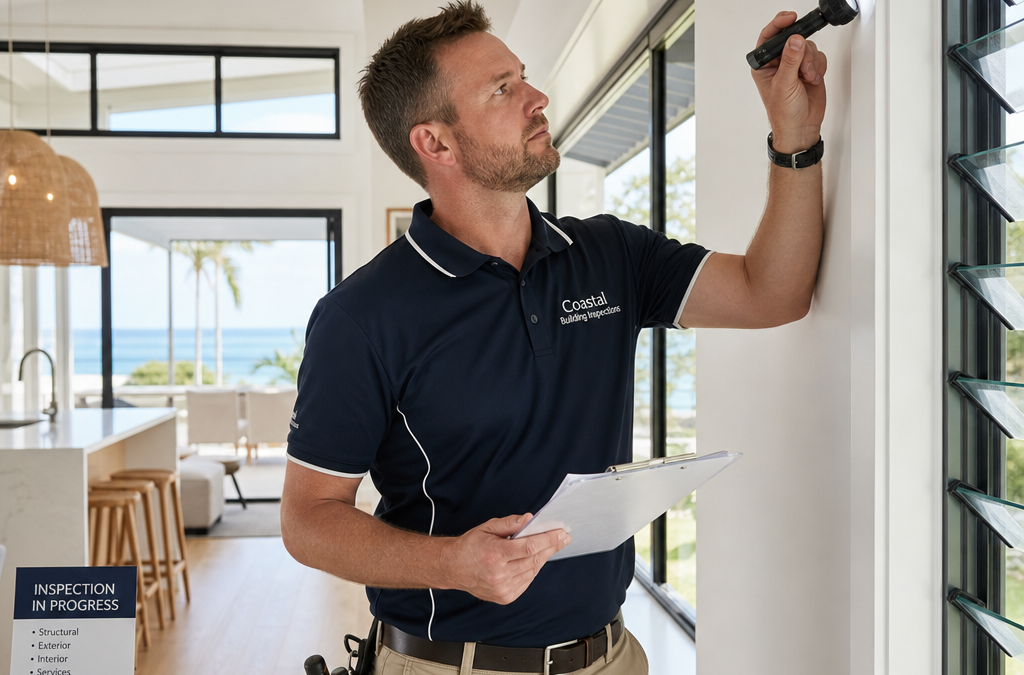
Most Gold Coast buyers sign off on a new home without having a licensed inspector walk through it first. That is a costly mistake. Construction defects in new builds are common, from cracked renders and misaligned doors to waterproofing failures that do not show up until the first heavy rain. A new home inspection Gold Coast is your last real opportunity to catch these issues before the builder hands over the keys and responsibility shifts entirely to you. This guide explains exactly what happens during the process, what inspectors look for, and how to book one without leaving money on the table.
Table of Contents
- Quick Takeaways
- What Is a New Home Inspection on the Gold Coast?
- What Inspectors Check During a Gold Coast Handover
- Common Defects Found in Gold Coast New Builds
- Inspection Types Compared: Pre-Handover vs Pre-Settlement vs PCI
- How to Book a New Home Inspection on the Gold Coast
- What to Expect in Your Inspection Report
- Frequently Asked Questions
- References
Quick Takeaways
| Key Insight | Explanation |
|---|---|
| Book before handover, not after | Once you accept the keys, your builder’s obligation to fix defects becomes harder to enforce. A pre-handover inspection preserves your leverage while the contract is still active. |
| Licensed inspectors matter on the Gold Coast | Queensland law requires building inspectors to hold a valid QBCC licence. Always verify credentials before booking anyone. |
| Photo-enhanced reports accelerate rectification | Reports that assign defects to specific trades, with timestamped photos, cut dispute time significantly compared to plain-text defect lists. |
| Same-day reporting is not the industry norm | Most inspection companies take 24 to 72 hours to deliver reports. Same-day reporting lets you respond to the builder before any scheduled settlement date. |
| High-rise inspections require customised checklists | Apartment handovers on the Gold Coast have different defect profiles than house-and-land builds. Inspectors who only use one-size-fits-all checklists will miss category-specific issues. |
| The inspection cost is minor relative to repair costs | A professional inspection starts from $550 including GST. A single missed waterproofing defect in a Gold Coast home can cost $5,000 to $30,000 to fix post-handover. |
| Defect rectification is time-sensitive | Queensland’s structural defect warranty period is 6 years and 6 months, but non-structural defects must typically be raised within 12 months of practical completion. |
What Is a New Home Inspection on the Gold Coast?
A new home inspection on the Gold Coast is a professional assessment of a newly constructed residential property, conducted by a licensed building inspector before the buyer formally accepts the property from the builder. It is not the same as a standard pest and building inspection on an established home. The scope, the defect categories, and the reporting requirements are entirely different.
In practice, these inspections are most commonly performed at two points in the build cycle. The first is at practical completion, also called a practical completion inspection or PCI, which happens when the builder notifies you the home is finished. The second is a pre-settlement inspection for off-the-plan purchases, which occurs just before the final payment is made and title is transferred.
The purpose is not to nitpick cosmetic preferences. It is to document construction defects, incomplete works, and code non-compliance that the builder is legally required to fix at no cost to you. GoInspect operates across Brisbane, Gold Coast, Logan, Ipswich, and Redland Bay, and the Gold Coast market in particular presents distinct challenges because of its mix of high-rise apartments, dual-occupancy builds, and prestige house-and-land projects.
What Inspectors Check During a Gold Coast Handover
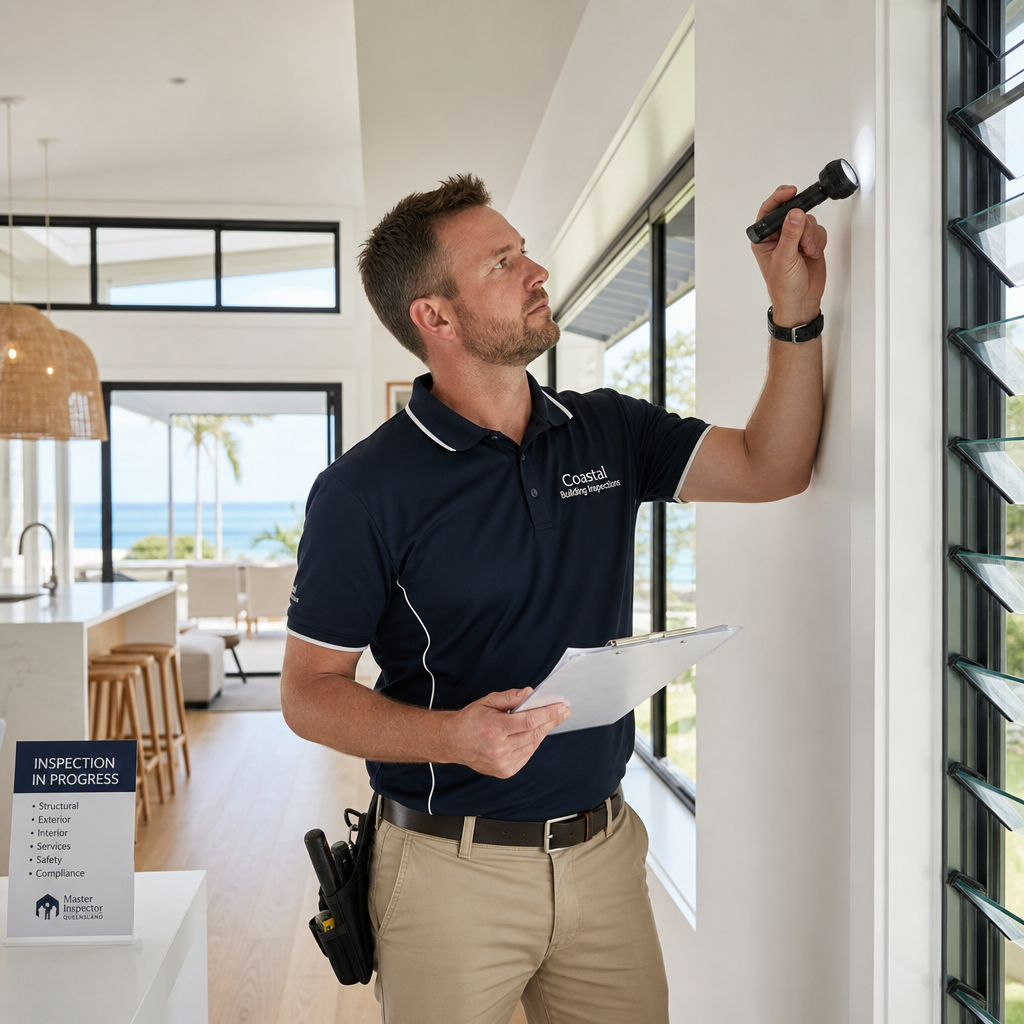
A thorough handover inspection Gold Coast covers far more than a quick walkthrough with the site supervisor. A licensed inspector systematically works through the property using a structured checklist that matches the requirements of Australian Standard AS 4349.1, the national benchmark for pre-purchase property inspections, adapted for new construction.
Structural and Framing Elements
Inspectors assess roof framing, wall framing, and subfloor structures where accessible. They look for signs of inadequate bracing, incorrect timber spacing, and moisture intrusion in subfloor areas. On the Gold Coast, humidity levels make subfloor ventilation a frequent defect point.
Waterproofing and Wet Areas
Bathrooms, laundries, and balconies are inspected for visible waterproofing membrane coverage, correct grading of floor falls, and proper sealing at junctions. This is one of the most commonly deficient areas in new Gold Coast builds, particularly in ground-floor apartments and units with tiled balconies exposed to Queensland rainfall.
External Cladding, Render, and Brickwork
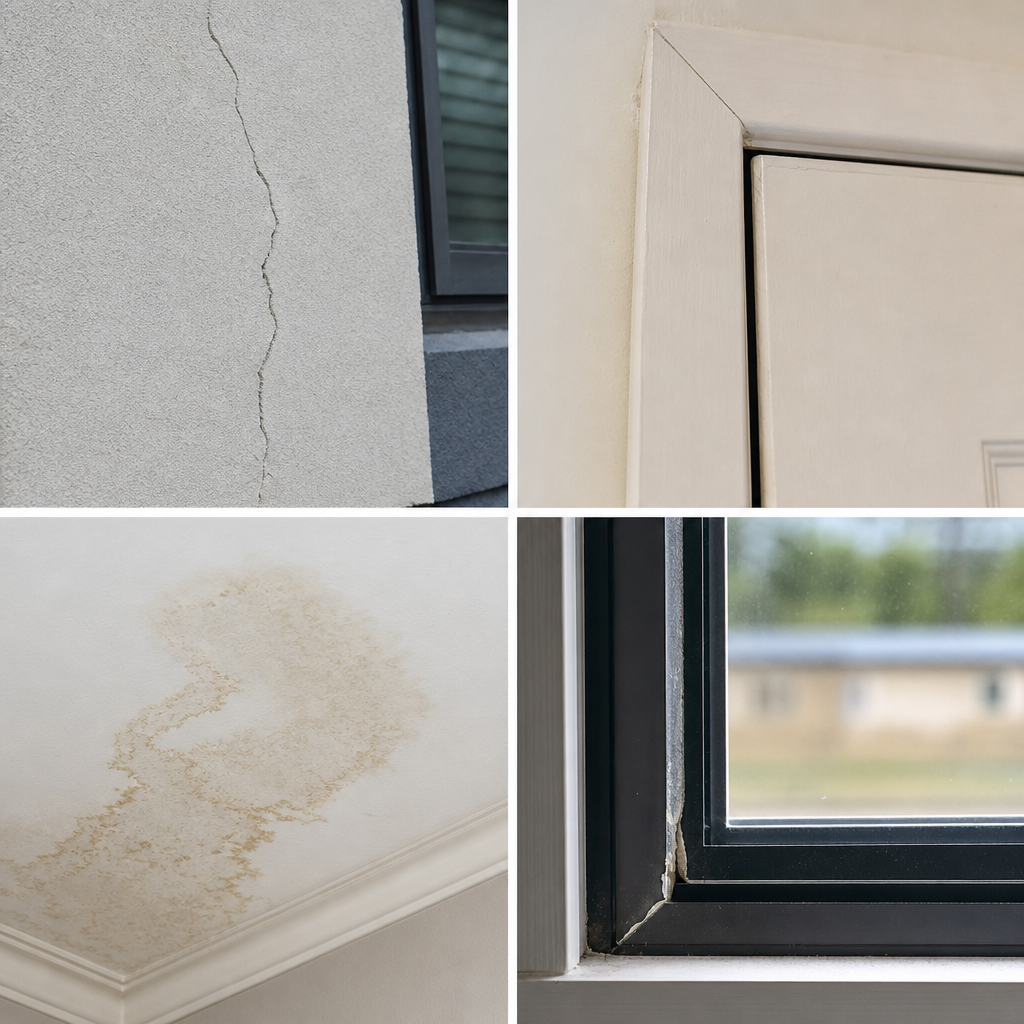
Inspectors examine external walls for cracking in render, inconsistent mortar joints in brickwork, inadequate weepholes, and flashings that are incorrectly installed or missing entirely. These defects are cosmetically obvious but are also early indicators of potential water ingress.
Doors, Windows, and Joinery
Every door and window is physically operated to test alignment, sealing, and hardware function. Sticking doors are often symptoms of frame movement or incorrect installation, not just settling. Joinery is inspected for finish quality, gaps, and adhesive failures.
Electrical, Plumbing, and Mechanical Services
While GoInspect’s building inspectors are not licensed electricians or plumbers, they visually assess fittings, fixtures, and installations for obvious defects and incomplete works. If specialist follow-up is required, the report will flag it clearly.
Pro tip: Bring your contract plans to the inspection. Inspectors can cross-reference what was promised in the build contract against what has actually been installed, which is critical for identifying substituted materials or omitted inclusions.
Common Defects Found in Gold Coast New Builds
The Gold Coast construction market has been running at high volume for several years. The Queensland Building and Construction Commission reported thousands of complaints against licensed contractors in recent years, and new builds account for a significant share of those disputes. High build volumes combined with subcontractor shortages create conditions where defects are not the exception. They are expected.
The most frequently cited defects in Gold Coast new homes include cracked or delaminating render, inadequate roof tile bedding and pointing, poorly installed shower recesses without correct waterproofing, balcony balustrade fixings that do not meet the National Construction Code height and loading requirements, and incomplete landscaping or stormwater drainage works that are listed in the contract but not delivered at handover.
“Defects in new residential construction are not rare events. Research by the Australian Building Codes Board has found that a significant proportion of new homes have at least one reportable defect at the time of practical completion.” – Australian Building Codes Board
In high-rise developments specifically, common defects include fire door gaps that exceed code tolerances, lobby and corridor finishes that do not match the builder’s specifications, and car park waterproofing failures that only become apparent after the first major rain event. GoInspect’s customised reports for high-rise developments are designed to capture these category-specific defects, not recycle a housing checklist and hope for the best.
Pro tip: Never attend a PCI alone with just the builder’s site supervisor. The site supervisor’s job is to facilitate handover, not to identify defects on your behalf. Their incentives are not aligned with yours. A licensed independent inspector has no commercial relationship with the builder.

Inspection Types Compared: Pre-Handover vs Pre-Settlement vs PCI
There is genuine confusion in the market about what these terms mean and which inspection type applies to your situation. The terminology differs slightly between builders, developers, and inspectors, but the differences in scope and timing are real and matter significantly.
| Inspection Type | When It Occurs | Best For |
|---|---|---|
| Practical Completion Inspection (PCI) | When the builder issues a notice of practical completion, before you accept the property | House-and-land buyers receiving a completed new build from a volume or project builder |
| Pre-Handover Inspection | Shortly before the formal handover date, often coordinated with the builder’s final inspection | Custom home buyers or owner-builders who want an independent review at the end of construction |
| Pre-Settlement Inspection | Just before final payment and title transfer for off-the-plan purchases | Apartment and townhouse buyers in Gold Coast developments who have not seen the finished property before settlement |
A common mistake is treating these as interchangeable. If you book a pre-settlement inspection but your builder has issued a PCI notice, you may have already passed the formal window to raise defects under your HIA or MBA contract. The timing is not just a preference. It is a contractual issue.
GoInspect handles all three inspection types across the Gold Coast and delivers reports the same day the inspection is completed. This matters most for pre-settlement inspections, where the window between inspection and settlement can be as short as 24 to 48 hours.
How to Book a New Home Inspection on the Gold Coast
Booking a building inspector Gold Coast for a new home is a straightforward process, but the timing of when you book is where most buyers go wrong. The general rule is to book at least five to seven business days before your expected handover or settlement date. This gives the inspection company time to coordinate access with your builder and ensures the inspector can attend during normal construction hours.
Step 1: Confirm the Stage of Your Build
Identify whether you are at practical completion, approaching a pre-settlement date, or requesting a pre-handover inspection before a formal notice has been issued. This determines which inspection type you need and affects the scope of the report.
Step 2: Verify the Inspector’s QBCC Licence
In Queensland, anyone conducting a building inspection for a fee must hold a current QBCC licence. You can verify licences directly on the QBCC website. Do not book any inspector who cannot provide their licence number immediately on request.
Step 3: Confirm Report Turnaround and Format
Ask specifically whether the report will include photos, which trades each defect is assigned to, and when you will receive it. Same-day delivery is available through GoInspect, which is critical when your settlement timeline is tight. Reports that take 48 to 72 hours to arrive are not useful if your settlement is the following morning.
Step 4: Coordinate Access with the Builder
Your inspector needs unobstructed access to all areas of the property, including roof space, subfloor, and any locked rooms or storage areas. Confirm this with your builder before the inspection date. Builders who refuse access to certain areas should be a red flag, and your inspector should document any areas where access was denied.
GoInspect’s inspections for the Gold Coast start from $550 including GST. For high-rise apartment inspections or large housing projects with multiple units, customised pricing applies based on property size and complexity.
What to Expect in Your Inspection Report
A high-quality new home inspection report is not a list of complaints. It is a structured document that identifies each defect, photographs it, references the relevant standard or contract clause, assigns it to the responsible trade, and describes what rectification is required. This structure is what makes the report actionable when you present it to your builder.
GoInspect’s reports are photo-enhanced, meaning every identified defect is supported by timestamped site photography. This removes ambiguity when the builder reviews the report and makes it substantially harder for a builder or subcontractor to dispute whether a defect exists. Reports that contain only written descriptions without photos are significantly less effective in defect negotiations.
Expect the report to categorise defects by severity. A typical categorisation includes urgent defects that pose safety risks, major defects that affect the structural integrity or weatherproofing of the home, and minor defects that are cosmetic or relate to incomplete finishing works. Each category has different rectification timeframes under Queensland building law.
After receiving the report, your next step is to formally submit the defect list to your builder in writing, referencing the contract and relevant Queensland Building and Construction Commission guidelines. Keep a copy of the submission and note the date. If the builder disputes the findings or fails to rectify within a reasonable timeframe, the QBCC’s dispute resolution process is available to you.
Pro tip: Do not annotate or mark defects on the walls or surfaces of the property during the inspection. This creates conflict with the builder and is unnecessary when you have a photo-documented report. Let the report do the work.
Frequently Asked Questions
How much does a new home inspection cost on the Gold Coast?
GoInspect’s new home inspections start from $550 including GST. The final price depends on property type, size, and whether the build is a standard house, a dual occupancy, or a high-rise apartment. Customised pricing is available for developers inspecting multiple units within a single development.
Can I attend the inspection in person?
Yes, and in most cases it is worth doing. Attending gives you the opportunity to ask the inspector questions on the spot and to see defects firsthand before the report is delivered. However, do not interfere with the inspection process or attempt to engage the builder’s representatives during the inspection itself.
What happens if the builder refuses to fix defects identified in the report?
If a builder refuses to rectify defects that fall within their obligations under the building contract or Queensland law, you can lodge a complaint with the Queensland Building and Construction Commission. The QBCC has the authority to direct rectification and can investigate licensed contractors. Your inspection report serves as formal evidence in that process.
How long does a Gold Coast new home inspection take?
A standard house-and-land inspection typically takes two to three hours depending on the size of the property and the number of defects identified. High-rise apartment inspections for a single unit generally take one to two hours. Multi-unit development inspections are scoped separately based on total unit count and floor area.
Is a new home inspection the same as a building and pest inspection?
No. A building and pest inspection is designed for existing homes and focuses on identifying pre-existing defects, pest activity, and structural deterioration over time. A new home inspection is specifically scoped for newly constructed properties and focuses on construction defects, incomplete works, and compliance with the building contract and National Construction Code. Different skills, different checklists, and often different licensing categories apply.
Do I need an inspection if the builder has already done their own quality check?
Yes. The builder’s internal quality check is conducted by their own team and is not an independent assessment. Their inspectors are employed to facilitate handover, not to identify every defect on your behalf. Independent inspectors consistently find defects that builder-conducted quality checks miss, particularly in areas like waterproofing, external cladding junctions, and roof space detailing.
What areas on the Gold Coast does GoInspect service?
GoInspect services the entire Gold Coast region as well as Brisbane, Logan, Ipswich, and Redland Bay. Whether the property is a new house in Coomera, a townhouse in Robina, or an apartment in Surfers Paradise, GoInspect’s licensed inspectors cover the full Gold Coast geographic area.
If you have had a new home inspection on the Gold Coast, share what surprised you most about the defects found or the process itself. Other buyers reading this genuinely benefit from first-hand accounts.
References
- Queensland Building and Construction Commission: licensing, defect complaints, and contractor dispute resolution information
- Australian Building Codes Board: National Construction Code requirements applicable to new residential construction
- Forbes: coverage of property investment strategies, construction quality issues, and real estate due diligence
- Statista: Australian residential construction data, housing completions, and building industry statistics
- Your Home (Australian Government): technical guidance on building performance, waterproofing, and construction standards for Australian homes