

Your builder has called to say your new home is ready. Naturally, you are excited. But before you hand over the final payment and pick up the keys, there is one step that separates homeowners who move in with confidence from those who spend the next twelve months chasing their builder over defects that were already there on day one. A new home handover inspection, also called a pre-handover inspection or Practical Completion Inspection (PCI), is the formal, independent assessment of your completed home before you accept it. It is not optional, and skipping it is one of the most expensive mistakes a new home buyer can make in Australia.
Table of Contents
- Quick Takeaways
- What Is a New Home Handover Inspection?
- What Gets Inspected During a Pre-Handover Inspection?
- Why an Independent Inspector Matters More Than You Think
- Your Legal Rights in Queensland Before and After Handover
- Common Defects Found at Handover in Brisbane and South East Queensland
- Inspection Types Compared: Choosing the Right Approach
- When to Book Your Pre-Handover Inspection
- Frequently Asked Questions
- References
Quick Takeaways
| Key Insight | Explanation |
|---|---|
| A handover inspection is a formal, legally significant event | It triggers contractual timelines, shifts builder obligations, and creates the documented record you need if disputes arise later. |
| Builder walkthroughs are not independent inspections | A builder’s own completion checklist reflects their perspective. An independent licensed inspector works for you, not the builder. |
| The defects liability period does not replace pre-handover documentation | In Queensland, the standard defects liability period is 12 months. It covers defects that emerge after handover, not defects that existed at handover and were not recorded. |
| Photo-enhanced reports make rectification faster | A written defect list without photos leaves room for dispute. Reports that assign each defect to a specific trade with clear photographs speed up builder response times. |
| New homes regularly carry multiple defects at completion | Finishing trades are often the most rushed on any site. Tiling, painting, waterproofing, and joinery defects are consistently among the most common findings at handover. |
| Waterproofing failures are a specific Queensland risk | Brisbane’s subtropical climate is harsh on wet area membranes applied under time pressure. Identifying these at handover costs far less than repairing them after tiling is complete. |
| Same-day reporting shortens the entire rectification process | When the defect report is in your hands the same day as the inspection, the builder can begin scheduling trades immediately rather than waiting days for documentation. |
What Is a New Home Handover Inspection?
A new home handover inspection is a formal assessment of a newly built property carried out before the buyer takes possession and makes the final payment. The inspector examines the finished home against the approved plans, the building contract specifications, the National Construction Code (NCC), and the relevant Australian Standards. Any defects, incomplete work, or non-compliant items are documented in a detailed written report, usually with photographs, and provided to the builder as a formal list requiring rectification.
The inspection is also known as a Practical Completion Inspection (PCI) or pre-settlement inspection, and the terminology is used interchangeably across the industry. What matters is that it happens before you sign off and before the final payment leaves your account.
The process is straightforward in principle: your builder notifies you that the home has reached practical completion, you engage a licensed independent building inspector, the inspector attends the property and conducts a systematic assessment, and you receive a documented report. In Queensland, builders are generally required to give homeowners at least five days written notice before the handover inspection date, which is your window to arrange an independent inspector rather than simply attending the builder’s own walkthrough.
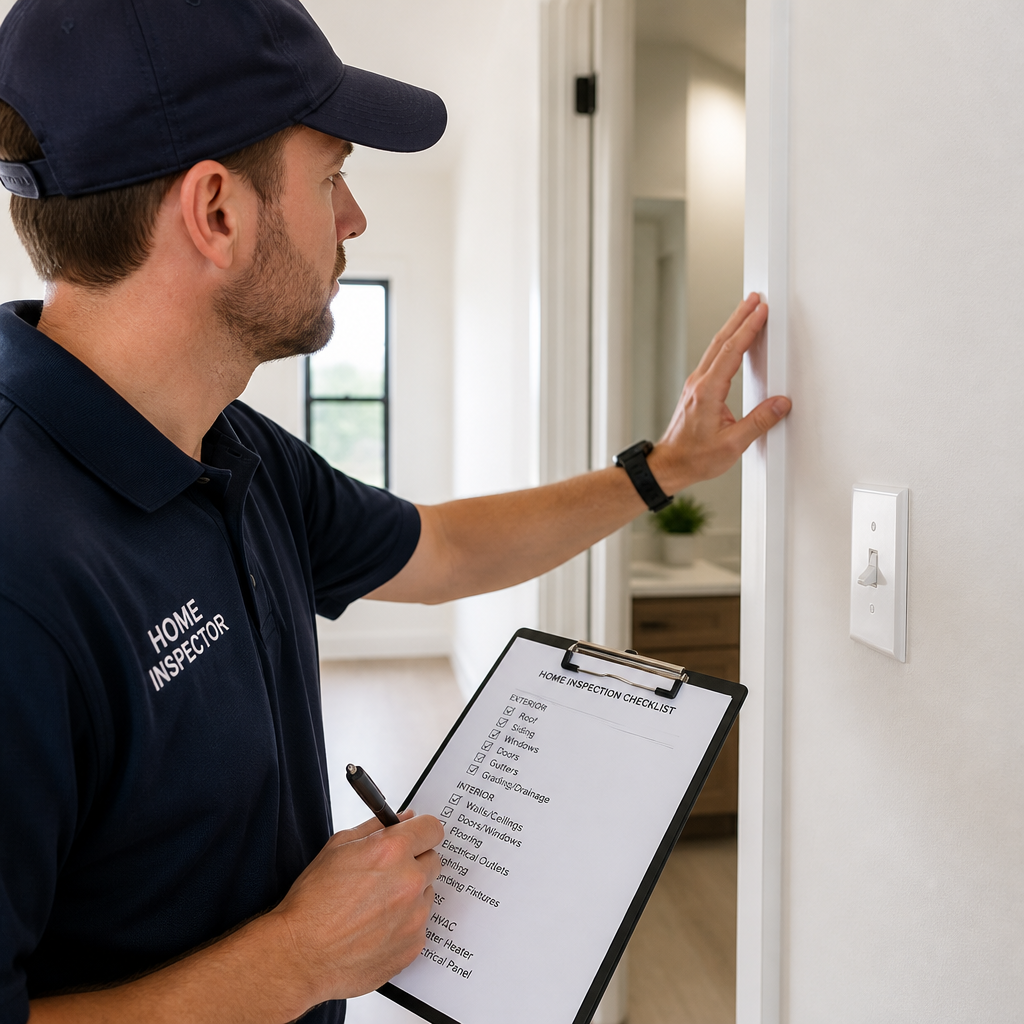

The distinction between a handover inspection and a general pre-purchase building inspection is worth understanding. A pre-handover inspection focuses specifically on construction defects, incomplete work, and contract compliance in a newly completed home. It is not the same as a pre-purchase inspection for an established property, which assesses the overall condition of an existing building including age-related wear. If you are buying a new build off the plan or a house and land package, only a pre-handover inspection is relevant to your situation.
Pro tip: Never attend only the builder’s walkthrough and assume that covers your obligations. A builder’s own completion checklist is produced for the builder’s purposes. An independent pre-handover inspection is produced for yours, by someone with no financial relationship to the building company.
What Gets Inspected During a Pre-Handover Inspection?
A thorough pre-handover inspection covers every accessible area of the completed property. The scope is wider than most homeowners expect, and that breadth is what makes an independent inspection worth the cost.
Structural Elements
The inspector checks the slab, load-bearing walls, roof frame, and structural connections for signs of cracking, movement, or defective construction. Structural issues found at this stage must be addressed before handover, not deferred to the defects liability period.
Interior Finishes
All internal finishes are assessed, including paintwork, tiling, cabinetry, benchtops, flooring, doors, and windows. Inspectors look for poor workmanship, damage, and items that do not meet the contract specifications or the tolerance standards that apply under Australian industry guidelines.
Wet Areas and Waterproofing
Bathrooms, ensuites, laundries, and any external decks or balconies are examined closely. Waterproofing membrane application in wet areas is a consistent failure point in Queensland builds, and defects here are significantly more expensive to repair after tiling is complete.
Plumbing and Electrical
Plumbing fixtures, taps, toilets, and drainage are tested for function. Electrical installations including power points, switches, and light fittings are checked for proper operation and compliance. Inspectors also confirm that safety items such as smoke alarms are correctly positioned and operational.
External Works and Site
The inspection extends to the exterior of the property: gutters, fascias, external cladding, drainage, driveways, fencing, and landscaping items included in the contract. In high-growth corridors around Logan, Ipswich, and Redland Bay, where multiple trades are managing several sites simultaneously, external work is frequently where corners get cut.
Pro tip: Bring your original contract and plans to the handover inspection appointment, or send them to your inspector in advance. Defects identified as contract deviations, where a specification or inclusion has not been delivered, are often easier to enforce against a builder than subjective workmanship disputes.
Why an Independent Inspector Matters More Than You Think
Most builders provide their own internal completion checklist at handover. This confirms the home is ready from the builder’s perspective. It is not an independent assessment of the property’s condition from your perspective as the buyer. These are fundamentally different documents with fundamentally different purposes.
A new home handover inspection gives you a written list of defects before the builder has fully closed out the job. Many buyers only notice issues after moving in, and at that point, access, urgency, and builder accountability all work against you.
An independent inspector brings specialist equipment and trained eyes to items a homeowner simply will not catch on a walkthrough. Technical defects such as waterproofing failures in wall cavities, plumbing faults within walls, and structural concerns with the roof frame require specific knowledge to identify. A licensed inspector also references recognised Australian standards and industry guidelines when assessing workmanship, giving your defect report the authority needed to hold a builder to account.
The other practical advantage of an independent inspection is the format of the report itself. At GoInspect, photo-enhanced defect reports assign each defect to the specific trade responsible. This means the builder can immediately direct the right subcontractor to the right item without ambiguity, which compresses the rectification timeline significantly. A list of written descriptions without photographic evidence gives a builder room to dispute the nature or severity of each item.
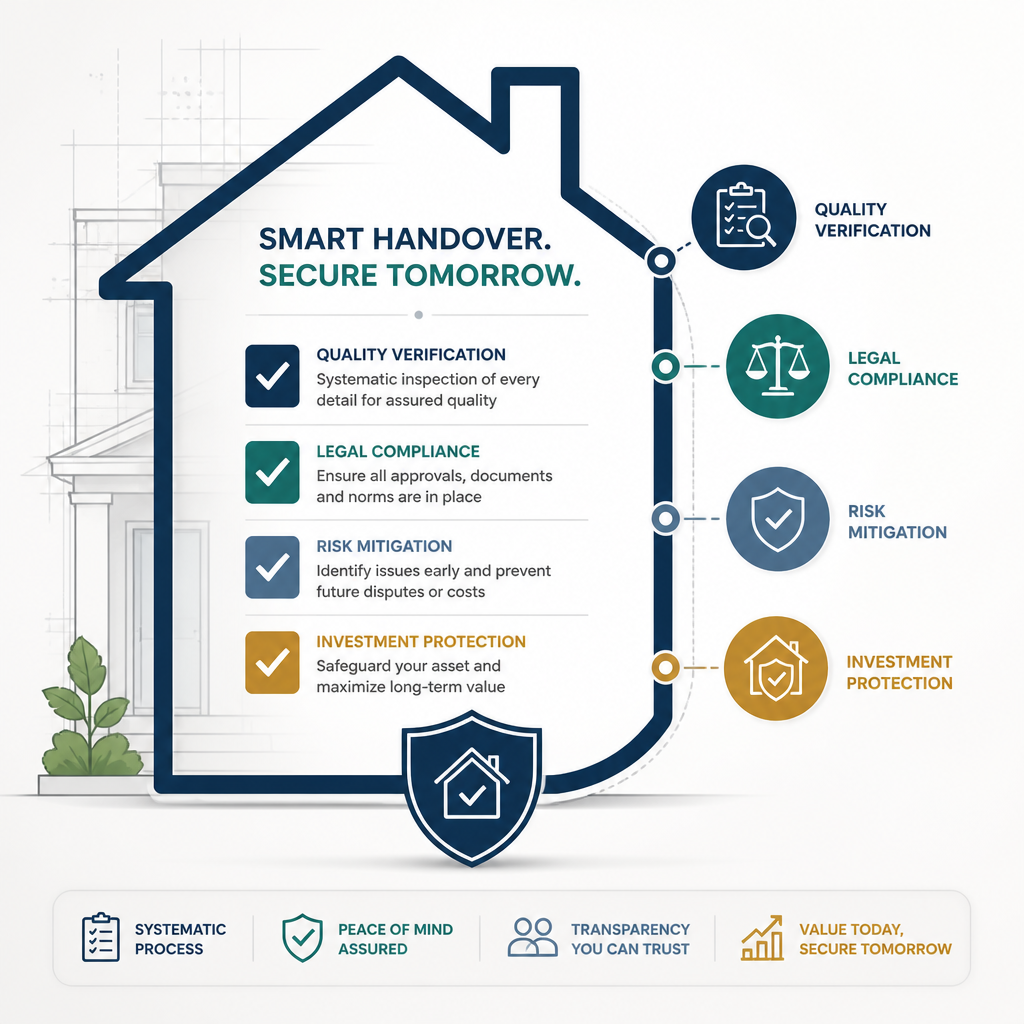
Same-day reporting, a feature GoInspect offers as standard, matters more than it might seem. When the report reaches the builder on the same afternoon as the inspection, trades can be rescheduled before the job site is demobilised. Delays in reporting mean delays in rectification, and once site access is lost after handover, every repair becomes more disruptive and more expensive.
Your Legal Rights in Queensland Before and After Handover
A pre-handover inspection is not just good practice. In Queensland, it connects directly to the legal framework that protects new home buyers and investors.
Under standard HIA and MBA residential building contracts used in Queensland, the defects liability period is typically 12 months from practical completion. This is a maintenance period for defects that become apparent after handover. It is not a substitute for identifying and documenting defects that already exist at the time of handover. The distinction is legally and practically significant.
Defects that are formally documented in a pre-handover report are far easier to enforce against a builder than issues raised informally months later, when the builder has moved on to other projects and the relevant subcontractor may no longer be engaged on the job. The Queensland Building and Construction Commission (QBCC) is the regulatory body that oversees building work quality and handles disputes. The QBCC’s guidelines state that property owners must notify the contractor of defects within 12 months of when they notice them, and different timeframes apply for lodging a formal complaint or claim under the Queensland Home Warranty Scheme.
A common mistake is to accept a builder’s verbal assurance that any problems will be fixed under the defects liability period, and on that basis, sign off at handover without a formal independent inspection. That assurance is worth very little if the defect was present before handover and you cannot prove it. Your pre-handover report is that proof.
For homeowners and investors in the GoInspect service areas, which cover Brisbane, Gold Coast, Logan, Ipswich, and Redland Bay, the QBCC framework is the same across all locations. What differs is the volume and nature of new construction. High-growth corridors see higher build rates, thinner supervision, and more rushed finishing trades, which is precisely where independent inspection pays for itself.
Common Defects Found at Handover in Brisbane and South East Queensland
It is a reasonable expectation that a brand-new home should be defect-free. In practice, that expectation is almost never met. Building is a complex process involving many separate trades, and the finishing phase is the most time-pressured stage of any new home construction.
The most frequently identified defect categories in Queensland new home inspections include:
- Paint and plasterboard defects: Uneven coverage, missed spots, surface damage, and plasterboard joins that are visible after painting.
- Tiling defects: Lippage between tiles, grout inconsistencies, cracked tiles, and incorrect fall in wet areas affecting drainage.
- Waterproofing failures: Membranes applied too thinly or incorrectly flashed at junctions in bathrooms, laundries, and balconies.
- Door and window issues: Frames not properly aligned, hardware not functioning correctly, sealing gaps that will allow water ingress.
- Drainage and stormwater: Site drainage that does not adequately manage Queensland’s heavy rainfall events.
- Incomplete contract inclusions: Items listed in the contract specification that have been omitted or substituted without the homeowner’s agreement.
It is common for a thorough independent inspection to identify between 30 and 80 individual items in a standard new home. Most are minor and quickly rectified. But some, particularly waterproofing issues, represent significant costs if left unaddressed and discovered later after tiling or other finishes have been applied over the top.
Inspection Types Compared: Choosing the Right Approach
Not all handover inspections deliver the same outcome. Understanding the difference between your available options is the first step to choosing the approach that actually protects you.
| Inspection Type | Who Conducts It | What It Delivers |
|---|---|---|
| Builder’s own walkthrough | Builder’s supervisor or site manager | A completion checklist from the builder’s perspective. No independence. No binding defect record from the buyer’s standpoint. Does not protect the buyer legally. |
| DIY walkthrough by the homeowner | The buyer themselves | Catches obvious visible issues but misses technical defects behind finishes, in wet areas, within the roof space, and in the subfloor. No formal standing in a QBCC complaint. High risk of missing serious items. |
| Independent licensed inspector (e.g., GoInspect) | Fully licensed, independent building inspector | A photo-enhanced defect report assigned by trade, produced same-day, checked against the NCC and QBCC Standards and Tolerances. Provides formal standing in disputes. Covers all accessible areas of the property systematically. |
The cost of an independent pre-handover inspection, starting from $550 including GST with GoInspect, is modest relative to the total cost of a new home. Waterproofing repairs discovered after handover, once tiles have been laid and walls have been finished, can run into thousands of dollars and require significant trade disruption. The inspection fee is not an overhead. It is protection on an asset worth hundreds of thousands of dollars.
When to Book Your Pre-Handover Inspection
Book your independent inspector as soon as your builder notifies you that practical completion is approaching. In Queensland, you should receive written notice from the builder before your handover inspection date. That notice period is your window to arrange an independent assessment.
Do not wait until the day of the builder’s handover appointment to think about booking. Independent inspectors in high-demand areas like Brisbane, Gold Coast, and Logan often need several days notice, particularly during peak building periods when multiple completions are happening simultaneously across new estates.
If you are an investor buying off the plan in a high-rise development, the timing is slightly different. GoInspect provides customized inspection reports for high-rise developments, where individual apartment inspections require different checklists and attention to different failure points than freestanding homes. Booking early and confirming access arrangements with the developer is essential.
For builders and developers, pre-handover inspections serve a different but equally important function. Identifying defects before a homeowner’s independent inspector arrives prevents disputes, speeds up settlement, and protects the builder’s reputation. Some builders commission their own independent pre-handover reports as part of quality control, using them to close out trade defects before the official handover date.
Frequently Asked Questions
What is a handover inspection in Australia?
A handover inspection, also called a pre-handover inspection or Practical Completion Inspection (PCI), is a formal assessment of a newly built home conducted by a qualified independent building inspector before the buyer accepts the keys and makes the final payment to the builder. It documents defects, incomplete work, and deviations from the contract before legal responsibility for the property shifts to the buyer.
Is a pre-handover inspection legally required in Queensland?
A pre-handover inspection is not legally mandated in Queensland. However, your right to commission one before accepting the property is protected under standard residential building contracts and Queensland building law. Builders are required to give notice of practical completion, and you are entitled to arrange an independent assessment during that notice period. Skipping the inspection does not eliminate your rights, but it significantly weakens your position in any subsequent dispute about what was present at handover.
How long does a new home handover inspection take?
A standard inspection of a new freestanding home typically takes between two and four hours, depending on the size of the property and the number of items requiring documentation. Larger homes, dual occupancy builds, or high-rise apartments may take longer. The inspection itself is only part of the process. With same-day reporting, as provided by GoInspect, you receive the completed defect report on the same day the inspection is conducted, rather than waiting several days for documentation.
Can the builder refuse to fix defects identified at handover?
In Queensland, a builder cannot simply refuse to rectify defects that are legitimately documented at practical completion. Under standard residential building contracts, the builder must rectify defects before handover is accepted, or the items must be agreed in writing with a timeline for rectification. If a builder refuses to engage, the Queensland Building and Construction Commission (QBCC) can be contacted. The QBCC has the power to issue directions to rectify and can take licensing action against builders who fail to comply.
What is the difference between a pre-handover inspection and a defects liability period?
A pre-handover inspection happens before you accept the property and identifies defects that exist at the time of handover. The defects liability period, typically 12 months from practical completion in Queensland, is a post-handover mechanism for defects that become apparent after you have moved in. The two things serve different purposes. Relying on the defects liability period instead of conducting a pre-handover inspection means you are accepting a property with unknown defects and banking on a process that requires you to notice them later, notify the builder in writing, and follow them up without the formal documentation that an inspection report provides.
Who can conduct a pre-handover inspection in Queensland?
A pre-handover inspection should be conducted by a fully licensed building inspector with specific experience in new residential construction. In Queensland, building inspectors are subject to licensing requirements under the QBCC. Using an unlicensed or unqualified person to produce an inspection report reduces its credibility in any dispute. GoInspect uses fully licensed inspectors with experience across Brisbane, Gold Coast, Logan, Ipswich, and Redland Bay, and produces photo-enhanced reports that are formatted for direct use in builder rectification processes.
Do investors need a handover inspection for new properties?
Yes. Property investors purchasing a new build, whether a house and land package or an off-the-plan apartment, face exactly the same defect risks as owner-occupiers. In some cases the risk is higher, because an investor who does not occupy the property may not notice defects until they manifest as significant problems. An independent pre-handover inspection protects the asset value of the investment and ensures the property is delivered to the standard required under the contract before any tenant takes occupation.
Have you recently gone through a handover inspection in South East Queensland? We would like to hear what your inspector found, or what you wish you had known before signing off.
References
- Legal aspects of pre-handover inspections for Australian homebuyers
- Comparing pre-handover inspections with builder walkthroughs in Australia
- Understanding pre-handover inspections: a guide for Australian homebuyers
- QBCC handover obligations and defect notification requirements in Queensland
- What a pre-handover inspection covers and why it matters for new home buyers