
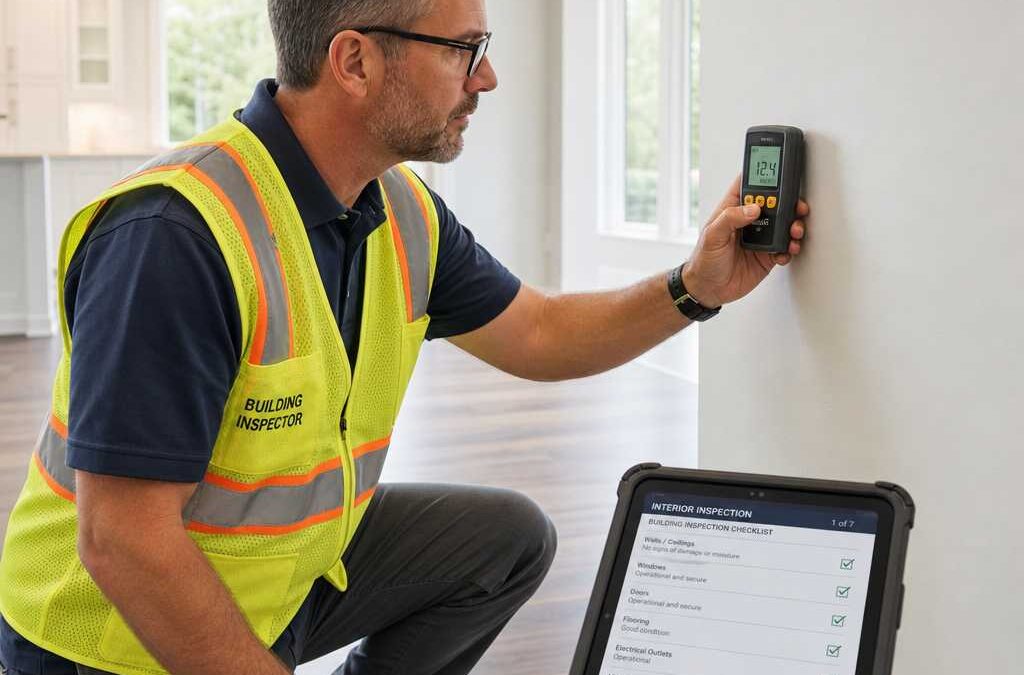
Most new home buyers in Brisbane walk into their handover inspection without knowing what they are looking at, and builders know it. The result is that defects get signed off, keys get handed over, and homeowners spend the next 12 months fighting for repairs that should have been fixed before settlement. A professional handover inspection Brisbane turns this around by placing a licensed, independent set of eyes on the property before you ever sign the completion paperwork. Here is exactly what that process involves, what gets checked, and how to avoid the most common and costly mistakes.
Table of Contents
- What Is a Handover Inspection in Brisbane?
- Quick Takeaways
- What Happens During the Inspection
- The Pre-Handover Inspection Checklist: Room by Room
- Common New Home Defects Found in Brisbane Builds
- Practical Completion Inspection vs. Pre-Settlement Inspection
- How Defect Reports Work and Why Photo Evidence Matters
- Comparing Inspection Approaches in Brisbane
- What to Do After Your Inspection Report
- Frequently Asked Questions
- References
What Is a Handover Inspection in Brisbane?

A handover inspection is an independent assessment of a newly built home, conducted at or just before the stage known as practical completion. In Queensland, practical completion is the point at which the builder declares the work is done and the home is ready for occupation. That declaration does not mean the home is defect-free. It means the builder believes it is substantially finished.
The inspection happens before you accept the keys and before you sign the final payment. This timing is the single most important factor. Once you take possession and pay the final progress claim, your negotiating position changes entirely. Getting a new home inspection Brisbane at this stage is not optional if you want to protect your investment.
In practice, the inspection involves a licensed building inspector walking through every accessible area of the property and comparing the work against the building contract, approved plans, and the relevant Queensland building standards, primarily AS 4349.1 and the Queensland Development Code.
Quick Takeaways
| Key Insight | Explanation |
|---|---|
| Timing is everything | Book the inspection before you pay the final progress claim. Once money changes hands and keys are accepted, defect leverage drops significantly. |
| Trade responsibility matters | A quality report does not just list defects. It assigns each issue to the responsible trade, which speeds up rectification and reduces builder pushback. |
| Photo evidence is non-negotiable | Defect reports without photographs are almost impossible to enforce. Every item should be supported by a clear, dated image. |
| Brisbane climate creates specific defects | High humidity and heat expansion mean waterproofing, roof flashings, and external caulking are consistently the highest-risk areas in South East Queensland builds. |
| High-rise inspections require specialist experience | Apartment and townhouse handovers involve common property areas, fire separation walls, and mechanical systems that detached home inspectors often miss. |
| Same-day reporting keeps builders accountable | The faster the report reaches the builder, the less time there is for construction crews to leave the site and for defects to become contested. |
| A licensed inspector is not the same as a building consultant | In Queensland, the inspector must hold a relevant building industry licence. Always verify credentials before booking, especially for pre-handover inspections. |
Understanding these points upfront changes how you approach the entire handover process. Most first-time buyers treat the handover as a formality. Experienced investors and developers treat it as a critical checkpoint that protects six-figure assets.
What Happens During the Inspection
A professional new home handover inspection in Brisbane typically takes between two and four hours depending on the size and type of property. A standard three-bedroom house on the north side of Brisbane will take less time than a dual-occupancy development in Logan or a three-storey townhouse on the Gold Coast.
Pre-Inspection Document Review
Before the inspector sets foot on site, they should review your building contract, the approved plans, and any variation documents. This is not a step that every inspector does, but it is a step that every inspector should do. Without these documents, the inspector can only check against general standards and cannot identify contractual non-conformances, which are sometimes more significant than visible defects.
On-Site Assessment Process
The inspection proceeds systematically from the exterior to the interior, then up through the roof space and subfloor where accessible. The inspector checks structural elements, waterproofing, finishes, fixtures, services rough-ins, and drainage. Each issue is photographed, noted with its location, and in a quality report, assigned to the responsible trade.
In practice, a thorough inspector will spend meaningful time on areas that builders commonly rush, including roof flashings, wet area waterproofing, door and window alignment, and the interface between different cladding materials. These are the areas where Brisbane’s subtropical climate creates long-term problems if workmanship is substandard.
Post-Inspection Report Delivery
The best inspectors in Brisbane deliver same-day reports. GoInspect, for example, is built around this model because delays between the inspection and report delivery give builders time to dispute findings and make it harder to demonstrate that defects existed at the time of practical completion. A report in your hands on the same day as the inspection is not just convenient. It is strategically important.
Pro tip: Ask your inspector to confirm same-day reporting before you book. If they cannot commit to it, find out exactly how many hours the report will take because a 48-hour turnaround on a defect report is too slow when a builder is pressuring you to sign off.
The Pre-Handover Inspection Checklist: Room by Room
The pre-handover inspection checklist covers every element of the home, but not every element carries equal risk. Based on what inspectors consistently find in Brisbane, Gold Coast, Logan, Ipswich, and Redland Bay builds, the following areas deserve the most attention.
Exterior and Structural Elements
Check the roof covering for cracked or misaligned tiles and inadequate sarking. Inspect all flashings at penetrations, valleys, and wall junctions. Look at the fascia, gutters, and downpipes for correct fall and secure fixing. Examine the external cladding for cracking, inadequate control joints, and gaps around windows and doors that will allow water ingress in a Brisbane summer storm.
The subfloor and slab should be checked for cracking that exceeds tolerances under AS 3600. A crack in a concrete slab is not automatically a defect, but a crack wider than 0.3mm in a structural member absolutely is.
Wet Areas: Bathrooms, Laundry, and Kitchen
Waterproofing failures are the single most expensive category of defect in new Brisbane homes. The inspector should check that all wet area floors and walls have been waterproofed to AS 3740, that the membrane extends the correct distance up walls, and that penetrations through the membrane are properly sealed. Grout and silicone jointing, tile alignment, and fall to drains are all checked at this stage.
Windows, Doors, and Joinery
Every door and window should open, close, lock, and seal correctly. Sticking doors are common and are usually a sign of frame movement or incorrect installation. Check that flyscreens fit properly, that window locks operate as specified, and that all glazing meets safety standards where required.
Electrical, Plumbing, and Mechanical Services
The inspector cannot perform electrical testing without an electrical licence, but they can check that all outlets, switches, lights, exhaust fans, and fixed appliances are installed and operational. Plumbing fixtures should be checked for correct operation, no leaks, and correct hot water delivery. Air conditioning systems should be tested for cooling and heating function.
Pro tip: Run every tap, flush every toilet, and test every light switch during the inspection. Do not assume the builder has tested them. In practice, rushing at the end of a build means service checks are often skipped.
Common New Home Defects Found in Brisbane Builds
The data from new home inspections across South East Queensland consistently points to the same categories of defects. Understanding these before your inspection helps you ask better questions and know where your inspector should be spending time.
“Waterproofing defects in wet areas account for some of the most expensive repair costs in residential construction, with remediation often costing ten to fifteen times what correct installation would have cost originally.” Queensland Building and Construction Commission guidance on defect rectification.
The Most Frequently Identified Defect Categories
Waterproofing failures, as noted above, top the list. After that, the most common issues are cracked or hollow tiles, out-of-plumb walls and door frames, incomplete or non-functional plumbing fixtures, roof flashing defects, and cosmetic finishing issues including paint runs, scratched glass, and damaged benchtops.
One category that surprises first-time buyers is contract non-conformance, where the builder has substituted specified products or finishes for cheaper alternatives without the owner’s consent. This is not always visible to the untrained eye, which is another reason why reviewing contract documents before the inspection matters.
In high-density builds across the Gold Coast and Brisbane CBD, fire separation walls and fire stopping at penetrations are increasingly flagged by inspectors. This is a life-safety issue, not a cosmetic one, and it is one area where the consequences of missing it are severe.

Practical Completion Inspection vs. Pre-Settlement Inspection
These terms are often used interchangeably, but they describe slightly different stages in the construction process. Understanding the difference helps you book the right inspection at the right time.
Practical Completion Inspection
A practical completion inspection happens at the point where the builder declares the work is substantially complete. In Queensland, this is typically when the builder issues the notice of practical completion and requests the final progress payment. This inspection is your primary opportunity to identify defects before any money changes hands or keys are accepted.
Pre-Settlement Inspection
A pre-settlement inspection typically applies to off-the-plan apartments or house-and-land packages where settlement is a separate legal event from practical completion. In this context, the inspection verifies that the property matches the contract and that any previously identified defects have been rectified before settlement funds are released.
Both inspections are valuable. If your build involves a separate practical completion and settlement, you ideally want both. The practical completion inspection identifies defects. The pre-settlement inspection confirms they have been fixed. GoInspect offers both as part of its service offering, which makes sense because a single inspection without a follow-up creates a gap in your protection.
How Defect Reports Work and Why Photo Evidence Matters
Not all defect reports are created equal. A report that lists “paint defect in bedroom 2” is almost useless when a builder’s site supervisor reviews it. A report that includes a photograph, a precise location description, a reference to the relevant standard or contractual requirement, and an identified responsible trade is actionable and hard to dispute.
Photo-enhanced reporting, the approach used by GoInspect, is the current best practice in Brisbane and across South East Queensland. The photograph does three things. It proves the defect existed at the time of inspection. It removes ambiguity about the location and nature of the issue. It creates a record that can be used in a QBCC complaint or QCAT dispute if the builder fails to rectify.
Assigning responsibility to a specific trade is a detail that most homeowners overlook but that builders pay close attention to. When a report says “painting defect” without attribution, the builder can push back on the plasterer, who pushes back on the painter, and weeks pass with no resolution. When the report says the defect is the responsibility of the painting subcontractor at a specific location, that loop closes faster.
Comparing Inspection Approaches in Brisbane
Brisbane homeowners and investors have several options when it comes to handover inspections. The differences between approaches have a direct impact on the quality of outcomes you get.
| Approach | What You Get | Key Limitation |
|---|---|---|
| DIY Owner Walk-Through | Free inspection using a checklist from the internet, conducted by the owner at practical completion | No technical knowledge of standards, no photo documentation system, no trade attribution, and no credibility with the builder or QBCC |
| Builder-Arranged Consultant | An inspector nominated or referred by the builder to conduct the handover review | Conflict of interest is built into the arrangement. Independent inspection is the only model that protects the buyer’s interests exclusively. |
| Independent Licensed Inspector (GoInspect model) | Fully licensed inspector, photo-enhanced same-day report, trade responsibility attribution, applicable to house-and-land and high-rise, starting from $550 including GST | Requires booking in advance and coordinating with builder access, but this is a minor logistical issue compared to the protection provided |
The DIY walk-through is the most common mistake made by first-time buyers across Brisbane and the Gold Coast. The problem is not effort or intention. The problem is that identifying a defect and documenting it in a way that is enforceable are two completely different skills. A builder’s site supervisor has dealt with hundreds of owner walk-throughs and knows exactly how to minimise the significance of verbally raised issues.
What to Do After Your Inspection Report
Receiving your inspection report is not the end of the process. It is the beginning of the defect rectification process, and how you handle this stage determines whether defects actually get fixed before you take possession.
Submitting the Defect List to the Builder
Send the full report to the builder in writing, via email, with a read receipt if possible. Do not hand it over verbally during a site meeting. Written communication creates a paper trail. The builder is required under Queensland building contracts to acknowledge defects and provide a rectification timeline. Get that commitment in writing before you agree to a settlement or handover date.
What Happens if the Builder Disputes the Defects
A small number of defects will be disputed. This is normal. The builder may argue that an item is within acceptable tolerance or that it is not a defect under the contract. A quality inspection report referenced to specific standards and supported by photographs makes this dispute much harder for the builder to sustain.
If a genuine dispute arises, the Queensland Building and Construction Commission (QBCC) is the first port of call. The QBCC has statutory powers to investigate defects in newly built homes and can require rectification. Having a professionally documented defect report is essential to any QBCC complaint. Homeowners who attempt this process with notes from a personal walk-through rarely get the same outcome as those with a licensed inspector’s photo report.
Follow-Up Inspection After Rectification
Once the builder advises that defects have been rectified, book a follow-up inspection before you accept that claim. Rectification quality varies significantly across trades and build teams. A brief follow-up check, particularly on the most significant defects, confirms that repairs have been completed properly rather than cosmetically patched.
GoInspect’s model is specifically designed to support this process end-to-end, from the initial practical completion inspection through to post-rectification verification. This is particularly relevant for investors and developers managing multiple properties across Brisbane, Logan, and the Gold Coast where the volume of builds makes a structured defect management process essential.
Frequently Asked Questions
How much does a handover inspection in Brisbane cost?
Professional handover inspections in Brisbane typically start from around $550 including GST for a standard residential dwelling. GoInspect’s pricing starts at this level and scales depending on property size and type. High-rise apartment inspections and larger developments will cost more, but the investment is minimal compared to the cost of even a single unresolved waterproofing defect or structural issue.
Can I use the builder’s inspector for my handover inspection?
No. The builder’s inspector works for the builder, not for you. Even if the inspector is technically competent, there is an inherent conflict of interest in any arrangement where the inspector is paid by or referred by the builder. Your handover inspection must be conducted by an independent, licensed inspector with no financial relationship to the building company.
What is the difference between a handover inspection and a building inspection?
A standard pre-purchase building inspection assesses an existing property, usually a second-hand home, for defects and structural issues. A handover inspection is specific to newly built properties and involves comparing the construction against the building contract, approved plans, and new construction standards like AS 4349.1. The two inspections use different benchmarks and require different knowledge from the inspector.
What happens if defects are found during the practical completion inspection?
The defects are documented in a written report and submitted to the builder. Under a standard Queensland building contract, the builder is obligated to rectify defects before you are required to accept practical completion and make the final payment. Significant or structural defects may allow you to withhold the final progress payment until rectification is complete. Minor cosmetic defects are typically listed in a separate schedule and must be rectified within an agreed timeframe after handover.
Do I need a handover inspection for an off-the-plan apartment in Brisbane?
Yes, and arguably more so than for a detached house. High-rise and medium-density apartment handovers involve complex systems including fire protection, mechanical ventilation, common property, and structural interfaces between units that present higher risk of defects being missed in a builder’s own quality review. A licensed inspector with specific experience in high-rise developments, which is a GoInspect specialty, will identify issues that a standard residential inspector might not assess correctly.
How do I prepare for my handover inspection appointment?
Gather your building contract, the approved plans, any approved variations, and your contract specifications document before the inspection day. Send these to your inspector in advance so they can review what was promised versus what was built. On inspection day, ensure the property has power and water connected, all keys and access codes are available, and that the site is accessible. Attending the inspection yourself is worthwhile because it allows you to ask questions in real time and understand the defects firsthand.
Have you recently gone through a handover inspection in Brisbane or South East Queensland? Share what surprised you most about the process in the comments below.
References
- Queensland Building and Construction Commission: official regulatory guidance on new home defects and builder obligations in Queensland
- Standards Australia: source of AS 4349.1 and AS 3740 building inspection and waterproofing standards referenced in residential handover inspections
- Forbes: property investment and new home purchase advice for buyers navigating construction contracts and defect management
- Statista: Australian construction industry data including residential building completions and defect rates in new home builds
- Your Home (Australian Government): technical guidance on building quality, waterproofing, and sustainable construction standards for new residential properties