

Most Queensland homeowners accepting a new build have no idea what a quality assurance certificate Queensland actually covers, who issues it, or whether it gives them any real legal protection. That gap costs people money. Defects missed at handover become disputes fought over years, not weeks. In Queensland’s residential construction market, where new dwelling approvals regularly exceed 30,000 per year according to the Australian Bureau of Statistics, the difference between a smooth settlement and a drawn-out rectification battle often comes down to whether the right documentation was reviewed before keys were exchanged.
Table of Contents
- Quick Takeaways
- What Is a Quality Assurance Certificate in Queensland Construction
- The Legal Framework Behind QA Certificates in Queensland
- What a QA Certificate Does Not Cover
- Practical Completion Inspections vs QA Certificates
- Comparing QA Approaches for Residential Developments
- Common Defects Missed When Relying Solely on Builder QA
- Why Independent Inspections Fill the Gaps QA Certificates Leave
- Frequently Asked Questions
- References
Quick Takeaways
| Key Insight | Explanation |
|---|---|
| A QA certificate is not a warranty | It confirms a builder’s internal process was followed, not that every defect has been identified or rectified. |
| QBCC licensing underpins validity | In Queensland, only builders licensed with the Queensland Building and Construction Commission can issue compliant QA documentation for residential work. |
| Practical completion is the trigger point | QA certificates are typically issued at practical completion, which is a contractual milestone, not necessarily a defect-free milestone. |
| Builder QA and independent inspection serve different purposes | Builder QA protects the builder’s internal sign-off process. An independent pre-handover inspection protects the buyer. |
| Photo-documented defect reports are actionable | Reports that identify defects, photograph them, and assign trade responsibility dramatically reduce rectification delays compared to plain text reports. |
| High-rise developments require customised QA documentation | Multi-unit and high-rise projects involve multiple trades and certifiers, making standardised single-inspector QA processes insufficient. |
| Same-day reporting matters at handover | Delays between inspection and report delivery give builders administrative grounds to dispute findings after settlement is triggered. |
What Is a Quality Assurance Certificate in Queensland Construction
A quality assurance certificate in Queensland residential construction is a formal document that confirms a defined set of construction activities were carried out in accordance with a quality management plan, the relevant Australian Standards, and the National Construction Code. It is not a standalone government document. It is produced either by the builder’s quality management system or by a certifying body engaged to audit that system.
In practice, QA certificates show up at two distinct moments: during staged construction inspections and at practical completion. For staged inspections, they confirm that a specific phase such as frame, slab, or lock-up met the required standard before the next stage proceeded. At practical completion, they are part of the handover package alongside the occupancy certificate and maintenance manuals.
The confusion most buyers experience is conflating the certificate with a clean defect slate. A QA certificate does not state that no defects exist. It states that the builder’s internal quality process was applied. Those are two very different claims, and understanding that distinction is the foundation of every smart handover conversation.

Who Issues QA Certificates in Queensland
QA certificates for residential construction in Queensland are typically issued by one of three parties: the builder’s own quality manager or site supervisor, a third-party inspection body engaged by the builder, or a private building certifier operating under the Building Act 1975 (Qld). For volume builders running multiple projects across Brisbane, Gold Coast, and Logan simultaneously, internal QA sign-off is standard. For custom builds and developer-led projects, a third-party certifier is more common.
The QBCC (Queensland Building and Construction Commission) does not issue QA certificates directly for individual residential projects. Its role is to license the practitioners and investigate complaints after the fact. Buyers sometimes assume the QBCC has reviewed their specific build before handover. That is not how the system works.
The Legal Framework Behind QA Certificates in Queensland
Queensland’s construction quality framework sits across several pieces of legislation, and no single document covers everything. The primary instruments are the Building Act 1975 (Qld), the Queensland Building and Construction Commission Act 1991 (Qld), and the National Construction Code (which has legal effect in Queensland through adoption by regulation). The Building Industry Fairness (Security of Payment) Act 2017 (Qld) also intersects when payment claims are tied to milestone completion certificates.
Builder QA obligations under QBCC licensing conditions require licence holders to carry out residential construction work in a proper and workmanlike manner. This obligation is non-delegable. A builder cannot point to a subcontractor’s poor workmanship and disclaim their QA responsibility. The QA documentation they produce or endorse reflects their statutory obligation, not just a contractual preference.
How the QBCC Home Warranty Scheme Connects to QA Documentation
For contracts over $3,300, Queensland builders must take out home warranty insurance through the QBCC’s statutory insurance scheme. This insurance covers defects that appear after practical completion for up to six years for structural defects and one year for non-structural defects. QA certificates and defect inspection reports become critical evidence if a warranty claim is lodged. A claim supported by a timestamped, photo-documented defect report from an independent inspector carries far more weight than an unsubstantiated complaint.
The data consistently shows that claims rejected by the QBCC at first instance are disproportionately those without contemporaneous inspection documentation. Having an independent pre-handover report from a licensed inspector is not just good practice. It is claim protection.
“The purpose of quality assurance in construction is not to produce paperwork. It is to create an auditable record that specific standards were met at specific points in time. When that record is missing or vague, disputes follow.” – Queensland Building and Construction Commission, Contractor Obligations Guidance
What a QA Certificate Does Not Cover
This is where most buyers get caught. A quality assurance certificate Queensland builders produce at practical completion typically covers the items their own quality checklist addresses. That checklist is designed to protect the builder’s compliance position, not to exhaustively identify every defect a buyer would care about.
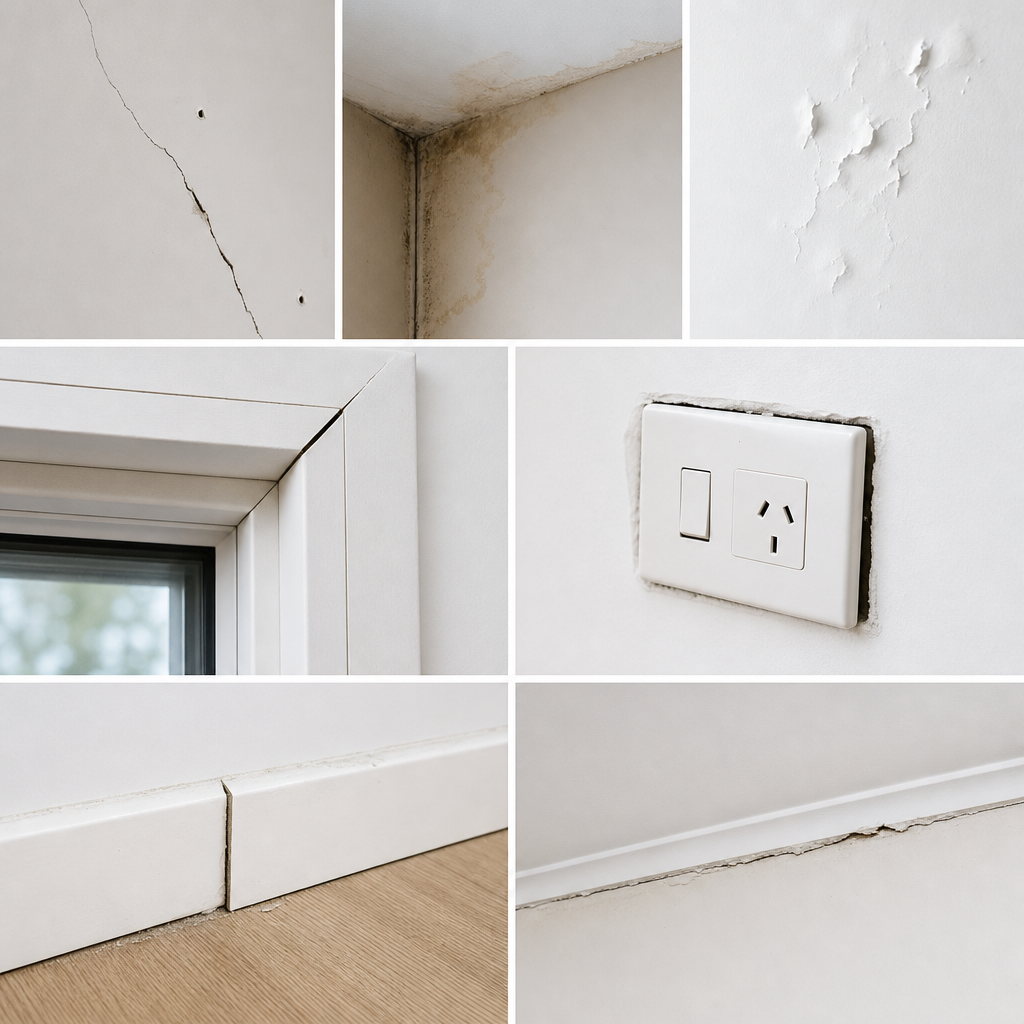
Common exclusions in builder-issued QA documentation include cosmetic defects such as paint finish inconsistencies and tile lippage below tolerance thresholds, minor plumbing and drainage issues that pass functional tests but fail visual inspection, incomplete or missing fixtures covered by provisional sum items, and landscaping or driveway elements classified as owner-supplied works. These gaps are not accidental. They reflect how QA checklists are scoped.
The Tolerance Problem
Australian Standards for residential construction specify tolerances for items like wall straightness (AS 3700 for masonry), floor flatness, and window installation. A builder’s QA certificate may confirm that work falls within tolerance, while a buyer standing in the room finds the outcome visually unacceptable. Both statements can be technically true simultaneously.
A common mistake is accepting a QA certificate as a comprehensive quality sign-off without understanding that tolerances in Australian Standards were written for structural and functional adequacy, not for the finish expectations of a premium build. If your contract specifies a higher standard, that higher standard must be explicitly assessed, not assumed.
Pro tip: Before accepting your builder’s QA certificate at practical completion, request the specific checklist used and cross-reference it against your contract specifications. Items in your contract that do not appear on the QA checklist are your first list of concerns to raise with an independent inspector.
Practical Completion Inspections vs QA Certificates
These two things are frequently confused, even by people who have been through a new build before. A practical completion inspection is a physical assessment of the property conducted at or before the builder declares practical completion. A QA certificate is a document. One is a process. The other is a record.
Under most Queensland residential building contracts, the builder declares practical completion and issues a notice. The buyer typically has a short window, often five to ten business days under the HIA or MBA standard contracts, to conduct their own inspection and raise defects. If that window closes without a formal defect list being lodged, the buyer’s ability to hold the builder accountable for items present at handover weakens significantly.
The Timing Risk at Practical Completion
The practical completion window is the single most time-pressured moment in a new build. Buyers are simultaneously arranging finance settlement, removalists, and utility connections while being expected to conduct a technically thorough inspection of a complex construction project. Most buyers are not qualified to do this themselves, and even those with construction backgrounds often miss trade-specific defects outside their own expertise.
Same-day reporting is not a luxury in this context. It is a functional necessity. An inspection that happens on day three of a five-day window and produces a report on day seven is a report that arrived after the window closed. That is not a theoretical risk. It happens regularly in the Brisbane and Gold Coast new home market.
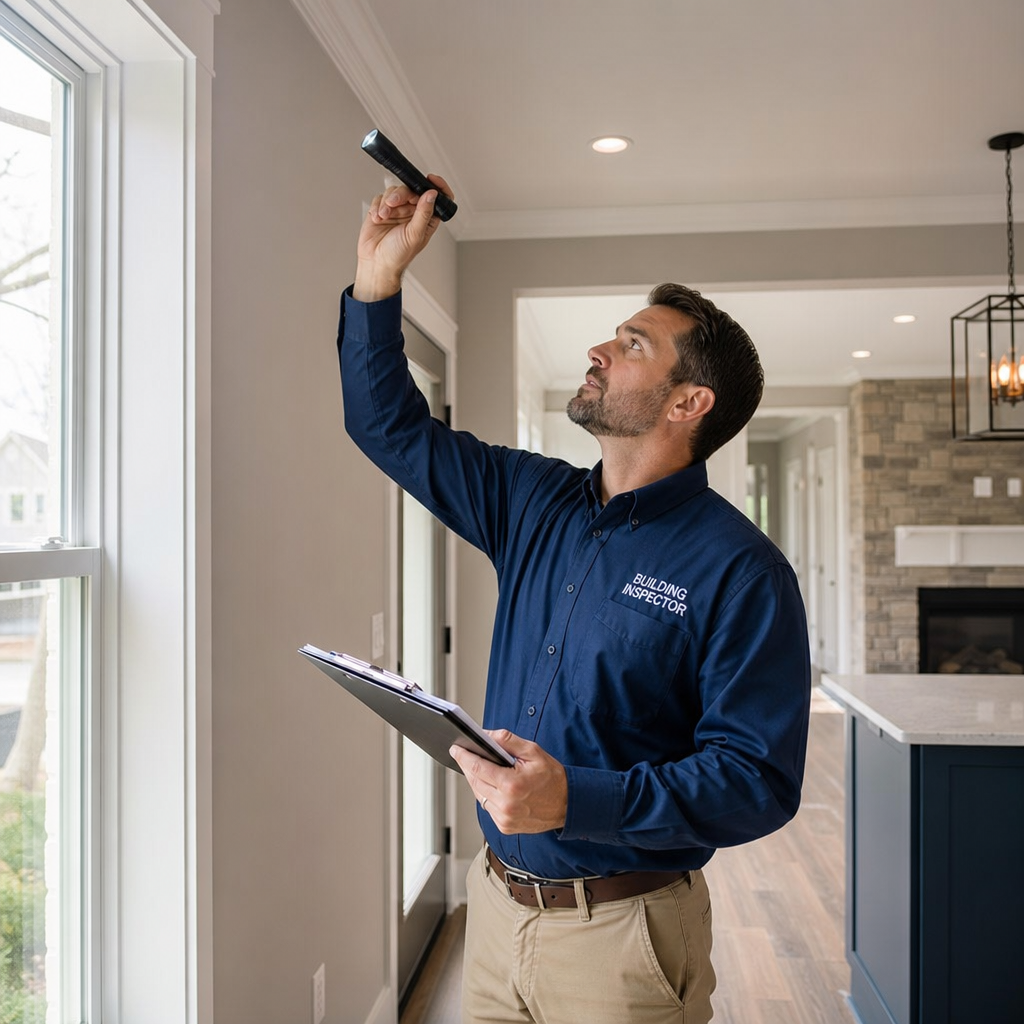
Pro tip: Book your independent pre-handover inspection for the first or second day of your practical completion window, not the last. This gives you time to receive the report, review it with your solicitor, and lodge a formal defect list before the window expires.
Comparing QA Approaches for Residential Developments
Not all quality assurance processes deliver the same outcome for buyers. The table below compares the three main approaches you will encounter in Queensland residential construction and what each actually delivers for a homeowner or investor.
| QA Approach | Who It Protects | What It Covers |
|---|---|---|
| Builder-issued internal QA certificate | The builder’s compliance position and QBCC licence obligations | Items on the builder’s own checklist, typically aligned to NCC minimum requirements and staged payment milestones |
| Private building certifier sign-off | Local council and statutory compliance | Code compliance for structure, fire safety, and amenity. Does not assess finish quality, contractual specifications, or cosmetic defects |
| Independent pre-handover inspection with photo-documented defect report | The buyer or investor | All observable defects against contract specifications, Australian Standards, and workmanship expectations, with trade responsibility assigned and same-day reporting for tight settlement windows |
The contrast is stark. Builder QA and certifier sign-off are both necessary parts of the construction process, but neither is designed to serve the buyer’s interests. Independent inspection fills that gap, and for developments across Brisbane, Gold Coast, Logan, Ipswich, and Redland Bay, having a licensed inspector who knows local trade practices and common defect patterns in Queensland’s climate makes a material difference to report quality.
Common Defects Missed When Relying Solely on Builder QA
In practice, the defects most likely to survive a builder’s own QA process fall into predictable categories. Understanding these categories helps buyers know what to look for and what to ask an independent inspector to prioritise.
Waterproofing failures in wet areas are consistently the highest-value category. Queensland’s subtropical climate means bathrooms, laundries, and alfresco areas face significant moisture loads. Waterproofing membranes that pass a builder’s visual check at practical completion can fail within eighteen months when thermal cycling and movement expose installation faults that were not apparent on the day.
Roof and ceiling penetrations are another consistent gap. Penetrations for plumbing, electrical, and HVAC services are often completed by multiple subcontractors in sequence. No single trade owns the final weatherproofing of every penetration, and builder QA checklists rarely assign explicit responsibility for verifying the completed condition of every roof penetration across all trades.
Trade-Specific Defects in Queensland High-Rise Developments
For multi-unit and high-rise developments in Brisbane and the Gold Coast, the defect profile is more complex. Common issues include fire door hardware that passes installation inspection but fails operational testing at handover, balcony drainage that meets fall tolerances but pools water in Queensland downpour conditions, and cladding junctions where two different trade scopes meet and neither subcontractor has clearly accepted responsibility for the flashing detail.
A customised inspection approach for high-rise developments, one that reviews each unit type rather than just a sample, and that maps defects to specific trade packages, is the only way to build an actionable rectification schedule for a developer managing multiple contractors on a single project.
Why Independent Inspections Fill the Gaps QA Certificates Leave
The construction QA certificate Brisbane buyers receive at handover is a starting point for documentation, not an endpoint for quality assurance. Independent pre-handover inspections conducted by fully licensed inspectors serve a structurally different function: they represent the buyer’s interests, apply the buyer’s contract as the benchmark, and produce evidence the buyer can use in a dispute.
Photo-enhanced defect reports change the dynamic of rectification conversations. When a defect is photographed, timestamped, described in technical language, and attributed to a specific trade, a builder cannot dismiss it as a subjective complaint. The report creates an objective record. Builders and their site supervisors respond differently to a forty-page illustrated defect schedule than they do to a handwritten list of concerns.
What to Expect from a Professional Pre-Handover Report
A professional pre-handover inspection report for a Queensland residential property should cover the external envelope including roof, walls, windows, and drainage, all internal finishes, structural elements visible without destructive investigation, all installed fixtures and fittings, and all mechanical services including plumbing, electrical, and air conditioning systems. Each defect should be assigned a severity classification, a reference to the applicable standard or contract clause, and a nominated trade for rectification.
Reports that simply list observations without trade attribution create ambiguity at the builder level. The builder’s site supervisor receives the report and immediately begins negotiating which subcontractor is responsible. That negotiation delays rectification. A report that has already made the trade attribution decision removes that step from the process entirely.
For investors and developers managing multiple properties or stages across Logan, Ipswich, or Redland Bay, consistent reporting formats across all inspections allow defect patterns to be identified across a project. A tiler making the same error on floor falls across twenty units is a contract management issue, not twenty individual defects. Identifying that pattern requires inspection data in a comparable format across all units.
GoInspect’s approach to pre-handover, pre-settlement, and practical completion inspections across Brisbane, Gold Coast, Logan, Ipswich, and Redland Bay is built around exactly this model. Fully licensed inspectors, photo-documented reports with trade attribution, and same-day delivery at a transparent starting price of $550 including GST. For homeowners, investors, and developers who need defect documentation that holds up, that combination matters more than any builder-issued QA certificate alone.
Frequently Asked Questions
Is a quality assurance certificate Queensland builders issue legally binding?
A QA certificate issued by a Queensland builder is a contractual and regulatory document, not a standalone legal guarantee. It confirms the builder attests that their quality management process was followed. It can be used as evidence in QBCC complaints, QCAT proceedings, or civil claims, but it does not prevent a buyer from pursuing defect rectification if observable defects exist. Its legal weight depends heavily on the specificity of the checklist it references and the qualifications of the person who signed it.
What is the difference between a QA certificate and an occupancy certificate in Queensland?
An occupancy certificate is issued by a private building certifier or local council and confirms that the building complies with the approved plans and the National Construction Code to a standard that makes it safe to occupy. A QA certificate is issued by the builder or their quality management system and confirms that internal quality processes were followed during construction. Both are required at practical completion, but they cover different things. Neither guarantees a defect-free property.
Can a builder refuse a pre-handover inspection in Queensland?
Under standard HIA and MBA residential building contracts used in Queensland, buyers have a right to inspect the property before accepting practical completion. A builder cannot contractually prevent a buyer from engaging an independent inspector within the practical completion window. However, the timing and notice requirements vary by contract. Review your contract’s practical completion clause and provide written notice of your intention to conduct an independent inspection before the window opens, not after the builder’s notice arrives.
How long does a builder quality assurance Brisbane inspection take for a standard house?
A thorough independent pre-handover inspection for a standard four-bedroom Queensland house typically takes between two and four hours on site, depending on the complexity of the build, the number of storeys, and the volume of identified defects. Report preparation adds time, which is why same-day reporting requires inspectors to document findings systematically during the inspection rather than relying on memory. For high-rise developments with multiple units, staged inspection scheduling across unit types is more practical than attempting all units in a single day.
What defects are typically covered under QBCC home warranty insurance after handover?
QBCC home warranty insurance covers structural defects for up to six years after completion and non-structural defects for one year. Structural defects include failures affecting the load-bearing capacity of the building or its weatherproofing integrity. Non-structural defects include items like floor finish failures, fixture faults, and incomplete work. The insurance applies when the builder has become insolvent, died, or disappeared, or when the QBCC has issued a direction to rectify that the builder has not complied with. Having a pre-handover inspection report documenting defects at the time of handover strengthens any subsequent warranty claim significantly.
Do investors buying off-the-plan in Brisbane need an independent inspection before settlement?
Yes, and arguably investors need independent inspection more than owner-occupiers do. An investor who settles on a defective property and then leases it immediately may not discover defects until a tenant reports them months later. By that point, the builder may argue the defects are tenancy damage rather than construction defects. A pre-settlement inspection with a dated, photo-documented report establishes the condition of the property at the point of the buyer’s first access. That evidence is difficult for a builder to dispute and simple for the QBCC to assess if a complaint is necessary.
Have you received a quality assurance certificate at handover that left you with more questions than answers? Share your experience in the comments or reach out directly so others in the Queensland new home market can learn from what you found.
References
- Queensland Building and Construction Commission official guidance on builder licensing, home warranty insurance, and defect complaint processes
- Queensland legislation database covering the Building Act 1975 and the Queensland Building and Construction Commission Act 1991
- Australian Building Codes Board, the authority responsible for the National Construction Code adopted in Queensland
- Australian Bureau of Statistics data on residential building approvals and construction activity across Queensland
- Standards Australia, the body responsible for Australian Standards referenced in residential construction quality assurance including AS 3700 masonry tolerances