
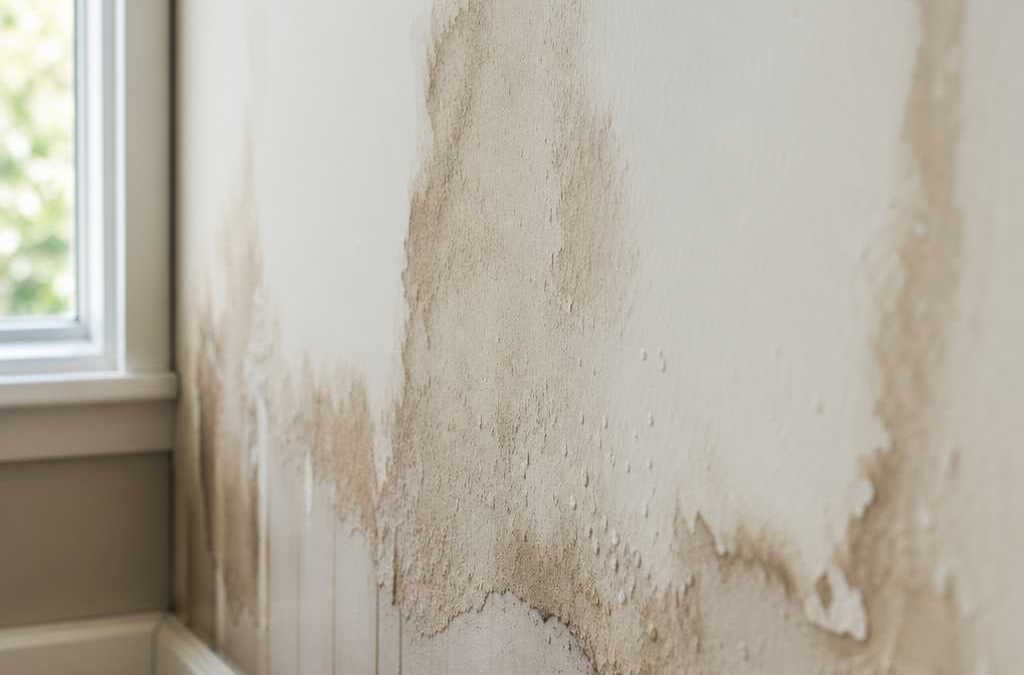
Roughly one in three new homes in southeast Queensland is handed over with defects serious enough to require rectification work. That number comes from inspectors working on the ground, not from a government brochure, and it tracks closely with what the team at GoInspect sees week after week across Brisbane, Gold Coast, Logan, Ipswich, and Redland Bay. If you are about to take possession of a new build, understanding the most common new home defects Brisbane buyers encounter is not optional knowledge. It is the difference between moving into a finished home and spending months chasing trades to fix problems that should never have passed quality control.
Table of Contents
- Quick Takeaways
- Why New Builds Still Have Defects
- Defect 1: Waterproofing Failures
- Defect 2: Cracking in Render and Plasterboard
- Defect 3: Poor Drainage and Site Grading
- Defect 4: Defective Windows and Doors
- Defect 5: Electrical and Mechanical Non-Compliance
- How a Handover Inspection Report Protects You
- Comparison Table: Inspection Approaches
- Frequently Asked Questions
- References
Quick Takeaways
|
Key Insight |
Explanation |
|---|---|
|
Waterproofing is the highest-risk defect category |
Membrane failures in wet areas are the single most expensive defect to rectify post-handover and are routinely missed by builders at practical completion. |
|
Defects must be documented before you sign off |
Once you accept the keys without a formal report, your negotiating position shrinks significantly and builders can dispute liability. |
|
Drainage issues compound over time |
Incorrect site grading causes water to pool against the slab and foundations, leading to structural problems that appear months after settlement. |
|
Photo-enhanced reports are legally stronger |
A defect report with timestamped photos and trade attribution is far more effective when lodging a QBCC complaint than a text-only checklist. |
|
Electrical non-compliance is not cosmetic |
Missing safety switches, incorrect circuit labelling, and non-compliant GPO placement are found regularly in new builds and pose genuine safety risks. |
|
Pre-settlement inspections and practical completion inspections are different |
A pre-settlement inspection happens before final payment. A practical completion inspection is the formal builder walkthrough. You need your own independent inspector for both. |
|
Building defects Gold Coast builds are subject to the same QBCC standards as Brisbane |
The Queensland Building and Construction Commission applies state-wide, so Gold Coast buyers have the same statutory rights as Brisbane buyers. |
Why New Builds Still Have Defects
The popular assumption is that a brand-new home is a defect-free home. In practice, the construction process involves dozens of subcontractors working to tight schedules, and quality control checks are often rushed or incomplete. Southeast Queensland’s construction boom has made this worse, not better. More volume means thinner supervision and faster handovers.
The Queensland Building and Construction Commission (QBCC) recorded thousands of defect complaints annually in recent years, and that figure represents only the disputes that escalated to a formal complaint. The majority of defects are quietly negotiated, or worse, simply accepted by homeowners who do not know their rights.
Understanding exactly which defects appear most often in Brisbane and Gold Coast new builds gives you a clear checklist to verify before you ever sign a handover document.


“>
Defect 1: Waterproofing Failures
Waterproofing failures are the number one defect GoInspect’s licensed inspectors flag in new residential builds across Brisbane and the Gold Coast. The affected areas are consistent: shower recesses, bathroom floors, wet room walls, balconies, and the junctions between the slab and exterior walls.
Where the Membrane Breaks Down
The failure is almost never the waterproofing membrane itself. It is the application. Membranes applied at insufficient thickness, membranes that miss corner junctions entirely, and membranes applied over dusty or damp substrates all fail within twelve to twenty-four months of use. By that point, the tiles are laid, the walls are painted, and the rectification cost has multiplied by a factor of five or more compared to fixing the membrane before tiling.
A competent pre-settlement inspection Brisbane will catch membrane deficiencies before the finished surfaces are in place, which is the only cost-effective point to fix them. Do not wait until your bathroom ceiling is stained to act.
What the Standards Require
AS 3740 sets out the waterproofing requirements for residential construction in Australia. Most builders know the standard. The problem is enforcement at the subcontractor level. The tiler is often a different trade to the waterproofer, and neither has an incentive to flag the other’s shortcomings.
Pro tip: Ask your inspector specifically to check waterproof membrane coverage at all internal and external wet areas during any practical completion inspection. A photo-enhanced report from GoInspect will document the exact location, the specific failure, and which trade is responsible, giving you a direct line of attack when requesting rectification.
Defect 2: Cracking in Render and Plasterboard
Cracking is the most visible defect category in new Brisbane and Gold Coast builds, and it is also the most misunderstood. Not all cracks are structural. But not all cracks are cosmetic, either. Getting that distinction right before handover is what separates a quick repair from a drawn-out dispute.
Cosmetic Versus Structural Cracking
Fine hairline cracks in plasterboard are common during the initial drying period and are generally covered by a standard defect liability period. What is not acceptable, and what GoInspect inspectors flag consistently, are cracks wider than 2mm in internal plasterboard, diagonal cracking at window and door corners indicating movement, and step cracking in external brickwork or render that suggests differential settlement.
External render on Gold Coast homes is a particular concern. The combination of coastal humidity, rapid build schedules, and insufficient render curing time creates conditions for early cracking. When render cracks before the paint is even dry, the waterproofing integrity of the external wall is already compromised.
What Builders Will and Will Not Fix Voluntarily
Builders routinely offer a cosmetic touch-up on minor plasterboard cracking. That is not a structural rectification. If the underlying cause is movement in the frame, framing shrinkage, or inadequate fixings, the crack will return within months. A documented handover inspection report that specifies the crack type, location, and likely cause gives you the evidence to demand a proper fix rather than a paint-over.
“A defect report that assigns responsibility to a specific trade and documents the exact failure mode is worth ten times a generic checklist when you are trying to get a builder to act.” – GoInspect licensed inspector, Brisbane
Defect 3: Poor Drainage and Site Grading
Poor drainage is the silent defect. It does not show up as a visible crack or a water stain on day one. It shows up three months later when you notice the garden bed against your front wall is permanently saturated, or the concrete path beside the garage is sitting in a puddle every time it rains.
The Grading Problem Specific to Southeast Queensland
Brisbane and the Gold Coast receive intense seasonal rainfall. The National Construction Code requires finished ground levels to fall away from the building at a minimum grade of 1:50 for the first 1 metre from the structure. In practice, this standard is frequently unmet at final inspection. Fill material settles after compaction, subcontractors regrade areas to work around other services, and the result is water flowing toward the slab rather than away from it.
Construction defects new build buyers should know that drainage failures are not covered by a warranty call if water pooling begins six months post-settlement, unless you have photographic evidence from a pre-settlement inspection proving the grading was non-compliant at handover.
Internal Drainage Points
Blocked or incorrectly set floor wastes in laundries, garages, and alfresco areas are also consistently identified during GoInspect inspections. A floor waste set 5mm too high means the entire floor drains to the wall junction rather than the drain. That is not a plumbing defect you want to discover after your first Queensland summer storm.
Pro tip: During your pre-settlement inspection, ask your GoInspect inspector to walk the external perimeter and check ground levels relative to the slab edge. This takes five minutes and can save you thousands in landscaping and drainage rectification after settlement.

“>
Defect 4: Defective Windows and Doors
Windows and doors account for a surprisingly high proportion of defects in new Brisbane and Gold Coast builds. The issues range from straightforward installation failures to more serious weatherproofing deficiencies that allow water ingress during heavy rain events.
Common Window and Door Defects
The most common failures GoInspect identifies in this category include: window frames not plumb or square causing binding and failed operation, inadequate or missing flashings above window heads allowing water entry, sliding door tracks set incorrectly so doors cannot be locked properly, and glazing installed with insufficient edge cover that compromises both safety and thermal performance.
On higher-density Gold Coast projects, aluminium window frames that are not correctly bedded into the masonry reveal are a recurring issue. Water tracks along the frame and into the wall cavity, causing damage that is entirely invisible until it becomes a mould problem.
Safety Glazing Requirements
AS 1288 governs glass selection and installation in Australia. Safety glazing is required in specific locations including any glass within 300mm of a doorway and floor-to-ceiling panels. GoInspect inspectors check glazing compliance as standard, because a non-compliant pane is both a safety hazard and a building code violation that could affect your insurance coverage if an injury occurs.
Defect 5: Electrical and Mechanical Non-Compliance
Electrical non-compliance in new builds tends to surprise homeowners the most, because the assumption is that new construction is automatically safe and compliant. It is not. Subcontractors make errors. Final electrical inspections by certifiers are sometimes cursory. And some non-compliance issues are only visible to a trained inspector with the right methodology.
What GoInspect Finds in New Homes
Across Brisbane and Gold Coast new home inspections, the electrical and mechanical defects that appear most frequently include: safety switches (RCDs) not installed on all circuits as required by AS/NZS 3000, circuit breaker labelling that does not match actual circuits, GPOs installed at non-compliant heights or with loose internal fittings, exhaust fans ducted into ceiling cavities rather than to the exterior, and air conditioning units installed without adequate clearances for servicing.
Exhaust fans ducted into ceiling cavities are particularly common in Gold Coast townhouse projects where multiple units are built simultaneously. The duct gets disconnected or was never connected at all, and the result is warm moist air pumped into your roof space every time someone showers. That is a mould event waiting to happen.
Why This Category Requires a Licensed Inspector
Some building defects Gold Coast inspection services use visual-only checklists and do not employ inspectors with the training to identify electrical non-compliance. GoInspect’s inspectors are fully licensed, which means they can identify not just cosmetic and structural issues but also technical installation failures that affect safety. That distinction matters enormously when you are paying $550 including GST for a report that needs to hold up when you are pushing a builder for rectification.
How a Handover Inspection Report Protects You
The practical purpose of a pre-settlement or practical completion inspection is not to find fault with your builder. It is to give you documented evidence of the condition of the property at the exact point of handover, so that any defects identified are clearly the builder’s responsibility to rectify before you accept the keys or make the final payment.
Same-Day Reporting and Trade Attribution
GoInspect’s same-day photo-enhanced reporting model is built specifically for this situation. The report does not just list defects generically. It photographs each defect, assigns it to the responsible trade (waterproofer, plasterer, electrician, drainage contractor, and so on), and produces a document that the builder’s site supervisor can act on immediately. That specificity is what forces faster rectification. Builders cannot claim ambiguity when the report says exactly which subcontractor missed which requirement.
Your Rights Under Queensland Law
Under Queensland building law, new homes are covered by a statutory warranty period administered by the QBCC. Structural defects are covered for six years and six months from practical completion. Non-structural defects are covered for one year. But these rights are only useful if you can prove when and how the defect existed at handover. A timestamped, photo-documented handover inspection report is your primary evidence.
Comparison Table: Inspection Approaches
Not all inspection approaches deliver the same outcome. The table below compares the three main approaches buyers use when taking possession of a new home in Brisbane or on the Gold Coast.
|
Approach |
What You Get |
Key Limitation |
|---|---|---|
|
Builder’s own practical completion walkthrough |
A guided tour with the site supervisor, usually a verbal acknowledgement of obvious items |
No independent documentation, no trade attribution, and the builder controls what is and is not acknowledged as a defect |
|
Generic building inspection checklist (DIY) |
A personal walkthrough using a downloaded checklist from the internet |
Misses technical defects in waterproofing, electrical compliance, and drainage grading. Not legally useful as evidence. Carries no professional weight in a QBCC dispute. |
|
GoInspect licensed pre-settlement inspection with same-day photo-enhanced report |
A comprehensive inspection by a fully licensed inspector covering structural, cosmetic, drainage, waterproofing, electrical, and mechanical items. Same-day report with photos, trade attribution, and defect severity ratings. |
Requires scheduling before handover date. Starting from $550 including GST, which is a cost some buyers try to avoid, typically to their own detriment. |
Frequently Asked Questions
What is the most common defect found in new Brisbane homes?
Waterproofing failures in wet areas are consistently the most common and most costly defect found in new Brisbane homes. Shower recesses, balconies, and bathroom floors with inadequate or incorrectly applied membranes account for a significant proportion of all QBCC defect complaints. Catching this before tiles are laid is the only cost-effective solution.
When should I book a pre-settlement inspection in Brisbane or Gold Coast?
Book your pre-settlement inspection at least one week before your scheduled settlement date. This gives your inspector time to complete the inspection, produce the same-day report, and gives you time to formally notify the builder of defects requiring rectification before you are contractually obligated to make the final payment.
Are building defects in Gold Coast new homes covered by warranty?
Yes. Queensland building law provides a statutory warranty on all new residential construction state-wide, including Gold Coast builds. Structural defects are covered for six years and six months from practical completion. Non-structural defects are covered for one year. You need documented evidence from the handover period to enforce these rights effectively.
Can I refuse to settle if defects are found during my pre-settlement inspection?
This depends on your contract terms and the severity of the defects. In Queensland, if defects are identified that prevent the home from being used for its intended purpose, you generally have grounds to delay settlement until rectification occurs. For minor defects, the standard approach is to document them formally and establish a binding rectification schedule as a condition of settlement. A licensed inspector’s report is essential for either scenario.
What is the difference between a practical completion inspection and a pre-settlement inspection?
A practical completion inspection is the formal process your builder uses to declare the home finished and ready for handover. A pre-settlement inspection is an independent inspection you commission before you make the final payment. They are not the same thing. The builder’s practical completion process serves the builder’s schedule. Your independent pre-settlement inspection serves your interests. You should never rely solely on the builder’s walkthrough.
How much does a new home inspection cost at GoInspect?
GoInspect’s pre-handover and practical completion inspections start from $550 including GST. Given that a single waterproofing rectification in a tiled shower can cost $3,000 to $8,000 or more to fix post-settlement, the inspection cost is not a significant expense. It is the cheapest insurance you will buy in the entire construction process.
What happens if my builder refuses to fix defects identified in the inspection report?
If a builder refuses to rectify defects identified in a formal pre-settlement inspection report, your next step is to lodge a complaint with the Queensland Building and Construction Commission (QBCC). The QBCC has enforcement powers and can direct builders to complete rectification work. A photo-enhanced report from a licensed inspector with specific trade attribution significantly strengthens your complaint and speeds up the QBCC assessment process.
Have you recently had a new home inspected in Brisbane or Gold Coast? Share what defects were found in your build, because your experience could help another buyer know exactly what to look for before they sign off.