
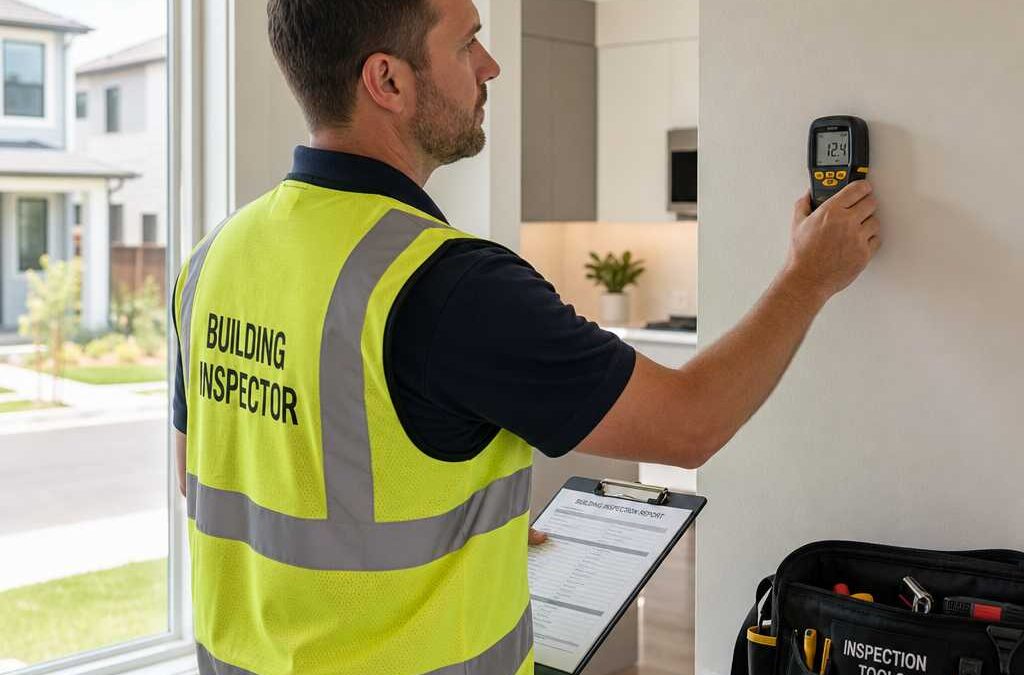
Most buyers collecting keys to a new townhouse or unit in Southeast Queensland assume the builder has done the hard work. They haven’t, not reliably. Construction defect rates in new residential builds across Queensland remain stubbornly high, with industry data suggesting that more than 80 percent of new homes contain at least one defect at handover. For attached dwellings like townhouses and units, the stakes are higher because defects in shared walls, common area waterproofing, or roofing can affect multiple owners simultaneously. Getting a professional townhouse inspection Brisbane buyers can trust before handover is not optional, it is the last real opportunity to make builders accountable at no cost to you.
Table of Contents
- Quick Takeaways
- Why Attached Dwellings Need Specialist Inspection
- What to Check Inside Your Townhouse or Unit
- External and Common Area Defects That Buyers Miss
- Comparing Inspection Approaches for SE Queensland Buyers
- The GoInspect Process for Attached Dwellings
- Frequently Asked Questions
- References
Quick Takeaways
| Key Insight | Explanation |
|---|---|
| Book inspection before settlement, not after | Once settlement occurs your negotiating power disappears. Defects found during practical completion inspections are the builder’s legal obligation to fix before handover in Queensland. |
| Waterproofing failures are the costliest defect category | Balcony and bathroom waterproofing defects in units can cost $15,000 to $40,000 to rectify, yet they are consistently overlooked without a licensed inspector on site. |
| Shared walls require specific acoustic checks | Queensland’s Building Code requires minimum acoustic ratings for party walls. A visual inspection alone will not detect non-compliant installation of insulation or wall framing. |
| Trade-specific defect assignment speeds up rectification | Reports that name the responsible trade, such as the tiler, plumber, or plasterer, reduce dispute time between builder and subcontractors and get defects fixed faster. |
| Same-day reports matter for settlement timelines | Brisbane and Gold Coast settlements often run on tight deadlines. Waiting three to five days for a report can cost you the ability to raise defects before keys are handed over. |
| High-rise unit inspections require different checklists | Lobby access, fire door compliance, mechanical ventilation, and common corridor finishes are checked differently in high-rise buildings than in standard townhouse developments. |
| Photo-documented reports are builder-ready | Inspectors who deliver photo-enhanced defect reports eliminate the builder’s ability to dispute whether a defect exists, shortening the rectification negotiation period significantly. |
Why Attached Dwellings Need Specialist Inspection
A standalone house inspection and a townhouse or unit inspection are not the same exercise. Attached dwellings share structural elements, drainage systems, and in many cases roofing with neighbouring lots. A defect in the shared roof membrane above your unit is simultaneously a defect above your neighbour’s, which means the builder faces compounded liability if it goes undetected. This structural complexity demands a checklist built specifically for attached dwellings, not a modified house inspection template.
In practice, the inspectors who deliver reliable results for unit inspection Brisbane buyers have worked on high-density residential projects and understand how body corporate boundaries interact with individual lot boundaries. Knowing where one owner’s responsibility ends and the builder’s warranty begins is not intuitive, and generic inspection services regularly get this wrong.
Southeast Queensland’s construction boom has created a particular pressure point. Brisbane, Gold Coast, Logan, Ipswich, and Redland Bay have all seen significant townhouse and unit development since 2020, with supply constraints pushing buyers to accept handover timelines that leave little room for due diligence. The result is that many buyers walk into defective properties and only discover the problems during their first wet season.


What to Check Inside Your Townhouse or Unit
Interior inspections for townhouses and units cover a broad range of trade work, and the sequence in which defects are identified matters. Starting from the roof space and working down is the most reliable approach because water-related defects that originate at roof level will show symptoms at lower levels, and identifying the source rather than the symptom is what forces the builder to fix the right problem.
Waterproofing in Wet Areas
Bathrooms, ensuites, laundries, and balconies are the highest-risk areas in any attached dwelling. Queensland’s building code requires wet area waterproofing to meet AS 3740, but the standard is frequently applied incorrectly by subcontractors working under time pressure. Common failures include membrane not turned up far enough on walls, cove formations at floor-wall junctions that are incomplete, and grout used as a substitute for a proper sealant at penetrations.
A common mistake buyers make is assuming that a newly tiled bathroom is a waterproofed bathroom. Tiles are not waterproofing. The membrane beneath the tiles is, and its integrity cannot be assessed visually once tiling is complete. Licensed inspectors use moisture meters to identify early-stage water ingress behind tiles before it becomes a structural issue.
Pro tip: Ask your inspector to specifically check the shower recess wall height on the waterproofing membrane. Anything less than 150mm above the finished floor level on the internal face fails AS 3740 and the builder must rectify it before handover.
Doors, Windows, and Joinery Alignment
Racking in door frames, windows that do not seal at the perimeter, and cabinetry that sits out of plumb are among the most common defects in new townhouses across Brisbane and the Gold Coast. These defects are easy to dismiss as cosmetic, but they are not. A window that does not seal correctly will allow water ingress during Queensland’s summer storm season, and racked door frames indicate potential issues with structural frame squareness.
Joinery defects are also significant because they are expensive to rectify after settlement. Builder warranties cover structural defects for six years and other defects for twelve months in Queensland, but proving a joinery defect after twelve months of occupation is difficult. Getting these items on the defect list before handover is the most cost-effective path.
Electrical and Plumbing Rough-Ins
Licensed inspectors conducting a new home inspection Southeast Queensland will test every power outlet, light switch, exhaust fan, and tap fitting in the property. This is not a substitute for an electrical compliance certificate, but it catches the practical failures that certificates do not cover, such as outlets with reversed polarity, exhaust fans that are connected but not vented to the exterior, and hot and cold tap connections that are reversed at the mixer.
For units in particular, check that the individual unit’s electrical circuit is correctly isolated from the building’s common area circuits. Cross-connected circuits are more common in high-density residential developments than most buyers realise.
External and Common Area Defects That Buyers Miss
External inspections for townhouses and units require a different mindset than interior inspections. Buyers focus on what is inside because that is where they will live. Builders know this and external defects are frequently left until after handover, when the buyer has less leverage to compel rectification.
Roof and Fascia Condition
Roof inspections on townhouses require access to the roof plane, not just a visual assessment from ground level. Cracked or lifted roof tiles, inadequate flashing at ridges and valleys, and missing verge pointing are common defects that lead to significant water damage within the first two years of occupation. In Southeast Queensland’s climate, a single wet season with an inadequately flashed roof can cause damage that costs multiples of the original inspection fee to repair.
Fascia and barge board joins that are not correctly caulked are a consistent finding in new townhouse developments across Logan and Ipswich. These are straightforward to fix before handover and extremely tedious to pursue under warranty after the fact.
Driveway, Paths, and Site Drainage
Site drainage is one of the most frequently disputed defect categories in Southeast Queensland townhouse developments. Concrete driveways and paths that have not been formed to the correct grade will direct water toward the building rather than away from it. Queensland’s planning requirements specify minimum grades for impervious surfaces adjacent to dwellings, and non-compliant grades are a legitimate defect the builder must rectify.
Stormwater pipe connections, particularly at the connection to the street or common drainage line, are often left unchecked. A blocked or incorrectly connected stormwater outlet creates localised flooding that can undermine footing systems over time. This is not a defect that presents visually during a dry day inspection without a trained eye.

Common Areas in Townhouse Complexes
If you are buying into a body corporate scheme, the common areas including driveways, visitor parking, garden beds, boundary fencing, and letterbox structures are assets that the body corporate will inherit. Defects in these areas become the body corporate’s problem once the developer hands over the common property, and the costs are shared across all lot owners.
A practical completion inspection that covers common areas, not just your individual lot, is worth the additional scope. GoInspect’s customised reporting for developments means defects in common areas are documented separately so the body corporate committee has a clear record from day one.
Pro tip: Request that your inspector documents the common property boundary fencing condition and any surface drainage in shared driveways. These items are disproportionately expensive to repair under body corporate funding and far cheaper to compel the builder to fix before handover.
Comparing Inspection Approaches for SE Queensland Buyers
Not all inspection services approach townhouse and unit handovers the same way. The differences between providers have real consequences for how effectively you can use the report to compel rectification from your builder.
| Inspection Approach | Strengths | Limitations for Townhouse and Unit Buyers |
|---|---|---|
| Generic pre-purchase inspection (non-specialist) | Lower cost entry point, widely available across Southeast Queensland | Checklist designed for established homes, not new builds. Misses construction-specific defects like wet area membrane compliance and frame tolerances. Reports rarely assign trade responsibility. |
| Builder’s own completion checklist | Free, completed before handover, gives buyer a walk-through opportunity | Produced by or for the party with financial interest in a clean handover. Consistently underreports defects. Not independent and carries no professional liability. |
| GoInspect licensed practical completion inspection | Licensed inspectors, photo-enhanced same-day reports, trade-specific defect assignment, customised for high-rise and housing developments, covers common areas on request | Requires booking in advance of settlement date. Starting from $550 including GST, which some buyers consider an additional cost despite the rectification value it delivers. |
“Defects that are not formally documented before handover rarely get rectified. Once the builder has your final payment, the dynamic shifts entirely. A photo-documented defect report is the difference between a builder responding in days and a homeowner waiting months.” – Queensland Building and Construction Commission guidance on defect management for new residential properties.
The GoInspect Process for Attached Dwellings
GoInspect’s approach to townhouse and unit inspections across Brisbane, Gold Coast, Logan, Ipswich, and Redland Bay is built around one principle: the report needs to be builder-ready on the day of inspection. A report that arrives three days after practical completion, without photographic evidence of each defect, is a report that gives builders room to argue. GoInspect eliminates that room.
The inspection process starts with a systematic interior assessment working from the roof space down through each level of the dwelling. Every defect is photographed, described with the specific trade responsible, and referenced to the relevant Australian Standard or building code requirement where applicable. This means a builder cannot dismiss a defect as a matter of opinion, because the report states exactly what standard has not been met and who is responsible for meeting it.
For high-rise unit developments, GoInspect customises the inspection scope to include mechanical ventilation systems, fire door hardware, egress lighting, and common corridor finishes in addition to the individual unit scope. This matters because high-rise defects in common areas are frequently the most expensive to rectify and the hardest to pursue after settlement.
Buyers in Redland Bay and outer Logan areas often assume that geographic distance from Brisbane means fewer inspection options or slower turnaround. GoInspect operates across the full Southeast Queensland region with the same same-day reporting standard regardless of location. For investors managing properties across multiple suburbs, this consistency means defect documentation is comparable across the portfolio.
The starting price of $550 including GST covers a standard townhouse or unit inspection. Larger or more complex dwellings, or inspections that include common area scope for body corporate purposes, are quoted based on the specific development. For developers managing staged practical completions across an entire project, GoInspect offers customised reporting templates that allow defect tracking across multiple lots using consistent defect categories and trade assignments.
Frequently Asked Questions
When should I book a townhouse inspection in Brisbane relative to my settlement date?
Book your inspection at least five to seven business days before your scheduled settlement date. This gives you time to receive the report, formally notify the builder of defects in writing, and allow them a reasonable period to respond before settlement proceeds. Booking the day before settlement leaves you with a report but no practical ability to use it as leverage.
What is the difference between a practical completion inspection and a pre-settlement inspection?
A practical completion inspection occurs when the builder notifies you that the dwelling is practically complete and ready for handover. It is conducted before you accept the keys. A pre-settlement inspection is typically the final check conducted within 24 to 48 hours of settlement to confirm that agreed defects have been rectified and that no new damage has occurred since practical completion. Both inspections serve different purposes and ideally both should be conducted.
Can a unit inspection in Brisbane cover the common areas of the development?
Yes, and GoInspect actively recommends this for buyers in body corporate schemes. Common area defects that are not documented before the developer hands over common property to the body corporate become the collective financial responsibility of all lot owners. Adding common area scope to your inspection is significantly cheaper than pursuing the developer for rectification after handover through the body corporate.
What defects do new townhouse inspections most commonly find in Southeast Queensland?
In practice, the most frequent findings across Brisbane, Gold Coast, Logan, and Ipswich townhouse inspections are wet area waterproofing non-compliance, roof tile cracking or poor ridge capping installation, door and window frame racking, site drainage grading issues, incomplete or incorrectly caulked external junctions, and electrical outlet faults. Painting defects including runs, holidays, and inadequate coverage at internal angles are also consistently documented.
Is a licensed inspector required for a pre-handover inspection in Queensland?
Queensland does not legislate that a pre-handover inspection must be conducted by a licensed building inspector, but using one is the only way to produce a report that carries professional weight with builders and the Queensland Building and Construction Commission. An unlicensed inspection report cannot be relied upon if a defect dispute escalates to QBCC or QCAT. GoInspect uses fully licensed inspectors for all townhouse and unit inspections across Southeast Queensland.
How long does a townhouse or unit inspection take?
A standard townhouse inspection in Brisbane or the Gold Coast typically takes between two and three hours depending on the size of the dwelling and the number of levels. A high-rise unit inspection scoped to cover individual lot and common areas can take three to four hours. Same-day reporting means the written report with photographs is delivered on the day of inspection, regardless of the inspection duration.
What happens if the builder refuses to rectify defects identified in the report?
A formally documented defect report from a licensed inspector is the foundation for a QBCC complaint. The Queensland Building and Construction Commission has statutory authority to compel builders to rectify defective work covered by the builder’s warranty. Without a report produced before handover, proving that a defect existed at completion rather than arising during your occupation is significantly harder. This is precisely why pre-handover documentation matters.
If you have recently gone through a townhouse or unit handover in Southeast Queensland, share what defects surprised you most and how the inspection process worked for you.
References
- Queensland Building and Construction Commission: information on builder warranties, defect disputes, and homeowner rights in Queensland
- Queensland Legislation: access to the Queensland Building and Construction Commission Act and related residential building standards
- Australian Building Codes Board: national construction code requirements including wet area waterproofing and structural standards relevant to new residential builds
- Domain Property Market Research: Southeast Queensland residential construction activity and new dwelling settlement trends
- Statista: construction industry defect rates and residential building completion data relevant to Australian housing markets