
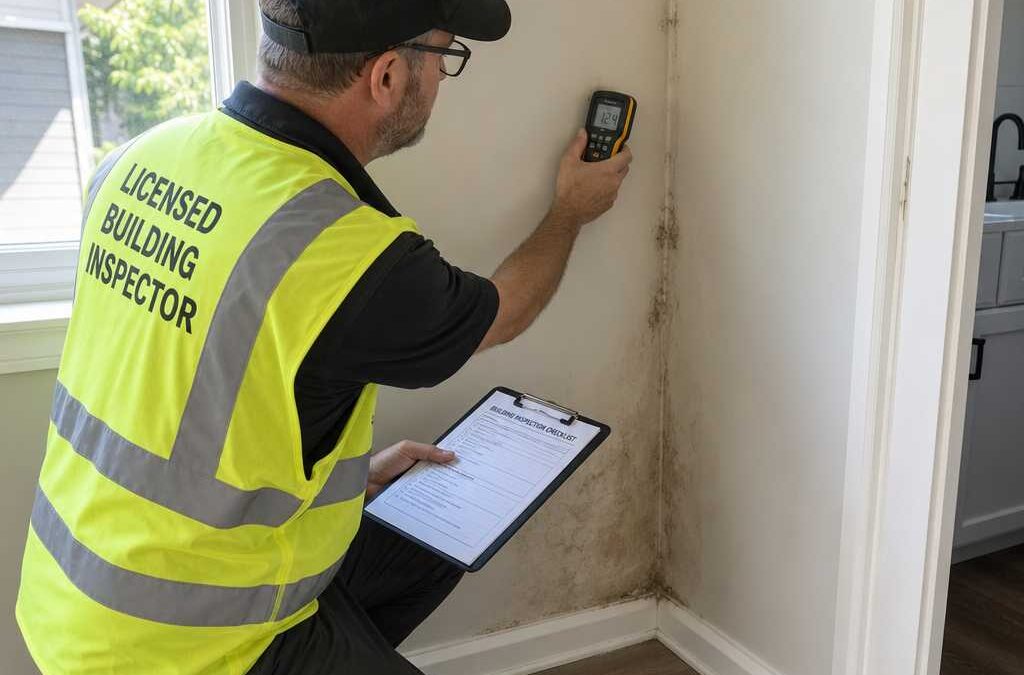
Most granny flat owners assume that because the build looks finished, it is finished. That assumption costs them thousands. A secondary dwelling has every system a full home has – plumbing, electrical, waterproofing, structural framing – compressed into a smaller footprint where defects are easier to hide and harder to detect without a trained eye. A proper granny flat inspection Brisbane is not optional. It is the only reliable way to confirm your builder has met their contractual and statutory obligations before you hand over final payment or allow a tenant to move in.
Table of Contents
- Why Secondary Dwellings Need Their Own Inspection
- Quick Takeaways
- The Complete Granny Flat Inspection Checklist
- Common Defects Found in Queensland Secondary Dwellings
- Comparison: DIY vs Builder Walkthrough vs Licensed Inspector
- Queensland Regulations That Apply to Granny Flat Inspections
- How GoInspect Handles Secondary Dwelling Inspections
- Frequently Asked Questions
- References
Why Secondary Dwellings Need Their Own Inspection
Builders and developers treat granny flats differently from the main dwelling on a property. In practice, secondary dwellings are often the last structure completed on a site, which means they absorb the tail end of a trade schedule. Subcontractors are rushing to clear a job, supervision is thinner, and quality control checks that happen routinely on the primary home frequently do not happen on the flat at all.
The Queensland Building and Construction Commission (QBCC) data consistently shows that warranty claims on secondary dwellings include the same categories of defects as full homes, including waterproofing failures, electrical non-compliance, and structural issues. The difference is that granny flat owners are statistically less likely to commission an independent inspection, which means defects go undetected until they become expensive rectification problems.
If you are building a granny flat in Brisbane, Logan, Gold Coast, Ipswich, or Redland Bay, a licensed secondary dwelling inspection Queensland is the only way to verify what your builder has delivered matches what you paid for.
Quick Takeaways
| Key Insight | Explanation |
|---|---|
| Granny flats have the same defect risk as full homes | Every trade that works on a main dwelling also works on a secondary dwelling. Waterproofing, electrical, plumbing, and structural defects are all present in failed granny flat builds across South East Queensland. |
| Pre-handover timing is non-negotiable | The inspection must happen before you make final payment and before occupation. Once you accept handover, your negotiating position for defect rectification weakens significantly. |
| Photo-enhanced reports carry more weight with builders | A written description of a defect is easy to dispute. A timestamped photo with trade responsibility assigned removes that ambiguity and accelerates rectification. |
| Wet area waterproofing is the highest-risk item | Granny flat bathrooms and laundries are small but full-risk. Membrane failures in compact wet areas cause disproportionate structural damage and are expensive to fix after tiling. |
| Same-day reporting matters when defects exist | Builder schedules move fast. If you receive your defect report three days after inspection, the builder may have already moved on. Same-day reporting keeps you in the conversation. |
| Queensland secondary dwellings must meet full NCC compliance | A granny flat is not exempt from the National Construction Code. It must meet the same energy efficiency, accessibility, and structural requirements as the primary dwelling. |
| Investor-owned flats face rental compliance risk | If a secondary dwelling has electrical or plumbing non-compliance that causes harm to a tenant, the owner carries liability. A pre-handover inspection is your evidence of due diligence. |
The Complete Granny Flat Inspection Checklist
A thorough new home inspection checklist applied to a secondary dwelling covers every system in the structure. The checklist below is what a licensed GoInspect inspector works through on every granny flat inspection across Brisbane and South East Queensland. It is not a cosmetic walkthrough. It is a trade-by-trade audit.


Structural and External Envelope
Start outside. Check all external walls for cracking, bowing, or misalignment. Verify roof sheeting is correctly fixed with no lifted edges or missing fasteners. Inspect fascia, barge boards, and guttering for correct installation and fall toward downpipes. Check that the slab edge is exposed correctly and that there is no soil bridging the termite barrier.
Window and door frames must be square, sealed, and correctly flashed. A common mistake is assuming that because a window looks flush, the flashing behind it is correctly installed. It often is not, and water ingress behind external cladding is one of the most expensive defects to rectify in a completed secondary dwelling.
Wet Areas: Bathrooms and Laundry
Granny flat bathrooms are small, which makes trade coordination harder, not easier. Tiles should be evenly laid with no hollow spots or lippage exceeding 1mm per Australian Standard AS 3958.1. Grout lines must be fully filled and sealed. The shower recess must have a waterproof membrane that was inspected and approved before tiling. If no waterproofing inspection certificate exists, this is a major defect flag.
Check that the floor falls toward the drain at a minimum 1:60 gradient. Pooling water in a shower is not a cosmetic issue. It is a membrane failure waiting to become a structural problem.
Plumbing and Drainage
Run every tap, flush every toilet, and test every drain for flow rate and backfall. In practice, granny flat plumbing connections to the main dwelling’s system are frequently the source of inadequate pressure or incorrect venting. Check hot water unit installation, pressure relief valve discharge, and that all plumbing is compliant with AS/NZS 3500.
Electrical
Verify that a separate switchboard or sub-board exists for the secondary dwelling if it is to be independently metered. Check all GPOs, light switches, and fixtures for secure fixing, correct polarity, and that RCD protection is present on all circuits as required under AS/NZS 3000. Test every power point. A common defect is a GPO that is wired but has no live connection because a junction was missed in the wall cavity.
Internal Finishes
Inspect plasterboard joints, cornices, and paint finish under raking light. Check that all doors operate smoothly, that hardware is correctly fitted, and that cabinetry is level and securely fixed. Floor coverings must be fully adhered with no lifting edges or bubbling. These are defects a builder will claim are cosmetic. Many are not. A lifting floor covering over a concrete slab can indicate moisture rising from below.
Pro tip: Bring a torch with a side-angle beam to every granny flat inspection. Raking light across a painted wall surface reveals shadow marks from poorly set plasterboard joins that direct overhead lighting hides completely.
Common Defects Found in Queensland Secondary Dwellings
GoInspect inspectors operating across Brisbane, Gold Coast, and Logan see recurring defect patterns in secondary dwellings. These are not random. They reflect the realities of how granny flats are built and who supervises them at each stage.
Waterproofing Membrane Not Inspected Before Tiling
This is the single most common serious defect in granny flat wet areas. Builders tile over a waterproofing membrane without calling for a local authority inspection. The membrane may be incomplete, may not be turned up the required 150mm at junctions, or may have been applied at the wrong thickness. None of this is visible once tiles are down. The only way to catch it before it fails is to inspect the membrane at the right construction stage, or to flag it as unverifiable at final inspection and require documentation.
Inadequate Subfloor Ventilation in Timber-Framed Flats
Timber-framed granny flats on stumps require subfloor ventilation that meets Queensland’s humid subtropical climate conditions. In practice, ventilation openings are undersized, blocked by landscaping, or simply omitted. Subfloor condensation in South East Queensland’s summer humidity accelerates timber decay and creates conditions for termite activity.
Electrical Sub-Board Non-Compliance
Where a secondary dwelling shares the main dwelling’s electrical supply, the sub-board installation is frequently non-compliant. Missing RCDs, incorrect labeling, and inadequate circuit protection are the most common findings. These are not minor issues. They are safety failures that expose owners to liability.

Incorrect Roof Drainage for Attached Structures
When a granny flat shares a roof or drainage system with the main dwelling, builders frequently install undersized guttering or incorrect valley configurations. In a South East Queensland storm event, this causes overflow that enters wall cavities. The Australian standard for roof drainage design is AS 3500.3, and it is routinely not followed on secondary dwelling builds.
“The most expensive defects are always the ones that were cheapest to fix during construction. Waterproofing membrane costs a few hundred dollars to apply correctly. Failing to inspect it before tiling can cost tens of thousands to rectify.” – QBCC guidance on residential construction defects
Pro tip: When reviewing your builder’s defect rectification response, require written confirmation of which trades will attend, on which date, and what the specific rectification method will be. A vague email saying “we will look at it” is not an acceptable response to a documented defect.
Comparison: DIY vs Builder Walkthrough vs Licensed Inspector
There are three ways granny flat owners typically approach the final inspection. Only one of them provides defensible documentation for defect rectification or future legal proceedings.
| Inspection Approach | What It Covers | Limitations and Risks |
|---|---|---|
| DIY owner walkthrough | Visible surface finishes, items the owner already knows to look for, obvious cosmetic defects | No technical knowledge of NCC compliance, trade standards, or waterproofing requirements. No documented report. Builder can dispute verbal findings. Owner has no standing if dispute escalates to QBCC. |
| Builder-arranged walkthrough with site supervisor | Builder identifies items they are willing to acknowledge and fix before handover | Supervisor has a direct financial interest in minimising the defect list. Structural, waterproofing, and electrical issues are routinely not disclosed. This is a commercial negotiation, not an independent inspection. |
| Licensed independent inspector (GoInspect) | Full trade-by-trade audit against NCC and Australian Standards, photo-enhanced defect report, trade responsibility assigned, same-day reporting | Upfront cost from $550 including GST. This is the only approach that produces a report with standing in QBCC disputes or legal proceedings. Every defect is documented, timestamped, and attributed to a specific trade. |
Queensland Regulations That Apply to Granny Flat Inspections
Queensland secondary dwellings are subject to full compliance with the National Construction Code (NCC), the Queensland Development Code (QDC), and relevant Australian Standards. The Queensland Planning Act 2016 governs what can be built and where. The QBCC Act governs the quality of what is built and the dispute resolution process when it falls short.
What Secondary Dwelling Means Under Queensland Law
Under the QDC Mandatory Part 1.1, a secondary dwelling is a self-contained residence on the same lot as a primary dwelling. It must be no larger than 80 square metres of gross floor area in most residential zones. It must comply with the same energy efficiency provisions under NCC Section J as the primary dwelling, which in South East Queensland’s climate zone means specific insulation R-values and glazing requirements.
QBCC Statutory Warranty and How Inspections Support Claims
Under the Queensland Building and Construction Commission Act 1991, residential construction comes with a statutory warranty. Structural defects are covered for six years and six months. Non-structural defects are covered for one year. A pre-handover inspection report documenting defects at the time of completion is strong evidence that a defect existed at practical completion, which is exactly what the QBCC needs to assess a warranty claim.
Without an independent inspection report, the burden of proving when a defect originated falls entirely on the owner. This is a difficult position to be in, especially when a builder claims a defect arose from owner misuse or post-occupancy damage.
How GoInspect Handles Secondary Dwelling Inspections
GoInspect operates across Brisbane, Gold Coast, Logan, Ipswich, and Redland Bay with fully licensed inspectors who specialise in new construction. Every granny flat inspection follows the same structured methodology: a pre-visit review of the contract and specification documents, a site inspection that covers every trade system in the dwelling, and a same-day photo-enhanced report delivered to the client.
The report does not just list defects. It assigns each defect to a responsible trade, references the relevant Australian Standard or NCC clause, and includes timestamped photos that cannot be disputed. This specificity is what separates a GoInspect report from a generic inspection checklist. Builders respond differently when they receive a report that identifies exactly which subcontractor is responsible and exactly which standard has not been met.
Pricing starts from $550 including GST for secondary dwelling inspections. Given that the average cost of rectifying a waterproofing failure after tiling in South East Queensland runs between $8,000 and $25,000 depending on scope, the inspection fee is not a cost. It is risk management.
For investors building granny flats to generate rental income, the inspection also produces documentation that demonstrates due diligence to insurers, property managers, and future buyers. A property with a clean pre-handover inspection report is a more defensible asset than one without any independent verification of build quality.
Frequently Asked Questions
When should I book a granny flat inspection in Brisbane?
Book your inspection at practical completion, which is the stage when your builder declares the work is substantially finished and ready for handover. Do not wait until after you have signed the handover documents or made final payment. The inspection must happen before you formally accept the dwelling, because that is when you have the most leverage to require the builder to rectify defects at their cost.
Can a granny flat fail a final inspection?
An independent inspection does not issue a pass or fail certificate. That is the role of the building certifier who signs off on the occupancy certificate. What an independent inspector does is identify construction defects, non-compliant work, and incomplete items that your builder is contractually obligated to fix. The list of findings can be extensive even when the certifier has approved the build, because certifier inspections check minimum compliance thresholds, not the full quality of workmanship.
Does a granny flat need a separate building inspection from the main home?
Yes, always. A secondary dwelling is a distinct structure with its own building contract, its own trade schedule, and its own defect risk profile. An inspection of the main home will not cover the granny flat’s plumbing connections, electrical sub-board, wet area waterproofing, or structural elements. GoInspect conducts separate inspections for secondary dwellings to ensure every system receives the attention it requires.
What happens if defects are found during the inspection?
Your inspector delivers a same-day photo-enhanced report documenting every defect with trade attribution and standards references. You then present this report to your builder before making final payment, with a formal written request for rectification. If the builder disputes the findings or refuses to rectify, the report provides the foundation for a QBCC complaint or a legal claim. Having documented evidence at handover is significantly more effective than attempting to pursue defects months later.
Is a secondary dwelling inspection worth it for a small flat?
The size of the flat has no relationship to the size of the defect risk. A 40 square metre granny flat has the same wet area waterproofing requirements, the same electrical compliance standards, and the same structural obligations as a 200 square metre home. In practice, defect rates in smaller secondary dwellings can be higher because supervision is less rigorous and trades are under greater time pressure. The inspection fee starting from $550 including GST is a fixed cost. A waterproofing failure, electrical non-compliance, or structural crack discovered after handover is not.
What areas does GoInspect cover for granny flat inspections?
GoInspect covers Brisbane, Gold Coast, Logan, Ipswich, and Redland Bay. If your secondary dwelling is in South East Queensland and you are approaching practical completion, contact GoInspect directly to confirm availability and book your inspection before your builder sets the handover date. Builder timelines move quickly, and same-day reporting only helps if the inspection happens at the right moment in the construction program.
Do investors need a granny flat inspection if the property is being tenanted immediately?
Investors face compounded risk without a pre-handover inspection. If an electrical or plumbing defect causes harm to a tenant in a secondary dwelling that was never independently inspected, the property owner has limited evidence of due diligence. Beyond the safety and liability implications, rental property compliance in Queensland requires that the dwelling is fit for habitation. An independent inspection report is the clearest way to document that standard was met at the point of handover.
If you have recently completed a granny flat build in South East Queensland, share what you found during your final inspection and whether an independent inspector made a difference to your outcome.
References
- Queensland Building and Construction Commission: residential construction standards, statutory warranties, and defect dispute processes in Queensland
- Australian Building Codes Board: National Construction Code compliance requirements for residential secondary dwellings including energy efficiency and structural standards
- Planning Institute of Australia: secondary dwelling planning policy and residential development regulations across Australian states
- Forbes: property investment risk management strategies and the financial case for independent building inspections before settlement
- Statista: Australian residential construction industry data including defect rates, warranty claims, and housing completions by dwelling type