
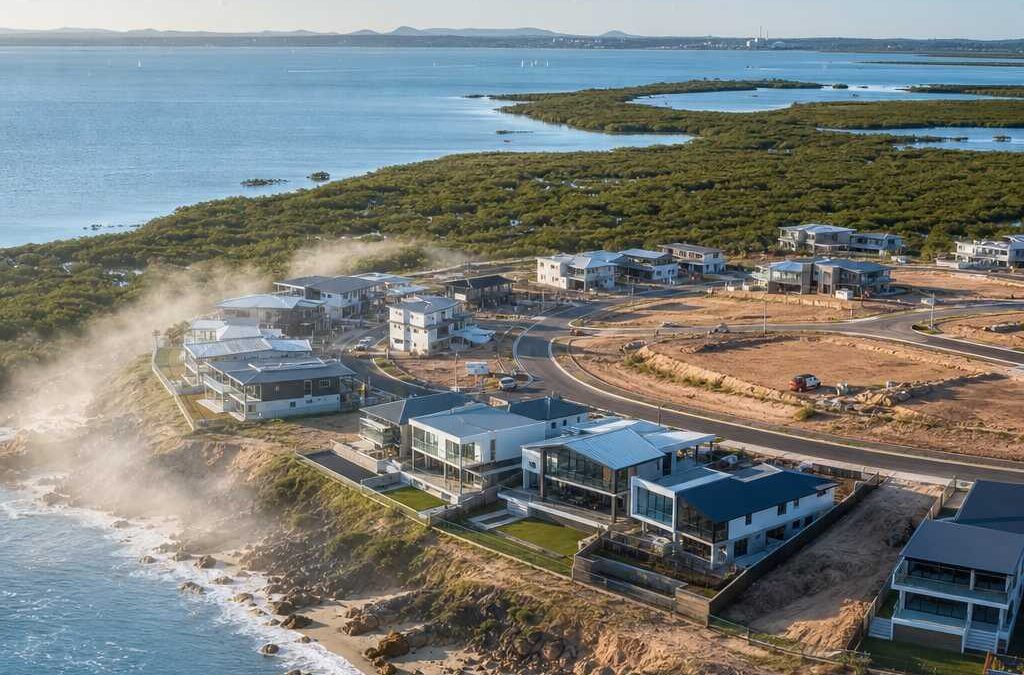
Redland Bay sits at the edge of Moreton Bay, and that waterfront charm comes with a construction reality that many new homeowners never anticipate. Salt-laden air, high humidity, storm surge exposure, and expansive coastal soils create a perfect environment for defects that a rushed handover inspection will miss entirely. A new home inspection Redland Bay is not the same exercise as inspecting a home in a dry inland suburb, and treating it as such is one of the most expensive mistakes a buyer can make. This article breaks down exactly what makes coastal construction in Redland Bay different and why independent professional inspection is non-negotiable before you take the keys.
Table of Contents
- Quick Takeaways
- Why Coastal Construction in Redland Bay Is Different
- Common Coastal Construction Defects Inspectors Find
- What a Professional New Home Inspection in Redland Bay Covers
- Comparing Inspection Approaches: What Works and What Doesn’t
- When to Book Your Inspection in the Build Timeline
- Why Photo-Enhanced Defect Reports Matter More in Coastal Builds
- Frequently Asked Questions
- References
Quick Takeaways
| Key Insight | Explanation |
|---|---|
| Coastal corrosion accelerates defect timelines | Salt air in Redland Bay degrades exposed metal fixings, roof screws, and flashing far faster than inland builds, making early inspection critical before handover. |
| Soil reactivity near the bay creates movement risks | Expansive clay soils common in coastal Redland Bay areas shrink and swell with moisture changes, making slab edge cracking and frame distortion regular findings. |
| Builder sign-off is not independent inspection | A builder’s practical completion checklist protects the builder’s interests. An independent inspector works solely for you and has no financial incentive to pass the build. |
| Defects must be documented before settlement | Once you accept a key handover without formal defect documentation, rectifying issues becomes a drawn-out dispute rather than a straightforward builder obligation. |
| Trade-specific defect attribution speeds up rectification | Reports that identify which trade is responsible for each defect (tiler, plumber, renderer) eliminate builder deflection and accelerate the repair process. |
| Same-day reporting matters at Redland Bay settlements | Settlement timelines are often tight. A report delivered same-day gives you documented leverage before you sign anything at settlement. |
| Coastal builds need corrosion-rated material verification | Queensland building codes specify corrosion resistance categories for coastal zones. Inspectors check whether specified materials actually match what was installed. |
Why Coastal Construction in Redland Bay Is Different
Redland Bay is classified as a coastal exposure zone under Australian Standard AS 4312, which means builders are legally required to use corrosion-rated materials for structural fixings, roof cladding, and exterior metalwork. In practice, compliance with this requirement is inconsistent. Inspectors regularly find standard-grade screws used on roofing in areas that require at least Class 3 or Class 4 corrosion resistance, and that substitution will cost homeowners thousands within five to seven years.
The moisture environment near Moreton Bay is not just about rain. Humidity cycles through the day and night at Redland Bay at levels that accelerate timber moisture uptake, paint delamination, and silicone joint failure at a rate that surprises most new owners. A building inspection Redland Bay needs to account for these environmental stresses specifically, not apply a generic checklist designed for Brisbane’s drier western suburbs.
Soil Conditions Specific to Redland Bay
The soils across much of Redland Bay and the surrounding Redlands Coast area are classified as highly reactive Class H or even Class E in pockets near tidal influence zones. The Queensland Building and Construction Commission (QBCC) site classification system exists precisely because reactive soil causes slab movement that can manifest as cracking within the first twelve months of occupation if the slab design was not correctly engineered for the site class.
A common mistake is assuming that a new build with a builder’s warranty automatically protects you from slab-related defects. Warranties require defects to be reported within defined timeframes and with adequate documentation. If you did not have an independent inspection before handover, proving when a crack appeared and that it constitutes a structural defect becomes your burden, not the builder’s.


Common Coastal Construction Defects Inspectors Find
Based on pre-handover inspections carried out in Redland Bay and the broader Redlands Coast area, certain defect categories appear disproportionately often compared to equivalent inspections in inland South East Queensland suburbs. Understanding these patterns helps buyers know what to prioritise and what questions to ask their builder before inspection day.
Roofing and Flashing Failures
Roof flashing is the single most commonly failed item in coastal construction defects at Redland Bay. Step flashing around roof penetrations, valley flashing, and fascia-to-roof junctions are regularly installed without adequate sealing. In a high-humidity coastal zone, water ingress through these points can saturate roof framing and insulation within a single wet season, creating conditions for timber decay and mould that are expensive to remediate.
Pro tip: Ask your inspector specifically to photograph all roof-to-wall junctions, not just flat-plane roof areas. These are the highest-risk locations in a coastal build and the most commonly glossed over in a builder’s own completion checklist.
Window and Door Sealing in Salt-Air Environments
Aluminium window frames in coastal zones require specific anodising or powder coating grades. Inspectors at Redland Bay find standard-grade aluminium frames installed without consultation with the window supplier’s coastal specification sheets. Surface pitting and seal failure typically begin within eighteen months in these conditions. Beyond the frame itself, the perimeter sealant between the frame and wall cladding is frequently applied too thin or with gaps, creating water ingress pathways directly into the wall cavity.
Subfloor Ventilation and Moisture Barriers
Homes with suspended timber floors over a subfloor space require adequate cross-ventilation and a moisture barrier over bare ground. In coastal areas with higher groundwater tables, inadequate subfloor ventilation creates trapped moisture that promotes termite activity and structural timber decay. This is not a cosmetic defect. It is a structural risk that takes very little time to develop in Redland Bay’s climate.
Render and Cladding Cracking
Cement render applied over lightweight framing systems is common in new Redland Bay builds. Thermal expansion and contraction in coastal Queensland is more aggressive than many renderers allow for in their joint spacing, and the data consistently shows that corner cracking and horizontal cracking at floor level appear earlier and more severely in coastal builds than inland equivalents. These cracks are water ingress points. Leaving them unaddressed because they look minor at handover is a recurring cause of major remediation costs three years down the track.
What a Professional New Home Inspection in Redland Bay Covers
A proper pre-handover or practical completion inspection at Redland Bay is a systematic, room-by-room and element-by-element assessment conducted by a fully licensed inspector who understands both the National Construction Code and the specific performance expectations for coastal construction zones. It is not a walkthrough with a clipboard. It is a technical assessment that produces a legally usable document.
Structural Elements
Inspectors assess the slab for cracking beyond hairline thresholds, check wall framing alignment, and verify that structural connections use the corrosion-rated hardware specified on the engineering plans. Any deviation from the approved structural drawings is documented with photos and attributed to the relevant trade.
Waterproofing and Wet Areas
Wet area waterproofing in bathrooms, laundries, and alfresco areas is a mandatory inspection element. Queensland Building Regulation requires waterproofing to comply with AS 3740. In practice, the most common failure points are at shower recesses where the screed falls away from the drain, and at balcony-to-wall junctions where waterproofing membranes are not turned up to the required height. These failures are invisible to the untrained eye at handover but produce leaks within one to three years of occupation.
Electrical and Plumbing Rough-Ins
While final electrical and plumbing sign-off is the responsibility of licensed tradespeople, an independent inspector checks that all outlets, fixtures, and switches are correctly installed, operable, and meet the specifications in the building contract. Missing GPOs, incorrect tap placements, and incomplete hot water commissioning are found regularly at Redland Bay pre-handover inspections and are entirely the builder’s cost to rectify when identified before settlement.
Pro tip: Bring a copy of your building contract specifications to the inspection. A good inspector will cross-reference installed finishes, appliances, and fittings against what you paid for, not just against a generic building standard.

Comparing Inspection Approaches: What Works and What Doesn’t
Not all inspection services are equivalent, and the differences matter significantly when you are protecting an asset worth $600,000 or more in a coastal market like Redland Bay. The table below outlines the key distinctions between the main approaches buyers currently use.
| Inspection Approach | What It Provides | Key Limitation in Coastal Builds |
|---|---|---|
| Builder’s Practical Completion Checklist | Internal sign-off that the build meets the builder’s own standards. Issued by the builder’s site supervisor. | No independence. The inspector works for the party whose work is being assessed. Coastal-specific risks like corrosion ratings and subfloor moisture are rarely checked. |
| Generic Independent Inspector (Non-Specialised) | Third-party assessment against general building standards. Provides some independence. | Inspectors without specific experience in coastal construction zones may not recognise material specification failures or coastal-standard non-compliance as defects. |
| GoInspect Pre-Handover Inspection | Fully licensed independent inspection with photo-enhanced defect reports, trade-specific defect attribution, and same-day reporting from $550 including GST. | Requires the homeowner to schedule the inspection before the builder’s handover appointment, which some buyers leave too late. Book at least five business days before handover. |
“Homeowners who obtain independent pre-handover inspections are significantly more likely to have defects rectified at the builder’s cost, rather than through warranty disputes that can take months or years to resolve.” Queensland Building and Construction Commission, consumer guidance on new home defects.
When to Book Your Inspection in the Build Timeline
Timing is one of the most misunderstood aspects of the inspection process. Many buyers assume inspection happens at settlement. In reality, the most powerful point to inspect is before practical completion, which means before the builder formally notifies you that the home is ready for handover. At that stage, every defect documented is the builder’s obligation to fix before you take possession.
Pre-Handover Inspection
This is the primary inspection for new builds. It occurs when construction is nominally complete but before keys are handed over. Any defects identified become part of a formal defect list that the builder must address under the building contract. This is the stage at which independent inspection delivers the most direct financial protection.
Pre-Settlement Inspection
A pre-settlement inspection confirms that previously identified defects have been rectified and checks for any new damage or incomplete work since the initial inspection. In a coastal build, this second inspection is worth doing because rectification work sometimes introduces new issues, such as repainting over moisture-affected surfaces without treating the underlying cause.
Post-Handover Defect Period Inspections
Queensland building contracts typically include a defect liability period of three to twelve months after handover. An inspection near the end of this period captures defects that have developed during occupation, particularly moisture-related and movement-related defects that take time to manifest in coastal conditions. Missing the end of the defect liability period means these repairs become your cost entirely.
Pro tip: Put a calendar reminder for 30 days before your defect liability period expires and book your end-of-period inspection at GoInspect before that date. Defects like render cracking, flashing failures, and wet area leaks often only become visible after a full year of seasonal cycling in Redland Bay’s coastal climate.
Why Photo-Enhanced Defect Reports Matter More in Coastal Builds
A written defect list without photographic documentation is nearly useless in a dispute. Builders can claim a defect was not present, was a normal characteristic of the material, or has been repaired when it has not. Photographic evidence taken by a licensed inspector and included in a timestamped report removes that ambiguity completely.
In coastal builds specifically, photographs serve an additional function. Many coastal construction defects are not immediately visible to the untrained eye. Hairline cracks in render, corrosion on roofing fixings, gaps in flashing, and thin sealant beads around windows require close-up photography to be communicated clearly to a builder’s site supervisor or to a QBCC investigator if the dispute escalates.
GoInspect’s reports attribute each defect to the responsible trade, which matters because it prevents the builder from routing your defect list to a subcontractor who then disputes responsibility. When the report says the waterproofing membrane failure at the shower recess is the tiler’s responsibility, the builder cannot easily redirect that claim.
Same-day reporting means your documentation exists before you leave the property on handover day. In settlements where the builder is applying pressure to sign immediately, having a formal report in hand changes the negotiation completely. You are not relying on memory or a handwritten note. You have a professional document that carries evidentiary weight.
Frequently Asked Questions
What does a new home inspection in Redland Bay typically cost?
GoInspect’s pre-handover inspections for new homes in Redland Bay start from $550 including GST. The price reflects a fully licensed inspection with a photo-enhanced defect report delivered the same day. Considering the asset value being protected, this is one of the lowest-risk investments a new homeowner can make at settlement.
Can I rely on the builder’s own completion inspection instead of hiring an independent inspector?
No. A builder’s practical completion checklist is produced by the builder or their site supervisor to confirm the build meets the builder’s own standards. It is not independent, it is not produced in your interest, and it will not document defects that obligate the builder to carry out additional unpaid work. Independent inspection is the only form that gives you a usable defect document.
What coastal construction defects are most often missed without specialist inspection?
The most commonly missed defects in Redland Bay coastal builds include incorrect corrosion class ratings on roof fixings and structural connectors, inadequate flashing at roof-to-wall junctions, substandard waterproofing membrane turn-up heights in wet areas, and subfloor moisture barrier failures. These items require specific knowledge of coastal construction standards to recognise and are not covered adequately by generic inspection checklists.
How far in advance should I book a pre-handover inspection in Redland Bay?
Book at least five business days before your scheduled handover date. Coastal areas like Redland Bay often have scheduling constraints for licensed inspectors, and same-day booking is rarely possible. If your builder gives you a handover date, contact GoInspect immediately rather than waiting until closer to the date.
Does a new home inspection cover compliance with Queensland coastal zone building requirements?
Yes. A qualified inspector checks installed materials and workmanship against the National Construction Code, relevant Australian Standards including AS 4312 for atmospheric corrosivity, and Queensland-specific requirements administered by the QBCC. Where materials installed do not meet the coastal zone specification, this is documented as a defect attributable to the responsible trade.
What happens if defects are found during the inspection?
The inspector produces a photo-enhanced defect report identifying each defect, its location, the likely cause, and the responsible trade. You then present this report to your builder formally, requiring rectification before settlement or within the terms of your building contract’s defect liability provisions. If the builder does not respond adequately, the report serves as your primary evidence for a QBCC complaint or legal action.
Are GoInspect inspectors familiar with the specific conditions in Redland Bay?
GoInspect operates across Brisbane, Gold Coast, Logan, Ipswich, and Redland Bay, meaning their inspectors work regularly in the Redlands Coast environment. Familiarity with local soil classifications, coastal exposure categories, and the types of housing developments active in the area is a direct product of that operational footprint, not something an inspector new to coastal Queensland can replicate from a textbook.
Have you recently gone through the handover process for a new home in Redland Bay? We’d like to hear what the experience was like and whether an independent inspection changed the outcome for you.
References
- Queensland Building and Construction Commission: official guidance on new home defects, warranty rights, and the dispute resolution process for Queensland homeowners
- Standards Australia: published Australian Standards including AS 4312 on atmospheric corrosivity categories and AS 3740 on waterproofing in wet areas relevant to coastal construction
- Australian Building Codes Board: the National Construction Code performance requirements and deemed-to-satisfy provisions that govern new residential construction nationwide
- Forbes: independent analysis of property investment risks, defect liability, and the financial impact of pre-settlement inspections on new home purchases
- Statista: residential construction data and defect rate statistics for the Australian housing market providing context on the prevalence of new build defects