

Roughly one in three new homes in Queensland is handed over with defects that the builder knows about but hasn’t fixed. The ones that go unnoticed until after settlement are almost always the most expensive to fight over. A handover inspection Brisbane buyers arrange before they collect the keys is the single most effective way to stop that from happening. This article explains exactly what a handover inspection is, what it covers, why the Brisbane and South East Queensland construction environment makes it non-negotiable, and how to choose the right inspector before you sign off on your new build.
Table of Contents
- What Is a Handover Inspection?
- Quick Takeaways
- Why Brisbane New Home Buyers Face Specific Risks
- What a Handover Inspection Actually Covers
- Comparing Your Options for a New Home Inspection
- How the Inspection Report Works and What to Do with It
- When to Book Your Pre-Handover Inspection
- What Happens If You Skip the Inspection?
- Frequently Asked Questions
- References
What Is a Handover Inspection?
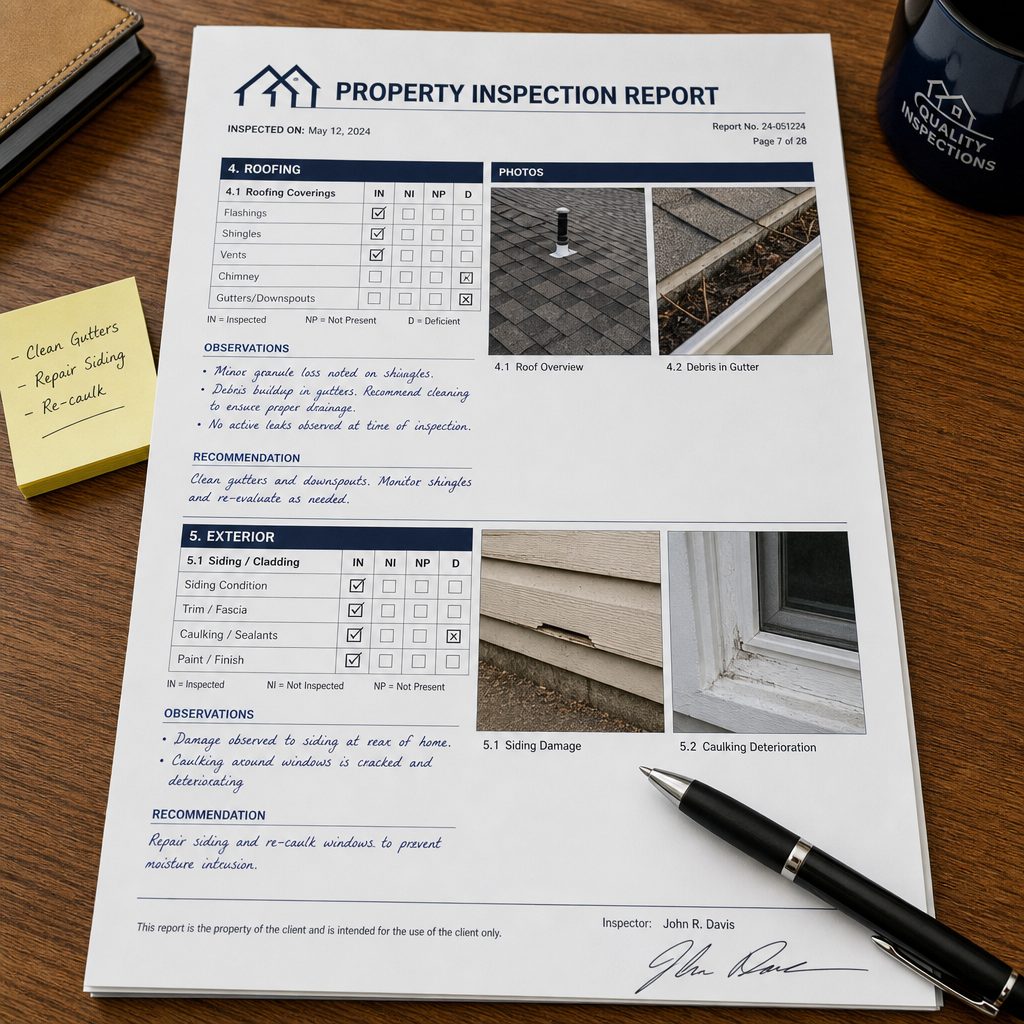
A handover inspection, also called a practical completion inspection or pre-settlement inspection, is a formal assessment of a newly constructed home carried out immediately before the builder hands the keys to the buyer. The inspector walks every accessible area of the property, documents every defect they find, and produces a written report that becomes a legally referenced tool during the defect rectification process.
This is not the same as a standard building inspection on an existing property. The focus is specifically on construction quality, compliance with the approved plans and specifications, and workmanship standards set by the relevant Australian Standards and the National Construction Code. The inspector is looking at what the builder’s own trades have done, not at what time and wear have done to a property.
In practice, a quality handover inspection will identify defects across all active trades: framing, brickwork, roofing, plastering, tiling, painting, joinery, wet areas, electrical fittings, plumbing fixtures, and external works. The report does not just flag a defect in general terms. A well-structured report assigns each defect to the responsible trade, so the builder knows precisely which subcontractor needs to return to the site.
Quick Takeaways
| Key Insight | Explanation |
|---|---|
| A handover inspection is not optional for new builds | Queensland builders are required to fix defects identified before practical completion. After settlement, enforcement becomes far more complex and expensive for the buyer. |
| Same-day reports change the outcome | When the inspector delivers a photo-enhanced report the same day, buyers can present defects to their builder before the handover meeting concludes, keeping rectification on the builder’s timeline and budget. |
| Trade-specific defect assignment matters | A report that says “paint defects present” is far weaker than one that lists each defect by location, photo reference, and responsible trade. The latter removes ambiguity and accelerates repairs. |
| Licensed inspectors carry legal weight | Reports from unlicensed inspectors can be dismissed by builders. Queensland requires building inspection reports to be signed by a licensed building inspector or contractor. |
| Pre-handover inspections apply to houses and apartments | High-rise and townhouse buyers need customized reports that cover common property, shared infrastructure, and individual lot finishes. The defect mix is different from a detached house. |
| The cost of an inspection is small relative to repair costs | A professional inspection from GoInspect starts at $550 including GST. A single defect item like a failed waterproofing membrane can cost several thousand dollars to rectify post-settlement. |
| Brisbane’s construction volume increases defect risk | South East Queensland is experiencing one of its highest residential construction periods on record. High builder workloads correlate directly with supervision gaps and increased defect rates. |
Why Brisbane New Home Buyers Face Specific Risks
South East Queensland, covering Brisbane, Gold Coast, Logan, Ipswich, and Redland Bay, is one of the most active residential construction markets in Australia. The Queensland Building and Construction Commission (QBCC) received more than 14,000 complaints from homeowners in the 2022-23 period, with defective building work consistently ranking as one of the top complaint categories. That number reflects what happens after settlement. The defects that go unchallenged at handover are the ones that generate those complaints.
The core problem is that builders operating at capacity tend to rely on subcontractors who are simultaneously managing multiple sites. Supervision becomes thinner. Trade handovers happen faster. The finishing trades, painters, tilers, and joiners, are often the last to arrive and the first to be rushed off the site because the builder is already preparing for the next practical completion payment. Brisbane’s subtropical climate also introduces specific risks. Waterproofing around wet areas and external decks is a consistent failure point in Queensland builds because the combination of heat, humidity, and heavy rainfall is unforgiving when membranes are applied poorly.
“Defective work and incomplete work remain the most common reasons homeowners contact the QBCC. Identifying and documenting these issues before settlement gives buyers their strongest legal and practical position.” Source: Queensland Building and Construction Commission consumer guidance.
A common mistake is assuming that the builder’s own inspection process is sufficient. Builders do conduct their own pre-completion checks, but those checks are carried out by people with a financial incentive to reach practical completion as quickly as possible. An independent inspector has no such incentive.

What a Handover Inspection Actually Covers
A thorough new home inspection before handover is not a quick walk-through with a checklist. It is a systematic assessment that moves through every accessible part of the property in a defined sequence. Here is what a competent inspector covers.
Structural and Framing Elements
The inspector checks for visible signs of inadequate bracing, out-of-plumb walls, roof framing issues, and any structural element that deviates from the approved plans. In Brisbane’s slab-on-ground construction, cracking patterns in the slab and early shrinkage cracks in masonry are also assessed at this stage.
Roofing and External Envelope
The roof space is inspected for insulation installation quality, sarking placement, tile or metal sheet alignment, flashing around penetrations, and ridge and valley conditions. Gutters, downpipes, fascias, and external cladding are inspected from ground level and, where safe access exists, from the roof itself.
Wet Areas and Waterproofing
This is where Queensland homes fail most often. The inspector assesses grout quality, silicone joints, tile lippage, shower screen installation, bath sealing, and the visual integrity of waterproofing. While a destructive moisture test is not part of a standard inspection, an experienced inspector recognizes the installation patterns that correlate with waterproofing failures.
Internal Finishes
Plasterboard joints, cornice lines, paint finish quality (assessed under raking light conditions), skirting and architrave installation, door alignment, cabinetry gaps, benchtop sealing, floor covering transitions, and staircase balustrading are all assessed against the tolerances set in AS 4349.0 and the relevant trade standards.
Electrical and Plumbing Fixtures
The inspector checks that all fixtures specified in the contract are present and operational, that power points and switches are correctly seated, that tapware is functioning without leaks, and that the hot water system is commissioned. This is a visual and functional check, not a licensed electrical or plumbing compliance test.
External Works
Driveways, pathways, landscaping provisions, retaining walls, fencing, and garage door operation are all checked against the contract and the approved plans. Poor falls in external concrete are a consistent finding in Brisbane new builds and a problem that is far cheaper to fix before handover than after.
Pro tip: Ask your inspector to check the drainage fall on all external concrete before your handover meeting. Poor falls that pool water against the house are common in SEQ builds and expensive to fix once the landscaping is established.
Comparing Your Options for a New Home Inspection
Brisbane buyers commissioning a pre-handover inspection have several service types to choose from. The differences between them are significant and directly affect what you can do with the report once you receive it.
| Inspection Approach | What You Get | Key Limitation |
|---|---|---|
| Licensed independent inspector with photo-enhanced, trade-assigned reports (e.g., GoInspect) | Same-day report with photos, each defect assigned to the responsible trade, ready to present to the builder at handover. Covers houses and high-rise. Starts at $550 inc. GST. | Requires booking in advance. Inspector access to the site must be arranged with the builder. |
| Generic building inspector using standard report templates | A report covering most visible defects. Usually delivered within 24-48 hours. May not distinguish between trade responsibilities. | Trade-assignment gaps make it harder to direct the builder to specific rectification actions. Some inspectors lack high-rise experience. |
| Builder’s in-house pre-completion inspection | The builder’s site supervisor or quality manager walks the property and notes items for their own trades to fix before handover. | Not independent. The inspector is employed by the party whose work is being assessed. No legal weight for the buyer. Significant conflict of interest. |
The data consistently shows that independent inspections find more defects than builder self-assessments. This is not because builders are dishonest. It is because an inspector trained to look for defects under raking light and with knowledge of trade tolerances will find things that a site supervisor walking a familiar property will not see.

How the Inspection Report Works and What to Do with It
The inspection report is the document that makes everything else possible. A report that lists defects without photos, without location references, and without trade assignments is nearly useless in a builder dispute. A report that includes GPS-located photos, numbered defect items, and clear trade assignments is a management tool the builder can act on immediately.
How to Use the Report at the Handover Meeting
Present the report to your builder’s representative at the handover meeting and request a written response to each numbered defect item. Ask for a schedule of rectification with dates. A builder who receives a professional report from a licensed inspector is in a far weaker position to dismiss the findings than one who receives a verbal complaint from a buyer.
What Happens if the Builder Refuses to Rectify?
If the builder refuses to address defects documented in the report, the buyer has a clear escalation path. In Queensland, the QBCC complaint process begins with a written dispute notification. A professional inspection report from a licensed inspector supports that complaint directly. Without a report, the complaint becomes one person’s word against another’s.
Pro tip: Never settle on your new home without a written defect schedule signed by both parties. If your builder says a defect will be fixed after settlement, get the commitment in writing with a specific completion date before you hand over any remaining funds.
Defects Found After Settlement
Queensland law provides statutory warranties for residential building work. The general warranty period covers defects that become apparent within six years for structural issues and one year for other defects. However, demonstrating when a defect originated is far harder after settlement. A pre-handover inspection report establishes a baseline record of the property’s condition at the point of practical completion.
When to Book Your Pre-Handover Inspection
The correct timing for a pre-handover inspection is after the builder has notified you that practical completion has been reached, but before you attend the handover meeting and accept the keys. Do not wait until the day of handover to arrange an inspection. Most quality inspectors require at least 48 hours notice, and the builder needs to be informed that an independent inspector will be attending the site.
In practice, the best approach is to book the inspection as soon as your builder gives you an estimated completion date. For most South East Queensland builds, this is approximately two weeks before the scheduled handover. This gives you time to receive the report, review it, and prepare your questions before you sit down at the handover meeting.
For off-the-plan apartment purchases, the timeline works slightly differently. The builder issues a notice of practical completion and the buyer typically has a short period to complete settlement. Booking a licensed inspector who specializes in high-rise defect inspections, as GoInspect does for developments across Brisbane and Gold Coast, is particularly important because common property defects and lot-specific defects need to be documented separately.
Investors purchasing multiple lots in the same development should request customized reporting that covers each lot individually while also addressing shared building elements. This is not something a generic building inspector typically offers, but it is standard practice for an experienced handover inspection team.
What Happens If You Skip the Inspection?
Skipping a handover inspection is one of the more expensive decisions a new home buyer in Brisbane can make. The average cost to rectify defects that were present at handover but not documented is significantly higher than the cost of the inspection itself, because post-settlement rectification involves re-engaging trades that are no longer under the builder’s direct control, disputing liability, and often funding repairs out of pocket while a complaint process runs its course.
A common mistake made by buyers who skip the inspection is to accept the builder’s assurance that any problems will be dealt with under the defects liability period. The defects liability period, typically 12 months from practical completion under the standard HIA and MBA contracts used in Queensland, is a maintenance period for defects that become apparent after handover. It is not a substitute for identifying and rectifying defects that already exist at handover. The distinction matters legally and practically.
The QBCC’s own data shows that disputes about what was present at handover versus what developed afterward are among the most contested categories in residential building complaints. A pre-handover inspection report eliminates that ambiguity entirely for the documented defects it covers.
Frequently Asked Questions
What is the difference between a handover inspection and a pre-settlement inspection?
The terms are often used interchangeably. Both refer to an inspection carried out before the buyer accepts the keys and before settlement funds are released. In Queensland, the inspection is typically conducted after the builder declares practical completion and before the buyer attends the formal handover meeting. Some contracts use the term practical completion inspection instead. The purpose and process are the same regardless of the label used.
Can my builder refuse to allow an independent inspector on site?
In Queensland, buyers have the right to have an independent building inspector assess the property before practical completion is accepted. Most standard residential building contracts include a clause permitting this. If your builder refuses access to a licensed inspector, this should be treated as a serious warning sign and documented in writing immediately. Contact the QBCC for guidance if access is denied.
How long does a handover inspection take?
A standard detached house in Brisbane or South East Queensland typically takes between two and four hours depending on the size and complexity of the build. A high-rise apartment inspection may take less time for the individual lot but additional time if common areas and building services are also being assessed. Same-day reports, as offered by GoInspect, mean the findings are available before the handover meeting concludes.
What qualifications should my inspector have in Queensland?
In Queensland, building inspection reports must be produced by or under the direct supervision of a licensed building inspector or a licensed builder with the appropriate category of licence. Always ask for the inspector’s Queensland licence number before booking. An unlicensed inspector’s report carries no formal weight in a QBCC complaint or legal dispute, regardless of how thorough the report appears.
Is a handover inspection worth it for a house and land package?
Yes, without qualification. House and land packages are built to a volume schedule by builders managing dozens of simultaneous builds. The defect rate on volume builds is not lower than on custom homes. In many cases it is higher, because the same subcontractors are under pressure to complete work across multiple sites in compressed timeframes. An independent pre-handover inspection is the buyer’s primary protection regardless of how reputable the volume builder’s brand appears to be.
Does GoInspect inspect apartments and high-rise developments, not just houses?
Yes. GoInspect provides customized inspection reports for high-rise developments and housing projects across Brisbane, Gold Coast, Logan, Ipswich, and Redland Bay. For developers and builders, GoInspect also works on the other side of the transaction, helping to document and manage defect rectification across multiple lots within a single development. The reporting format is adapted to reflect both individual lot findings and building-wide issues.
Have you gone through a handover inspection in Brisbane or South East Queensland? Share your experience in the comments below and let us know what surprised you most about the process.
References
- Queensland Building and Construction Commission: consumer rights, defect complaint processes, and residential building warranty information for Queensland homeowners
- Queensland Government legislation portal: Queensland Building and Construction Commission Act 1991 and residential construction contract requirements
- Australian Building Codes Board: National Construction Code standards and residential building compliance requirements applicable to new home construction across Australia
- Forbes: property investment risk management, new construction defect trends, and independent inspection guidance for homebuyers
- Statista: Australian residential construction volume data, housing completion rates, and property market statistics relevant to South East Queensland