

You’ve signed the contract, watched the slab go down, and waited months for your new home to take shape. Now the builder is calling to book your handover appointment. Before you pick up the keys, there is one step that too many Brisbane buyers skip – and it costs them dearly. A pre-handover inspection in Brisbane is not a formality. It is your last legal window to document defects before responsibility shifts away from the builder and onto you. Research from industry sources suggests that up to 30% of new construction defects go undetected without a formal inspection process, and the repair bills that follow settlement can run into tens of thousands of dollars.
Table of Contents
- Quick Takeaways
- What Is a Pre-Handover Inspection?
- What Gets Checked During a Pre-Handover Inspection?
- Why Brisbane New Home Buyers Face Unique Risks
- The Handover Inspection Report: What It Contains and Why It Matters
- DIY vs. Professional Inspection: A Direct Comparison
- How GoInspect Approaches Pre-Handover Inspections
- Frequently Asked Questions
- References
Quick Takeaways
| Key Insight | Explanation |
|---|---|
| Sign nothing before inspecting | Once you accept handover documents, your legal position weakens significantly. Defect liability shifts, and proving the builder’s responsibility becomes your burden. |
| A verbal walk-through is not an inspection | Builders often offer a site walk with the site supervisor. This is not a substitute for an independent, documented inspection by a licensed professional. |
| Photo-enhanced reports are essential | Written defect lists without photos are routinely disputed by builders and trades. Photographic evidence attached to specific defects is far harder to dismiss. |
| New homes have just as many defects as older ones | Brand-new construction regularly produces issues with waterproofing, tiling, electrical work, and structural finishes. “New” does not mean “defect-free.” |
| Trade-specific defect attribution speeds up rectification | A report that names which trade is responsible for each defect removes ambiguity. Builders and developers can act immediately rather than spending weeks assigning blame internally. |
| Timing matters as much as thoroughness | A pre-handover inspection must happen before settlement, not after. Same-day reporting means you can use the findings during handover negotiations on the same visit. |
| High-rise and house-and-land inspections require different approaches | Apartment and townhouse inspections involve common property, fire systems, and body corporate items that a standard house checklist will not cover. |
What Is a Pre-Handover Inspection?
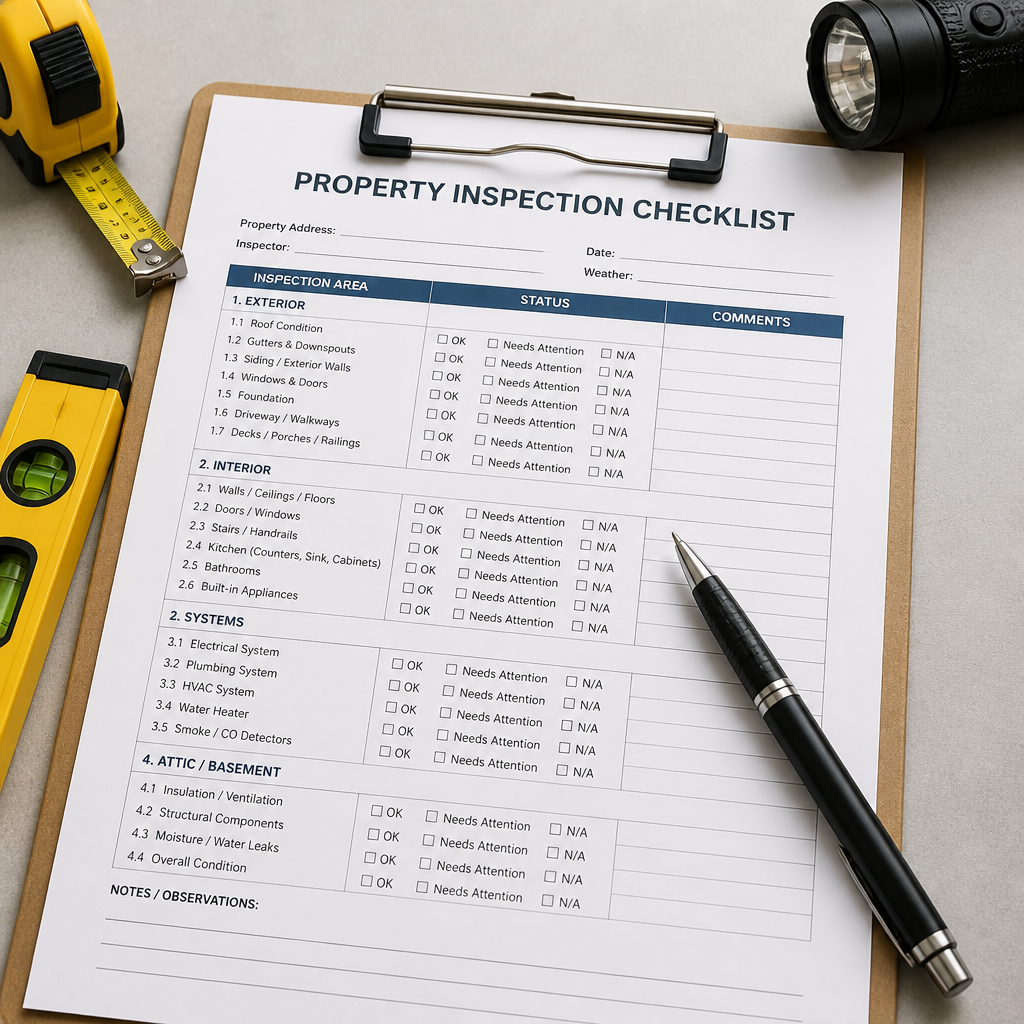
A pre-handover inspection is a structured, documented assessment of a newly constructed property carried out by a licensed inspector before the buyer formally accepts the property from the builder or developer. It is also referred to as a practical completion inspection or pre-settlement inspection, and the terms are often used interchangeably depending on the stage of the contract.
The purpose is straightforward: to create a written and photographic record of every defect, incomplete item, and deviation from the agreed specifications before you sign anything. Once you accept handover, the legal and financial dynamics change. The builder’s obligation to fix defects before settlement ends, and you move into a warranty period where disputes are slower and harder to resolve.
In practice, this inspection covers everything from structural elements and waterproofing to door hardware, paint finish, and electrical points. A thorough inspection does not just generate a list – it assigns each defect to the responsible trade and documents it with photographs, giving you a clear, actionable report you can hand directly to the builder.

The Difference Between a Pre-Handover and a Practical Completion Inspection
These two terms describe the same event from different contractual perspectives. “Practical completion” is the builder’s declaration that the work is done. A “pre-handover inspection” is the buyer’s independent verification of that claim. In Queensland, most building contracts include a right to inspect at practical completion, and exercising that right through a qualified third party is the only way to protect yourself properly.
Skipping this step because the builder says “everything is fine” is one of the most expensive mistakes a new home buyer in Brisbane can make. The builder’s interests and your interests are not the same at handover.
What Gets Checked During a Pre-Handover Inspection?
A comprehensive pre-handover inspection covers the full property systematically, area by area, trade by trade. The scope is wider than most buyers expect, and the details matter more than the big-picture items.
Structural and External Elements
Inspectors assess the roof covering, roof framing, gutters, downpipes, and external cladding for defects, incorrect installation, or deviation from plans. Brickwork, render, and external paint are checked for cracking, unevenness, and finish quality. Drainage grading around the slab is examined because incorrect fall can cause long-term water ingress issues that are expensive to rectify after you move in.
Internal Finishes and Fixtures
Walls, ceilings, and floors are inspected for cracking, paint defects, hollow tiles, and uneven surfaces. Door and window frames are checked for alignment, smooth operation, correct locking mechanisms, and gaps in sealing. Wet areas including bathrooms, ensuite, laundry, and kitchen are scrutinized for waterproofing membrane installation, grout quality, silicone application, and fixture security. These are the areas where defects are both most common and most costly to fix after settlement.
Electrical, Plumbing, and Mechanical Systems
Every power point, light switch, exhaust fan, and circuit breaker label is tested and verified. Water pressure is checked at every tap. Drain flow rates, toilet flush performance, and hot water system installation are all part of a thorough new home inspection. Air conditioning and ventilation systems, where installed, are checked for correct operation and correct installation to specification.
Pro tip: Take your contract inclusions list and any variation orders to the inspection. Your inspector should cross-reference what was promised against what has actually been installed. Substituted fixtures and missing inclusions are common and are your right to demand rectification before settlement.
Why Brisbane New Home Buyers Face Unique Risks
Brisbane’s construction market has experienced sustained growth across new house-and-land developments in areas including Logan, Ipswich, Redland Bay, and the Gold Coast corridor. High build volumes combined with ongoing trades shortages have placed real pressure on site supervision and construction quality across the region.
Buyers purchasing off-the-plan or in large land releases are often dealing with volume builders managing dozens of projects simultaneously. The site supervisors responsible for quality control are stretched, and inspections done by the builder’s own team are not independent. This is not speculation – it is the structural reality of high-volume residential construction.
Common Defects Found in Queensland New Builds
Waterproofing failures in wet areas are consistently among the most serious and most common defects found in new Queensland homes. They are invisible at handover if no one looks properly, and devastating once water penetration begins. Other frequently identified issues include hollow or cracked tiles, inadequate paint coverage on ceilings and cornice joins, incomplete or incorrectly installed insulation, misaligned cabinetry, and non-compliant balustrades on elevated decks and balconies.
High-rise apartment buyers face additional risks around fire door compliance, common area finishes, and lobby and lift lobby defects that may not be identified in a standard house inspection. These require a different checklist and specific experience with multi-unit developments.
A pre-handover inspection is not about being difficult with your builder. It is about exercising a right that exists specifically to protect buyers – and using it before it expires.
The Handover Inspection Report: What It Contains and Why It Matters
The quality of your handover inspection report determines how useful it actually is. A report that lists “cracked tile in bathroom” with no photo, no location reference, and no trade attribution is nearly useless in a dispute. A report that includes a photograph of the tile, the room location, the GPS coordinates or room plan reference, and the responsible trade (tiler) is actionable on the day it is delivered.
Photo-enhanced reports are the industry standard for professional pre-handover inspections because photographic evidence is difficult to dispute and easy to act on. A builder receiving a defect report with clear photos and trade attribution can brief the relevant subcontractor directly, rather than spending days investigating what was meant by a vague written description.
What a Good Report Includes
A properly structured handover inspection report should include a summary defect count by category, individual defect entries with photographs, room-by-room location references, trade attribution for each defect, and a clear statement of whether each item requires rectification before settlement or can be addressed under the statutory warranty period. It should also distinguish between defects that are safety-related, items that are incomplete, and items that deviate from contracted specifications.
Same-Day Reporting and Why It Changes the Handover Dynamic
Same-day delivery of the inspection report means you arrive at your handover meeting informed and equipped. You do not have to accept the property unconditionally and then wait days for a report to tell you what was wrong. Same-day reporting allows you to present the defect list to your builder at or immediately after the handover walkthrough and formally request rectification before you sign off.
Pro tip: Do not attend your handover appointment without your inspection report already in hand. Builders are experienced at managing handover conversations, and walking in without documentation puts you at an immediate disadvantage. Same-day reporting from an independent inspector changes that dynamic entirely.

DIY vs. Professional Inspection: A Direct Comparison
Some buyers attempt to conduct their own pre-handover walkthrough using a checklist found online. This approach has real limitations, and it is worth being direct about them. An untrained buyer walking through a new home will miss waterproofing defects, structural issues concealed by finishes, non-compliant installations, and dozens of small but meaningful finish defects simply because they do not know what to look for or where to look.
| Approach | What It Covers | Key Limitation |
|---|---|---|
| DIY buyer walkthrough | Obvious visual defects, missing fixtures, surface-level paint and tile issues | Misses concealed defects, waterproofing failures, structural and compliance issues; no formal documentation |
| Builder’s own inspection | Internal quality checks against the builder’s own standards | Not independent; builder has a financial interest in passing the property; not legally equivalent to a third-party inspection |
| Licensed independent inspector (GoInspect) | Systematic full-property inspection covering structure, finishes, wet areas, electrical, plumbing, and compliance items with photo-enhanced trade-attributed reporting | Requires booking in advance; cost starts from $550 including GST – but this is consistently recovered through defect rectification that would otherwise cost multiples of the inspection fee |
The comparison is not particularly close. A licensed inspector brings pattern recognition built from hundreds of inspections across Brisbane, Logan, Ipswich, Gold Coast, and Redland Bay. They know which builders have recurring issues in specific trades, which construction methods produce which defect types, and exactly where to look in a wet area for a waterproofing failure that will not present as a visible leak for another twelve months.
How GoInspect Approaches Pre-Handover Inspections
GoInspect operates across Brisbane, Gold Coast, Logan, Ipswich, and Redland Bay, providing pre-handover, pre-settlement, and practical completion inspections for homeowners, investors, builders, and developers. The approach is built around one practical principle: a defect found before handover costs the builder money, not the buyer.
Every inspection produces a photo-enhanced defect report with trade attribution, delivered the same day. This is not a marketing claim – it is the functional requirement for the report to be useful at a handover meeting. Reports are customized for both house-and-land projects and high-rise developments, which require different inspection frameworks to cover common property, fire compliance, and multi-unit finish standards.
Who Benefits from a GoInspect Pre-Handover Inspection
Homeowners buying their first or second new home benefit most from having an experienced, fully licensed inspector on their side during the most significant financial transaction of their lives. Investors purchasing multiple properties across developments benefit from consistent reporting that can be compared across sites and used to assess builder quality over time.
Builders and developers also use GoInspect’s inspection services to identify defects before the buyer’s own inspector does – a proactive quality control measure that reduces the volume of post-handover defect claims and protects relationships with clients. A developer who resolves defects before handover has a fundamentally different client experience than one who hands over a defective property and then disputes rectification claims for months.
Inspections start from $550 including GST. Set against the cost of a single waterproofing rectification, a cracked structural element, or a non-compliant balustrade that requires removal and rebuild, this is not a meaningful financial risk. It is a proportionate investment in protecting the largest asset most buyers will ever purchase.
Frequently Asked Questions
When should I book a pre-handover inspection in Brisbane?
Book your inspection as soon as your builder confirms a practical completion date, which is typically two to four weeks before handover. This gives you time to receive the report, discuss defects with the builder, and allow for rectification before you are expected to sign off. Do not wait until the handover appointment is confirmed for the next day.
Can my builder refuse to allow an independent inspection?
In Queensland, most standard building contracts include a right to inspect at practical completion. If your contract contains this right, the builder cannot reasonably refuse access to a licensed independent inspector. If you are unsure of your contractual rights, review your contract with a solicitor before your practical completion date approaches.
What happens if the builder refuses to fix defects identified in the report?
A documented inspection report is your formal evidence of the defects that existed at handover. If the builder refuses to rectify, you have documented grounds to pursue the matter through the Queensland Building and Construction Commission (QBCC) or through your statutory warranty entitlements. Without a report, you have no evidence that the defects existed before settlement.
Is a new home inspection different from an older property building inspection?
Yes. A new home inspection focuses on construction quality, compliance with specifications, and finish standards rather than wear and maintenance issues. It requires specific knowledge of construction methods, trade standards, and the defect patterns common in new residential builds. An inspector experienced in pre-handover work for new builds is better suited than one who primarily inspects older properties for buyers in the resale market.
Does GoInspect inspect high-rise apartments as well as houses?
Yes. GoInspect provides customized inspection reports for high-rise developments as well as standard residential housing projects. Apartment inspections include common property areas, fire system compliance items, lobby and lift lobby finishes, and unit-specific defects. The inspection framework is adapted to the building type rather than applying a one-size checklist to every property.
How long does a pre-handover inspection take?
A thorough inspection of a standard four-bedroom house typically takes two to three hours. Larger homes, dual occupancy properties, and high-rise apartments may take longer. The time on site is less important than the thoroughness of what is inspected – rushing through a new build to save an hour is where critical defects get missed.
Have you been through a pre-handover inspection with your new Brisbane build? Share what you found – or what you wish you had checked before signing.