
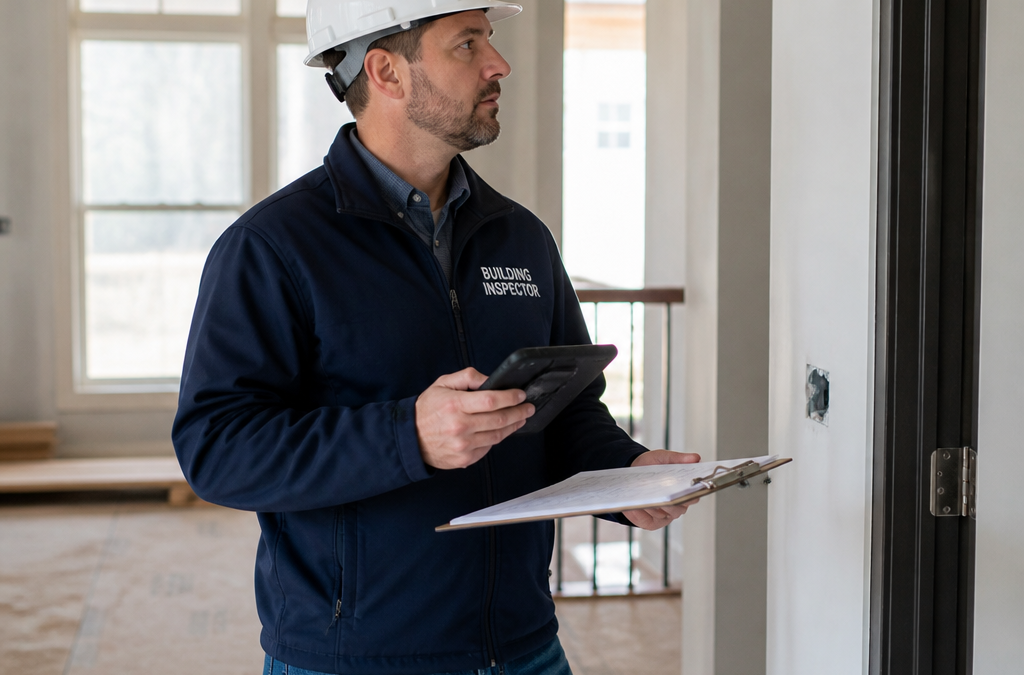
Most builders only learn about defects when a client calls to complain after handover. By that point, trades have moved on, memories have faded, and the cost of revisiting completed work has multiplied. A quality assurance building inspection integrated into the build process changes that equation entirely. GoInspect works directly with builders and developers across Brisbane, Gold Coast, Logan, Ipswich, and Redland Bay to catch defects before keys change hands, assign them to the responsible trade, and deliver reports fast enough to act on. The result is fewer post-handover disputes, cleaner project closeouts, and a paper trail that protects everyone involved.
Table of Contents
- Quick Takeaways
- Why Builders Need Independent QA, Not Just Internal Checks
- How GoInspect Works With Builders and Developers
- Trade-Specific Reports and Defect Accountability
- Defect Statistics and Open/Closed Tracking
- High-Rise and Multi-Dwelling QA Inspections
- Comparison of QA Inspection Approaches
- Frequently Asked Questions
- References
Quick Takeaways
| Key Insight | Explanation |
|---|---|
| Independent QA catches what internal checks miss | Builders’ own inspectors have a structural conflict of interest. An independent licensed inspector reports findings without internal pressure to minimise defect counts before handover. |
| Trade-specific reports eliminate the blame shuffle | GoInspect assigns each defect to the responsible trade in the report. This removes ambiguity and tells the site supervisor exactly who needs to return to rectify, rather than leaving it as an unresolved dispute between subcontractors. |
| Same-day reporting keeps projects moving | Waiting days for a report adds unnecessary delay when handover timelines are tight. GoInspect delivers reports the same day, meaning builders can start the rectification process without losing momentum. |
| Defect statistics enable performance benchmarking | Tracking open and closed defects across multiple projects reveals which trades are underperforming and which project types generate the most defects, giving developers data to make better subcontractor decisions. |
| Pre-handover QA reduces post-handover call-backs | Defects identified and rectified before handover cost a fraction of the same repairs managed as call-backs after the client has taken possession. The builder saves time and money by front-loading the quality check. |
| High-rise projects require specialised inspection scope | Apartments and multi-dwelling developments have defect categories that do not apply to detached homes, including fire separation, waterproofing of common areas, and mechanical services. Generic checklists miss these entirely. |
| Quality Assurance Certificates protect builder reputation | GoInspect issues QA Certificates on completion of the inspection and rectification cycle. These give builders a verifiable record of quality to present to clients and, where required, regulators. |
Why Builders Need Independent QA, Not Just Internal Checks
Internal quality checks are a normal part of any responsible build process. The problem is that they are not objective. The person conducting an internal inspection is employed or contracted by the builder, which creates pressure, conscious or not, to close out defects on paper before they are fully resolved in the field.
This gap has real consequences. Research from Deakin University examining building reports across Queensland, New South Wales, and Victoria found that 85% of the 212 reports reviewed identified at least one defect. That figure is not evidence that builders are doing a poor job. It is evidence that defects are a structural feature of any complex construction project, and that independent eyes consistently find things that internal reviews close over.
For builders, the commercial logic of independent QA is straightforward. A defect identified and rectified before handover costs a fraction of the same repair managed as a call-back after the client has taken possession. The client experience also changes: a buyer who sees a formal defect report with photos, trade assignments, and a re-inspection confirmation walks away with confidence rather than suspicion.
A defect caught before handover is a process success. The same defect discovered by the client three weeks after settlement is a dispute, a relationship problem, and an unbudgeted cost all at once.
Pro tip: If your site supervisor is marking defects as rectified before physically verifying the work has been completed, you already have an open/closed tracking problem. A third-party re-inspection catches exactly this gap before it becomes a client complaint.
How GoInspect Works With Builders and Developers
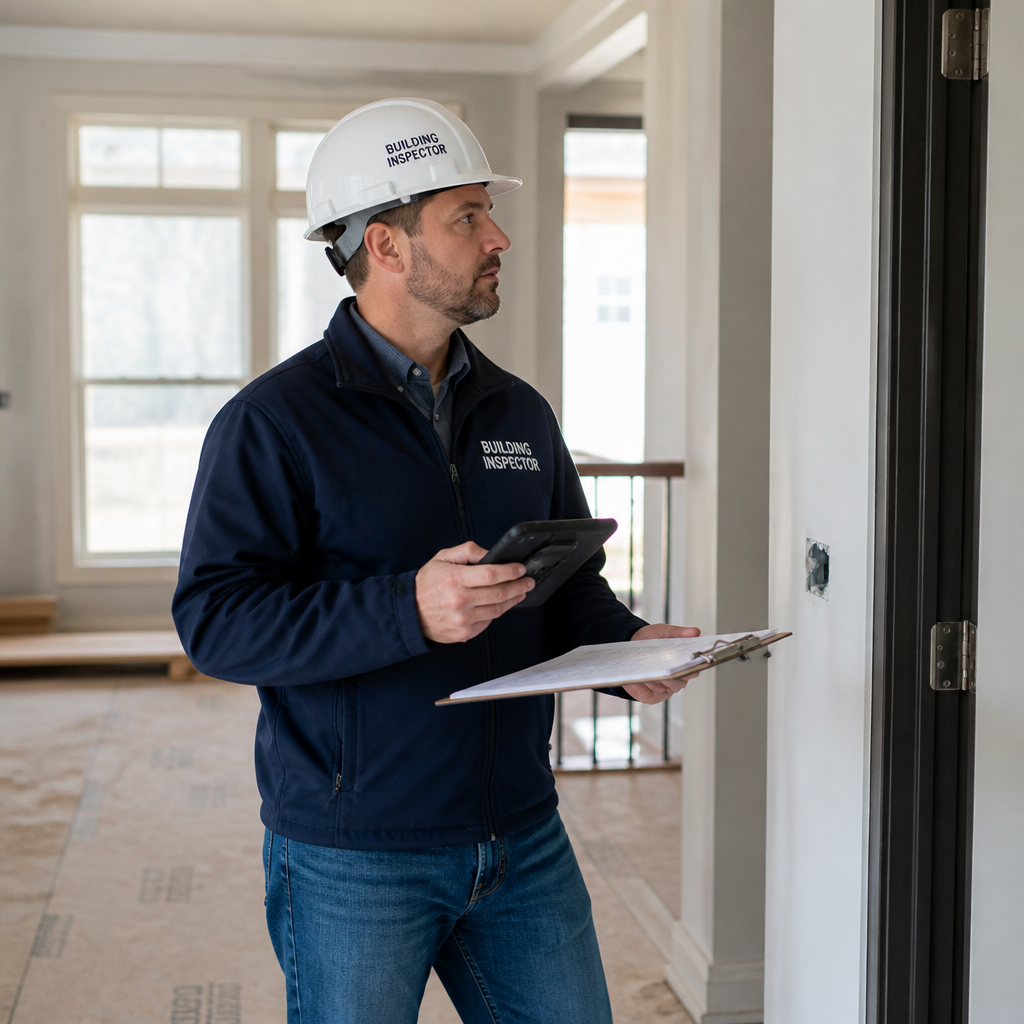
GoInspect’s process for builders is built around three stages: identification, rectification, and re-inspection. Each stage has a defined output, and no stage is left open-ended.
Stage 1: Identification
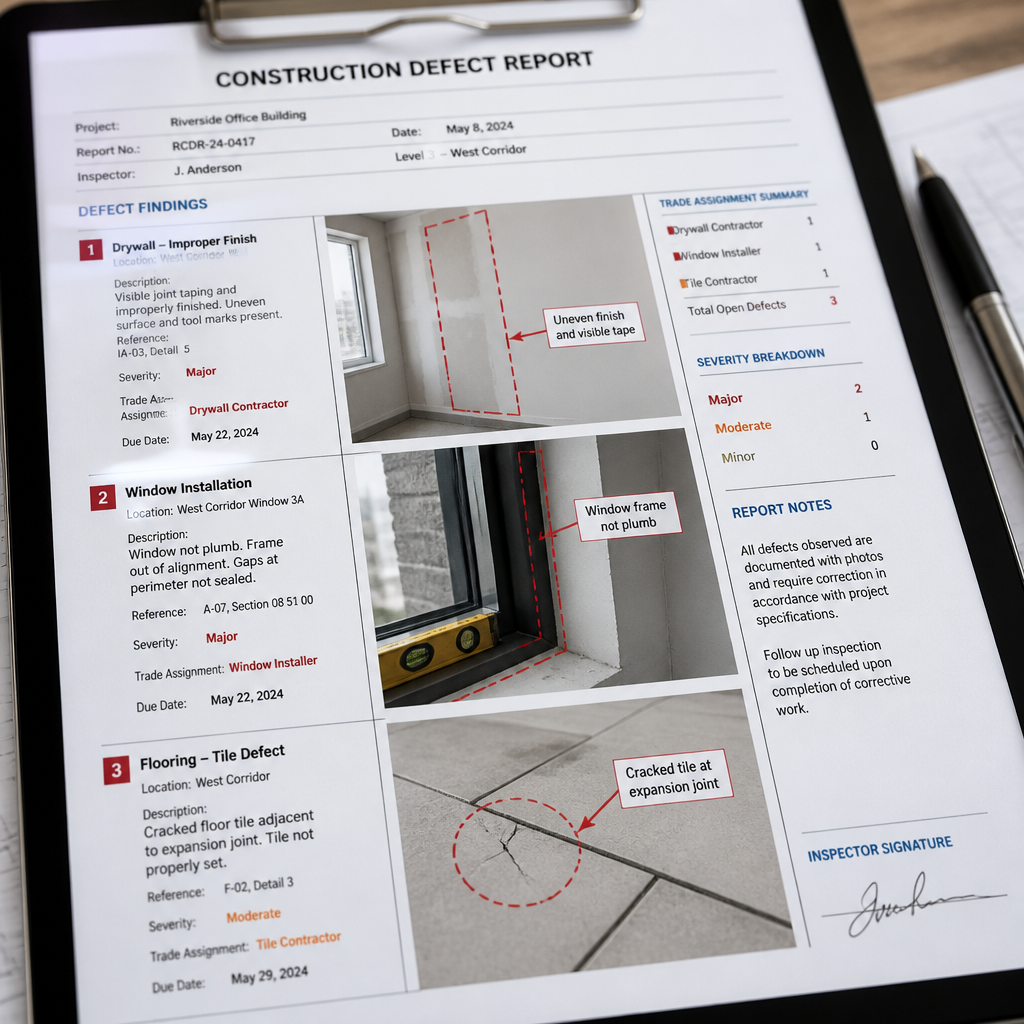
GoInspect inspectors walk the completed or near-completed property and document every defect with photos. Each defect is described in specific terms, located precisely within the property, and assigned to the relevant trade. The report is delivered the same day as the inspection, meaning the builder receives actionable information while the work is still fresh.
Stage 2: Rectification
This stage belongs to the builder. The trade-specific report makes it straightforward to issue work orders directly to the subcontractors responsible. There is no interpretation required and no argument about who owns which item. The report has already done that work.
Stage 3: Re-Inspection
Once the builder confirms that rectification is complete, GoInspect returns to verify each item against the original report. This is not a general walk-through. It is an item-by-item check, with photo comparison where relevant, confirming that the specific defect documented in Stage 1 has been genuinely resolved. Re-inspections start from $550 including GST, in line with the base price of the initial inspection.
This three-stage structure gives developers working across multiple projects a repeatable, consistent QA process. It also creates a documented audit trail that can be presented to clients, strata managers, or the Queensland Building and Construction Commission if disputes arise later.
Pro tip: For housing developments with multiple lots progressing at different stages, schedule GoInspect across the project rather than treating each lot as a one-off engagement. Consistent use of the same inspector across a development builds familiarity with the builder’s subcontractors and makes trade performance tracking meaningful over time.
Trade-Specific Reports and Defect Accountability
One of the most common sources of delay in defect rectification is the question of who is responsible. A defect report that simply lists problems leaves the builder to arbitrate between a plasterer who says it is a painter’s problem and a painter who says it is the plasterer’s fault. That arbitration takes time and rarely resolves cleanly.
GoInspect’s trade-specific reports resolve this before the argument starts. Each defect in the report carries an assigned trade responsibility. The builder does not need to investigate ownership. They issue the work order to the named trade and the trade either rectifies or disputes with documented evidence rather than verbal disagreement.
What Trade Assignment Looks Like in Practice
A door that does not close properly might involve the frame carpenter, the door hardware installer, or both. A GoInspect report will specify which element is defective and which trade is accountable, rather than logging “door issue” and leaving the builder to sort it out. This specificity is the difference between a report that creates action and one that creates meetings.
For developers managing multiple subcontractors across a housing development or high-rise project, the cumulative effect is significant. Trade-specific defect data across a full development exposes patterns: which subcontractors are generating repeat defect types, which stages of the build are most problem-prone, and which trades are completing their rectification obligations promptly.
Photos as Evidence, Not Just Illustration
Photo-enhanced reports are central to how GoInspect documents defects. The photos do more than confirm a defect exists. They record location, extent, and condition at the time of inspection. When a builder pushes back on a defect claim, a timestamped photo removes the ambiguity that makes disputes drag on. The trade either fixes it or provides a technical reason why the identified item is within tolerance. Undocumented verbal reports cannot achieve this.
Defect Statistics and Open/Closed Tracking
For builders and developers managing multiple projects or delivering ongoing housing supply, a single inspection report answers one question: what is wrong with this specific property? Defect statistics reporting answers a more valuable question: what patterns are emerging across all of our projects, and are we getting better or worse?
GoInspect provides defect statistics reports that track open and closed defects across projects. This is not a simple count. Open status in these reports reflects defects that have been identified and not yet verified as rectified. Closed status reflects defects confirmed as resolved by a GoInspect re-inspection, not defects marked closed by the builder’s internal system.
Why the Internal/External Closed Gap Matters
A common finding across GoInspect inspections in Brisbane, Gold Coast, Logan, Ipswich, and Redland Bay is defects logged as internally resolved by the building company that are still physically present when an independent inspector walks the property. That gap between what the builder’s system says is closed and what is actually closed is one of the most persistent and costly quality problems in residential construction.
Tracking defect density across house and land packages versus high-rise developments also reveals where builder performance deteriorates under complexity or volume pressure. A developer who can see that defect rates on their apartment projects are consistently higher than on their detached housing projects can investigate the cause rather than simply accepting the outcome as inevitable.
Trade Performance Over Time
When defect data is aggregated across multiple projects, it becomes a subcontractor performance tool. A tiler who generates twice the defect rate of their peers on every project is an identifiable risk, not just a one-off problem. Builders who use GoInspect consistently across their portfolio can make procurement decisions based on real defect data rather than anecdotal experience.
High-Rise and Multi-Dwelling QA Inspections
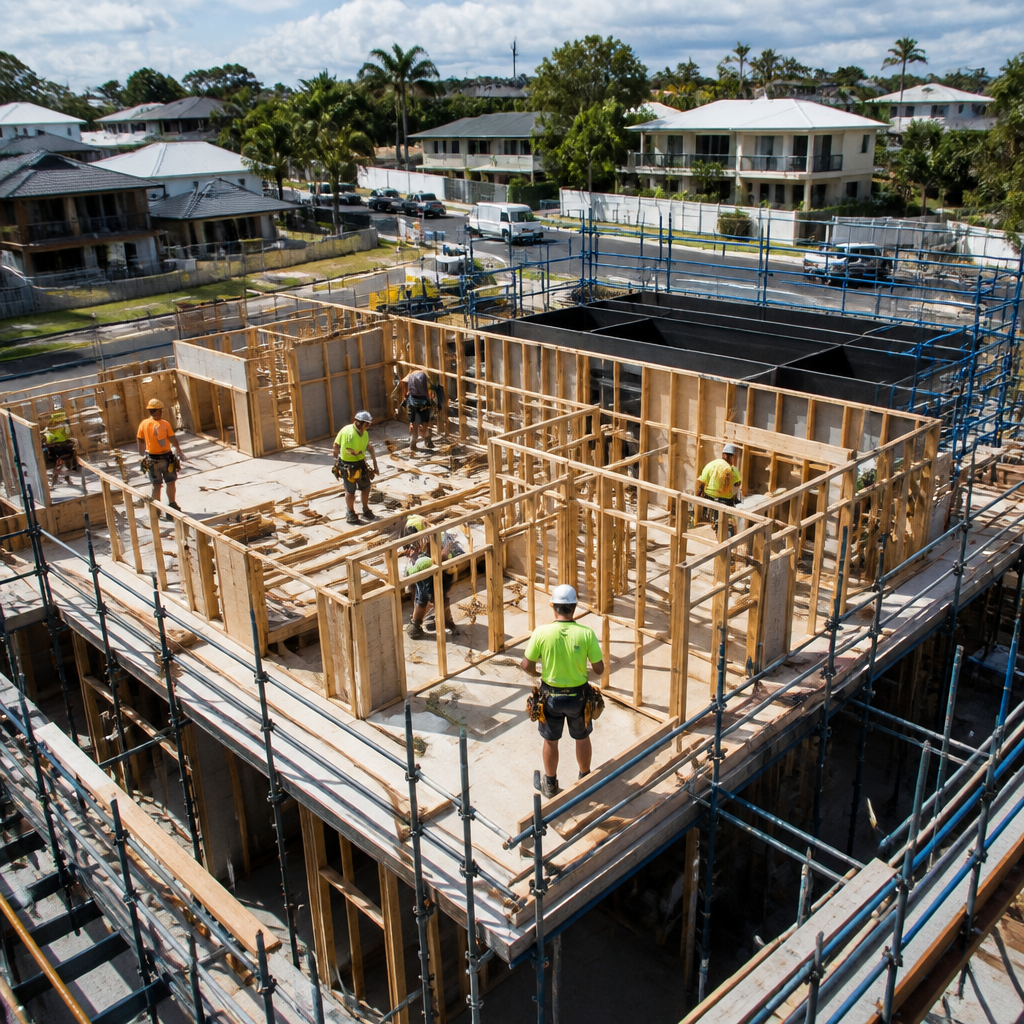
Quality assurance for apartments, townhouses, and high-rise developments requires a different inspection scope than detached housing. The defect categories are different, the building systems are more complex, and the consequences of missed defects are multiplied across many owners in a strata scheme.
GoInspect provides customised reports specifically designed for apartment buildings and high-rise developments. These are not standard house checklists applied to a different building type. They account for defect categories that are specific to multi-dwelling construction: waterproofing of wet areas and common spaces, fire separation compliance, mechanical services including HVAC and hydraulics, and the condition of common area finishes.
Why Generic Inspection Templates Fall Short
A checklist built for a detached house will miss a significant portion of the risk in a multi-storey development. Fire separation between apartments is not a detached house concern. Neither is the waterproofing of a rooftop terrace or the performance of shared mechanical plant. Applying an inadequate checklist to a complex building gives the developer a false sense of completeness and leaves the strata body exposed to defects that were documented as passing but never actually checked.
Coordinating QA Across Multiple Lots and Towers
Developers managing large projects face an additional challenge: coordinating inspections across units that complete at different times within the same building. GoInspect manages this by working directly with the developer’s project team to schedule inspections at the point of practical completion for each unit or floor, rather than waiting for the entire building to be finished. Early identification of defect patterns in completed floors allows trades to adjust their approach on floors still in progress.
Pro tip: For multi-stage housing developments, ask GoInspect to provide defect density statistics by stage as each stage completes. If Stage 2 is generating significantly more defects per property than Stage 1, that is a signal to investigate before Stage 3 is underway, not after it is finished.
Comparison of QA Inspection Approaches
Not all quality assurance inspection approaches deliver the same outcome. The table below compares three approaches builders and developers commonly use, and what each actually produces in practice.
| Approach | What It Delivers | Key Limitation for Builders and Developers |
|---|---|---|
| Builder’s internal quality check only | Sign-off by a person employed or contracted by the builder; may include a standard checklist completed on-site | Not independent. Internal pressure to minimise defect counts before handover means the same structural gap exists on every project. Provides no defensible audit trail if a dispute arises post-settlement. |
| Single pre-handover report without trade assignment or re-inspection | A list of defects, sometimes with photos, delivered to the builder before handover | No verified closure. The builder receives a defect list but there is no independent confirmation that items have actually been rectified. Trade ownership of each defect remains ambiguous, slowing rectification. |
| GoInspect builder and developer QA program (identification, trade-specific report, re-inspection, statistics tracking) | Photo-enhanced defect identification with trade responsibility assigned, same-day delivery, verified re-inspection, open/closed tracking across projects, QA Certificates on completion | Requires scheduling in advance of handover dates and consistent use across projects to generate meaningful performance benchmarking data. Best value is realised when used across a full portfolio, not as a one-off engagement. |
Frequently Asked Questions
What is a quality assurance building inspection for builders?
A quality assurance building inspection for builders is an independent assessment of a completed or near-completed property, conducted before handover to the client. It identifies defects, assigns responsibility to specific trades, and produces a documented report the builder uses to drive rectification. Unlike an inspection commissioned by the buyer, a builder QA inspection is initiated by the builder as part of their own quality control process and is designed to protect their reputation and reduce post-handover call-backs.
How does GoInspect assign defects to specific trades?
GoInspect inspectors document each defect with its location, a description of the issue, and an assignment of trade responsibility based on the nature of the defect and the work involved. For example, a gap in caulking around a bathroom fixture is assigned to the tiler or plumber depending on its location and cause. This assessment draws on the inspector’s trade knowledge and familiarity with how subcontractors divide responsibility on residential and commercial builds in Queensland.
Can GoInspect handle large housing developments and high-rise projects?
Yes. GoInspect provides customised inspection programs for housing developments, townhouse groups, apartment buildings, and high-rise projects across Brisbane, Gold Coast, Logan, Ipswich, and Redland Bay. Reports for multi-dwelling and high-rise projects are specifically scoped for those building types, covering waterproofing, fire separation, mechanical services, and common area finishes in addition to standard defect categories. Inspections can be scheduled by unit, floor, or stage to align with the developer’s practical completion program.
What is included in GoInspect’s defect statistics reporting for developers?
GoInspect’s defect statistics reports track open and closed defects across multiple properties or projects. They show which trades are generating the most defects, how quickly defects are being rectified, and how defect density compares across different project types. Closed status in these reports reflects defects verified as resolved by a GoInspect re-inspection, not items marked closed in the builder’s internal system. This distinction is what gives the data its value as a genuine performance management tool rather than a documentation exercise.
When should a builder schedule a GoInspect quality assurance inspection?
The inspection should be scheduled when the property is at or near practical completion, but before the handover appointment with the client. This timing gives the builder the maximum window to rectify defects before the client walks through. For large developments, GoInspect recommends scheduling inspections progressively as each unit or lot reaches completion rather than waiting for the entire project to finish, so that defect patterns can be identified and addressed while trades are still on-site.
Does using GoInspect for QA reduce disputes with homeowners after settlement?
In practice, yes. When a builder can demonstrate that an independent licensed inspector reviewed the property before handover, identified defects, and confirmed rectification through a re-inspection, it substantially changes the nature of any post-settlement conversation. The documented audit trail shows the builder took the defect process seriously. Clients who receive this documentation at handover are less likely to escalate minor issues to formal complaints, and builders have a clear record to rely on if a dispute does proceed to the QBCC or another authority.
If you are a builder or developer currently managing defects through internal checklists alone, we would be interested to hear what challenges you face at the handover stage and whether independent QA has changed your process.
References
- GoInspect Builders and Developers service overview including QA Certificates, trade-specific reports, and defect statistics
- GoInspect guide to open and closed defect tracking for builders across Queensland residential projects
- QBCC proactive audit findings on how early inspections help Queensland builders address defects before they become costly
- QBCC 2025 Industry Snapshot on the most commonly reported building defects across Queensland
- Deakin University study findings on the prevalence of building defects across residential properties in Queensland, NSW, and Victoria