
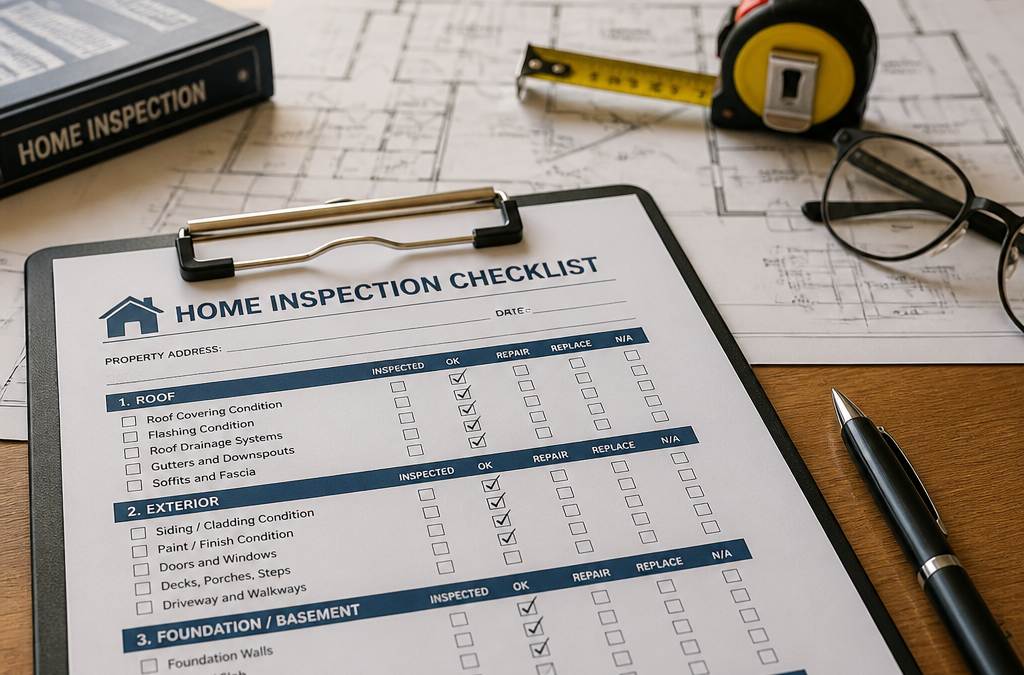
Most Brisbane buyers signing off on a new build assume the price tag on their inspection quote tells them everything they need to know. It does not. A new home inspection cost Brisbane buyers encounter can range from under $400 to well over $1,200, and the difference between the cheapest and most thorough option is rarely just money. It is what gets missed, what gets documented, and whether you have anything enforceable in your hands before you hand over your final payment. This article breaks down exactly what drives that price range, what a proper handover report must contain to justify its fee, and where buyers and investors consistently make costly mistakes.
Table of Contents
- What Does a Handover Inspection Cost in Brisbane?
- Quick Takeaways
- Four Factors That Move the Price
- What a Quality Report Must Contain to Justify the Fee
- Comparing Inspection Service Types and What They Actually Include
- The Real Cost of Skipping the Inspection
- Investors vs. Owner-Occupiers: Is the Calculation Different?
- Frequently Asked Questions
- References
What Does a Handover Inspection Cost in Brisbane?
For a standard single-dwelling new home in Brisbane and the broader Southeast Queensland region, licensed inspection providers start at approximately $550 including GST. That entry price covers a pre-handover or practical completion inspection for a house or townhouse in areas including Brisbane, Gold Coast, Logan, Ipswich, and Redland Bay. At the lower end of the market, around $400, you are typically looking at operators who are unlicensed, lightly experienced, or both. At $1,200 and above, you are generally paying for larger homes, high-rise apartments with body corporate coordination requirements, or highly detailed photographic defect reporting on complex builds.
The $550 to $700 band is where the majority of quality licensed inspections for standard Brisbane new homes sit. That is the realistic benchmark for a properly conducted, photo-enhanced inspection that produces a same-day report with defects assigned to specific trades. Anything below $450 for a full house should prompt serious questions about who is actually conducting the inspection and what licensing they hold.
Quick Takeaways
| Key Insight | Explanation |
|---|---|
| Licensed inspections start from $550 inc. GST in Brisbane | This is the realistic market entry point for a properly conducted pre-handover inspection of a standard Brisbane new home from a licensed provider. |
| Cheap quotes often mean unlicensed operators | Quotes below $400 for a full house in Southeast Queensland frequently come from unlicensed or inexperienced inspectors whose reports carry limited legal weight. |
| Defect costs dwarf inspection fees | The Queensland Home Warranty Scheme average claim for defective waterproofing has reached $25,000. An inspection fee is a fraction of a single uncaught defect. |
| Same-day reporting is not just a convenience | Builders move quickly at handover. A report delivered same-day gives you documented evidence before trades demobilise and the builder’s attention moves to the next project. |
| Trade-specific defect assignment changes how builders respond | Reports that identify which subcontractor is responsible for each defect are acted on faster than vague defect lists, because they remove the builder’s ability to deflect accountability. |
| High-rise apartments cost more to inspect than houses | Apartment pre-handover inspections require coordination with body corporate management and different checklists, which increases inspection time and therefore price. |
| Your QBCC position depends on documented evidence | A formal, independently produced handover report significantly strengthens your position if you need to lodge a defective work dispute with the QBCC after settlement. |
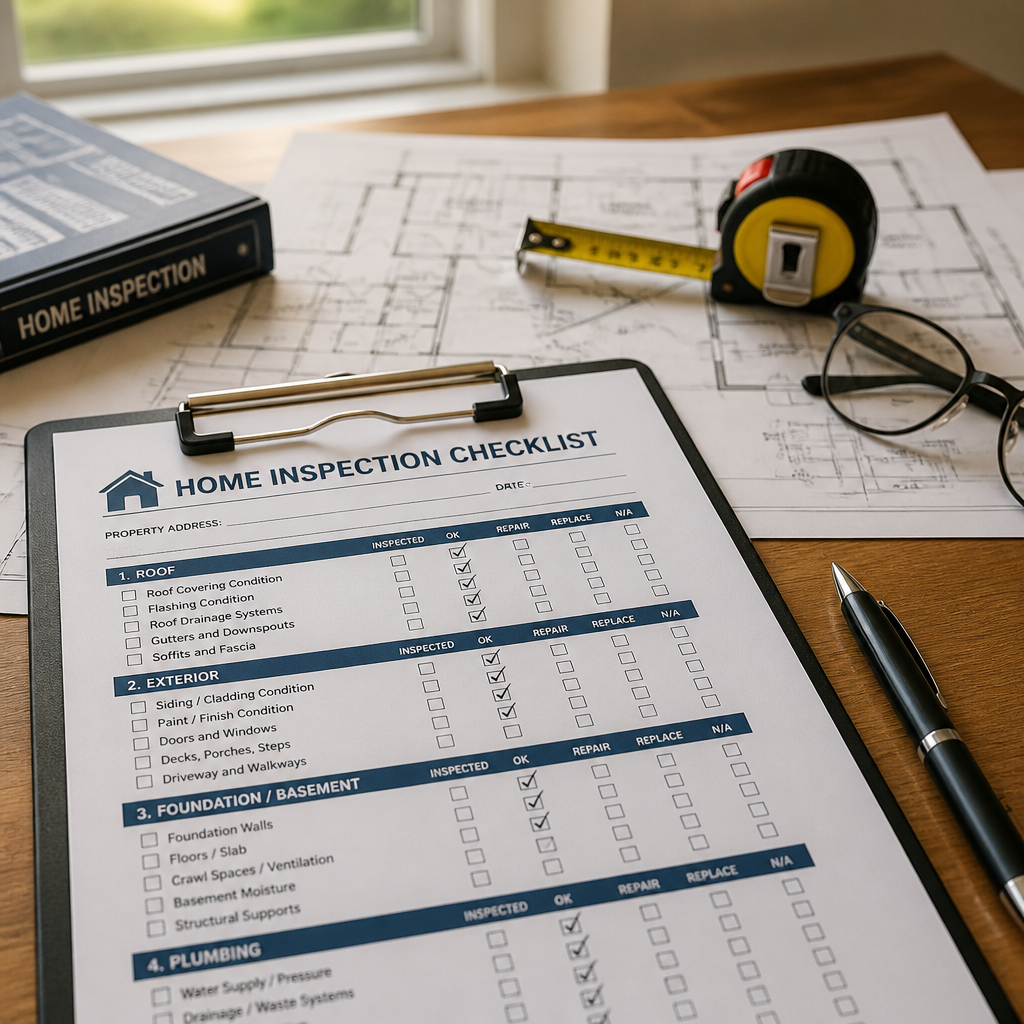
The price of a new home inspection is one of the easiest numbers to compare across providers. The value of what you get for that price is significantly harder to assess unless you know exactly what to look for in a report. Before booking any inspection on a Brisbane new build, consider the points below as non-negotiable minimum standards, not optional extras.
Four Factors That Move the Price
The building inspection fee Brisbane homeowners pay is not arbitrary. Four specific variables account for most of the price variation you will see when comparing quotes across Southeast Queensland.
Property Type and Size
A compact townhouse in Logan takes fewer hours to inspect than a two-storey, four-bedroom home in Redland Bay with a double garage, alfresco area, and pool. Larger homes have more surfaces, more fixtures, more junctions between trades, and more opportunity for defects to hide. Inspection fees reflect time on site, and time on site scales with size and complexity. A standard pre-handover inspection takes between two and four hours. Larger or more complex properties push toward the higher end of that range and command higher fees accordingly.
Property Location Within Southeast Queensland
Brisbane metropolitan inspections are generally priced at the base rate. Properties in outer growth corridors such as Ipswich, Logan’s southern suburbs, and Redland Bay may carry a modest additional travel component, though many licensed providers price these regions within the same bracket for their core service area. Gold Coast inspections reflect the density of high-rise construction in that market, where apartment pre-handover inspections require different checklists and often body corporate coordination.
Report Depth and Photographic Documentation
A basic written defect list and a photo-enhanced report with trade-specific defect assignment are two fundamentally different products, even if both are called a “handover inspection report.” Detailed photographic evidence, location mapping, and trade attribution require more time to compile both on site and in post-processing. Providers who deliver a polished, same-day photo report are pricing that labour into their fee. Those who deliver a template form filled in by hand are not.
Inspector Licensing and Professional Credentials
In Queensland, building inspectors should hold a QBCC licence. Operators without this credential represent a real risk: their reports carry limited legal weight if you need to pursue a defect dispute, and their liability to you is substantially reduced. Always ask any inspector you are considering whether they hold a current QBCC licence and request their licence number before booking.
Pro tip: When comparing quotes, ask each provider to specify the inspector’s QBCC licence number upfront. If they cannot or will not provide it, treat that as a clear disqualification regardless of how low their price is.
What a Quality Report Must Contain to Justify the Fee
The inspection itself is only part of what you are paying for. The report is the document you will use to negotiate with your builder, and potentially to support a QBCC complaint if rectification is refused. A report that does not meet the minimum standard below is functionally useless for either purpose, regardless of how low its associated fee was.
Photographic Evidence for Every Defect
Every identified defect should be supported by at least one photograph that clearly shows the issue, its location within the property, and its severity. Verbal descriptions without photos are contestable. A builder who disagrees with a defect finding will challenge a written description far more aggressively than a timestamped photograph taken on the day of inspection.
Trade-Specific Defect Attribution
A well-structured report assigns each defect to the responsible trade: framing, brickwork, roofing, plastering, tiling, painting, joinery, wet areas, electrical fittings, plumbing fixtures, or external works. This is not a nicety. Builders use trade-attributed defect lists to direct subcontractors back to site efficiently. A vague defect list creates ambiguity about which subcontractor must return, giving the builder room to delay or avoid rectification.
Compliance References
Quality reports reference the relevant standards that the identified defect breaches. This means the National Construction Code (NCC), applicable Australian Standards, and the QBCC Standards and Tolerances Guide. A defect described in terms of the specific standard it violates is far harder for a builder to dismiss than one described only in subjective terms.
Same-Day Delivery
Finishing trades at handover demobilise quickly. The painter, tiler, and joiner who did the work may not be engaged on that site within days of your inspection. A report delivered same-day, before you leave the handover meeting, gives you documented evidence while the builder still has active relationships with the responsible trades. A report delivered 48 to 72 hours later loses that timing advantage.
A handover inspection report is a working document, not just a record. You put it to the builder and request rectification before settlement. The QBCC framework means a formally documented, independent report gives you something concrete to hold them to – trying to prove a defect existed after settlement is a far harder position to be in.
Comparing Inspection Service Types and What They Actually Include
Not all inspection services positioned as “new home” or “handover” inspections are the same product. The table below compares the three main service tiers you will encounter when researching handover inspection price Queensland, based on what these services actually deliver rather than how they market themselves.
| Service Type | Typical Price Range (Brisbane, inc. GST) | What You Actually Get |
|---|---|---|
| Basic walkthrough / template checklist | $350 to $450 | A completed checklist form. Often no photographs or minimal photos. No trade attribution. Report turnaround 24 to 48 hours. Often from unlicensed or lightly credentialed operators. Limited enforceability in a QBCC dispute. |
| Licensed inspection with photographic report | $550 to $750 | Full photo-enhanced defect report with trade-specific attribution. QBCC-licensed inspector. Same-day or next-morning delivery. Covers all trades: structural, wet areas, finishes, external works, fixtures, and fittings. Suitable for QBCC dispute support. |
| High-rise or complex development inspection | $750 to $1,200+ | Everything in the licensed report tier, plus body corporate coordination, apartment-specific checklists, and customised reporting for multi-dwelling developments. Suitable for investors managing multiple units or developers conducting defect audits across a project. |
The middle tier is where most Brisbane owner-occupiers and residential investors get the right balance of coverage, documentation quality, and cost. The key distinction between the bottom and middle tiers is not price but licensing. A $450 report from a QBCC-licensed inspector with photographic documentation is worth more than a $400 report from an unlicensed operator, and worth considerably more in a dispute scenario.
Pro tip: If you are purchasing an investment property in a high-rise development in Brisbane or the Gold Coast, request a provider who has specific experience with multi-unit inspections and body corporate coordination. The checklist for an apartment differs materially from that of a freestanding house, and a generic checklist applied to an apartment will miss unit-specific defects in common areas, balcony waterproofing, and fire separation elements.
The Real Cost of Skipping the Inspection
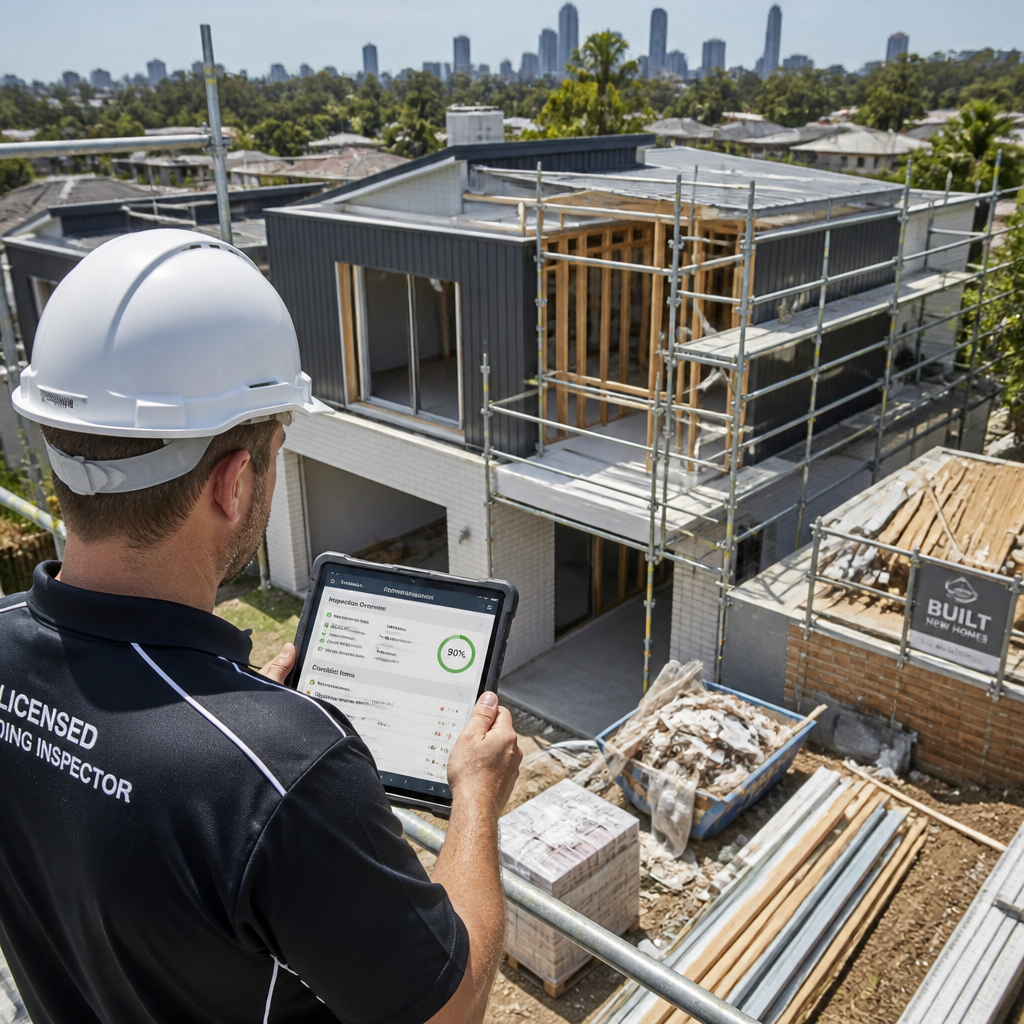
The objection most buyers raise when they see a $550 inspection fee is that the home is brand new and therefore unlikely to have defects worth finding. This reasoning is factually incorrect and financially dangerous.
The Queensland Building and Construction Commission’s 2025 Industry Snapshot identified defective building work as one of the most common complaint categories across the state. The QBCC reported that under the Queensland Home Warranty Scheme, the average claim to fix defective waterproofing reached $25,000. A single uncaught waterproofing fault in a bathroom or balcony, once tiling and finishes are installed, can cost between $3,000 and $15,000 or more to rectify. That figure makes a $550 inspection fee look like a straightforward financial decision.
The timing matters as much as the number. Defects formally documented at handover are significantly easier to enforce than issues raised informally six months later. By that point, the builder has moved to other projects, the specific subcontractor may no longer be engaged on that site, and you are trying to establish retrospectively that the defect existed from day one rather than arising after settlement. A formal inspection report eliminates that ambiguity entirely.
If issues are found during inspection, the options available to you before settlement include requesting rectification directly from the builder, or in serious cases, delaying settlement until the identified work is completed. Both options become substantially stronger positions when supported by a dated, photographic, licensed inspector’s report than when based on verbal observations made during a walk-through with the builder’s site supervisor.
Investors vs. Owner-Occupiers: Is the Calculation Different?
For owner-occupiers, the primary driver of the inspection decision is protecting their home from defects that affect liveability, safety, and resale value. For investors purchasing in Brisbane, Logan, Ipswich, Gold Coast, or Redland Bay, the calculation has an additional dimension that makes the inspection even more financially compelling.
A defect-free property commands stronger rental yield and carries lower risk of rental vacancy caused by maintenance issues in the first twelve months of tenancy. A tenant who moves into a newly built property and immediately encounters plumbing failures, waterproofing issues, or incomplete finishes is a tenant who leaves at the first lease renewal. The reputational and financial cost of early vacancy in a new investment property far exceeds the inspection fee that would have prevented it.
For investors managing multiple units in a Brisbane or Gold Coast high-rise development, the case for customised inspection reporting is even stronger. A developer or investor who wants to document defects across a project systematically, assign them to trades, and manage rectification across multiple units simultaneously needs a report format designed for that purpose, not a residential checklist applied to an apartment.
GoInspect works with both individual homeowners and property investors across Southeast Queensland, providing customised reports for high-rise developments and housing projects that support the defect rectification process from documentation through to builder follow-up. Their pricing starts at $550 including GST for standard single-dwelling new home inspections in the core service region.
Frequently Asked Questions
How much does a new home inspection cost in Brisbane?
For a standard single-dwelling new home in Brisbane, a licensed pre-handover inspection from a properly credentialed provider starts at approximately $550 including GST. The broader price range across Southeast Queensland runs from around $400 at the lower end for unlicensed or basic-checklist services, up to $1,200 or more for larger homes or high-rise apartment inspections with detailed photographic reporting. The $550 to $750 range covers most quality licensed inspections for standard Brisbane new homes.
What is included in a Brisbane handover inspection at the $550 price point?
At the $550 including GST entry point from a licensed provider like GoInspect, you receive a full on-site inspection by a QBCC-licensed inspector, a photo-enhanced defect report with defects attributed to specific trades, same-day report delivery, and coverage of all active trades including structural elements, wet areas, finishes, external works, fixtures, and fittings. This is not a basic checklist. It is a working document you can use directly in your builder negotiation.
Is a handover inspection legally required in Queensland?
A handover or practical completion inspection is not legally mandatory in Queensland. However, it is the most effective tool available to a homeowner or investor for documenting defects before settlement, and a formal inspection report is specifically what the QBCC expects when a homeowner pursues a defective work complaint. Choosing to skip the inspection does not remove the builder’s obligations under the QBCC framework, but it does weaken your evidentiary position if those obligations need to be enforced.
What is the difference between a pre-handover inspection and a 12-month warranty inspection?
A pre-handover inspection occurs before you accept the keys, giving you the opportunity to have defects rectified at the builder’s cost before settlement. A 12-month warranty inspection occurs near the end of the builder’s defect liability period and documents any issues that have emerged during the first year of occupation. Both are valuable and serve different purposes. If you only book one, pre-handover is the higher-priority inspection because it preserves your strongest legal position before you take ownership.
Can I use the inspection report to delay settlement if defects are found?
In some cases, yes. If defects identified during a pre-handover inspection are serious, you may have grounds to delay settlement until rectification is completed. The specific options available to you depend on the terms of your building contract and the nature of the defects identified. Your solicitor or conveyancer should be involved in any decision to delay settlement. A formal, photographic inspection report from a licensed inspector is the document that makes this conversation with your builder and your solicitor actionable rather than speculative.
Why do high-rise apartment inspections cost more than house inspections in Brisbane?
Apartment pre-handover inspections require coordination with body corporate management, different access arrangements, and a checklist that covers unit-specific elements like balcony waterproofing, fire separation, common area finishes, and shared services. This adds to the inspection time and complexity compared to a freestanding house. For investors purchasing in high-density developments on the Gold Coast or in inner Brisbane, this additional cost is well-justified given the concentration of defect risk in high-rise construction.
Should I attend the handover inspection myself?
Yes, attending the inspection is recommended where possible. Bring your building contract and plans so the inspector can verify that specified finishes, fixtures, and fittings have been delivered as agreed. Make sure all power and water are connected before the inspection day, because an inspector cannot properly assess electrical fittings or plumbing without live services. Your presence also allows the inspector to walk you through findings in person, which is a far more useful briefing than reading a report cold the next morning.
Have you recently gone through a new home handover in Brisbane or Southeast Queensland? Share your experience below, including what you found during your inspection and whether it changed what you paid at settlement.
References
- Queensland Building and Construction Commission: Top Building Defects and Their Costs Under the Home Warranty Scheme
- Buildi: How Much Does a Home Building Inspection Cost in Queensland?
- InspectMyHome: Handover Inspection Brisbane, What New Build Buyers Need to Know
- QBCC: How to Lodge a Defective Building Work Complaint in Queensland