
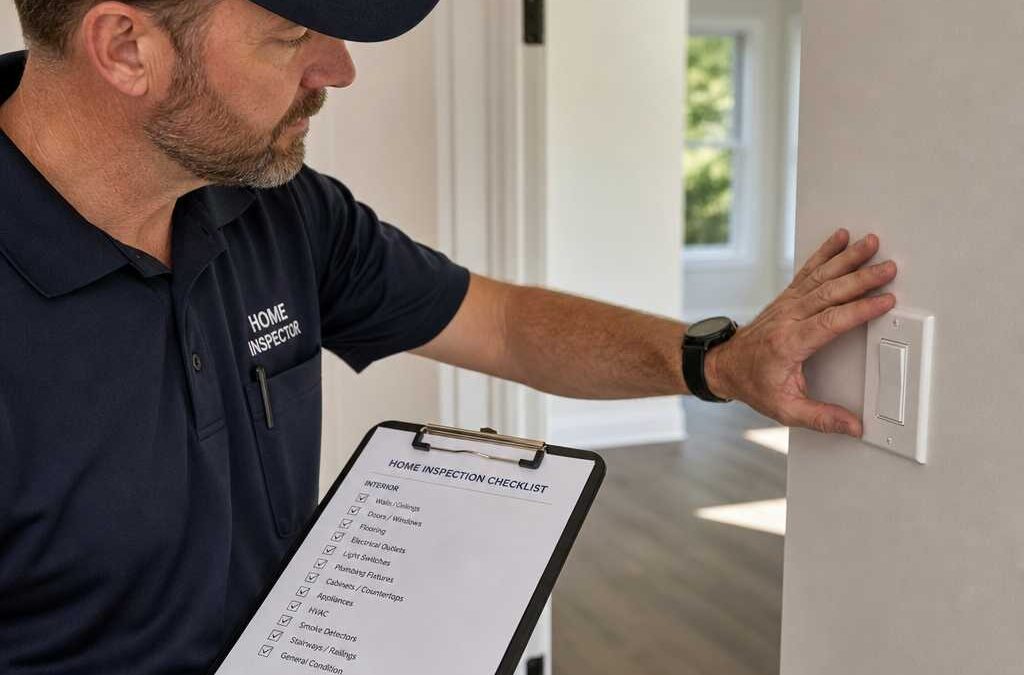
Most Gold Coast buyers assume a brand-new home is defect-free because it has never been lived in. That assumption is expensive. Independent research and the practical experience of inspectors working across Brisbane, the Gold Coast, and Logan consistently show that new builds contain an average of 20 to 40 identifiable defects before handover. A new home inspection Gold Coast buyers arrange before settlement is the single most effective tool for catching those defects while the builder is still contractually obligated to fix them, not after you have signed the transfer documents and moved in.
Table of Contents
- Quick Takeaways
- Why New Builds on the Gold Coast Have More Defects Than You Expect
- What a Handover Inspection on the Gold Coast Actually Covers
- Pre-Settlement vs Practical Completion: Understanding the Difference
- When to Book Your Inspection and Why Timing Is Everything
- How to Read a Defect Report and Use It Effectively
- Comparing Inspection Approaches for Gold Coast New Builds
- What Property Investors on the Gold Coast Need to Know
- Frequently Asked Questions
- References
Quick Takeaways
| Key Insight | Explanation |
|---|---|
| New builds are not defect-free | Construction trade sequencing on Gold Coast projects regularly leaves plumbing, tiling, and frame defects that are invisible without a trained eye. |
| Timing is legally critical | A pre-settlement inspection must happen before you sign off at settlement. Once settlement completes, defect liability shifts significantly toward the owner. |
| Photo-enhanced reports accelerate rectification | Reports that assign each defect to a specific trade and include photographs give builders clear, actionable instructions, reducing back-and-forth delays. |
| Queensland has mandatory defect liability periods | Under the Queensland Building and Construction Commission framework, new homes carry a 12-month defect liability period and a 6.5-year structural warranty. |
| High-rise inspections require customised reports | Apartment and townhouse developments on the Gold Coast have different common-area obligations. A standard house-inspection checklist misses shared infrastructure defects. |
| Same-day reporting matters at settlement | Settlement deadlines do not wait. Inspectors who deliver reports on the same day allow buyers to act on defect findings before contracts finalise. |
| Cost of inspection versus cost of defects | A professional inspection starting at $550 including GST is modest compared to a single unrectified structural defect that can cost thousands in remediation. |
Why New Builds on the Gold Coast Have More Defects Than You Expect
The Gold Coast construction market has been running at high volume for years. Demand from interstate migration, strong investor activity, and a pipeline of master-planned communities from Pimpama through to Coomera and Ormeau has kept trades stretched. When trades are stretched, quality control slips.
In practice, the most common defect categories GoInspect inspectors encounter on Gold Coast new builds are waterproofing failures in wet areas, cracked render on external cladding, incomplete or misaligned architraves and skirting boards, drainage falls that do not meet the minimum gradient under AS 3740, and electrical fixtures that have been installed but not commissioned. None of these are visible to an untrained buyer walking through a display-level finish.
The data consistently shows that defect density is highest on projects where multiple subcontractors have overlapping scopes. A tiler finishing a bathroom after a plumber has roughed in creates the exact conditions for waterproofing membrane punctures, which only show up as water damage months after settlement. That is precisely why an independent inspection exists: to find those failures before they become your problem.
Pro tip: Ask your inspector to specifically check the shower recess waterproofing membrane continuity on any Gold Coast new build completed between late 2022 and now. Labour shortages during that period produced a measurable spike in wet area defects across Southeast Queensland projects.


What a Handover Inspection on the Gold Coast Actually Covers
A handover inspection Gold Coast buyers book through a licensed inspector is not a casual walkthrough with a checklist app. It is a structured assessment against the Australian Standards, the National Construction Code, and the specific terms of your building contract.
Structural and Framing Assessment
The inspector checks wall frames, roof framing, and structural connections for compliance with engineering specifications. On Gold Coast properties near the coast, cyclone tie compliance under the applicable wind region classification is a specific check that carries real safety implications.
Wet Area and Waterproofing
Every shower, bath, laundry, and alfresco area with drainage is assessed for correct waterproofing installation. This includes checking that the membrane extends to the required height up internal walls and that the screed fall is compliant under AS 3740.
Finishes and Fixtures
Door and window operation, tile lippage tolerances under AS 3958, paint finish quality under AS 2311, and installed appliance commissioning are all assessed. A defect at this level does not threaten your safety, but it does affect your contractual right to a finished product that meets the agreed standard.
Site and External Works
Site drainage, driveway gradients, retaining wall construction, and fence alignment are assessed. On Gold Coast lots where topography varies significantly, external drainage defects are common and frequently overlooked by buyers focused on internal finishes.
GoInspect produces photo-enhanced defect reports that identify each issue, photograph it, and assign it to the responsible trade. That specificity is not a courtesy. It is what makes a builder’s rectification process efficient rather than a dispute over who owns the problem.
Pre-Settlement vs Practical Completion: Understanding the Difference
These two terms are used loosely and that creates real problems for buyers. A pre-settlement inspection Gold Coast buyers arrange is not always the same moment as practical completion, and the distinction matters legally.
Practical completion is the point your builder declares the work is finished and compliant, triggering your obligation to settle. Pre-settlement inspection is the independent inspection you arrange before you accept that declaration and complete the financial transaction. They can occur within the same 24 to 48-hour window, but they are separate acts with separate consequences.
If you accept practical completion without an independent inspection and then discover defects after settlement, you are still entitled to claim under the defect liability period. However, you have lost your most powerful negotiating position: the ability to withhold settlement until defects are rectified or a retention sum is agreed. That leverage disappears the moment settlement completes.
The Queensland Building and Construction Commission is clear that buyers retain rights during the defect liability period. But exercising those rights after settlement requires written notices, builder responses, and potentially QBCC dispute processes. Exercising them before settlement requires one phone call to your solicitor.
“The most effective consumer protection in a new home transaction is the ability to withhold funds until the product meets the contracted standard. That window closes at settlement.” Source: Queensland Building and Construction Commission consumer guidance framework.
When to Book Your Inspection and Why Timing Is Everything
Book your inspection the moment your builder provides a practical completion notice or a proposed handover date. Do not wait for a specific date to be confirmed before making contact with an inspector. Gold Coast inspection availability during peak settlement periods, particularly end of financial year and end of calendar year, is constrained. Inspectors who can deliver same-day reports are in especially high demand.
The ideal sequence is: receive practical completion notice from builder, book inspection immediately for the earliest available date, have inspector attend and deliver same-day report, review defects with your solicitor, and then respond to the builder’s settlement request with any relevant defect conditions. That sequence gives you a defensible position regardless of what the report finds.
A common mistake is booking the inspection the day before settlement because that was when the buyer first felt urgency. At that point, even a same-day report gives you less than 24 hours to act. Book early, even if it means the inspection date shifts slightly as the builder’s completion date moves.
Pro tip: If your Gold Coast build is a high-rise apartment or townhouse in a strata development, book your inspection to include both the individual lot and the relevant common property areas accessible at that stage. Defects in common areas discovered after settlement require body corporate resolutions to rectify, which adds time and cost that individual unit buyers never anticipated.

How to Read a Defect Report and Use It Effectively
A well-structured defect report does three things. It describes the defect precisely enough for a tradesperson to locate and understand it without revisiting the site. It photographs the defect in context. And it assigns responsibility to a specific trade so the builder can direct rectification without internal dispute.
When you receive the report, your first task is not to panic at the number of items. A report listing 35 defects on a new Gold Coast house is not unusual and does not mean the build is catastrophically poor. It means the inspection was thorough. What matters is the severity classification of each item.
Critical vs. Minor Defects
Critical defects are those that affect structural integrity, waterproofing compliance, electrical safety, or habitability. These require rectification before settlement or a formal written undertaking from the builder with a specific completion date. Minor defects, such as paint touch-ups or minor tile lippage at the edge of tolerance, can often be managed through a retention sum arrangement negotiated before settlement.
Using the Report in Negotiations
Hand the report to your solicitor the day it is delivered. Your solicitor uses it to draft correspondence to the builder that specifies which defects must be rectified pre-settlement, which can be managed through retention, and which you accept responsibility for post-settlement under the defect liability period. A report without photographs is almost impossible to use this way because builders routinely dispute whether a defect exists or whether it meets the threshold for rectification. Photographs remove that ambiguity.
Comparing Inspection Approaches for Gold Coast New Builds
| Approach | What It Includes | Where It Falls Short |
|---|---|---|
| Builder’s own handover inspection | Walk-through by the site supervisor against the builder’s internal checklist. Free of charge and scheduled by the builder. | No independent oversight. The supervisor’s interest is in completing the project. Critical defects are frequently noted as acceptable or remedied cosmetically rather than structurally. |
| Generic building inspection company | Trained inspector with a general checklist. Covers structural and safety items across all property types. | Often uses standardised reports not tailored to new build defects. Does not assign trade responsibility. Reports may not differentiate between high-rise common area and lot-specific defects on Gold Coast strata projects. |
| GoInspect new home handover inspection | Fully licensed inspector with photo-enhanced reports tailored to new builds. Trade-specific defect assignment. Same-day reporting. Customised for high-rise and housing projects across the Gold Coast. | Requires advance booking due to demand. Not suitable as a structural dilapidation report for purchase of existing older properties. |
The difference between a generic building inspection and a purpose-built new home handover inspection is not just the checklist. It is the practical output that a buyer can use in a settlement negotiation. A report that says “waterproofing issue in bathroom two” is less useful than a report that says “waterproofing membrane not extended to minimum height of 150mm above the shower grate as required by AS 3740, installed by tiling contractor, photographed on page 7.” The second version ends a dispute before it starts.
What Property Investors on the Gold Coast Need to Know
Property investors purchasing new builds on the Gold Coast, whether off-the-plan apartments in Southport or new house-and-land packages in the northern growth corridor, have a different risk profile than owner-occupiers. An investor who does not attend the property personally has even less visibility over construction quality, which makes an independent inspection more important, not less.
Rental income assumptions for a new Gold Coast property depend on the property being lettable immediately after settlement. An unrectified defect that makes the property uninhabitable, such as a failed waterproofing installation, a non-compliant smoke alarm layout, or an incomplete electrical commissioning, delays the first tenancy and can trigger a breach notice from a property manager. That delayed income is a direct financial loss that the cost of an inspection would have prevented.
Investors purchasing through a self-managed super fund have additional obligations. The property must be suitable for investment purposes at acquisition. A documented inspection report is evidence of due diligence that a fund trustee can point to if the property’s condition is ever questioned by the ATO or a fund auditor.
GoInspect’s reporting format, which assigns defects to specific trades and provides photographic documentation, also creates a durable record for investors who may not be on the Gold Coast during the inspection. A remote investor in Sydney or Melbourne can review a 40-page photo-enhanced report and understand exactly what was found, what needs fixing, and who is responsible, without attending the site.
Frequently Asked Questions
How much does a new home inspection on the Gold Coast cost?
GoInspect’s new home inspections start at $550 including GST. The final price depends on the property type, whether it is a house or a high-rise apartment, and the scope required. That starting price is consistent with the broader Southeast Queensland market for licensed inspection services, though pricing varies significantly based on what the report format includes. A cheaper inspection that produces a vague two-page report is not a saving when you need to use that report in a settlement negotiation.
Do I need a handover inspection if the builder has given me a defects list already?
Yes. A builder’s own defects list is prepared by the builder’s representative and reflects what the builder chooses to disclose. It is not an independent assessment. An independent handover inspection Gold Coast buyers arrange through GoInspect or a comparable licensed service will consistently identify items not on the builder’s self-prepared list. The two documents serve different purposes and one does not replace the other.
What happens if defects are found on the day of settlement?
If defects are found before settlement completes, your solicitor can raise them with the vendor’s solicitor and negotiate either a delay to settlement pending rectification, a retention sum held in trust until rectification occurs, or a price adjustment. The outcome depends on the severity of the defects and the terms of your contract. This is exactly why same-day reporting matters. A report delivered on the morning of settlement gives your solicitor something to work with before the transaction closes.
Are new home inspections on the Gold Coast different from Brisbane inspections?
The Australian Standards and National Construction Code apply uniformly, but Gold Coast builds have specific considerations. Coastal wind region classifications affect structural tie requirements. Salt air exposure raises the bar for material selections in external fixtures. And the density of high-rise and strata developments on the Gold Coast means a higher proportion of inspections require assessment of both individual lots and common property areas. GoInspect operates across both Gold Coast and Brisbane and tailors report formats accordingly.
Can I attend the inspection myself?
Yes, and attending is recommended where practical. Walking through the property with the inspector while findings are noted gives you direct context for the report items. That said, the inspection’s value does not depend on your presence. GoInspect’s photo-enhanced reports are designed to communicate findings clearly to buyers who were not present, including interstate investors and buyers who could not take time off work on the inspection day.
Is a pre-settlement inspection the same as a building and pest inspection?
No. A pre-settlement inspection on a new build assesses construction compliance and defects against the building contract and Australian Standards. A building and pest inspection is typically used for existing homes and adds a timber pest assessment. New builds do not require a pest inspection in the same way because the property has no occupancy history, though some buyers choose to add a timber pest component. For a new home on the Gold Coast, the pre-settlement handover inspection is the primary tool, and it focuses specifically on construction quality and trade compliance.
If you have recently completed a new home handover inspection on the Gold Coast, share what surprised you most about the defects found, your experience helps other buyers understand what to look for.
We would love your feedback and any insights you would share with others. What perspective would you add?
References
- Queensland Building and Construction Commission, official consumer guidance on defect liability periods and new home warranties
- Australian Competition and Consumer Commission, consumer rights in new property transactions and contract obligations
- Standards Australia, Australian Standards governing waterproofing, tiling, and construction compliance for residential buildings
- Forbes Real Estate coverage of new home construction defect trends and buyer protection strategies
- Statista housing construction and defect rate data for the Australian residential property market