
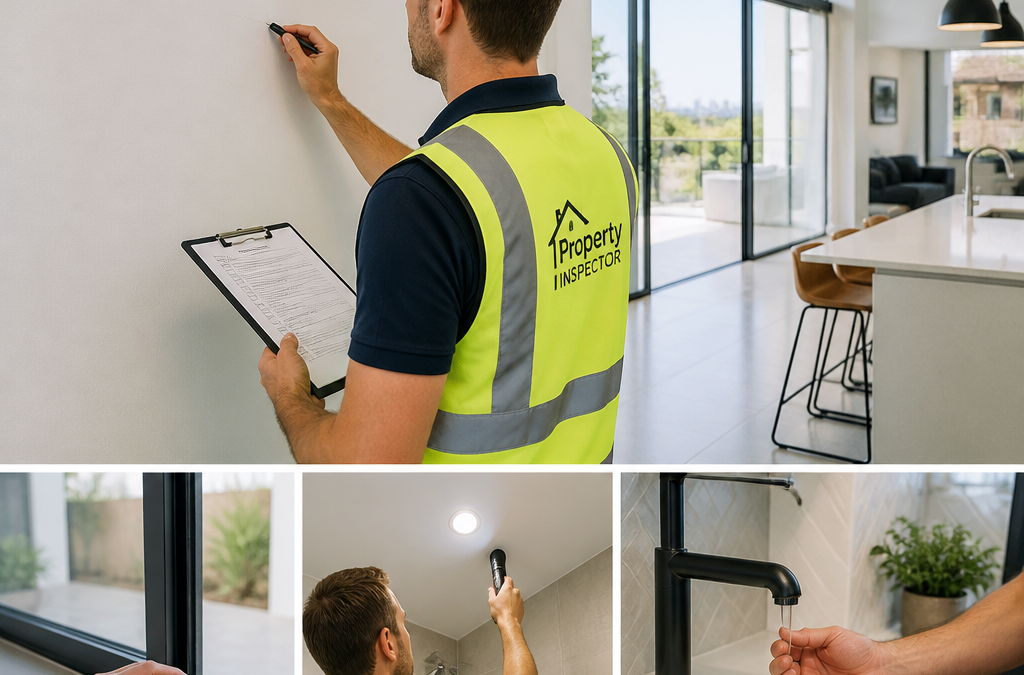
You have just signed a contract on a new Gold Coast property. The builder has declared practical completion, and the handover date is locked in. At that exact moment, the QBCC warranty clock starts ticking, your final payment obligation is triggered, and whatever defects exist in that building become your problem to manage. A handover inspection Gold Coast investors and homeowners arrange before that moment is the single most effective tool available to protect a purchase worth hundreds of thousands of dollars. Skip it, and you are relying entirely on the builder’s own quality assurance, which is not an independent process.
Table of Contents
- Quick Takeaways
- Why the Gold Coast Market Makes This Urgent
- What a Handover Inspection Actually Does
- What Gets Found: Common Defects in Gold Coast New Builds
- The QBCC Warranty Connection: Why Timing Is Everything
- Investor-Specific Risks That Make Inspection Non-Negotiable
- Comparing Your Inspection Options on the Gold Coast
- Frequently Asked Questions
- References
Quick Takeaways
| Key Insight | Explanation |
|---|---|
| The warranty clock starts at practical completion | The QBCC 12-month defect liability period begins the day the builder declares practical completion. Defects you do not identify and document before handover are harder to link back to original construction quality. |
| Independent inspection is not the same as the builder’s walk-through | A builder’s pre-handover walk-through is conducted by the builder or their representative. It is not an independent check. Only a fully licensed third-party inspector has no conflict of interest. |
| Gold Coast rental vacancy sits near 1% | With vacancy rates this low, any defect that delays the property being lettable translates directly into lost rental income from day one. The cost of inspection is a fraction of one week’s vacancy. |
| Photo-enhanced, trade-assigned reports make rectification faster | Reports that identify which trade is responsible for each defect remove ambiguity. Builders can brief subcontractors directly rather than spending time attributing faults internally, which shortens the rectification timeline. |
| High-rise apartments carry unique risks that require specialized inspection | Common areas, wet area waterproofing across multiple levels, and shared mechanical services need a different inspection lens than a freestanding house. Not every inspector is equipped for high-rise work. |
| GoInspect’s new home inspection Gold Coast starts at $550 incl. GST | For a property likely worth $700,000 or more in the current Gold Coast market, the inspection cost represents well under 0.1% of the asset value. There is no rational argument for skipping it on cost grounds. |
| Investors purchasing remotely are at higher risk than owner-occupiers | If you are not visiting the property personally during construction, you have zero visibility over workmanship quality. An independent inspection is the only form of quality control available to you. |
Why the Gold Coast Market Makes This Urgent
The Gold Coast property market is absorbing enormous pressure right now. Population growth of 15,300 people in 2024 alone has pushed rental vacancy rates to near 1%, and construction costs have risen sharply enough that new apartment prices are significantly higher than comparable established stock. Builders across the region are working at high volume with trades stretched thin. That combination, high demand, constrained labour, and cost pressure on builders, is precisely the environment where construction quality slips.
Unit market growth of 5 to 8 percent is anticipated through 2025, which sounds like good news for investors. But a defect-laden property in a rising market is not simply a problem deferred. Waterproofing failures, non-compliant plumbing, or incomplete electrical commissioning do not get cheaper or easier to fix once a tenant is in place. They become disputes, rectification delays, and potential liability issues that sit alongside your investment return.
The Gold Coast is not a market where you can afford to absorb a $20,000 to $60,000 rectification cost that a $550 inspection would have prevented. The market conditions that make new builds attractive to investors are the same conditions that increase the risk of construction defects being present at handover.
A new build does not guarantee quality. It guarantees newness. Those are two different things, and only an independent inspection tells you which one you actually have.
What a Handover Inspection Actually Does
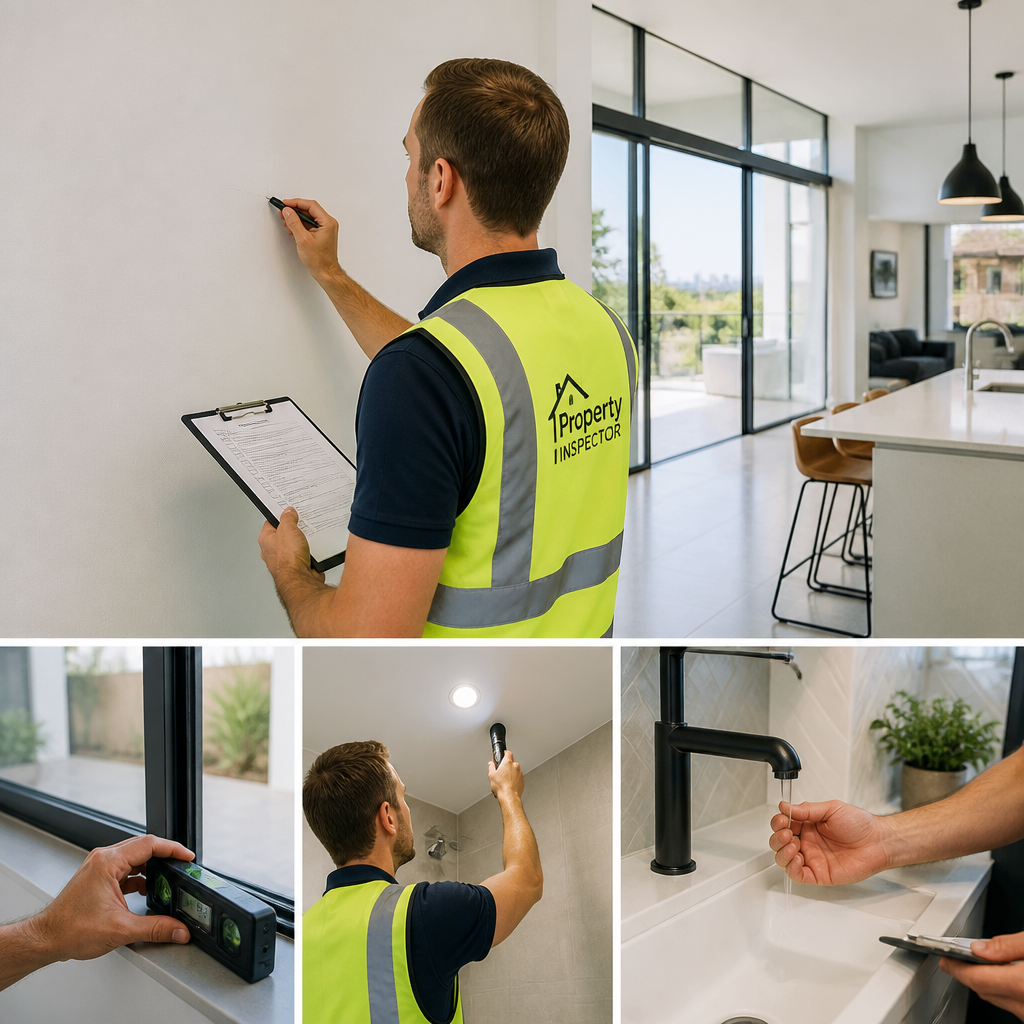
A handover inspection, also called a practical completion inspection or pre-settlement inspection, is a systematic assessment of a newly completed property conducted by a licensed inspector before you accept the keys and make your final payment. It is not a walkthrough. It is a methodical check of every accessible area of the building against the approved plans, Australian Standards, the National Construction Code, and QBCC Standards and Tolerances.

What the inspector is actually checking
In practice, a thorough inspection covers all active trades: framing, brickwork and external cladding, roofing, plastering, tiling, painting, joinery, wet area waterproofing, electrical fittings, plumbing fixtures, and external works including drainage and retaining. Each element is assessed against the applicable standard, not against a generic checklist that any trade might pass by showing up.
The output of the inspection is a written defect report. The quality of that report determines whether it is useful or not. A report that says “crack in plasterboard” is less useful than one that says “horizontal crack above window opening in bedroom two consistent with deflection in the header, responsibility: framing trade, reference: AS 1684.” GoInspect’s reports assign each defect to the responsible trade, so builders can direct their subcontractors precisely rather than spending days attributing faults internally.
Same-day reporting and what it means in practice
GoInspect delivers same-day reports. This matters more than it sounds. Builder settlement timelines on the Gold Coast are rarely flexible, and a report that arrives three days after the inspection compresses your window to raise defects, negotiate rectification, or request a delay to settlement. A report in your hands the day of the inspection gives you the full available time to act on it.
Pro tip: Request that your builder confirm in writing which defects they will rectify and within what timeframe before you sign off on practical completion. An inspection report without a written rectification commitment from the builder has less legal weight in any subsequent dispute.
What Gets Found: Common Defects in Gold Coast New Builds
Inspectors conducting new home inspections across South East Queensland consistently see a recognizable pattern of defects. These are not exotic failures. They are workmanship issues that occur when trades are moving fast between sites and supervision is spread thin, which is a description of the Gold Coast building environment at present.
Wet area waterproofing failures
Waterproofing is the single highest-risk defect category in new construction. A waterproofing membrane that is not extended to the minimum height above a shower grate, or that has been incorrectly lapped at a floor-to-wall junction, will allow water ingress into the subfloor or adjacent wall framing. This defect is invisible at handover. By the time it becomes visible, typically as mould, soft flooring, or wall staining, it has been causing structural damage for months or years. A qualified inspector uses moisture meter readings and visual checks of membrane coverage to identify this before the tiles go on, or at handover before you accept keys.
Painting and finishing defects
Paint defects are the most common single category of items flagged in new build reports, not because they are the most serious but because they are numerous. Missed spots, incorrect sheen in wet areas, paint over silicone, and inadequate preparation are visible throughout most new builds. Each one individually is minor. Collectively, they indicate the standard of finish the builder considers acceptable, which is relevant to how they will handle the less visible defects.
External drainage and site works
Gold Coast properties, particularly in growth corridors such as Coomera, Pimpama, and Ormeau, are frequently built on land that has been significantly cut and filled. Drainage that does not direct water away from the slab effectively, retaining walls that lack adequate drainage provision, and concrete paths or driveways with insufficient falls are all common findings. These are not cosmetic issues. They are potential sources of water damage to the structure.
Pro tip: If your build is in a growth corridor suburb like Coomera, Pimpama, or Ormeau where large subdivisions are being completed rapidly, ask your inspector specifically about site drainage and retaining wall construction. These areas have higher rates of earthworks-related defects because the land preparation is done under significant time pressure.
The QBCC Warranty Connection: Why Timing Is Everything
Queensland’s building warranty framework, administered by the QBCC, provides two layers of protection for owners of new construction. The 12-month defect liability period covers non-structural defects and begins from the date of practical completion. The 6.5-year structural warranty covers structural defects from the same date. Understanding this framework is not optional knowledge for a Gold Coast property investor. It determines the rules under which you can hold a builder accountable.
Why practical completion is the most important date in your build
When the builder declares practical completion and you accept the handover, the warranty period starts. If you accept handover without documenting existing defects, you have made the subsequent argument that those defects are construction defects, not post-settlement user damage, significantly harder to prove. A timestamped inspection report prepared before or at handover is the clearest possible evidence that defects existed at the time the property was handed over.
To make a claim under the QBCC Home Warranty Insurance Scheme for non-structural defects, the claim must generally be lodged within three months of noticing the defect, and within the 12-month defect liability period. An inspection report that documents defects at handover is the strongest possible evidence for any subsequent QBCC complaint or dispute.
What happens when you rely on the builder’s own quality check
Builders conduct their own pre-handover checks. These are not independent. The same business that built the property is checking its own work, under commercial pressure to complete the handover and receive the final payment. This is not a criticism unique to any particular builder. It is a structural conflict of interest that exists in every construction contract. An independent licensed inspector has no financial relationship with the builder and no incentive to minimize what they find.
Investor-Specific Risks That Make Inspection Non-Negotiable
Homeowners buying their own residence have at least some personal presence during construction, even if only for occasional site visits. Investors purchasing a Gold Coast property from interstate, or through a self-managed super fund (SMSF), frequently have no personal contact with the build at any stage. The inspection is not just useful in that situation. It is the only independent quality check that exists.
Rental income at risk from day one
With Gold Coast rental vacancy near 1%, the expectation for most investors is that a new property achieves tenancy quickly after settlement. A defect that makes the property uninhabitable, such as a failed waterproofing installation, an incomplete electrical commissioning, or a non-compliant smoke alarm layout, delays the first tenancy. Every week of vacancy is lost income that cannot be recovered. The cost of a professional inspection is a fraction of a single week’s rent on a Gold Coast investment property.
High-rise apartment inspections require specialist expertise
A significant portion of Gold Coast investment property is in high-rise apartment buildings, from the densely developed Surfers Paradise and Broadbeach corridors to newer developments in Southport and Robina. These properties present inspection challenges that do not arise in freestanding house inspections. Common area defects, wet area waterproofing across stacked levels, balcony drainage, shared mechanical services, and fire system compliance are all elements that require a different inspection approach. GoInspect provides customized inspection reports for high-rise developments, covering both individual lot findings and building-wide issues.
SMSF investors face additional compliance obligations
If the purchase is through an SMSF, the property must meet the “sole purpose test” and be investment-grade immediately. Any defect that delays settlement, affects rental viability, or triggers a dispute with the builder creates complications that extend beyond a simple investment return calculation. Documenting the property’s condition at handover is a basic element of demonstrating that the trustee has exercised the required standard of care over the fund asset.
Comparing Your Inspection Options on the Gold Coast
Not all inspection services are equivalent, and on the Gold Coast, where the stakes per property are high, the differences matter. The table below compares the key attributes of the approaches available to investors and homeowners arranging a new home inspection Gold Coast.
| Inspection Approach | What You Get | Key Limitation |
|---|---|---|
| Builder’s own pre-handover check | Internal quality walkthrough, defect list prepared by the builder’s team | No independence. The builder has a financial incentive to minimize findings and complete handover. Defects found are at the builder’s discretion to include. |
| Generic pre-purchase building inspection | Condition report covering visible elements, typically used for established properties | Not calibrated to new construction standards, Australian Standards compliance, or QBCC tolerances. Will miss defects that matter in new builds but not in established stock. |
| GoInspect new home handover inspection | Licensed inspector, photo-enhanced defect report with trade responsibility assigned, NCC and Australian Standards compliance check, same-day delivery, starting from $550 incl. GST | Requires scheduling before practical completion date, which depends on builder communication. Not a substitute for legal advice in a contract dispute. |
The practical difference between a generic building inspection and a purpose-built new home handover inspection is not just the checklist. It is the usable output. A report that identifies which trade is responsible for each defect, with photographic documentation and an Australian Standard reference, is a working document for the builder’s rectification process. A generic report is background information. For a Gold Coast property investment where the asset value starts well above $600,000, the distinction matters.
GoInspect covers the full Gold Coast region, including high-density apartment developments and freestanding homes in growth corridors like Coomera and Ormeau, and delivers reports on the same day as the inspection. For investors who need to manage settlement timelines and rectification windows from a distance, that combination is not a minor convenience. It is what makes the process workable.
Frequently Asked Questions
When should I book a handover inspection Gold Coast for my new build?
Book it as soon as your builder indicates that construction is approaching practical completion, typically two to four weeks before the nominated handover date. You want the inspection to happen before you sign the practical completion certificate or release the final progress payment. Once you accept handover, your negotiating position on defect rectification changes significantly. GoInspect operates across the Gold Coast and can generally accommodate short scheduling windows, but giving more notice means more flexibility on inspection dates.
Can I attend the inspection myself?
Yes, and in most cases it is worth doing if you are local. Being present allows the inspector to walk you through findings in real time, which helps you understand the severity and priority of each defect before you receive the written report. For interstate investors or those purchasing through an SMSF who cannot attend personally, the same-day photo-enhanced report GoInspect provides gives you a clear documented record without needing to be on site.
What is the difference between a practical completion inspection and a defect inspection after I have moved in?
A practical completion inspection happens before you accept handover, while the builder is still financially liable for rectification as part of the contract. A defect inspection after you have moved in is conducted during the QBCC 12-month defect liability period and identifies issues that have emerged or become visible since handover. Both serve a purpose. The pre-handover inspection is the stronger position because you have not yet released the final payment and accepted the property in its current state.
Does a new home on the Gold Coast really need an inspection if the council has already done a final inspection?
Yes. Council inspections confirm that the building meets the minimum requirements for a certificate of occupancy. They do not assess workmanship quality in detail, they do not check compliance with Australian Standards across all trades, and they do not document defects in a format useful for rectification negotiation. A council final inspection passing says the building can legally be occupied. It says nothing about whether the tiling is acceptable, the painting is complete, the drainage functions correctly, or the waterproofing has been installed to standard.
How much does a new home inspection Gold Coast cost and is it negotiable?
GoInspect’s new home inspections start at $550 including GST. The final cost depends on the property type, whether it is a house or a high-rise apartment, and the scope required. For high-rise developments with common area assessment, pricing will be higher to reflect the additional scope. The cost is not meaningfully negotiable on price alone, but the value relative to the property being inspected is clear. On a Gold Coast property valued at $800,000, the inspection cost is 0.07% of the asset value. The question is not whether you can afford the inspection. It is whether you can afford not to have it.
What happens if the builder refuses to fix defects identified in the report?
If a builder refuses to rectify defects identified before or after handover, the QBCC provides a formal dispute resolution pathway. Within the 12-month defect liability period for non-structural defects (and 6.5 years for structural defects), you can lodge a complaint with the QBCC, which can issue a Direction to Rectify if the defects are confirmed. A timestamped, photo-documented inspection report prepared by a licensed inspector before handover is the strongest possible evidence for that process. A verbal complaint or a self-documented list of issues carries significantly less weight.
Have you been through a handover inspection on a Gold Coast property? Share your experience in the comments below, including what defects were found and how the rectification process went.
References
- Queensland defect liability period explained: homeowner rights and QBCC timeframes
- QBCC Home Warranty Scheme: the 12-month and 6.5-year protection periods for Queensland new builds
- Gold Coast property market snapshot and 2025 projections for houses and units
- Gold Coast property market prices, vacancy rates, and 2025 outlook
- HIA guide to defective works and QBCC Direction to Rectify provisions in Queensland