
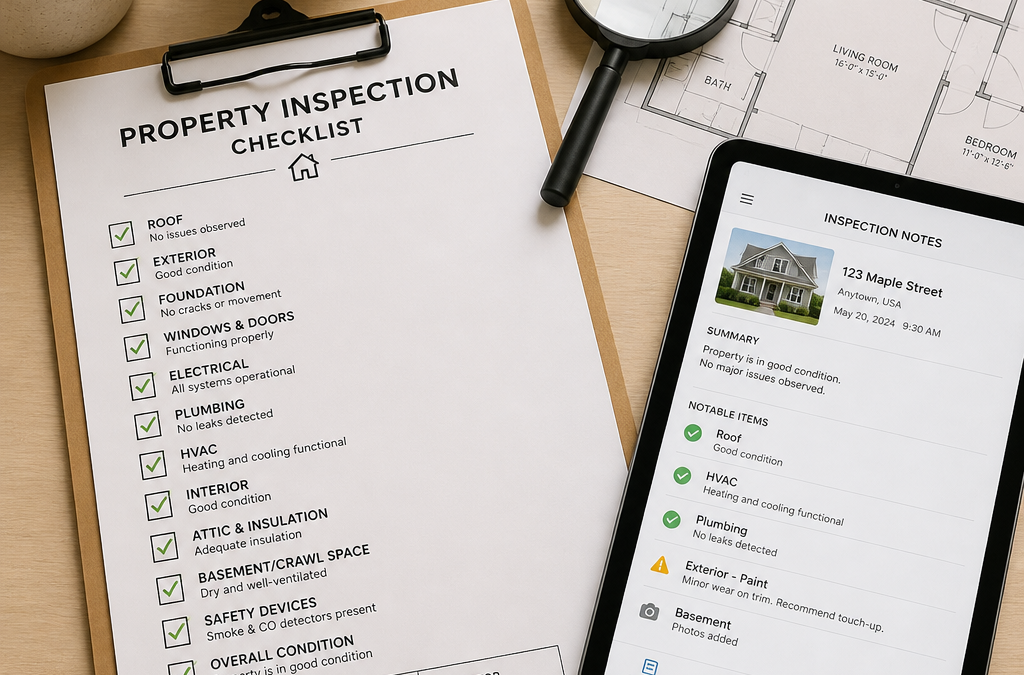
You’ve signed the contract, secured the finance, and your new investment property is almost ready for handover. Here’s the part most investors skip: ordering an independent property investor new home inspection before they collect the keys. Around 70% of newly built Australian homes contain defects at the time of handover. For an owner-occupier, that’s stressful. For an investor who needs the property tenanted, cash-flowing, and depreciating correctly from day one, unresolved defects are a direct hit to returns. A pre-handover inspection is not a nice-to-have. It is the single most effective tool you have to protect a new build investment before the builder’s contractual obligations shift.
Table of Contents
- Why Investors Face Higher Risk Than Owner-Occupiers
- What a Pre-Handover Inspection Actually Catches
- The Legal Window You Must Use
- Investment Property Defect Report: What to Look For
- Comparing Your Inspection Options
- What Happens After the Report
- Frequently Asked Questions
- References
Why Investors Face Higher Risk Than Owner-Occupiers
Owner-occupiers move into their new home. They notice the sticking door, the grout crack in the shower, and the paint bleed on the cornice within days of moving in. They’re in the property constantly, and complaints tend to surface quickly while the builder is still reachable.
Investors almost never walk through their new build in the weeks after settlement. The property manager arranges access, a tenant moves in, and any defects become a landlord-tenant dispute first and a builder dispute second. By the time the waterproofing failure behind the shower recess becomes obvious, the defect liability period may have narrowed significantly, and proving the fault was pre-existing becomes a costly fight.
There’s a second layer of risk that’s specific to investors. Depreciation schedules depend on the property being handed over in the condition it was contracted to be built. If fitout items are missing, substituted, or substandard, your quantity surveyor is working from an inaccurate base. That has real tax consequences across the life of the investment. A pre-handover inspection locks in an accurate record of what was actually delivered before your first depreciation claim is filed.
Investors also tend to move through the process faster and with less emotional attachment than owner-occupiers. That speed, which is otherwise an asset, becomes a liability if it means accepting a defective property to avoid delaying settlement.
What a Pre-Handover Inspection Actually Catches
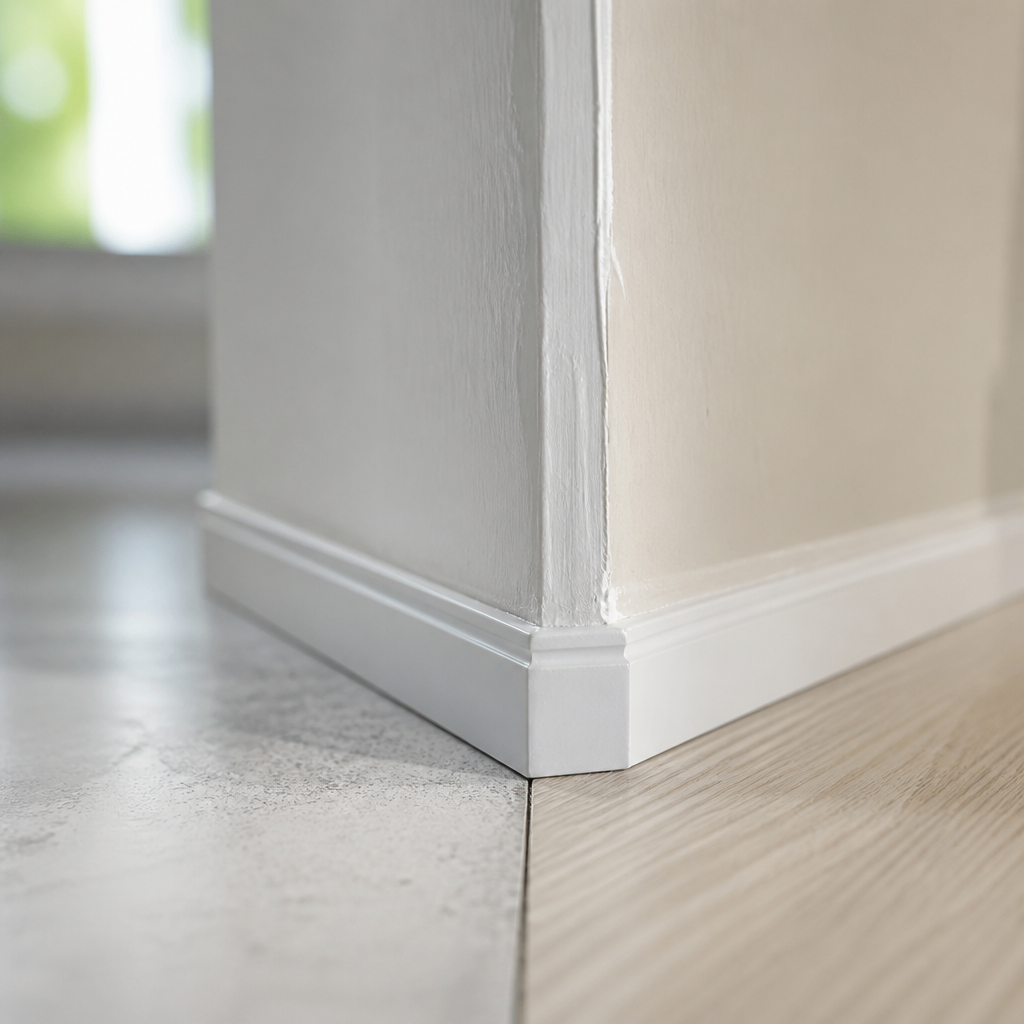
Many investors assume a pre-handover inspection is about cosmetic issues: paint marks, scratched glass, minor finish defects. In practice, the most financially significant findings are structural or waterproofing-related, and they often show no visible signs until well after the tenant has moved in.
Waterproofing Failures
A single missed waterproofing fault can run into the tens of thousands of dollars to fix after settlement. Bathrooms, wet areas, laundries, and external decking are the most common locations. A licensed inspector tests these surfaces and membranes before the builder’s obligation to fix them at no cost ends. After settlement, you’re arguing about who pays.
Structural and Framing Defects
Roof framing, floor levelling, and wall straightness issues are rarely visible to the naked eye during a casual walk-through. An experienced inspector checks these with the right tools and knows what tolerances apply under the National Construction Code. Investors who skip this step sometimes find out about structural problems when tenants report cracking, or when they attempt to sell.
Incomplete or Substituted Items
Contracts specify inclusions. Site supervisors substitute items when the specified product is unavailable and don’t always document the change. A pre-handover inspection investor report documents exactly what was installed versus what was contracted. This protects you at settlement and forms the basis for any variation claims.
Plumbing, Electrical, and Mechanical Systems
Taps, fixtures, hot water systems, exhaust fans, circuit breakers, and air conditioning units all need to function correctly at handover. Inspectors test these in operation. Defects found here are some of the most common across Queensland new builds, and they are also the most disruptive to a tenanted property if left to fail post-settlement.
Pro tip: Request that your inspection covers the roof space and subfloor if accessible. These are the areas most commonly missed during a standard walk-through and the areas where serious structural and moisture defects hide longest.
The Legal Window You Must Use
A pre-handover inspection is legally significant. It triggers defect liability timelines and contractual obligations. Your building contract is the primary document governing what the builder must fix and when. The defect liability period, which typically runs 12 to 24 months from handover depending on the state, does not give you indefinite protection. It is a countdown that starts at handover, not at the point you discover a problem.
The most important legal principle investors need to understand: you are generally not obligated to accept the property or make the final payment until defects are resolved to a satisfactory standard. That leverage disappears the moment settlement completes. Once you have paid and taken possession, every defect rectification becomes a dispute, not a condition of completion.
The pre-handover inspection is the only point in the entire construction process where the buyer has documented defects in their hands before the final dollar changes hands. Everything after that is negotiation under much less favourable conditions.
Queensland builders are contractually obligated to deliver the property in accordance with the agreed plans and the National Construction Code. An independent inspection report gives you the documented evidence to hold them to that obligation before you release the final payment. Without it, you are accepting the property on trust.
Pro tip: Always commission your inspection at least a week before your scheduled settlement date. This gives you time to receive the report, issue a defect notice to the builder, and negotiate rectification or a settlement adjustment without triggering penalty interest for delay.
Investment Property Defect Report: What to Look For
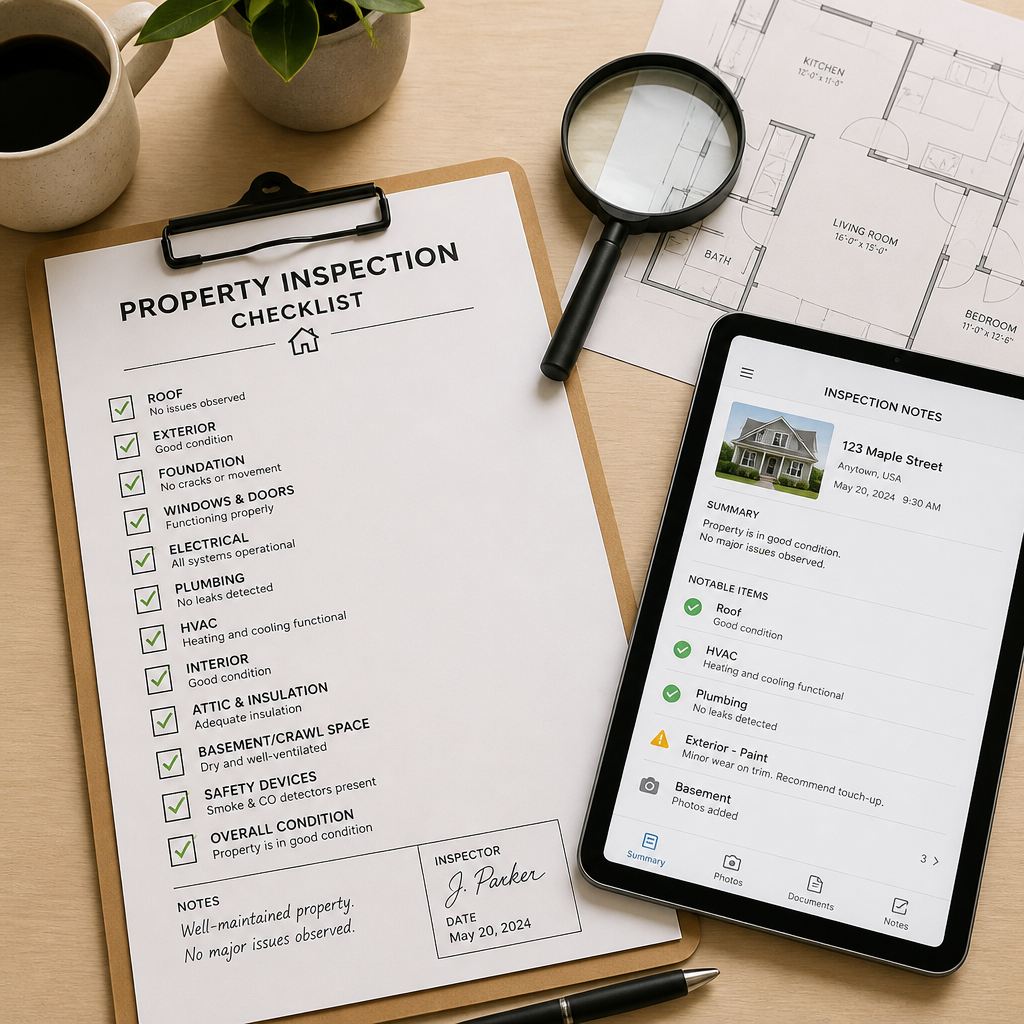
Not all inspection reports are equal. For an investor, the quality of the investment property defect report matters as much as the inspection itself. A report that lists defects without photos, without trade responsibility assignments, and without clear action items is almost useless when you need to get a builder’s site supervisor to respond.
Photo Documentation
Every defect must be photographed. Without photographic evidence, a builder can dispute whether a defect existed at handover or appeared afterward. For investors who aren’t present at the inspection or during rectification, photos are the only independent record. Reports that embed photos directly alongside each defect item are significantly more actionable than text-only reports or separate photo appendices.
Trade Responsibility Assignment
A defect report that identifies the problem but doesn’t specify which trade is responsible creates work for you. You or your property manager then has to figure out whether to send a waterproofing fault back to the tiler, the waterproofer, or the builder’s site supervisor. A well-structured report assigns each defect to the specific trade responsible, which dramatically speeds up rectification on developments where multiple subcontractors are involved.
Same-Day Reporting
For investors coordinating settlement dates, finance conditions, and property management handovers, waiting three to five days for a report creates real scheduling problems. Same-day reporting means you receive the documented evidence before the business day ends, and you can act on it immediately.
GoInspect’s approach in Brisbane, Gold Coast, Logan, Ipswich, and Redland Bay is built around exactly these requirements: photo-enhanced reports, trade-specific defect assignments, and same-day delivery. For investors managing multiple properties or tight settlement timelines, that combination is not a luxury. It is a functional requirement.
Comparing Your Inspection Options
Investors commissioning a pre-handover inspection across Southeast Queensland have several approaches available. The differences between them directly affect what you can do with the report and how quickly defects get resolved.
| Inspection Approach | What It Delivers | Best Suited For |
|---|---|---|
| Licensed independent inspector (e.g., GoInspect) | Photo-enhanced report, trade-specific defect assignments, same-day turnaround, fully licensed inspector, covers houses, townhouses, units, duplexes, and high-rise developments. Starts from $550 inc. GST. | Investors and developers who need an actionable report fast, with clear builder accountability and no conflict of interest. |
| Builder’s own practical completion sign-off | Basic checklist walkthrough conducted by the builder’s site supervisor. Builder identifies what they choose to disclose. | Not recommended as a standalone approach for investors. Inherent conflict of interest means defects are underreported. |
| Generic building inspection company (no specialisation in new builds) | Standard report format often designed for pre-purchase assessments on existing homes. May not cover new build compliance requirements or NCC tolerances. | Acceptable for secondary checks on existing stock, but misses the specialist knowledge needed to assess new construction against contract and code. |
The practical difference between a licensed specialist and a builder’s sign-off is not subtle. Builders have a financial incentive to pass their own work. An independent inspector has no such incentive, and their professional licence depends on their report being accurate. For an investor who is not going to be living in the property and catching problems organically, independent is the only defensible choice.
What Happens After the Report
Receiving a defect report is the beginning of a process, not the end of one. The report is your documented evidence. What you do with it determines whether defects are actually rectified before you settle or carry them into a post-settlement dispute.
Issuing a Defect Notice
Provide the inspection report to the builder in writing and formally request rectification before making the final payment. Keep written records of every communication. Verbal agreements to fix things are not enforceable in the way a written notice accompanied by a professional report is.
Requesting a Re-Inspection
Once the builder has addressed the items in the report, commission a follow-up inspection to confirm the rectification work meets standard. Builders occasionally fix one defect while creating another, or partially address a waterproofing issue without resolving the underlying cause. A re-inspection closes that loop before settlement completes.
Negotiating a Settlement Adjustment
In cases where the builder cannot rectify all defects before the contracted settlement date, you may be able to negotiate a financial adjustment at settlement rather than delaying. This is only possible when you have a documented, itemised defect report to justify the amount. Without one, you have no basis for a figure.
Post-Settlement Defect Liability
Even after settlement, defects that appear within the defect liability period remain the builder’s responsibility to fix. However, defects you could have identified at handover but didn’t may become harder to enforce, since the builder can argue they arose from tenant use rather than construction. An inspection report dated before settlement establishes a clear baseline that protects your position for the full duration of the liability period.
For investors with multiple properties across Southeast Queensland, this process compounds in value. Each defect caught and rectified before handover is one less maintenance call on a tenanted property, one less dispute with a builder over causation, and one fewer cost absorbing into operating expenses.
Frequently Asked Questions
Is a pre-handover inspection legally required for investment properties in Queensland?
It is not legally mandatory, but it is strongly recommended and practically essential for investors. Without an independent inspection, you may accept a property with defects that are difficult and costly to rectify after settlement. Queensland builders are contractually obligated to deliver a property that meets building standards and contract specifications. An inspection is your mechanism for verifying that obligation was met.
How much does a property investor new home inspection cost in Southeast Queensland?
Pricing from licensed providers for a standard new home inspection in Queensland starts at approximately $550 including GST. Costs vary depending on property size, type, and complexity. High-rise units and large dual-occupancy developments typically cost more due to the additional time and scope involved. The cost is minimal compared to the expense of a single unresolved waterproofing defect post-settlement.
Can I use the builder’s practical completion inspection instead of ordering an independent one?
No. A builder’s own sign-off is a conflict of interest. The site supervisor conducting that inspection is employed by the party responsible for the defects. An independent, licensed inspector has no financial relationship with the builder and is professionally accountable for the accuracy of their report. For an investor who will not be living in the property, independent verification is the only defensible approach.
What types of investment properties in Southeast Queensland can be inspected before handover?
Pre-handover inspections apply to houses, townhouses, units, duplexes, granny flats, and high-rise developments. Inspectors familiar with the Southeast Queensland market, including Brisbane, Gold Coast, Logan, Ipswich, and Redland Bay, understand the specific construction types, trade practices, and NCC requirements relevant to each property category. High-rise inspections require additional specialisation given the number of individual lots and common property elements involved.
How does an investment property defect report help with my depreciation schedule?
A defect report documents exactly what was installed and delivered at handover, including any items that were substituted or missing. This record gives your quantity surveyor an accurate baseline for calculating Division 43 capital works deductions and Division 40 plant and equipment claims. If fitout items were substituted for lower-cost alternatives without disclosure, an accurate inspection report ensures your depreciation schedule reflects the actual construction rather than what was contracted.
What is the best time to order a pre-handover inspection?
Book the inspection at least one week before your scheduled settlement date. This gives you enough time to receive the report, issue a formal defect notice to the builder, and negotiate rectification or a settlement adjustment before the settlement date arrives. Leaving it to the day before settlement removes any practical ability to act on the findings.
Does a pre-handover inspection cover the same things as a building and pest inspection?
No. A pre-handover inspection on a new build assesses construction quality, completeness, code compliance, and contract conformance. It is specifically designed for newly completed properties where the focus is on defects arising from the construction process. A standard building and pest inspection is primarily designed for existing properties and assesses structural condition, moisture, and pest activity from an occupant’s perspective. New builds require a specialist who understands construction tolerances, trade responsibilities, and NCC requirements.
Have you ordered a pre-handover inspection on a new investment property before, and did it change what you were willing to accept at settlement? Share your experience in the comments.
References
- Pre-occupancy inspection checklist for new buildings in Australia, including defect statistics and what inspectors look for
- Legal aspects of pre-handover inspections in Australia, covering defect liability periods and builder obligations by state
- Final checks for a pre-handover construction inspection and what happens when defects are found before settlement
- How a pre-settlement defect inspection works and what buyers are entitled to request before handover in Australia
- Investment property depreciation schedule for new builds, including Capital Works and plant and equipment claim eligibility