
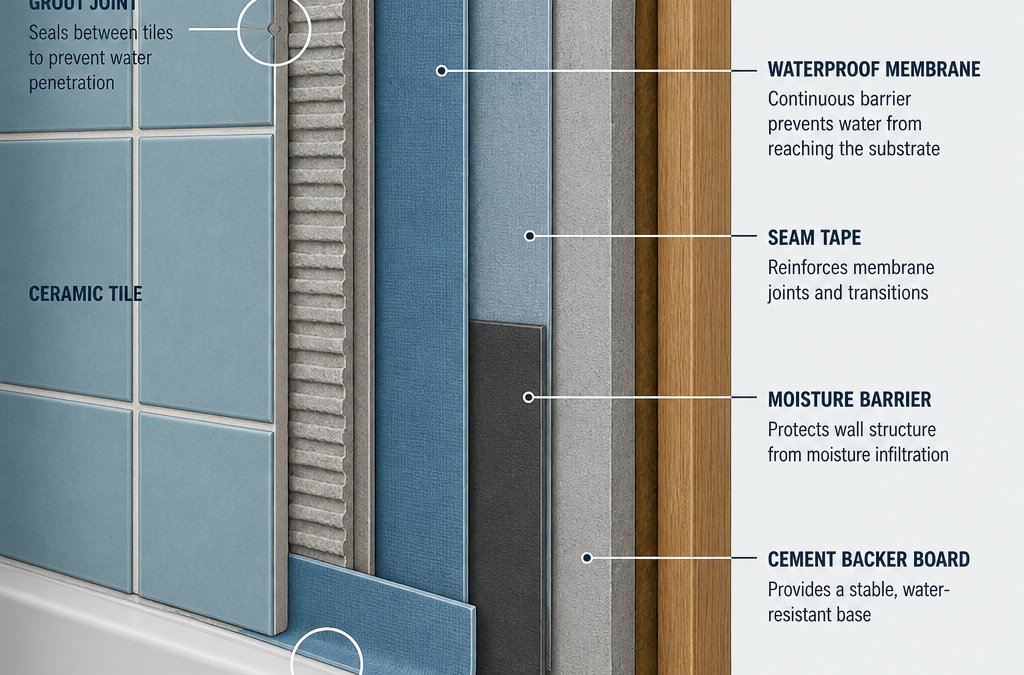
Waterproofing concerns deserve attention, but a finished bathroom cannot reveal every detail of the system behind its tiles. A new-home inspection can record visible issues and signs requiring investigation; it cannot certify a concealed membrane from the finished surface.
What can be observed after tiling?
Within the agreed scope and available access, visible observations may include damaged tiles, missing grout, incomplete silicone, signs of moisture, staining and water remaining on finished surfaces. The report should explain what was observed rather than assume an unseen installation defect.
For example, the anonymised GoInspect sample handover report includes missing grout and silicone requiring completion. Those findings describe the finished work; they do not prove the condition of the membrane underneath.
What remains concealed?
Membrane thickness, its continuity behind tiles, substrate preparation and hidden junction details generally cannot be confirmed by a visual inspection of the finished room. Photos taken during construction and relevant installation documentation may help an appropriately qualified person review the work, but they do not replace assessment of the particular concern.
A pre-cover inspection can provide an opportunity to review exposed work while it is visible. It is a different stage and scope from a handover inspection. Discuss the required access and inspection service before work is covered.
What does Queensland guidance explain?
The QBCC’s homeowner waterproofing guidance highlights surface preparation, detailing and curing, along with care of the completed system. Later drilling or alterations can damage hidden waterproofing, so modifications should be discussed with the appropriate contractor.
The requirements for a particular installation depend on the applicable building provisions, approved design, construction details and product instructions. This article does not prescribe one membrane position, wall height or floor fall for every bathroom and balcony.
What should you give the builder?
- The room, balcony or opening where the concern occurs.
- An overview photo and a close-up of visible damage or staining.
- When the symptom occurs, such as after shower use or rainfall.
- Relevant construction photos and documents you already hold.
- A written request for investigation and an explanation of proposed rectification.
Avoid removing tiles or altering the installation before the concern has been assessed. Where water is entering or damage is developing, seek appropriate assistance promptly.
When is additional testing needed?
A suspected leak may require a specialist investigation with a separately agreed scope. Controlled testing, access to concealed work or other investigation may be needed to identify the cause. Do not assume these are included in a standard handover inspection.
Arrange the right inspection
GoInspect’s standard handover inspection scope covers visible and safely accessible building work; appliances are not tested. Tell us about any water-entry concerns when booking so the required service can be discussed.
See examples of visible defects we identify, read our inspection FAQs, or get a current inspection quote.