
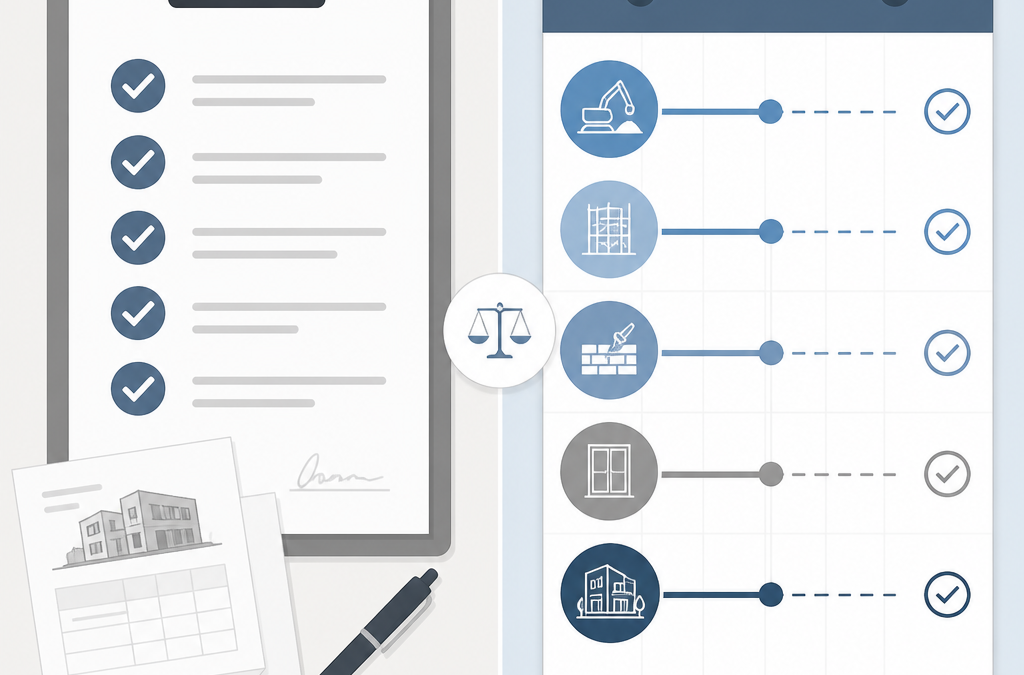
Most buyers purchasing a new home in Brisbane, Gold Coast, Logan, or Ipswich hear the terms “practical completion inspection” and “pre-settlement inspection” used interchangeably, and assume they describe the same appointment. They do not. Confusing the two is one of the most common and costly mistakes a new homeowner can make, because each inspection serves a different purpose, happens at a different point in the construction and conveyancing process, and carries a different set of rights. If you are trying to figure out which one your new build actually needs before you accept the keys, this guide gives you a direct answer for Queensland buyers specifically – not a generic national overview that glosses over how pre-settlement inspection Brisbane practice actually works.
Table of Contents
- Quick Takeaways
- What Is a Practical Completion Inspection?
- What Is a Pre-Settlement Inspection?
- Key Differences Side by Side
- Which Inspection Does Your New Home Actually Need?
- What Gets Documented – and Why It Matters
- Common Defects Found in Queensland New Builds
- Frequently Asked Questions
- References
Quick Takeaways
| Key Insight | Explanation |
|---|---|
| These are two distinct inspection types | A practical completion inspection (PCI) occurs at the end of construction before handover. A pre-settlement inspection occurs just before final financial settlement – sometimes weeks later. |
| PCI is the one with the most power | The defects list created at the PCI is the legal mechanism that holds the builder responsible for rectification. Signing off without one eliminates that accountability. |
| Queensland law sets specific timelines | Under QBCC rules, a builder must provide at least five days’ written notice before the practical completion inspection takes place. Missing that window costs you negotiating position. |
| Both inspections are recommended for off-the-plan buyers | Apartment buyers purchasing off the plan in Brisbane or the Gold Coast typically need both: a PCI at practical completion and a pre-settlement check to confirm rectifications were actually done. |
| An independent inspector is not the same as a builder walkthrough | Doing the PCI yourself, without a licensed independent inspector, means you are relying on your own untrained eye to catch waterproofing failures, structural cracking, and trade coordination defects. |
| Defect documentation timelines are strict | Under QBCC guidelines, you must lodge a complaint within 3 months of noticing structural defects and 7 months for non-structural defects or risk losing your options for formal intervention. |
| Same-day photo reports change what gets fixed | Inspectors who assign defects to specific trades and deliver reports the same day give builders far less room to delay or dispute responsibility than handwritten lists produced at the walkthrough. |
What Is a Practical Completion Inspection?
A practical completion inspection, or PCI, is the formal final inspection conducted under your Queensland building contract before you accept handover of your new home. The Queensland Building and Construction Commission (QBCC) defines practical completion as the point where the building works are essentially finished and the home can be used for its intended purpose. That definition matters because it means the builder can legally call practical completion even when minor defects are still present.
When your builder notifies you that the project is approaching practical completion, that notification generally comes at least two to three weeks out, with at least five days’ written notice before the inspection date itself. Once that notice is given, you are entitled to conduct a detailed walk-through to identify and document any issues. Everything found – defects, incomplete work, items not built to specification – gets recorded in a defects list that both parties typically sign.
Why the defects list is the most important document at handover
Once the defects list is agreed and shared, the builder is responsible for fixing those items within a reasonable timeframe after practical completion. The contract may specify that timeframe. Without a formal, independently produced defects list, you are relying on the builder’s goodwill rather than a documented legal obligation. In practice, builders who have moved on to the next project and subcontractors who are no longer on site become very hard to hold accountable for issues that were never formally recorded.
Under Queensland building contracts, a contractor must repair defects noticed at handover or within 12 months of when the work is finished. That 12-month defects liability period runs from the date of practical completion. If you discover a defect after moving in, you are not automatically without recourse – but defects formally documented at handover are far easier to enforce than issues raised informally months later.
Pro tip: Bring a copy of your contract and plans to the practical completion inspection. Confirm that agreed finishes, fixtures, and specifications were actually delivered – not substituted for something cheaper or easier to install.
What Is a Pre-Settlement Inspection?
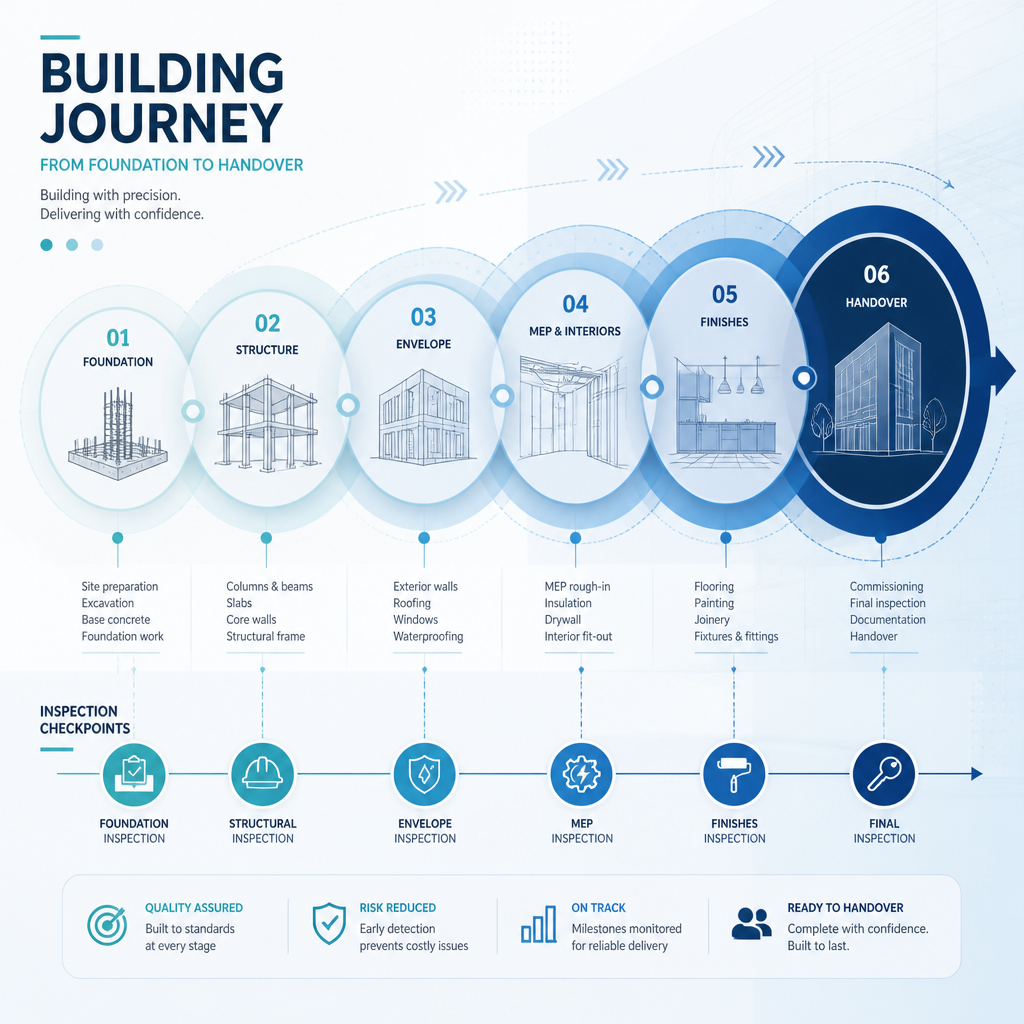
A pre-settlement inspection happens after practical completion – sometimes days later, sometimes weeks – and just before final financial settlement occurs. Its purpose is narrower than the PCI. A pre-settlement inspection confirms that the defects listed at the practical completion stage have actually been rectified, that no new damage has occurred during the repair period, and that the property is in the condition expected before money changes hands.
For buyers of established properties (a resale house rather than a new build), a pre-settlement inspection checks that the property remains in the same condition as when contracts were exchanged, and that agreed vendor repairs are complete. In Queensland, settlement periods typically run between 30 and 60 days, and quite a lot can change in that window.
What pre-settlement inspections look for in a new build context
For new home buyers in Brisbane, Logan, Ipswich, and the Gold Coast, the pre-settlement inspection is specifically about verification. Did the builder fix the cracked render noted on the defects list? Was the faulty tapware actually replaced, or just adjusted? Has the repair to the waterproofing membrane created a new issue in the adjacent area? These are not hypothetical questions – builders occasionally repair one defect and inadvertently damage something else in the process, and it takes an independent eye to catch it.
For off-the-plan apartment purchases, most contracts include a clause allowing the buyer a walk-through before final settlement. This is sometimes called the pre-settlement inspection in the developer’s documentation, even though it may functionally cover the same ground as a practical completion inspection. In those cases, the terminology shifts but the purpose remains the same: document what is wrong before you hand over the final payment.
An independent inspector’s job at the pre-settlement stage is not to re-run the full PCI from scratch. It is to verify that what was supposed to be fixed is actually fixed – and to catch anything introduced during the rectification period.
Key Differences Side by Side
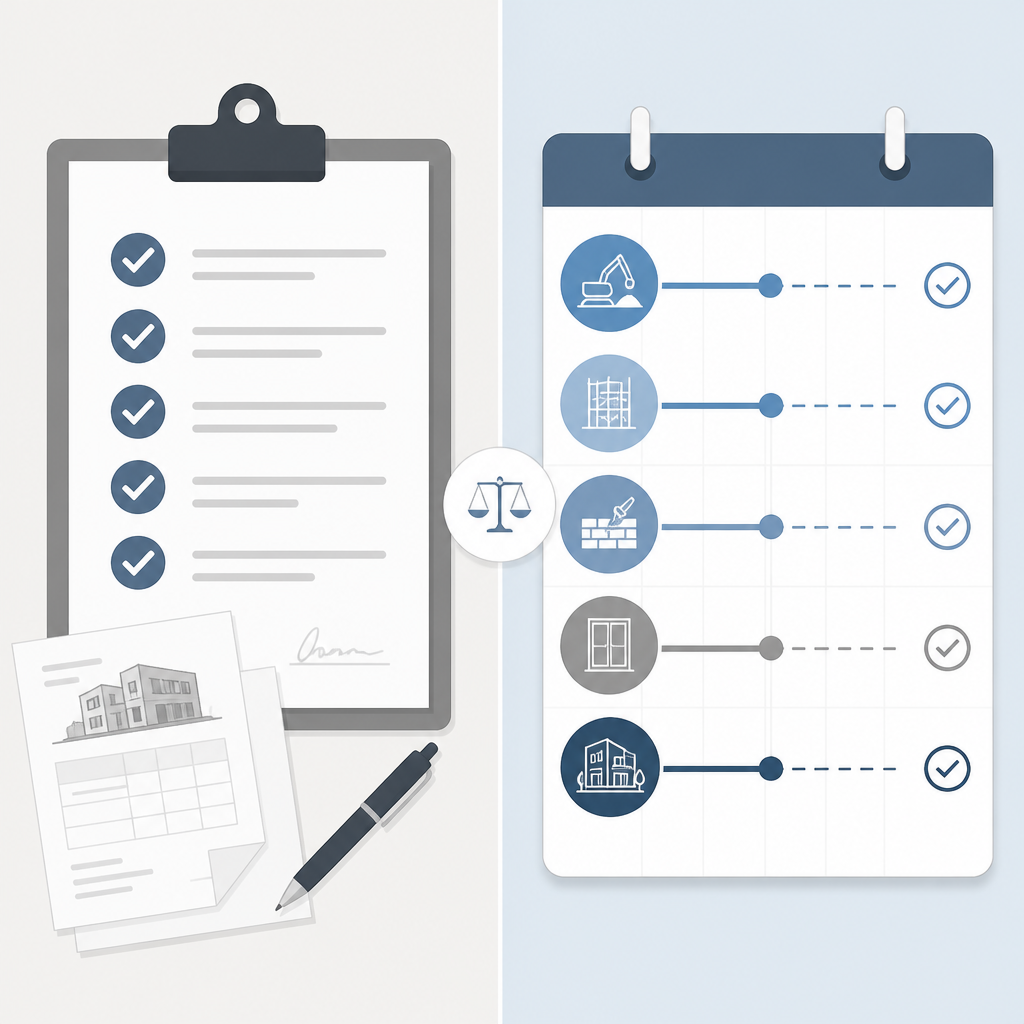
The table below puts the two inspection types into direct comparison alongside the builder’s initial walkthrough, which many buyers attempt to rely on as a substitute for independent inspection. Understanding these three approaches makes it easier to see why the combination of a professional PCI and a follow-up pre-settlement inspection delivers the most complete protection.
| Inspection Type | When It Happens | Primary Purpose |
|---|---|---|
| Practical Completion Inspection (PCI) – professional and independent | At practical completion, before you accept the keys. The builder provides at least five days’ written notice under QBCC requirements. | Identify all defects, incomplete work, and specification non-conformances before handover. Creates the formal defects list the builder is legally obligated to rectify. |
| Pre-Settlement Inspection – independent verification | After practical completion and rectification work, just before final financial settlement occurs. | Confirm that all items on the defects list have been properly rectified. Identify any new defects introduced during repair work. Final checkpoint before money transfers. |
| Builder’s Walkthrough – not independent | Same timing as the PCI, conducted by the builder or their site supervisor. | Shows the buyer the finished home. Does not independently verify defects or produce an enforceable defects list. The builder has a financial interest in minimising the defects list. |
The builder’s walkthrough is not a substitute for an independent inspection. The site supervisor conducting that walkthrough works for the entity responsible for the defects. That is not a neutral position, and the resulting documentation, if any exists at all, reflects that.
Which Inspection Does Your New Home Actually Need?
The direct answer is this: if you are taking possession of a newly constructed home in Brisbane, Gold Coast, Logan, Ipswich, or Redland Bay, you need a practical completion inspection conducted by an independent, licensed inspector before you accept the keys. A pre-settlement inspection is the follow-up step that confirms rectifications were completed properly.
For house-and-land buyers building with a builder directly
If you contracted directly with a builder under a Queensland building contract, the PCI is your primary protection. This is where the defects list is created, signed by both parties, and becomes the document the builder is held to. Skipping an independent PCI, or relying on the builder’s walkthrough as a substitute, means accepting the property with no independent record of what was wrong at handover.
The pre-settlement inspection for direct-build buyers is a secondary verification step – important, but only useful if the PCI was done properly first. If the PCI produced no formal defects list, the pre-settlement inspection has nothing to verify against.
For off-the-plan apartment buyers in Brisbane and the Gold Coast
Off-the-plan buyers face a different challenge. The developer controls the timing of what is called practical completion, and the buyer’s ability to attend a formal PCI depends on the contract terms. In many off-the-plan contracts, the pre-settlement inspection clause is the only formal opportunity the buyer has to inspect the finished apartment before settlement completes.
For high-rise apartments and multi-lot developments, a practical completion inspection Queensland conducted by an inspector experienced with both individual lot defects and common property issues is essential. The volume of defects in apartment developments is typically higher than in standalone houses, the trades involved are more numerous, and the coordination failures between them are harder for an untrained buyer to identify without a structured inspection framework.
Pro tip: For off-the-plan apartment purchases, ask your solicitor before the pre-settlement inspection what your rights are if defects are found. Queensland law does not automatically allow you to refuse settlement over minor defects – knowing your options before the inspection shapes how you respond to what the inspector finds.
For investors buying new properties in Logan and Ipswich growth corridors
Investors purchasing new builds in high-volume growth areas like Springfield Lakes, Ripley Valley, Redbank Plains, and Flagstone in the Ipswich corridor, or in Logan’s outer estates, face a specific risk: the sheer volume of new construction in these areas puts enormous pressure on subcontractor capacity. The result is higher rates of defects caused by rushed trades and poor coordination between construction stages. A handover inspection Logan Ipswich conducted independently – not just a builder’s internal quality check – is the appropriate response to that risk.
Investors who plan to tenant the property immediately after handover have even less margin for error. Defects discovered by tenants after move-in are more difficult to attribute to the builder, and any informal arrangement to “sort it out later” is far weaker than a formal defects list created at practical completion.
What Gets Documented – and Why It Matters
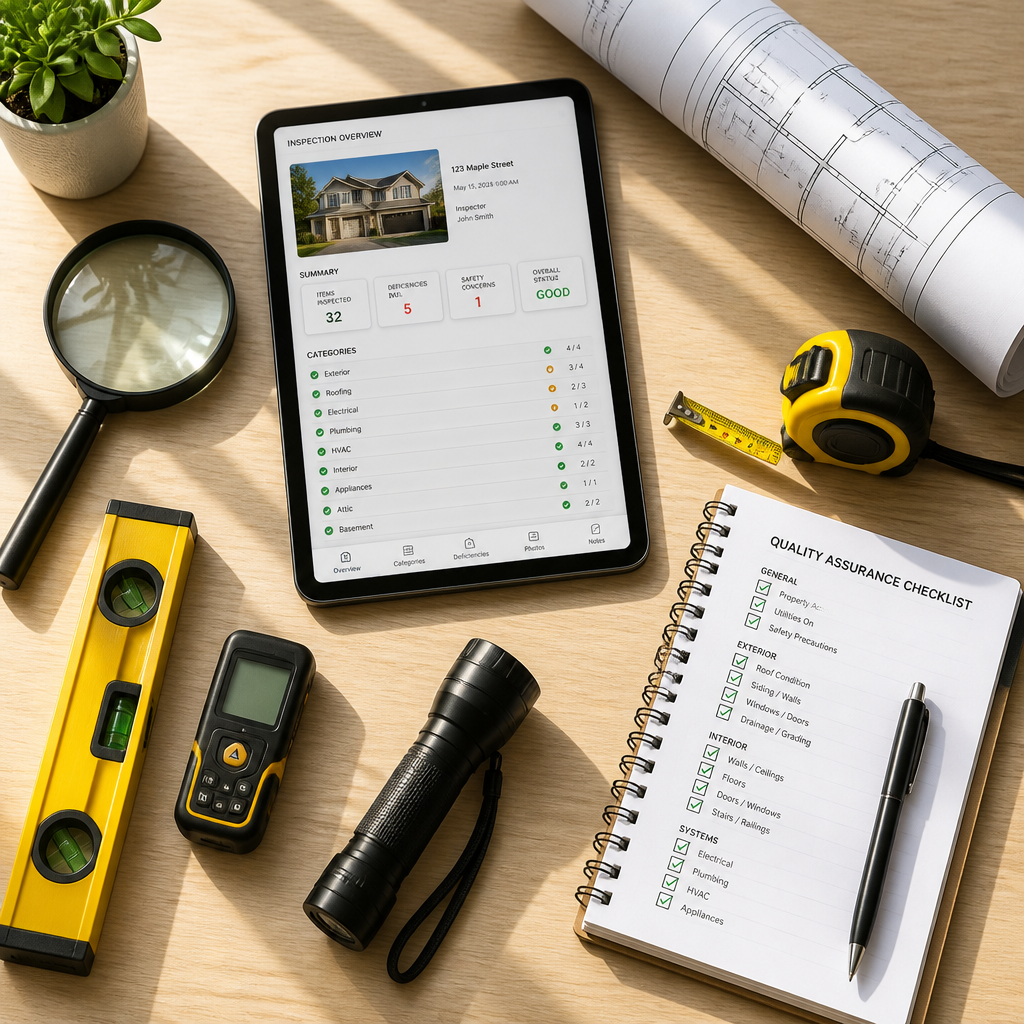
The quality of the documentation produced at a new home inspection Brisbane determines how useful that inspection actually is. A handwritten list of items ticked off during the walkthrough is not the same as a structured photo-enhanced defect report that identifies each issue, specifies its location, and assigns responsibility to the relevant trade.
Disputes about defective or incomplete work at practical completion are among the most common complaint categories managed by the QBCC. When a dispute is lodged with the QBCC, the strength of your position depends substantially on what was formally documented and when. An independently produced inspection report, combined with written communication to the builder referencing its findings, creates the paper trail the QBCC expects to see as evidence that the homeowner made a reasonable attempt to resolve the issue directly before escalating.
How report structure affects what gets fixed
Builders respond differently to different types of defect documentation. A vague written description of “paint issues in the master bedroom” gives a painter enormous latitude to perform a partial fix and consider the item closed. A photo-enhanced report that captures the specific location, the nature of the defect, the applicable standard it fails to meet, and the trade responsible for rectifying it leaves no room for that kind of avoidance.
For high-rise developments and larger housing projects, where defect volumes are higher and trade coordination is more complex, the quality of the report structure has a direct impact on how efficiently the rectification process runs. A report that assigns defects to specific trades allows the builder to coordinate rectification by trade group rather than running the same subcontractor back to site multiple times for items that could have been done in a single visit.
Same-day reporting is another practical differentiator. A defect report delivered the same day the inspection takes place gives the builder, the developer, and the homeowner the full picture immediately – not a week later when the site supervisor’s memory of the walkthrough has faded and documentation delays give defects a chance to be quietly de-prioritised.
Common Defects Found in Queensland New Builds
Knowing what professional inspectors routinely find at building inspection Gold Coast and Brisbane new builds calibrates your expectations before the inspection and makes you a more effective participant in the process. New homes are not defect-free by default. Construction involves dozens of subcontractors working across multiple stages, and the coordination failures between trades are where defects consistently appear.
Trade coordination failures
Waterproofing failures are among the most consistently identified issues at practical completion. Wet area waterproofing that was applied correctly but then penetrated by a subsequent trade – a plumber, a tiler, an electrician – is a common pattern. The penetration itself may be small but the consequence, water ingress into structural elements, is expensive. This is precisely the kind of defect that a builder’s own walkthrough frequently misses or minimises.
Framing and structural issues, incorrect roof pitching, and incomplete or improperly installed insulation are also routinely documented. None of these are visible to an untrained buyer doing a walkthrough independently. An experienced inspector who has seen the same failure pattern in dozens of Queensland new builds will identify it in minutes.
Finish and specification defects
Substitution of agreed specifications – a cheaper benchtop material, a different tile to the one selected, a fixture brand that was not the agreed brand – is a finishing defect that is only catchable by comparing the actual installed item against the contract documents. Bringing your plans and specifications to the inspection is not optional; it is the only way to confirm that what was contracted was actually delivered.
Paint finish defects, incomplete caulking, poorly aligned joinery, and improperly sealed windows and doors are lower severity but high-volume issues that add up quickly in a new build. A professional inspection report will capture these systematically, room by room, in a way that a personal walkthrough simply will not.
Frequently Asked Questions
Is a practical completion inspection the same as a pre-handover inspection?
Yes. In Queensland, these terms refer to the same inspection. A practical completion inspection is the formal name used in Queensland building contracts for the final inspection conducted before you accept handover of your new home. Some inspection companies and developers use “pre-handover inspection” as a more straightforward description of the same event.
Can I do my own practical completion inspection without hiring an independent inspector?
You can, but you should not. Under QBCC guidelines, you are entitled to engage a building inspector to check the building work on your behalf at the practical completion stage. An untrained buyer conducting their own walkthrough will miss structural, waterproofing, and trade coordination defects that a licensed inspector identifies as a matter of routine. The cost of an independent inspection is a fraction of the cost of any single significant defect that goes undetected at handover.
What happens if the builder refuses to fix items on the defects list?
Under Queensland law, the builder has an obligation to rectify defects within a reasonable timeframe after practical completion, and within the defects liability period specified in your contract. If the builder does not comply, you can lodge a defective work complaint with the QBCC. The QBCC requires you to have first attempted to resolve the issue directly with the contractor. Your inspection report and written correspondence referencing it constitute that documented attempt. For structural defects, the complaint must be lodged within 3 months of noticing the defect; for non-structural defects, within 7 months.
Do I need both a practical completion inspection and a pre-settlement inspection?
For most new builds in Brisbane, Gold Coast, Logan, and Ipswich, yes. The PCI creates the formal defects list. The pre-settlement inspection verifies that rectifications were completed and that no new issues were introduced during repair work. For off-the-plan apartment purchases where the developer’s contract only provides for a pre-settlement inspection, that single appointment needs to cover both functions – which means it requires a thorough, independently conducted inspection rather than a quick walk-through.
How much does a practical completion inspection cost in Brisbane and South East Queensland?
Independent practical completion inspections for new homes in Brisbane and surrounding areas typically start from around $550 including GST, depending on the property type, size, and complexity. High-rise apartment inspections that also cover common property defects may be priced higher. The cost should be evaluated against the value of the property and the cost of any defect that an inspection might catch – a single missed waterproofing failure can cost multiples of the inspection fee to rectify after settlement.
What should the inspection report include to be useful if a dispute arises?
A useful defect report for a QBCC complaint or any subsequent legal action needs to clearly identify each defect, specify its location within the property, include photographs, and indicate which trade is responsible for rectification. Vague descriptions without photographic evidence are difficult to enforce. An inspection report that assigns defects to specific trades and is delivered promptly after the inspection – ideally the same day – gives you the most enforceable documentation and the clearest path through the rectification process.
Have you recently gone through a practical completion inspection or pre-settlement inspection on a new Queensland property? We would genuinely like to hear what your experience was like and what you wish you had known before the walkthrough.
References
- Queensland Building and Construction Commission: Practical completion inspection – official guidance on builder obligations, defects lists, and the inspection process
- QBCC: Help with defective work – defects liability periods, complaint eligibility criteria, and timeframes
- QBCC: What is defective work – standards and tolerances guide for Queensland homeowners and contractors
- GoInspect: Pre-handover inspection Brisbane – what to expect at practical completion in Queensland
- GoInspect: How to choose the right building inspector in Queensland – what separates professional inspection from a basic walkthrough