
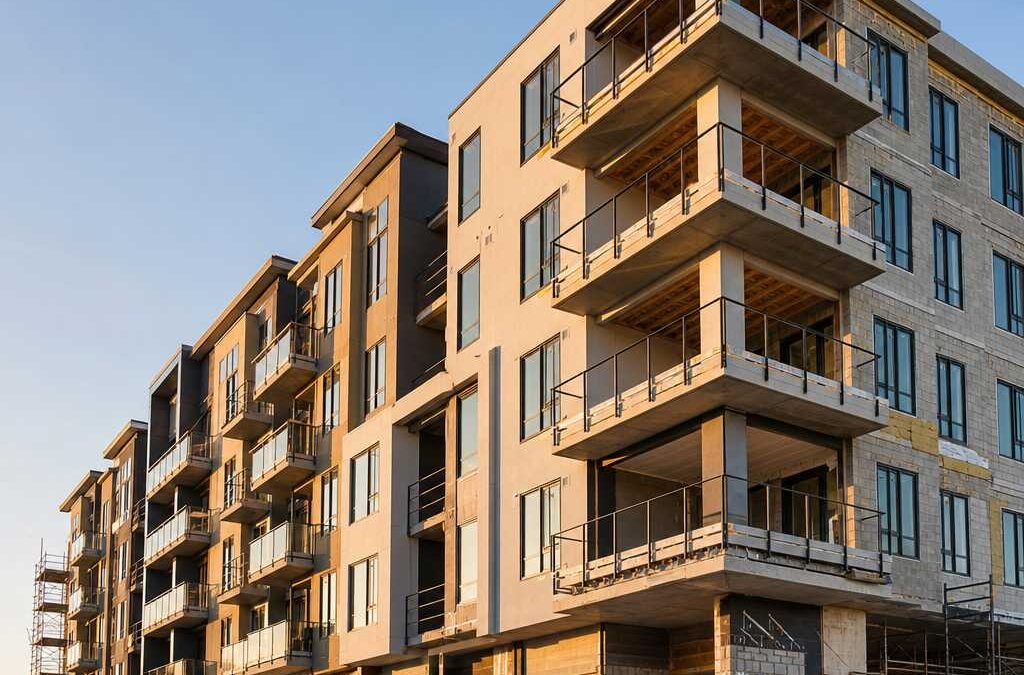
Most defects in a high-rise or multi-unit development are not found during construction. They are found on handover day, when a buyer walks through a finished apartment and notices cracked render, misaligned door frames, or a balcony membrane that was never properly installed. By that point, the builder is under pressure, trades have moved on, and rectifying defects becomes a costly, time-consuming dispute. A structured high rise building inspection Brisbane process, carried out before handover, is the single most effective way to prevent that scenario. GoInspect was built specifically to handle this kind of work at scale, across multi-unit developments and high-rise projects throughout South East Queensland.
Table of Contents
- Quick Takeaways
- Why High-Rise Inspections Are Different from Standard House Inspections
- What a Multi-Unit Development Inspection Actually Covers
- How GoInspect Supports Builders and Developers Specifically
- Photo-Enhanced Defect Reports: Why They Matter for Large Developments
- Comparing Inspection Approaches for High-Rise Projects
- Common Defects Found in Brisbane High-Rise and Multi-Unit Projects
- Timing Your Inspections Correctly Across a Development Stage
- Frequently Asked Questions
- References
Quick Takeaways
| Key Insight | Explanation |
|---|---|
| Trade-specific defect assignment matters | GoInspect reports identify which trade is responsible for each defect, removing ambiguity and speeding up rectification across large developments. |
| Same-day reporting is not a luxury for developers | On multi-unit projects, delays in defect documentation create settlement risk. Same-day reports allow builders to act before handover deadlines pass. |
| High-rise inspections require customised report structures | A standard residential template cannot capture stairwell fire door compliance, common area defects, or facade issues specific to multi-storey buildings. |
| Pre-handover inspections reduce post-settlement disputes | Defects identified and rectified before settlement cost significantly less to fix than those escalated through body corporate or legal channels after handover. |
| GoInspect covers the full South East Queensland development corridor | Brisbane, Gold Coast, Logan, Ipswich, and Redland Bay are all service areas, covering the regions where most multi-unit pipeline activity is concentrated. |
| Fully licensed inspectors are non-negotiable on complex builds | High-rise work involves fire systems, waterproofing membranes, structural elements, and mechanical services that require a qualified inspector to assess correctly. |
| Starting price of $550 including GST applies to residential inspections | For multi-unit developments, GoInspect provides customised pricing that reflects the number of units and scope of common area inspection required. |
Why High-Rise Inspections Are Different from Standard House Inspections
A single-dwelling pre-handover inspection and a high-rise building inspection in Brisbane are not the same job with a different address. The complexity, scope, and documentation requirements are fundamentally different, and applying a residential inspection framework to a multi-storey development will miss critical issues every time.
In practice, a high-rise inspection must account for common area defects that no individual buyer will ever report, because no one person owns them. Lobbies, car parks, lift shafts, stairwells, rooftop plant rooms, and external facades are shared assets. If they are not inspected systematically before handover, they become the body corporate’s problem immediately after settlement.
There is also the question of trade complexity. A detached house might involve a dozen trades. A 20-storey residential building involves waterproofing contractors, facade engineers, fire services installers, mechanical engineers, tilers, painters, and joiners, often with overlapping scopes. When a defect appears at the junction of two trades’ work, resolving responsibility without proper documentation becomes a drawn-out argument rather than a quick fix.


Pro tip: Always confirm that your inspection provider has specific experience with multi-storey residential buildings, not just a general builder’s licence. The Australian Building Codes Board sets distinct requirements for Class 2 buildings, which includes most multi-unit residential developments, and a residential house inspector may not be across those requirements.
What a Multi-Unit Development Inspection Actually Covers
A multi-unit development inspection conducted by GoInspect is structured to cover both individual dwellings and shared building elements. This dual-scope approach is what separates a professional developer-grade inspection from a buyer-focused walk-through.
Individual Unit Inspections
Each apartment or townhouse is inspected individually against the contract specifications and applicable Australian Standards. This includes wall and ceiling finishes, floor coverings, joinery, wet area waterproofing, window and door operation, balcony surfaces, and all fixtures. Defects are photographed, logged by location, and linked to the responsible trade in the report.
Common Area and Building Envelope Inspections
GoInspect inspectors assess common areas including lobbies, corridors, stairwells, car parking levels, plant rooms, and any rooftop or podium areas. The building envelope, including external cladding, window seals, expansion joints, and membrane systems, is also reviewed. These elements carry significant warranty and liability risk for developers if defects are not captured before handover.
Fire Safety and Essential Services
While GoInspect does not replace a formal essential services assessment, inspectors document visible fire door compliance issues, emergency lighting gaps, and mechanical ventilation concerns that are inconsistent with approved plans. These observations are flagged clearly in the report for follow-up by the appropriate certified specialist.
“The Queensland Building and Construction Commission reports that defect disputes represent one of the most common categories of complaint received from new home buyers, with waterproofing and structural issues featuring prominently.” – Queensland Building and Construction Commission (QBCC)
How GoInspect Supports Builders and Developers Specifically
Most inspection services are designed around the buyer. GoInspect was deliberately structured to also serve the builder and developer side of the transaction, which changes the service model significantly.
For builders, the value is in pre-empting buyer defect lists. When GoInspect conducts an inspection before the buyer’s own inspection, the builder receives a detailed report identifying defects by trade and location. This allows the site team to rectify issues before the buyer walks through, reducing the length and severity of the buyer’s own defect list and improving settlement outcomes.
For developers managing large pipelines, GoInspect offers customised report structures for each project. This means the report format, defect categories, and trade assignment methodology are aligned to the specific build type and contract terms of the development. A 150-unit apartment tower in Brisbane’s inner north and a 30-lot townhouse complex in Logan require different inspection frameworks, and GoInspect builds those frameworks to suit.
The same-day reporting capability is particularly valuable on staged handovers, where a builder is settling 20 units in a week. Waiting 48 to 72 hours for a report is not practical when settlement deadlines are fixed. GoInspect delivers reports the day of inspection, giving site supervisors and project managers the information they need to act immediately.
Pro tip: If you are a developer handing over a multi-stage project, schedule GoInspect to inspect each stage approximately two to three weeks before the planned settlement date. This buffer allows time for defect rectification and a follow-up inspection if needed, without pushing settlement.

Photo-Enhanced Defect Reports: Why They Matter for Large Developments
A text-only defect list is nearly useless on a large development. When a subcontractor receives a written description of a defect, interpretation becomes the primary obstacle to resolution. A photo-enhanced developer defect report removes that obstacle entirely.
GoInspect’s reports include photographs of every defect logged, with annotations where needed to clarify the specific area of concern. Each defect is linked to a location within the building and assigned to a responsible trade. This structure means a site supervisor can send the relevant section of the report directly to the relevant subcontractor, without any translation or interpretation required.
On a development with 80 apartments, this matters enormously. The volume of defects across a project of that size can run into the hundreds. Without a structured, photo-supported report, managing rectification becomes a project management problem in itself. With a properly structured GoInspect report, the defect management process has a clear workflow from the moment the report is delivered.
The data consistently shows that defects with photographic documentation are resolved faster and with fewer disputes between parties. This is not a minor administrative improvement. On a large development, faster defect resolution directly reduces holding costs and settlement risk.
Comparing Inspection Approaches for High-Rise Projects
| Inspection Approach | Suitability for High-Rise and Multi-Unit Developments | Key Limitation |
|---|---|---|
| GoInspect (customised multi-unit inspection) | High. Reports are structured for multi-unit developments, cover common areas, assign defects by trade, and are delivered same-day. Covers Brisbane, Gold Coast, Logan, Ipswich, and Redland Bay. | Pricing is project-specific for large developments; requires early engagement to align report format with project scope. |
| Standard residential pre-purchase inspection | Low. Designed for individual dwellings. Does not account for common area defects, building envelope issues, or trade-specific defect assignment across multiple units. | Misses building-wide defects that carry the highest rectification cost. Inappropriate for developer or builder use on multi-unit projects. |
| Builder’s internal site walk-through | Moderate. Useful for identifying obvious finishes defects but lacks independence, formal documentation, and photo-enhanced reporting. Subject to confirmation bias and time pressure. | Not acceptable to most buyers or body corporates as a substitute for an independent inspection. Creates liability risk for the builder if defects are missed. |
Common Defects Found in Brisbane High-Rise and Multi-Unit Projects
Based on inspection work across South East Queensland’s development corridor, certain defect categories appear with enough regularity to be considered systemic rather than incidental. Understanding these patterns helps builders and developers know where to focus rectification effort before an independent inspection takes place.
Waterproofing Failures in Wet Areas and Balconies
Waterproofing is consistently the highest-risk defect category in multi-unit construction. Bathroom, laundry, and balcony membrane installation is time-sensitive work that is often rushed as handover pressure mounts. A common mistake is covering membrane work before it has been properly inspected and tested, leaving hidden defects that only become apparent when water penetration occurs after settlement.
Door and Window Alignment Issues
Frame movement during construction and imprecise installation lead to doors and windows that do not seal properly, operate stiffly, or fail to latch correctly. On a 100-unit building, even a 10 percent defect rate means 10 units with this problem, each requiring a trade callback after settlement if not caught pre-handover.
Paint and Internal Finishes
Surface preparation defects, inconsistent coverage, and damage from subsequent trades are extremely common in high-rise construction. While these are lower-risk than structural or waterproofing issues, they are highly visible to buyers and generate a disproportionate number of post-settlement complaints.
Common Area Tiling and Grouting
Lobby and corridor tiling is installed under tight schedules and often shows lippage, cracked grout, or hollow tiles. Because these areas are not owned by any individual buyer, defects are rarely reported formally, but they remain the developer’s liability until the building is properly handed over to the body corporate.
Timing Your Inspections Correctly Across a Development Stage
The most common mistake developers make with high-rise inspections is engaging an inspector too late. An inspection scheduled for the week before settlement gives almost no time for rectification, creating a choice between delaying settlement or handing over a building with documented defects.
GoInspect recommends a minimum two-stage approach for any multi-unit development. The first inspection should occur at practical completion, when construction work is finished but before final cleaning and pre-settlement preparation. This inspection captures all construction defects while trades are still on site and mobilisation costs for rectification are low.
The second inspection should occur immediately before handover to buyers, confirming that agreed defects have been rectified and that no new defects were introduced during the clean-up and preparation phase. For large developments, a third inspection at the midpoint of the defects liability period is also worthwhile, allowing the builder to proactively manage any emerging issues before they are formally raised by the body corporate.
GoInspect’s geographic coverage across Brisbane, the Gold Coast, Logan, Ipswich, and Redland Bay means that for developers with projects across multiple sites or councils, a single inspection provider can coordinate across the entire pipeline with consistent reporting formats and defect classification standards.
Frequently Asked Questions
What is included in a high-rise building inspection in Brisbane?
A high-rise building inspection from GoInspect covers both individual apartments and common areas including lobbies, corridors, car parks, plant rooms, and the building envelope. Each defect is photographed, assigned to the responsible trade, and documented in a same-day report delivered to the builder or developer. The report is structured for multi-storey Class 2 buildings and can be customised to match the specific scope of the development.
How does GoInspect’s approach differ from a standard pre-purchase inspection?
A standard pre-purchase inspection is designed for a single dwelling and focuses on a buyer’s perspective. GoInspect’s multi-unit development inspections are structured to serve both buyers and builders, covering entire building stages, assigning defects by trade, and delivering reports in a format that supports active defect management rather than just buyer disclosure.
Can GoInspect handle staged handovers across a large apartment project?
Yes. GoInspect is specifically equipped for staged handovers, where different floors or wings of a development are settled at different dates. The same-day reporting model ensures that each stage’s inspection results are available immediately, allowing the site team to act on defects before the next settlement date arrives.
What areas does GoInspect service for multi-unit development inspections?
GoInspect covers Brisbane, Gold Coast, Logan, Ipswich, and Redland Bay. These regions cover the primary South East Queensland development corridor where most high-rise and multi-unit pipeline activity is concentrated. Developers with projects across multiple locations in this corridor can use GoInspect as a single provider for consistent inspection standards across all sites.
How much does a multi-unit development inspection cost with GoInspect?
GoInspect’s residential inspections start from $550 including GST. For multi-unit developments, pricing is customised based on the number of units, the extent of common areas to be inspected, and the specific report format required. Developers and builders are encouraged to contact GoInspect early in the project timeline to agree on a pricing and inspection schedule that fits the development programme.
What is a developer defect report and how is it used?
A developer defect report is a structured document that lists all defects identified during a pre-handover inspection, with photographs, location references, and trade responsibility assigned to each item. It is used by builders to direct subcontractor rectification work, by developers to manage settlement risk, and as a formal record of the building’s condition at the time of handover. GoInspect’s reports are designed to function as active project management tools, not just static checklists.
Is GoInspect’s inspection service suitable for townhouse developments as well as apartment towers?
Yes. GoInspect handles both high-rise apartment buildings and lower-density multi-unit developments including townhouse and villa projects. The report format and inspection scope are customised to the building type, so a 10-lot townhouse project receives an inspection framework appropriate to that build rather than one designed for a high-rise tower.
If you have recently commissioned a multi-unit development inspection in Brisbane or South East Queensland, we would welcome your thoughts on what the process looked like and whether trade-specific defect assignment made a difference to your rectification timeline.
References
- Queensland Building and Construction Commission: licensing, defect standards, and homeowner rights for new residential construction in Queensland
- Australian Building Codes Board: national construction code requirements for Class 2 multi-unit residential buildings
- Statista: construction industry statistics and defect rate benchmarks for residential and multi-unit development projects
- Forbes: expert analysis on construction risk management and quality assurance practices for property developers
- Royal Institution of Chartered Surveyors: professional standards for building inspection, defect reporting, and practical completion assessments