
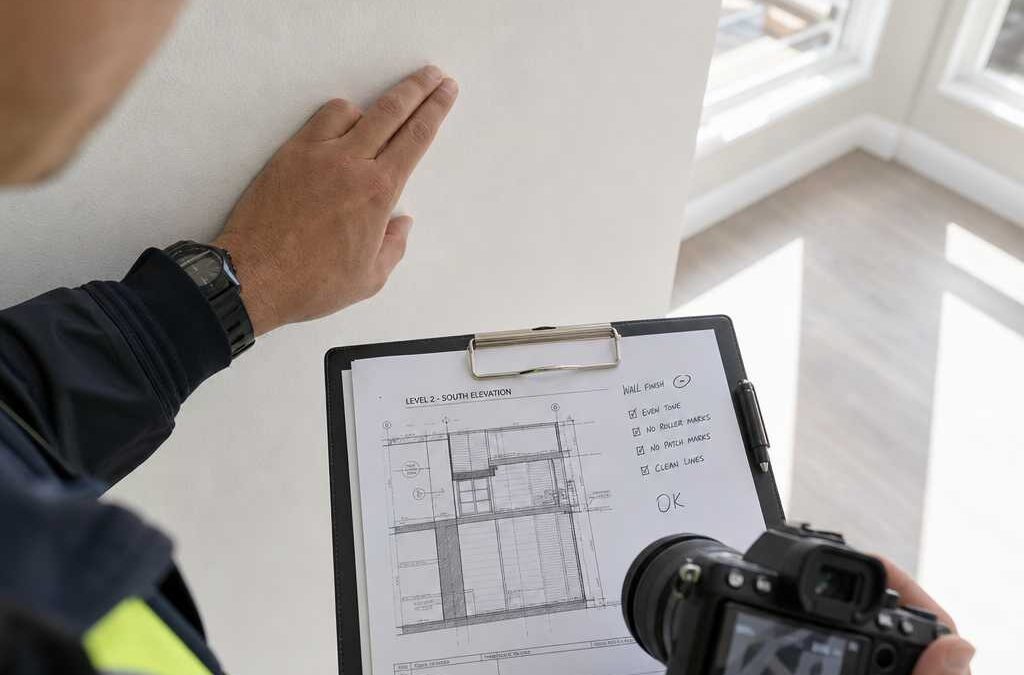
Roughly one in three new homes in Queensland is handed over with defects that the builder hoped you would not notice. That is not cynicism. That is the pattern that experienced inspectors see on site every week across Brisbane, the Gold Coast, Logan, Ipswich, and Redland Bay. A pre-handover inspection Brisbane buyers arrange before signing off at settlement is the single most effective tool for protecting what is almost certainly the largest purchase of your life. Without one, you are accepting a building on the builder’s terms, not yours.
Table of Contents
- Quick Takeaways
- What Is a Pre-Handover Inspection
- What Inspectors Actually Check
- Common Defects Found in Brisbane New Builds
- Pre-Handover vs Other Inspection Types
- The Cost of Skipping an Inspection
- How GoInspect Runs a Pre-Handover Inspection
- When to Book Your Inspection
- What a Good Inspection Report Looks Like
- Frequently Asked Questions
- References
Quick Takeaways
| Key Insight | Explanation |
|---|---|
| Book before you sign, not after | Once you sign the handover paperwork, your legal position weakens significantly. An inspection conducted before sign-off gives you documented leverage with the builder. |
| Photo-enhanced reports are non-negotiable | Text-only defect lists are routinely ignored or disputed by trades. Reports with dated, referenced photos force accountability and speed up rectification. |
| Defects are not just cosmetic | Structural waterproofing failures, incorrect fall on shower floors, and missing fire-rated materials are common in new Brisbane builds and carry serious long-term costs. |
| Trade-specific defect attribution matters | A report that names which trade is responsible for each defect means the builder can act immediately rather than spending weeks determining accountability internally. |
| Same-day reporting is a real advantage | Settlement timelines in Queensland are tight. A report delivered the same day as the inspection means you can present defects to the builder without delaying your finance or settlement date. |
| New home inspections cover high-rise too | Apartment and high-rise buyers in Brisbane and the Gold Coast face a different defect profile to house-and-land buyers. Customised inspection scopes for these buildings are essential. |
| Starting from $550 including GST is accessible | Compared to the tens of thousands of dollars a single missed structural defect can cost in post-settlement repairs, the inspection fee is a straightforward decision. |
What Is a Pre-Handover Inspection
A pre-handover inspection, also called a practical completion inspection or PCI, is a formal assessment of a newly constructed home or apartment carried out before the owner takes legal possession of the property. The inspection is conducted by a licensed building inspector who assesses the property against the plans, specifications, the relevant Australian Standards, and the National Construction Code.
In practice, the inspection covers everything from structural elements and waterproofing to paint quality, cabinetry alignment, and the operation of every door, window, and fitting. The outcome is a written defect report that documents every non-conforming item and assigns it a priority level based on whether it affects structural integrity, habitability, or finish quality.
A new home inspection Brisbane buyers arrange through a fully licensed third-party inspector, rather than relying on the builder’s own quality control walkthrough, is fundamentally different in purpose. The builder’s site supervisor is motivated to hand the property over. A third-party inspector is motivated to find every defect before you are legally bound to accept the property in its current state.


What Inspectors Actually Check
The scope of a handover inspection is considerably broader than most buyers expect. A qualified inspector does not simply walk through rooms looking for paint chips. The inspection follows a structured methodology that works from the exterior of the building inward and from the ground up.
Exterior and Structural Elements
Inspectors assess the roof covering, gutters, fascias, and downpipes for installation compliance and visible defects. Wall cladding, brickwork mortar joints, and rendered surfaces are checked for cracking, incorrect joins, and moisture penetration points. Subfloor areas, where accessible, are assessed for drainage, timber quality, and correct clearance heights.
Site drainage and fall away from the building is one of the most commonly failed items in new Brisbane builds. Incorrect grading allows water to pond against the foundation, which creates long-term slab edge and subfloor moisture problems that are expensive to rectify post-settlement.
Wet Areas and Waterproofing
Bathrooms, ensuites, and laundries receive particularly close attention. Waterproofing membranes that are improperly applied or incorrectly terminated at joins are among the most costly defects found in new construction. Shower floor falls are measured to confirm water drains toward the outlet rather than pooling at the wall junctions.
Tiling work is assessed for lippage, hollow tiles, and grout consistency. These are not purely cosmetic issues. A hollow tile over a wet area membrane represents a pathway for water ingress once the tile eventually cracks under foot traffic.
Mechanical and Electrical Fitout
Every power point, light switch, and fixed appliance is tested for operation. Inspectors check that electrical installations are completed to the approved plan layout, that exhaust fans are ducted to the exterior rather than into roof cavities, and that air conditioning installations do not compromise the building envelope. Plumbing fixtures are checked for operation, pressure, and correct installation height relative to Australian Standards.
Common Defects Found in Brisbane New Builds
The defect profile of new construction in South East Queensland has some consistent patterns. Brisbane’s climate, with its high summer humidity and significant rainfall events, means that waterproofing and drainage failures surface faster here than in drier parts of Australia. Inspectors working across Brisbane, Logan, Ipswich, and Redland Bay see the same categories of defects appearing repeatedly regardless of builder or price point.
The most frequently documented defects in pre-handover inspections across this region include incorrect shower floor falls, paint finish defects under raking light, cabinetry alignment issues, missing or incorrect expansion joints in tiled areas, door and window hardware that does not operate correctly, incomplete silicone sealing at wall-to-floor junctions in wet areas, and missing insulation batts in ceiling spaces.
“The Queensland Building and Construction Commission receives thousands of complaints each year about defective building work in new homes. The majority of these disputes could be resolved faster if buyers had a detailed pre-handover inspection report documenting defects before settlement.” – Queensland Building and Construction Commission (QBCC) guidance on building defects and dispute resolution.
At the higher end of severity, inspectors find items such as incorrectly installed fire-rated wall systems in townhouse and apartment construction, structural connections that do not match the engineering drawings, and waterproofing membranes that have been applied over dusty or unprepared substrates, rendering them effectively non-functional.
A common mistake buyers make is assuming that because a property passed council inspections during construction, it is defect-free. Council building inspections are stage inspections focused on compliance at key structural points. They are not a comprehensive quality audit of the finished building. Third-party pre-handover inspections fill that gap entirely.

Pre-Handover vs Other Inspection Types
Buyers frequently confuse pre-handover inspections with other types of building assessments. Understanding the differences helps you use the right inspection at the right time and avoid paying for overlap or, worse, missing a critical assessment window.
| Inspection Type | When It Happens | Primary Purpose |
|---|---|---|
| Pre-Handover Inspection (PCI) | Before settlement and before signing handover paperwork | Identifies defects in the finished building so the builder must rectify them before you take possession. This is your strongest legal position. |
| Pre-Purchase Inspection (Established Homes) | During the finance or due diligence period after signing a contract on an existing property | Identifies structural defects, pest activity, and maintenance issues in an existing property. Not applicable to new builds under a construction contract. |
| Defect Liability Period Inspection | Typically at the 90-day or 12-month mark after settlement | Documents defects that have emerged since handover and fall within the builder’s defect liability obligations. Useful but less powerful than a pre-handover inspection because you have already accepted the property. |
The pre-handover inspection is the most powerful of the three because it occurs before you have any legal obligation to accept the building. Once you sign the handover certificate, you are acknowledging that the property is complete to your satisfaction. Defects discovered after that point require you to engage the builder’s defect liability process, which is slower, more contested, and less likely to result in full rectification.
Pro tip: If your builder offers to do a joint walkthrough with their site supervisor as the only quality check, decline it as a substitute for an independent inspection. The site supervisor is employed by the builder and has a different objective than a licensed third-party inspector working exclusively for you.
The Cost of Skipping an Inspection
The data consistently shows that the cost of rectifying defects discovered after settlement is significantly higher than the cost of rectifying defects identified before settlement. Post-settlement rectification often involves living in the home, engaging tradespeople independently, and navigating a formal dispute process with the QBCC if the builder does not cooperate.
A single waterproofing failure in a bathroom, if not identified at handover and not rectified until water damage becomes visible, can cost between $8,000 and $25,000 to repair. That figure includes tile removal, membrane reapplication, retiling, potential replacement of wet area cabinetry, and repainting of adjacent walls and ceilings. A pre-handover inspection that identifies the same defect before settlement costs a fraction of that amount and places the rectification obligation squarely on the builder.
Investors purchasing new properties to hold or rent out face an additional risk. A tenant will not wait patiently for a builder to rectify defects after a lease starts. Post-settlement defect disputes during a tenancy create property management complications, potential rental income loss, and reputational issues if the defects affect habitability.
Pro tip: For apartment buyers in Brisbane and the Gold Coast, request that your inspection scope specifically includes common property areas accessible at the time of your individual unit inspection. Defects in shared corridors, car park areas, or building entry points are your responsibility as a lot owner through the body corporate, and they are worth documenting at the earliest opportunity.
How GoInspect Runs a Pre-Handover Inspection
GoInspect’s approach to pre-handover inspections is built around one practical outcome: giving buyers a report they can hand directly to the builder and expect action from. That means the report structure, the defect documentation, and the language used are all calibrated for the rectification process rather than for general information.
Every defect identified during a pre-handover inspection Brisbane site visit is photographed with reference to location and context. The photographs are embedded in the report alongside a written description of the defect, the applicable standard or specification it fails to meet, and the trade responsible for the item. This trade attribution is what separates a GoInspect report from a generic defect list. When a builder receives a report that tells them the tiler is responsible for items 4, 9, and 14, the painter for items 2 and 7, and the plumber for items 11 and 15, they can dispatch the right trades without an internal review process that adds weeks to rectification timelines.
Same-day reporting means that clients who have an inspection conducted on a Tuesday morning have a completed report by Tuesday afternoon. For buyers navigating tight settlement timelines, this is not a convenience feature. It is a practical necessity. Delayed reports create situations where buyers either delay settlement and incur financial penalties, or accept the property without the full defect picture in hand.
GoInspect’s inspectors are fully licensed under Queensland regulations and carry professional indemnity insurance. The inspection scope is customised for both house-and-land packages and high-rise or medium-density apartment developments, recognising that a 20-storey apartment in inner Brisbane has a fundamentally different defect profile to a four-bedroom house in Ripley or Springfield.
When to Book Your Inspection
The correct time to book a pre-handover inspection is as soon as your builder notifies you that the property is at practical completion and they are preparing to issue the handover notice. Do not wait until you receive the formal handover invitation. By the time that invitation arrives, the builder is expecting a rapid turnaround and may pressure you to sign before you have had the opportunity to conduct an independent inspection.
Under Queensland’s construction contract law and the QBCC framework, you have the right to engage a licensed building inspector to assess the property before accepting it. A builder who refuses to allow an independent inspection before handover is acting contrary to industry standards and QBCC guidance, and that refusal is itself worth documenting.
For apartment and townhouse buyers, the timing is slightly different. Practical completion for a multi-unit development may be staged, with individual lot handovers occurring over several weeks. Book your inspection for your specific lot as soon as you are advised it is ready, regardless of where the broader development is in its programme.
What a Good Inspection Report Looks Like
Not all inspection reports are equally useful. A report that lists defects in text without photographs, without reference to specific locations in the home, and without indicating which trade is responsible creates ambiguity that builders use to dispute or delay rectification. A good pre-handover inspection report eliminates that ambiguity entirely.
Specifically, a high-quality report includes a summary page that counts the total number of defects by category and priority, individual defect entries with embedded photographs taken on the inspection date, a written description that references the applicable Australian Standard or construction specification, a location reference so trades can find the item without a site walkthrough, a trade attribution, and a rectification recommendation where appropriate.
The report should be in a format the builder and their trades can read and action without needing to contact you for clarification. PDF reports with clear section breaks by area of the home, rather than a chronological list of everything the inspector noticed, are significantly more effective for driving rectification outcomes.
GoInspect’s photo-enhanced reports are formatted specifically for this purpose. They are structured to be used by site supervisors, project managers, and individual trades as a working document throughout the rectification process, not just as a letter the buyer sends to the builder and then follows up on indefinitely.
Frequently Asked Questions
Is a pre-handover inspection legally required in Queensland?
No, it is not a legal requirement in Queensland. However, it is one of the most financially sound decisions a new home buyer can make. Under Queensland building contracts, once you sign the handover certificate, you are accepting the property as complete. An independent inspection before that point is your primary mechanism for identifying defects while the builder still has a clear obligation to rectify them at no cost to you.
Can my builder refuse to allow an independent inspection?
A builder cannot legally prevent you from engaging a licensed building inspector to assess the property before handover. If a builder is pressuring you to sign handover documents without allowing an independent inspection, that is a significant red flag. Document any such pressure in writing and contact the QBCC for guidance on your rights under your construction contract.
How long does a pre-handover inspection take?
For a standard four-bedroom house, a thorough pre-handover inspection typically takes between two and three hours on site. Larger homes, dual-occupancy properties, and apartment inspections will vary. The time required depends on the size and complexity of the build, not on the number of defects found. An inspector who rushes through a new home in under an hour is not conducting a thorough assessment.
What happens if the builder disputes a defect identified in the report?
A dated, photographed defect report from a licensed inspector is a strong document in any dispute. If a builder disputes a defect, the photographic evidence, the inspector’s credentials, and the reference to the applicable Australian Standard or NCC provision all support your position. For unresolved disputes, the QBCC dispute resolution process accepts third-party inspection reports as evidence. In practice, builders who see a well-documented report with clear photographic evidence are significantly less likely to dispute individual items.
Do I need an inspection if the builder is a large national company with their own quality control process?
Yes. Builder size and reputation do not eliminate defects. Large volume builders operating across Brisbane and South East Queensland produce defects at rates consistent with the broader industry. Their internal quality control processes are designed to manage their own liability and programme efficiency, not to represent your interests as the buyer. Independent third-party inspection is not a comment on the builder’s reputation. It is a standard due diligence step regardless of who built the property.
What is the difference between a pre-handover inspection and a pre-settlement inspection?
In the context of new construction in Queensland, these terms are often used interchangeably and refer to the same type of assessment, which is an inspection of the finished property conducted before the buyer takes legal possession and signs the handover documentation. Some inspectors use different terminology depending on whether the buyer is purchasing off-the-plan or building under a contract directly with a builder, but the core scope and purpose are the same.
If you have recently been through the new home handover process in Brisbane or South East Queensland, share what you found most useful or what you wish you had known before your inspection.
References
- Queensland Building and Construction Commission: building defects, dispute resolution, and homeowner rights in Queensland new construction
- Australian Building Codes Board: National Construction Code standards applicable to new residential construction
- Forbes: financial impact of undisclosed building defects and property due diligence guidance for home buyers
- Statista: residential construction activity data and housing completions statistics for Queensland and greater Brisbane
- Australian Competition and Consumer Commission: consumer rights relating to building contracts, warranties, and defective goods and services