
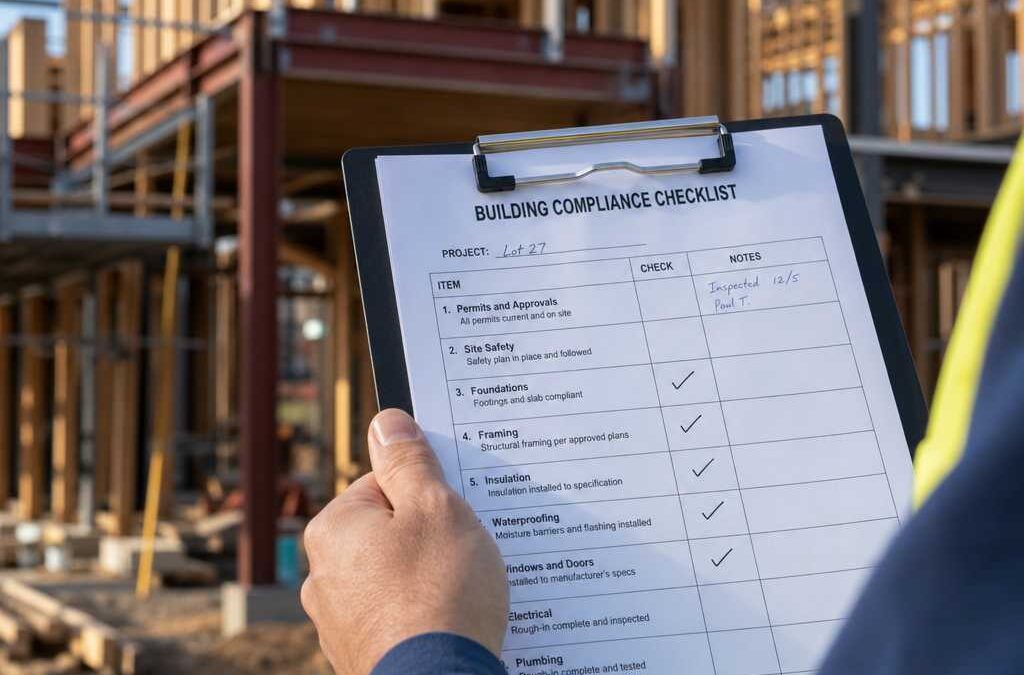
Building compliance and finished-work quality are related, but they are not the same inspection task. Understanding the references used in a new-home assessment helps you ask useful questions and interpret your defect report.
Which documents matter?
Depending on the property and issue, assessment may involve applicable building requirements, relevant Australian Standards, approved plans and specifications, and manufacturer’s installation instructions. The applicable provisions need to be checked for the particular building and work; a general article cannot determine them for every project.
The National Construction Code is an important building reference. In Queensland, the QBCC Standards and Tolerances Guide also provides guidance for assessing workmanship. A generic measurement quoted without its context is not a reliable substitute for the relevant requirement.
What does a handover inspection assess?
GoInspect reviews visible and safely accessible work within the agreed scope. This can include paint and plaster finishes, damage to tiles and cabinetry, door and window operation, loose fittings and incomplete finishing work.
The report records identified issues with photos, locations and clear descriptions. The responsible trade can be identified where appropriate to help the builder organise a response. Read our defect examples for practical illustrations.
What cannot be confirmed from finished surfaces?
Tiles conceal the membrane beneath them, and wall linings conceal much of the framing and service installation. A visual inspection cannot establish those hidden details simply by viewing the finished room. Specialist assessment, construction-stage access or additional investigation may be needed.
GoInspect’s standard handover inspection does not test appliances or replace electrical safety testing, engineering assessment or building certification. External roof inspections are an additional service, subject to the agreed scope and suitable access.
How does this differ from certification?
Building certification and independent defect reporting serve different purposes. Certification does not mean that every finish, fitting or operational issue has been checked for the owner. Equally, a photographic defect report is not a replacement for the required certification.
Keep the builder’s completion documentation alongside your inspection report. If a concern relates to a particular approval or installation, request the relevant documents and discuss the appropriate assessment.
What should you do with a disputed finding?
- Identify the location and observed issue clearly.
- Provide photos and the report to the builder in writing.
- Ask which specification or requirement applies if the item is disputed.
- Keep the response and agreed rectification arrangements.
- Seek suitable technical or contractual advice where the issue remains unresolved.
Practical completion can include minor defects and omissions. Refer to the QBCC’s practical completion guidance and your contract. Do not assume that a report automatically changes your payment obligations.
Book with a clear scope
Explore GoInspect’s new-home inspection service or get an inspection quote. Tell us what stage the property is at and any specific concerns requiring additional investigation.