
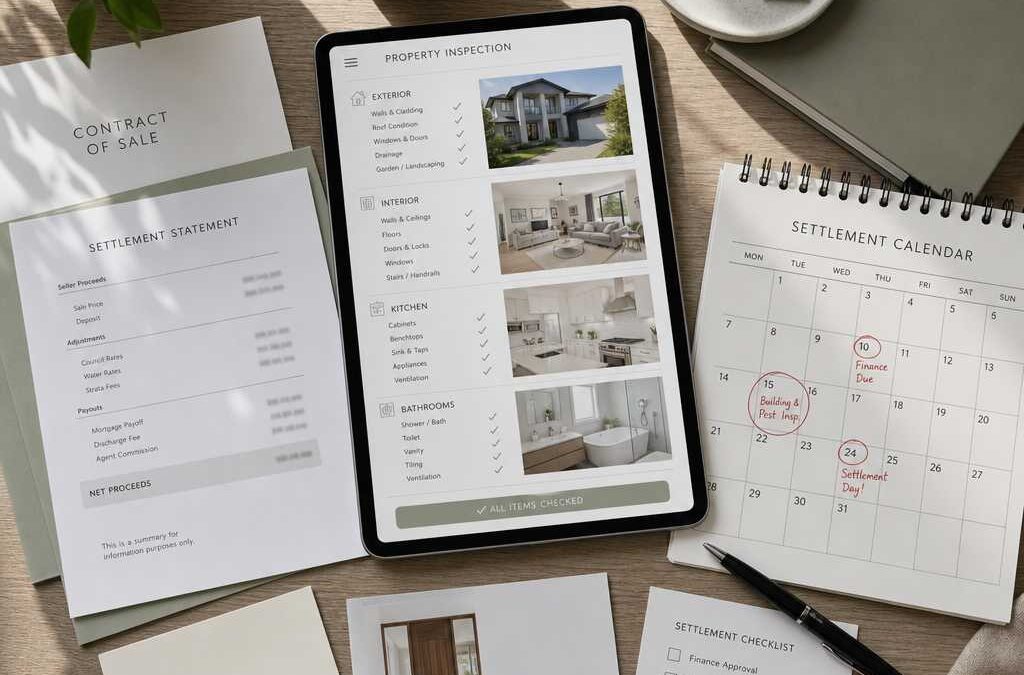
Settlement is not a forgiving deadline. When you are days away from taking legal ownership of a new home or investment property, a delayed inspection report is not just an inconvenience – it can cost you your right to have defects rectified before handover. A same day inspection report gives you something a 48-hour turnaround simply cannot: the ability to act before the moment passes. For buyers in Brisbane, Gold Coast, Logan, Ipswich, and Redland Bay, where new construction activity is relentless, the gap between a fast report and a slow one is the gap between a builder fixing a defect and a buyer living with it.
Table of Contents
- Quick Takeaways
- Why Timing Is Everything at Pre-Handover
- What Happens When Reports Are Delayed
- What a Same-Day Report Actually Contains
- Comparison of Reporting Approaches
- Who Needs Same-Day Reports Most
- How GoInspect Delivers Same-Day Reporting
- Frequently Asked Questions
- References
Quick Takeaways
| Key Insight | Explanation |
|---|---|
| Settlement windows are tight | Most new home contracts in Queensland allow only 5 to 10 business days for defect notices after a practical completion inspection. Waiting two days for a report wastes a third of that window. |
| Defect responsibility shifts at settlement | Once you settle, many construction defects become your liability rather than the builder’s. A same day inspection report lets you raise issues while the builder still legally owns the problem. |
| Photo-enhanced reports carry more weight | Reports with dated, trade-attributed photos are harder for builders to dispute. They show exactly what was wrong and who caused it, which accelerates rectification. |
| Investors face compounding risk | Investors with multiple settlements or tight tenant move-in dates cannot afford a 48-hour reporting delay. Same-day delivery keeps their entire schedule intact. |
| Builders respond faster to immediate reports | A report delivered the same day the inspection is conducted gives the builder’s site supervisor less room to claim the defect appeared later or was caused by another party. |
| Pre-handover inspection timing is non-negotiable | A pre-handover inspection in Brisbane completed on Friday with a Monday report effectively gives you no business time before a mid-week settlement. Same-day removes that risk entirely. |
| High-rise settlements need coordination across multiple trades | For apartments and high-rise developments, defects often span several trades. Same-day reports with trade-specific attribution allow the developer to coordinate rectification simultaneously rather than sequentially. |
Why Timing Is Everything at Pre-Handover
The pre-handover phase in a new home build is a legally defined window. In Queensland, the practical completion inspection (often called a PCI) is the buyer’s formal opportunity to identify defects before accepting the property. What most buyers do not realise is that this window closes faster than expected, and the report you receive from your inspector is the document that starts the clock.
If your inspector conducts a thorough inspection on Monday but does not deliver the report until Wednesday, you have lost two business days of negotiating time. For a settlement scheduled on the following Monday, that delay is significant. Builders and developers often set short internal deadlines for responding to defect schedules, and they are under no obligation to extend those deadlines because your inspection company was slow.
A common mistake is treating the inspection and the report as two separate events with a natural gap between them. In practice, the inspection and the report must function as a single workflow. The moment the inspector leaves the site, the clock is running.
Pro tip: When booking a pre-handover inspection in Brisbane or on the Gold Coast, always confirm the report delivery time in writing before you book. If the company cannot commit to same-day delivery, that constraint should factor into your settlement timeline planning.


What Happens When Reports Are Delayed
The consequences of a delayed new home inspection report are rarely theoretical. They show up in very specific, costly ways that buyers and investors experience long after the inspection company has cashed their cheque.
The builder disputes the defect timeline
When a report arrives two or three days after the inspection, a builder’s legal team has a straightforward argument: the defect may have occurred after the inspection. This argument is weaker when the report is timestamped the same day, accompanied by dated photos taken on site. Delayed reports create ambiguity. Same-day reports eliminate it.
Rectification gets pushed past settlement
If defects are not formally raised before settlement, the buyer typically has to pursue rectification under warranty provisions rather than pre-settlement defect clauses. Warranty claims are slower, involve more bureaucracy, and often result in the builder prioritising new builds over rectification work. A defect raised before settlement has a different legal weight than one raised three weeks later.
Finance conditions become complicated
Some buyers have finance conditions tied to satisfactory completion of the property. A delayed inspection report can push the formal defect notice past the date the lender needs confirmation that the build is acceptable. This creates a cascading problem that involves conveyancers, lenders, and builders all working against the same shrinking deadline.
“The practical completion inspection is not just a checklist exercise. It is a legal event. Treating the report as an afterthought is one of the most expensive mistakes a new home buyer can make.” – Queensland Building and Construction Commission, guidance for new home buyers
What a Same-Day Report Actually Contains
Speed without substance is pointless. A same-day inspection report that arrives quickly but lacks detail is no better than a slow one. The standard that GoInspect holds its reports to is that every defect is photographed, attributed to a specific trade, and described with enough precision that a builder’s site supervisor can immediately understand what needs to be fixed and who is responsible for fixing it.
Photo-enhanced defect documentation
Photos serve two purposes in a new home inspection report. First, they remove any ambiguity about what was found and where. Second, they create a timestamped record that is difficult to dispute. A report that describes a defect in text only is far weaker in any subsequent negotiation with a builder or developer. Photos taken on the day, attached to the same-day report, carry evidentiary weight that text alone cannot match.
Trade attribution for each defect
This is where many generic inspection reports fall short. Identifying that a defect exists is useful. Identifying which trade caused it is what actually accelerates rectification. When a report states that a waterproofing issue is the responsibility of the waterproofing contractor rather than the tiler who covered it, the builder can direct the right tradesperson immediately rather than spending days working out accountability internally.
Customised reports for high-rise and housing projects
A detached house in Logan and a high-rise apartment in Brisbane CBD have very different defect profiles. A same-day report that is customised to the property type rather than generated from a one-size-fits-all template is going to be more actionable for both the buyer and the developer. High-rise reports, for example, need to track defects by apartment number, level, and common area in a way that standard residential templates do not support.
Pro tip: Before your practical completion inspection, ask your inspector whether the report format is specific to your property type. A standard template used for every inspection is a warning sign that trade attribution and high-rise formatting may be missing from your final document.

Comparison of Reporting Approaches
Not all pre-handover inspection providers operate the same way. The differences in reporting approach translate directly into differences in how useful the report is when you are working against a settlement deadline.
| Approach | Report Delivery Timeline | Practical Impact Near Settlement |
|---|---|---|
| Same-day delivery with trade-attributed, photo-enhanced report (GoInspect) | Delivered the same day as the inspection | Full negotiating time is preserved. Builder can begin rectification immediately. Defect disputes are minimised by dated photo evidence. |
| Standard next-day or 48-hour delivery | 24 to 48 hours after inspection | Loses one to two business days of the defect notice window. If inspection falls on a Friday, the report may not arrive until Tuesday, cutting the effective response window significantly. |
| Template-based report without trade attribution | Varies, often 24 to 72 hours | Builder has to internally determine which trade is responsible for each defect, adding days to the rectification coordination process. Report has less legal weight in disputes. |
Who Needs Same-Day Reports Most
While every new home buyer benefits from a fast report, some situations make same-day delivery not just convenient but operationally essential.
Investors with multiple settlements
Property investors managing more than one new build settlement in a short period cannot absorb reporting delays across a portfolio. A two-day delay on each of three inspections can create a scenario where defect notices are filed late on all three properties simultaneously. Same-day reports keep each settlement on its own clean timeline.
Buyers with tight finance conditions
Lenders sometimes require confirmation that a new home has been inspected and accepted before releasing funds. When inspection results need to flow to a conveyancer and then to a lender within a compressed window, the same-day report is the only format that realistically supports this chain.
Developers managing high-rise handovers
A developer handing over a 100-apartment building cannot manage rectification without a report format that gives site supervisors an immediate, trade-by-trade action list. Same-day delivery means the rectification program starts the day of inspection rather than two days later, which, across dozens of apartments, can compress the total defect rectification period by weeks.
How GoInspect Delivers Same-Day Reporting
GoInspect operates across Brisbane, Gold Coast, Logan, Ipswich, and Redland Bay with fully licensed inspectors who complete the report during and immediately after the inspection rather than compiling it in an office the following day. The workflow is built around the premise that a new home inspection report has limited value if it arrives after the window for action has closed.
Each report includes photo documentation of every identified defect, with the responsible trade noted against each item. This trade attribution is not a cosmetic feature. It is the mechanism that allows builders and developers to issue immediate instructions to the right subcontractors rather than spending time on internal triage. For high-rise and multi-dwelling projects, GoInspect provides customised report formats that organise defects by unit number and common area, making the document directly usable by the development team’s site management software.
At a starting price of $550 including GST, GoInspect positions same-day reporting as a standard deliverable rather than a premium add-on. The logic is straightforward: a report that arrives after the settlement deadline has passed is worth considerably less than the paper it is printed on, regardless of how thorough the inspection was.
Frequently Asked Questions
What is a same-day inspection report and why does it matter for settlement?
A same-day inspection report is a completed defect document delivered to the buyer or investor on the same calendar day that the physical inspection is conducted. It matters for settlement because Queensland new home contracts have defined windows for raising defects before settlement is finalised. A report that takes 24 to 48 hours to arrive consumes a significant portion of that window, leaving less time for the buyer to formally notify the builder and for rectification to be scheduled before handover.
What should a pre-handover inspection in Brisbane include?
A pre-handover inspection in Brisbane should cover all visible structural elements, internal finishes, waterproofing, plumbing fixtures, electrical installations, windows and doors, cabinetry, tiling, and external areas including driveways and fencing. Each defect should be photographed, described in plain language, and attributed to the responsible trade. The report should be formatted so that both the buyer’s conveyancer and the builder’s site supervisor can use it without interpretation.
Can I negotiate defect rectification after settlement if I missed the pre-handover window?
Technically yes, but the process is significantly harder. After settlement, defect rectification falls under statutory warranty provisions rather than contractual pre-settlement obligations. Builders tend to deprioritise warranty work relative to active construction projects. You will also face higher evidentiary requirements if the builder disputes when or how a defect occurred, since there is no inspection report with dated photos establishing the defect’s existence before settlement.
How is a same-day new home inspection report different from a standard building inspection report?
A standard building inspection report is typically used for established properties and focuses on maintenance issues and structural concerns visible to a non-invasive inspection. A new home inspection report for pre-handover purposes is specifically designed to identify construction defects against the contract specifications and applicable building codes, attribute those defects to specific trades, and provide a defect schedule the builder can act on. The same-day delivery component means the report functions as a real-time defect notice rather than a retrospective document.
What happens if the builder refuses to rectify defects identified in the inspection report?
If a builder refuses to rectify defects formally documented in a pre-handover inspection report, the buyer can escalate the matter to the Queensland Building and Construction Commission (QBCC). The inspection report, particularly one with dated photographs and trade attribution, forms a critical part of the evidence file in any QBCC complaint or formal dispute process. Reports without photos or trade attribution are considerably weaker in this context.
How far in advance should I book a pre-handover inspection near my settlement date?
Book your inspection at least five to seven business days before your scheduled settlement date. This gives you time to receive the same-day report, review it with your conveyancer, issue a formal defect notice to the builder, and allow at least some rectification time before you are legally required to settle. Booking the inspection the day before settlement leaves no practical window for any of this, even with a same-day report.
If you have recently gone through a pre-handover inspection or are currently navigating a new home settlement, share what worked and what you wish you had done differently – your experience helps other buyers in Brisbane and South East Queensland make better decisions.
We would love your feedback and any insights you would share with others. What perspective would you add?
References
- Queensland Building and Construction Commission – regulatory guidance for new home buyers on defect rights and practical completion
- Forbes – coverage of property investment risk management and settlement processes
- Statista – residential construction data and new dwelling commencement statistics for Australia
- Queensland Legislation – Housing Industry Association contract provisions and building industry regulations
- Australian Building Codes Board – National Construction Code standards applicable to new residential builds