
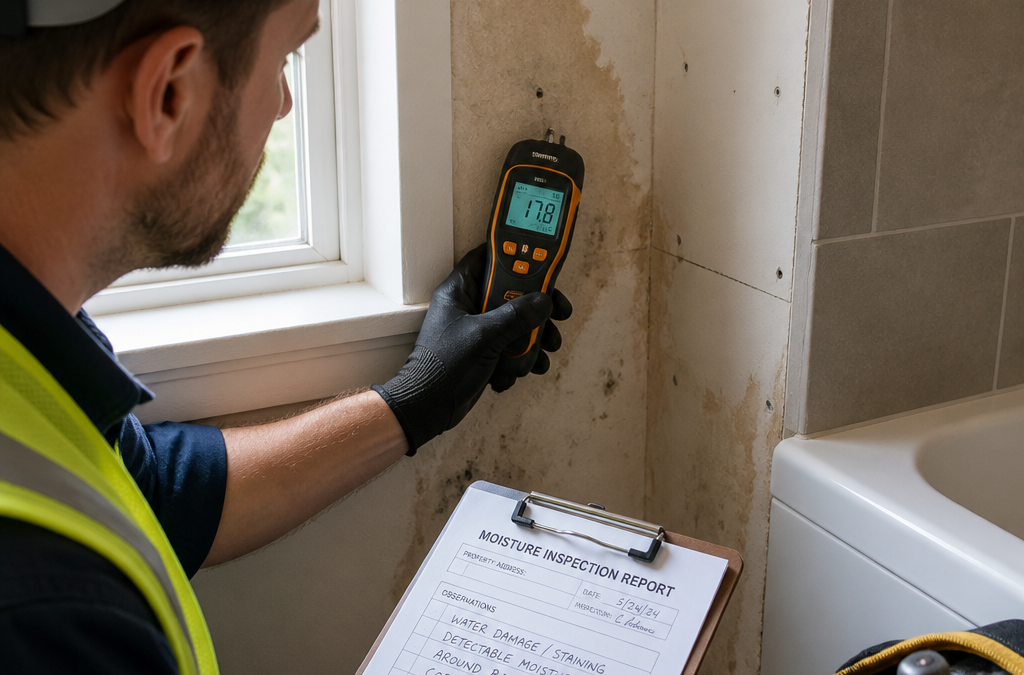
Most new homeowners in South East Queensland expect a brand-new house to be defect-free. In practice, that assumption is almost always wrong. Pre-handover inspections conducted across Brisbane, the Gold Coast, Logan, Ipswich, and Redland Bay consistently reveal construction issues that range from cosmetic blemishes to genuine structural concerns. Understanding the most common new home defects found during these inspections means you can walk into your handover with realistic expectations, a clear checklist, and the leverage you need to hold your builder accountable before you sign off on anything.
Table of Contents
- Quick Takeaways
- Why New Homes in SEQ Are Not Defect-Free
- The 10 Most Common Construction Defects Found During New Home Inspections in SEQ
- How Defects Are Classified in Queensland
- Comparing Your Inspection Options
- What Happens After the Defect List Is Signed
- Frequently Asked Questions
- References
Quick Takeaways
| Key Insight | Explanation |
|---|---|
| Waterproofing failures are the single most reported defect in new Australian homes | They affect bathrooms, laundries, balconies, and wet areas. They are cheap to fix before tiling, expensive once finishes are in. |
| QBCC certifier inspections check minimum compliance, not workmanship detail | An independent pre-handover inspection fills the gap between “legally compliant” and “actually built properly”. |
| Slab cracking is common in SEQ due to reactive clay soils | Not all slab cracks are structural, but cracks wider than allowable tolerances must be documented and assessed before handover. |
| Roof framing defects are often invisible without a roof space entry | Missing bracing, inadequate connections, and non-compliant truss installation are regularly missed by builders during self-assessment. |
| Queensland’s defect liability period is 12 months for non-structural defects, 6.5 years for structural | Documenting defects at practical completion protects your rights across both timeframes. |
| A signed defects list creates a legal obligation for the builder to rectify | Verbal agreements at handover are not enforceable. Everything must be in writing, ideally with photos. |
| Photo-enhanced defect reports make trade responsibility clear | When each defect is photographed and assigned to a specific trade, builders and subcontractors cannot dispute what needs fixing. |
Why New Homes in SEQ Are Not Defect-Free
South East Queensland’s construction boom has kept trades stretched thin across Brisbane, the Gold Coast, and surrounding growth corridors. When subcontractors are juggling multiple sites, quality control suffers. Time pressure drives shortcuts, and those shortcuts show up at practical completion.
SEQ also presents specific environmental challenges. Reactive clay soils underlie large parts of the region, meaning slab movement and cracking are a predictable risk on many sites. High humidity and heavy summer rainfall create ideal conditions for moisture-related defects that may not appear immediately but become serious within the first year. The QBCC sets clear standards, but certifier inspections at mandated stages focus on code compliance rather than workmanship quality. That gap is exactly where an independent building inspection Brisbane adds real value.
Experienced independent inspectors who work across SEQ regularly find that even well-known volume builders leave multiple defects unresolved at handover. This is not always intentional. It reflects the reality of multi-trade projects managed under tight deadlines. Knowing which defects to look for lets you go into the handover conversation prepared.

The 10 Most Common Construction Defects Found During New Home Inspections in SEQ
1. Waterproofing Failures in Wet Areas
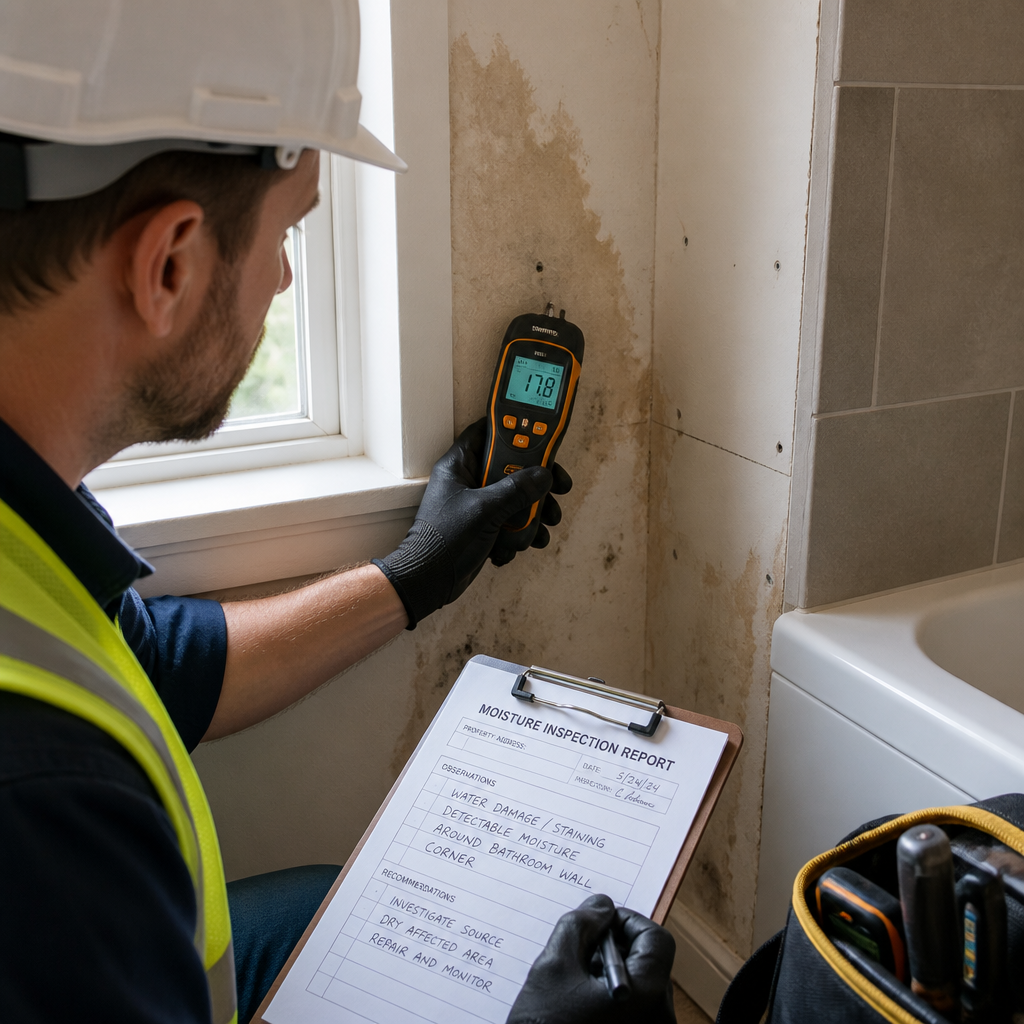
Waterproofing defects are the most reported construction issue in new Australian homes. In bathrooms, ensuites, laundries, and balconies, inspectors regularly find membranes that have not been applied to the correct height, junctions left unsealed, or membrane layers that are thinner than the required standard. These failures are virtually invisible once tiling is complete, which is why they must be checked before finishes go in.
The QBCC has specifically identified incorrect membrane applications and unsealed junctions as the most frequent waterproofing problems encountered in Queensland. The cost of rectifying a waterproofing failure after tiling involves stripping the entire tiled surface, reapplying the membrane, and retiling. Catching it at the right construction stage costs almost nothing by comparison.
Pro tip: If your practical completion inspection reveals water staining, damp odours, or efflorescence around wet areas, treat these as red flags for an underlying waterproofing failure, not just cosmetic issues.
2. Concrete Slab Cracking and Drainage Issues
Slab defects are a particularly common finding across SEQ, where expansive clay soils mean ground movement is an ongoing variable. Inspectors frequently identify cracking that exceeds QBCC tolerances, inadequate steel reinforcement placement, and slab drainage that directs water toward the structure rather than away from it.
Not every slab crack is a structural problem, but the distinction matters. The QBCC Standards and Tolerances Guide sets out exactly which crack widths, patterns, and locations are acceptable, and which require rectification. A competent inspector will assess each crack against those tolerances and document it with photographs so the builder cannot later dispute whether it was present at handover.
3. Roof Framing Non-Compliance
Roof space entry is non-negotiable in a thorough pre-handover inspection, yet many homeowners skip it or assume the space has been checked. In practice, inspectors conducting construction defects Queensland assessments frequently find roof trusses with missing or inadequate bracing, connections that do not meet engineering specifications, and ridge beams or rafters installed out of alignment.
Parts of SEQ are subject to higher wind-load requirements under the National Construction Code, particularly in coastal and elevated areas. Roof framing that does not meet the applicable wind rating is a serious structural defect, not a cosmetic one. It also represents a safety risk during storm events, which are a regular occurrence in the region.
4. Roof Flashing and Drainage Defects
Even where the structural framing is sound, roof-level waterproofing and drainage can fail. Inspectors regularly find flashings around penetrations, valleys, and ridge cappings that are incorrectly installed, poorly sealed, or missing entirely. Gutters and downpipes are another consistent problem: incorrect fall, inadequate sizing, or connections that dump water against the building rather than directing it to stormwater.
Queensland’s summer rainfall intensity makes these defects matter more than they would in drier climates. A poorly connected downpipe that causes minor pooling in a dry month can direct hundreds of litres of water against a wall or slab edge during a typical Brisbane storm.
5. Brickwork and Masonry Defects
In brick veneer and full masonry homes, inspectors commonly find cracking in mortar joints, missing or improperly placed articulation joints, inconsistent brick coursing, and mortar smeared across face brickwork. Stair-step cracking patterns in brickwork, particularly around window and door openings, often signal foundation movement or inadequate articulation rather than simple cosmetic issues.
Articulation joints exist precisely to accommodate the natural movement that occurs in masonry construction. When they are omitted or incorrectly placed, the brickwork has nowhere to move and cracks instead. This is a construction defect that should always be documented and rectified before handover.
6. Window and Door Installation Problems
Windows and doors that are out of plumb, have poor weather seals, or are missing flashings are a regular finding in new home inspections. Poorly sealed window frames are a primary entry point for water ingress driven by wind, a particular concern in coastal parts of the Gold Coast and Redland Bay.
Inspectors also check that windows and doors operate correctly, lock properly, and meet any required safety glazing standards. Sliding doors that bind, or hinged doors that do not latch without force, indicate installation that is either out of square or missing proper hardware adjustments. These are straightforward rectifications, but they need to be on the defects list before you sign.
7. Plumbing and Drainage Non-Compliance
Plumbing defects found during new home inspections include incorrect hot and cold pipe connections, inadequate fall in drainage lines, missing inspection openings, and fixture installations that do not comply with the relevant Australian Standard. Leaking or poorly supported pipework inside wall linings can cause long-term water damage that is entirely hidden from view.
Inspectors also check that all plumbing fixtures are correctly sealed at penetrations, particularly around bath and shower waste connections. An unsealed penetration where a pipe passes through a waterproofed membrane can undermine an otherwise correctly applied membrane system.
8. Electrical and Switchboard Issues
While electrical certification sits with a licensed electrician and a certificate of compliance is required, independent inspections still check for accessible issues: GPOs (power points) that are not seated flush, light fittings that are incorrectly positioned, and exhaust fan installations where the duct simply terminates in the roof space rather than venting externally. That last one is more common than it should be, and it creates a direct moisture and mould risk in the roof cavity.
Safety switches (RCDs) and smoke alarm installations are also checked against current Queensland requirements. Deficiencies here are not cosmetic. They have direct safety and insurance implications.
9. Tiling Defects and Poor Finishes
Tiling defects cover a wide range: lippage between tiles that exceeds tolerance, hollow-sounding tiles that indicate inadequate adhesive coverage, grout lines that are inconsistent or missing entirely, and tile layouts that do not match the agreed specification. External paving and tile work on alfresco areas is particularly prone to inadequate drainage fall, which creates pooling that degrades both the tiles and the substrate beneath them.
Poor paint finishes, including runs, holidays (missed patches), incorrect sheen levels, and paint applied over un-primed surfaces, are also consistent findings. These are genuinely easier to fix before handover than after you have moved furniture in.
10. Incomplete or Non-Compliant Insulation
Insulation that is missing from sections of the ceiling, compressed against the roof sarking, or incorrectly installed around downlights represents a compliance issue as well as an ongoing energy cost. Inspectors frequently find that the insulation specifications stated in the contract are not what has been installed, whether that is the wrong R-value, the wrong product type, or simply sections that were skipped during installation.
In SEQ’s subtropical climate, ceiling insulation has a direct impact on internal temperatures during summer. A home that performs well below its design specification is a defect that costs you money every month.
Pro tip: Always request the builder’s QBCC compliance documentation alongside your own independent inspection report. Comparing what the certifier signed off on with what your inspector found gives you a complete picture of what was built versus what was approved.
How Defects Are Classified in Queensland
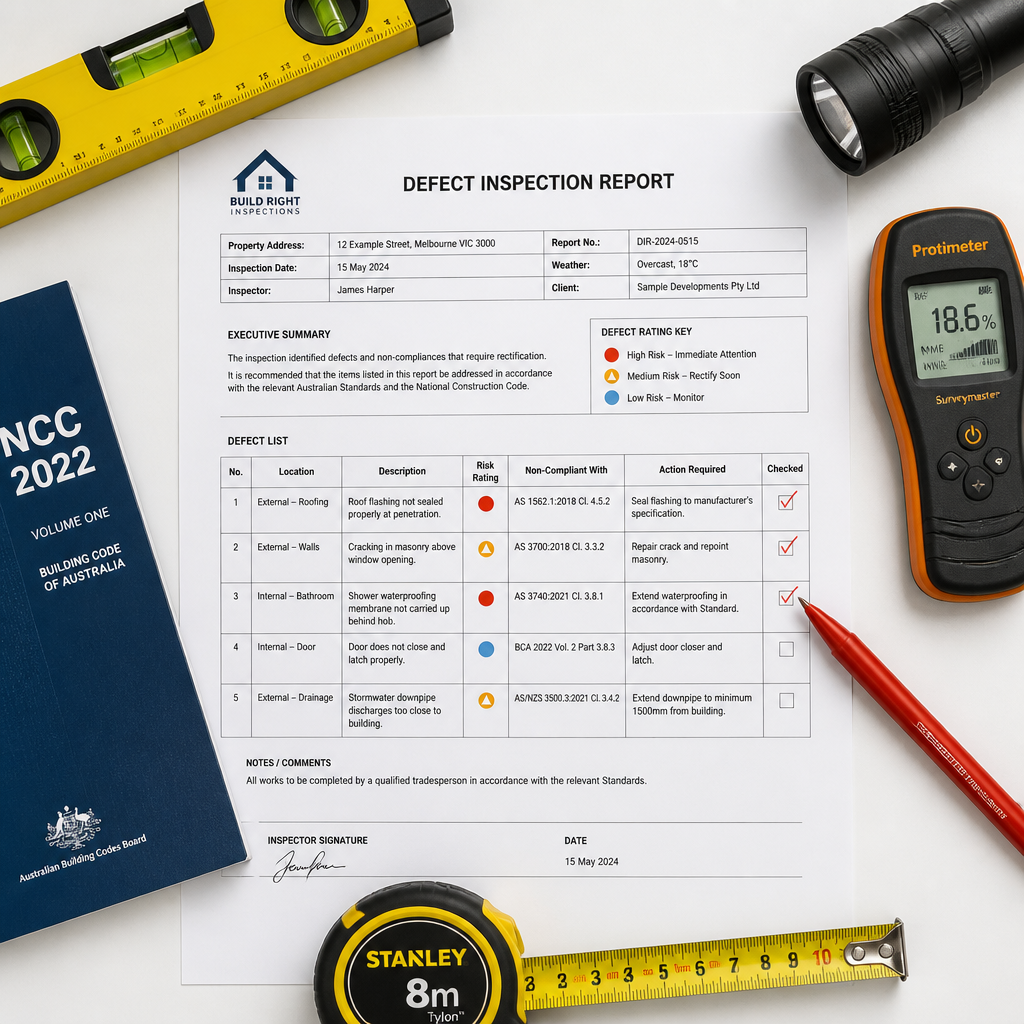
Under Queensland’s building laws, defects are broadly separated into structural and non-structural categories, and the timeline for making a claim differs significantly between the two. Builders are required to remedy defective work within a 12-month defect liability period after practical completion for non-structural defects. For structural defects, the QBCC can direct rectification for up to six years and six months from practical completion.
The QBCC Standards and Tolerances Guide is the primary reference document for determining whether something is actually defective. It covers categories from roofing and plumbing through to painting, floors, and masonry. Inspectors who are familiar with this guide will assess every finding against the applicable tolerance rather than making subjective judgements.
A practical completion inspection is not about finding fault for its own sake. It is about creating a documented record of what exists at handover so that nothing is disputed after you take possession. A verbal agreement to fix something is worth nothing. A signed defects list with photographs is worth everything.
The practical completion inspection is the formal walk-through conducted with the builder at the point the home is ready for handover. At that point, the builder notifies you that the work is substantially complete, and you have the right to document any remaining defects or incomplete items in a defects list that both parties sign. Engaging an independent inspector to conduct this assessment on your behalf, before the builder’s walk-through, means you arrive with a complete, photo-documented report rather than relying on what you can identify yourself on the day.
Comparing Your Inspection Options
| Inspection Approach | What It Covers | Key Limitation |
|---|---|---|
| QBCC Certifier Inspection | Mandatory compliance checkpoints at defined construction stages. Confirms work meets minimum code requirements. | Does not assess workmanship quality or finishes. Not designed to catch every defect, only structural and safety compliance at the stage inspected. |
| Builder’s Own Walk-Through | Supervised tour led by the builder or site supervisor at practical completion. Defects noted on the builder’s own form. | Clear conflict of interest. Inspectors employed by or loyal to the builder are not incentivised to find or document every defect. No independent photographic record. |
| Independent Pre-Handover Inspection (GoInspect) | Comprehensive inspection of all accessible areas including roof space. Photo-enhanced defect report with each issue assigned to the responsible trade. Same-day reporting. | Requires scheduling before the builder’s handover date. Homeowner must allow sufficient lead time. |
The comparison above makes the case clearly. A certifier inspection and a builder walk-through both serve the builder’s interests at least as much as yours. An independent inspection conducted by a fully licensed inspector with no relationship to the builder is the only approach that is structurally aligned with your interests as the homeowner or investor.
GoInspect’s photo-enhanced reports go a step further by assigning each identified defect to the specific trade responsible. This matters because when a builder sends a subcontractor back to rectify, the subcontractor needs to know exactly what they are fixing and who signed off on the defect. Ambiguous reporting leads to incomplete rectification. Specific, photographed, trade-attributed reports get things fixed.
What Happens After the Defect List Is Signed
Once both you and the builder have signed the defects list at practical completion, the builder is legally obligated to rectify every item on it. Timeframes for rectification should be agreed in writing at the same time. “We’ll fix it” without a timeline attached is not an acceptable response to a documented defect.
During the 12-month defect liability period, any additional non-structural defects that emerge should be communicated to your builder in writing as soon as they are identified. Do not wait until near the end of the period. Queensland’s climate means that some moisture-related defects only appear during the wet season, which may be months after handover. Documenting and notifying promptly keeps your rights intact.
If a builder refuses to rectify a defect documented at practical completion, you can lodge a complaint with the QBCC. The QBCC has the power to issue a Direction to Rectify. Having a professional inspection report with photographs and trade attribution means your complaint is backed by evidence rather than assertion, which significantly increases the likelihood of a swift resolution.
For investors managing multiple properties or developers overseeing multi-lot projects, the value of a standardised, professional inspection process becomes even more pronounced. A defect that costs $500 to fix before handover on a single dwelling multiplies across 20 dwellings in a project if it is missed and discovered post-settlement. GoInspect provides customised reporting for high-rise developments and housing projects that scales this process without losing the detail that makes individual reports useful.
Frequently Asked Questions
What is the difference between a pre-handover inspection and a practical completion inspection?
In everyday use, these terms are often treated as interchangeable, and the inspection process is the same. A practical completion inspection is the formal term used in the QBCC framework: it is the inspection conducted at the point the builder notifies you of practical completion. A pre-handover inspection typically refers to an independent assessment you commission before that formal builder walk-through, so you arrive prepared. Booking your independent inspector to attend before the builder’s walk-through is the recommended approach.
Can I conduct my own inspection instead of hiring a professional?
You can conduct your own walk-through, and doing so is better than not looking at all. However, a licensed building inspector assesses work against the QBCC Standards and Tolerances Guide, checks roof spaces and areas that require access equipment, identifies defects that are not visible to an untrained eye, and produces a report that is legally useful if you need to escalate to the QBCC. A self-conducted inspection produces none of those outcomes reliably.
How long does a pre-handover inspection take?
A thorough inspection of a standard new home in Brisbane or the Gold Coast typically takes between two and four hours, depending on the size and complexity of the dwelling. A larger home, dual-occupancy, or townhouse project takes longer. Same-day reporting, as offered by GoInspect, means you have your full defect report in hand on the day of inspection rather than waiting days for a document that may already be out of date by the time you receive it.
What if the builder disputes a defect identified in the inspection report?
A photo-documented report that references the relevant section of the QBCC Standards and Tolerances Guide is significantly harder to dispute than a verbal observation. If the builder does dispute a finding, the QBCC can inspect the work and determine whether a Direction to Rectify should be issued. Your independent inspection report is the evidence base for that process. This is why the quality and specificity of the report matters as much as the inspection itself.
At what stage should I book a pre-handover inspection for a new build in Brisbane or South East Queensland?
Book your independent inspector as soon as the builder provides written notice that practical completion is approaching, typically two to three weeks before the scheduled handover date. You need enough time for the inspection to be completed and the report reviewed before the builder’s walk-through. Trying to organise an inspection the day before handover creates unnecessary pressure and may mean you miss the window to have defects formally documented before signing.
Are construction defects in new homes covered by the builder’s warranty?
Yes. Under Queensland law, builders carry a statutory defect liability period of 12 months after practical completion for non-structural defects. For structural defects, the QBCC can direct rectification for up to six years and six months. These rights are triggered by you notifying the builder in writing of the defect. They are not automatic, and they cannot be claimed effectively without documentation of what the defect is and when it was identified.
Have you been through a pre-handover inspection in Brisbane, the Gold Coast, Logan, Ipswich, or Redland Bay? We would like to hear what defects surprised you most, or what you wish you had known before the handover day.
References
- QBCC guide to practical completion inspections and homeowner rights in Queensland
- QBCC overview of what constitutes defective building work and how to use the Standards and Tolerances Guide
- Australia’s top 10 most common building defects explained, with types, risks, and rectification guidance
- Complete guide to defective building work and builder obligations in Queensland
- What independent inspectors commonly find when building a new home in Brisbane