
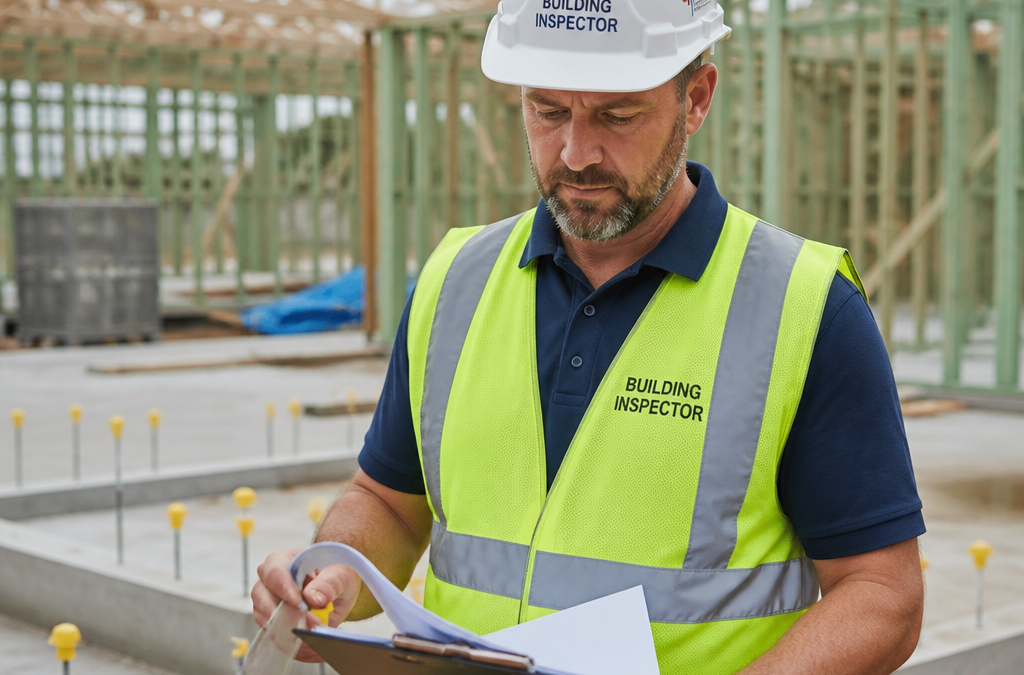
Most new homeowners assume their builder’s site supervisor is keeping a close eye on quality. In practice, that person’s primary job is to keep the project moving on schedule, not to advocate for your interests. That gap, between what you expect and what gets built, is exactly where the role of a building inspector becomes essential. An independent inspector works for you, not the builder, checking structural compliance, workmanship, and defect documentation at each stage so problems are caught before they get buried behind plasterboard, tiling, or a coat of paint.
Table of Contents
- What Does a Building Inspector Actually Do?
- Quick Takeaways
- The Key Stages of a New Home Inspection
- Independent Building Inspector vs. Statutory Certifier: What’s the Difference?
- What an Inspector Looks for at Each Stage
- The Defect Report: Your Most Valuable Document at Handover
- Comparing Inspection Approaches for New Homes
- Why Independence Matters in Queensland’s Construction Market
- Frequently Asked Questions
- References
What Does a Building Inspector Actually Do?
A building inspector for a new home is a licensed professional who physically attends the construction site and assesses whether the work meets the requirements of the National Construction Code (NCC), relevant Australian Standards, and the approved building plans. Their job is not ceremonial. They measure, probe, photograph, and document, and then produce a written report that you can hand directly to your builder.
In Australia, an independent building inspector is engaged by you, the homeowner or investor, specifically to represent your interests. That distinction matters enormously. A certifier or building surveyor is a statutory appointment who processes approvals. An independent inspector is your expert eyes on site, with no incentive to wave through substandard work to keep the build on schedule.
The scope of work covers structural elements, waterproofing, roof installation, brickwork and render quality, window and door fitment, wet area compliance, fixing and fit-off quality, and final practical completion. Depending on when you engage them, they can attend at one stage or across multiple stages of the build.
Quick Takeaways
| Key Insight | Explanation |
|---|---|
| Independent inspectors work for you, not the builder | They have no commercial relationship with the builder or developer, so their findings are unbiased and documented purely in your interest. |
| Slab and frame stages are the highest-risk inspection points | Defects at these stages get concealed by subsequent work. Once concrete is poured or plasterboard is fixed, rectification becomes invasive and expensive. |
| A defect report is a legal document | A properly prepared inspection report with photographic evidence gives you documented grounds to require rectification under your building contract before handover. |
| Practical completion inspections are not optional for buyers | Queensland building contracts grant you the right to inspect before accepting handover. Skipping this step removes your strongest point of leverage with the builder. |
| Photo-enhanced reports identify responsible trades | A good report doesn’t just list defects, it identifies which trade is responsible, making the rectification process faster and reducing disputes between builder and subcontractors. |
| High-rise and house inspections require different expertise | Apartments and townhouses involve common property, fire compliance, and stairwell finishes that require a different inspection focus than a freestanding house. |
| Same-day reporting is a practical necessity | Delays between inspection and report delivery give builders time to argue that conditions changed. A same-day report with photos is far harder to dispute. |
Before getting into the detail of each inspection stage, it helps to understand what distinguishes a rigorous inspection from a cursory walk-through. The quality of the inspector’s methodology, their reporting format, and their ability to identify which trade caused each defect will determine whether your builder takes the findings seriously or dismisses them.
The Key Stages of a New Home Inspection
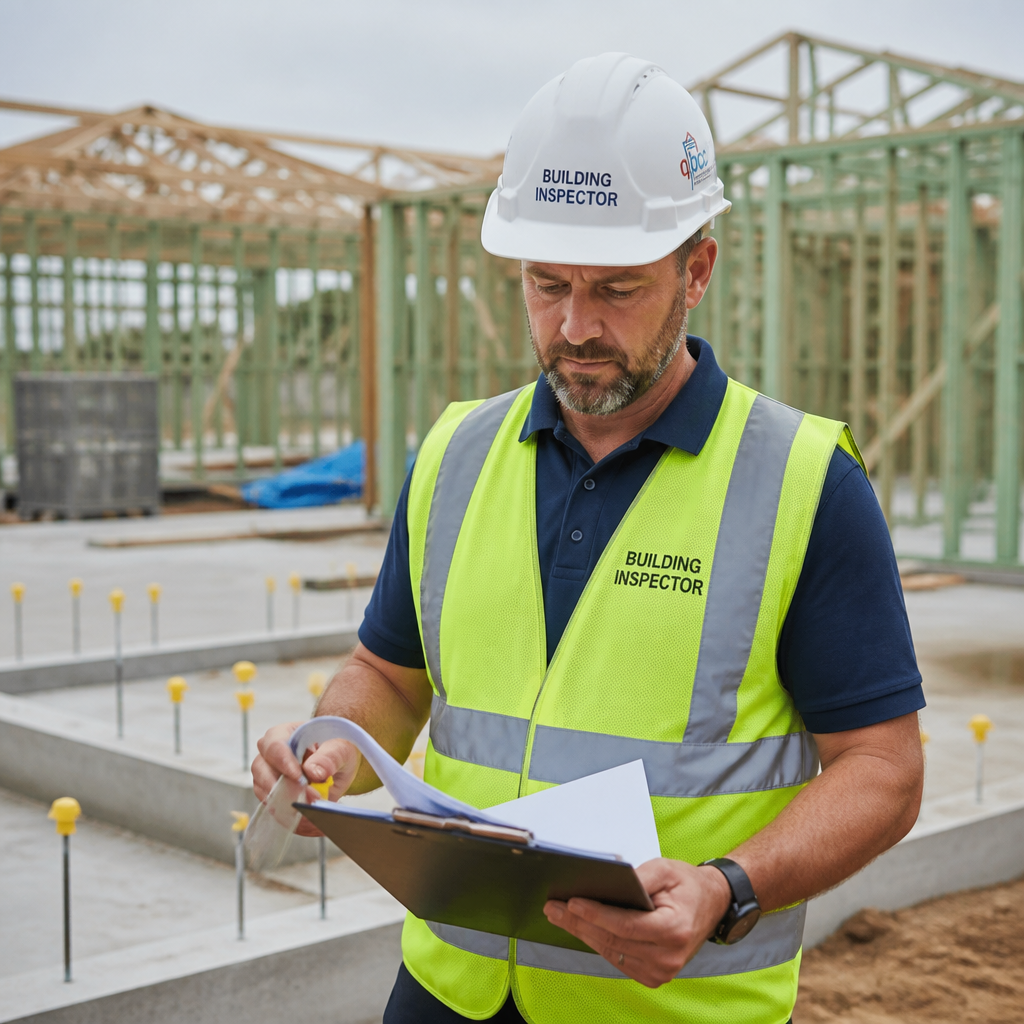
A new home build in Queensland typically passes through five main stages before practical completion. An independent building inspector can attend at any or all of these points. Each stage exposes different elements of the structure, and each carries its own risks if work is not verified before it is covered up.
Stage 1: Pre-Slab (Base Stage)
This inspection happens after formwork and steel reinforcement are in place but before concrete is poured. It is the most time-sensitive inspection in the entire build. Once the concrete goes down, there is no way to check whether the reo is correct, the vapour barrier is intact, or the termite management system has been installed properly. Missing this stage is a risk that cannot be undone.
Stage 2: Frame Stage
The frame inspection checks that the structural skeleton of the house matches the approved engineering drawings. Inspectors look at timber sizing, bracing, tie-down connections, wall heights, and window openings. Frame defects are critical because the entire load of the roof and upper floors depends on what is built here. A frame inspection also confirms that electrical and plumbing rough-ins are correctly positioned before walls are closed in.
Stage 3: Lock-Up Stage
Lock-up means the roof is on, external walls are closed, and windows and doors are fitted. The inspection at this stage assesses weatherproofing, roof covering, flashing installation, and the quality of external cladding. Waterproofing failures are among the most expensive defects in residential construction, and they begin here.
Stage 4: Fixing and Fit-Off Stage
This is when internal finishes are applied, cabinetry is installed, tiling is completed, and fixtures are fitted. Inspectors check wet area waterproofing under tiles before they are laid, grout and tile quality, door and window operation, and the standard of all internal joinery. It is also the last chance to identify issues with plasterboard finish before paint goes on.
Stage 5: Practical Completion Inspection (Handover)
The practical completion inspection is the most critical single inspection for any homeowner or investor. This is the formal walk-through that happens just before you accept the keys. A thorough PCI covers every accessible element of the finished home: paintwork, tiling, fixtures, cabinetry, electrical fittings, plumbing connections, roof condition, external works, driveway, fencing, and landscaping. Every defect identified here gives you documented grounds to require rectification before handover is accepted.
Pro tip: Even if you only commission one inspection during the entire build, make it the practical completion inspection. Accepting handover with an undocumented defect list puts the burden of proof on you later, not on your builder.
Independent Building Inspector vs. Statutory Certifier: What’s the Difference?
Many homeowners confuse the building certifier (sometimes called a building surveyor) with an independent building inspector. They perform fundamentally different functions, and understanding the difference protects you from assuming coverage you do not actually have.
A building certifier is a statutory appointment made at the start of the project. Their role is to process approvals, issue permits, and sign off on mandatory stage inspections required by law. In Queensland, the Queensland Building and Construction Commission (QBCC) sets the regulatory framework for these inspections. The certifier’s obligation is to regulatory compliance, not to your interests as the owner.
An independent building inspector Australia homeowners engage directly is a different professional entirely. They are licensed under the QBCC but work for you. Their inspection goes beyond the minimum statutory checklist and focuses on workmanship quality, contract specifications, and defect identification in the format that is most useful to you. They are under no commercial pressure to approve stages quickly, and their report is written to support your negotiation with the builder, not to process a government sign-off.
The statutory certifier confirms that a building can legally proceed. The independent inspector confirms that the building is actually worth proceeding into.
In practice, many defects identified in pre-handover inspections are not code violations. They are workmanship failures, items that passed statutory sign-off but fall short of the standard specified in the building contract. Only an independent inspector, checking against your specific contract and plans, will catch these.
What an Inspector Looks for at Each Stage
The specifics of what a building inspector examines vary considerably between stages. The checklist below represents the kinds of issues that generate defect reports in South East Queensland new home builds, drawn from the reality of inspections across Brisbane, Logan, Gold Coast, Ipswich, and Redland Bay.
Structural and Waterproofing Checks
At slab stage, inspectors verify reinforcement bar sizing and placement, slab thickness at the edges, the presence and continuity of the vapour barrier, and the correct installation of any termite management system. At frame stage, they check tie-down fixings at the top plate, bracing layout against the engineering drawings, and that LVL beams and steel posts match the structural specification.
Wet Area and Waterproofing Compliance
Waterproofing failures are consistently among the most common and costly defects in new homes. An inspector checks that wet area membranes are applied to the correct height on walls, that they have appropriate curing time before tiling begins, and that junctions between floor and wall membranes are correctly sealed. A visual inspection before tiles are laid is the only reliable opportunity to assess this. Once tiled, waterproofing defects typically only reveal themselves through damage.
Finish Quality at Practical Completion
At practical completion, the inspection scope is broad. Inspectors systematically check every room, every external elevation, roof covering and guttering, fencing and gates, driveways and pathways, and all plumbing and electrical fittings. Common defects at this stage include inconsistent paint coverage, tile lippage exceeding tolerance, cabinetry door alignment, inadequate silicone sealing at wet area joints, damaged window hardware, and incomplete external works.
The Defect Report: Your Most Valuable Document at Handover
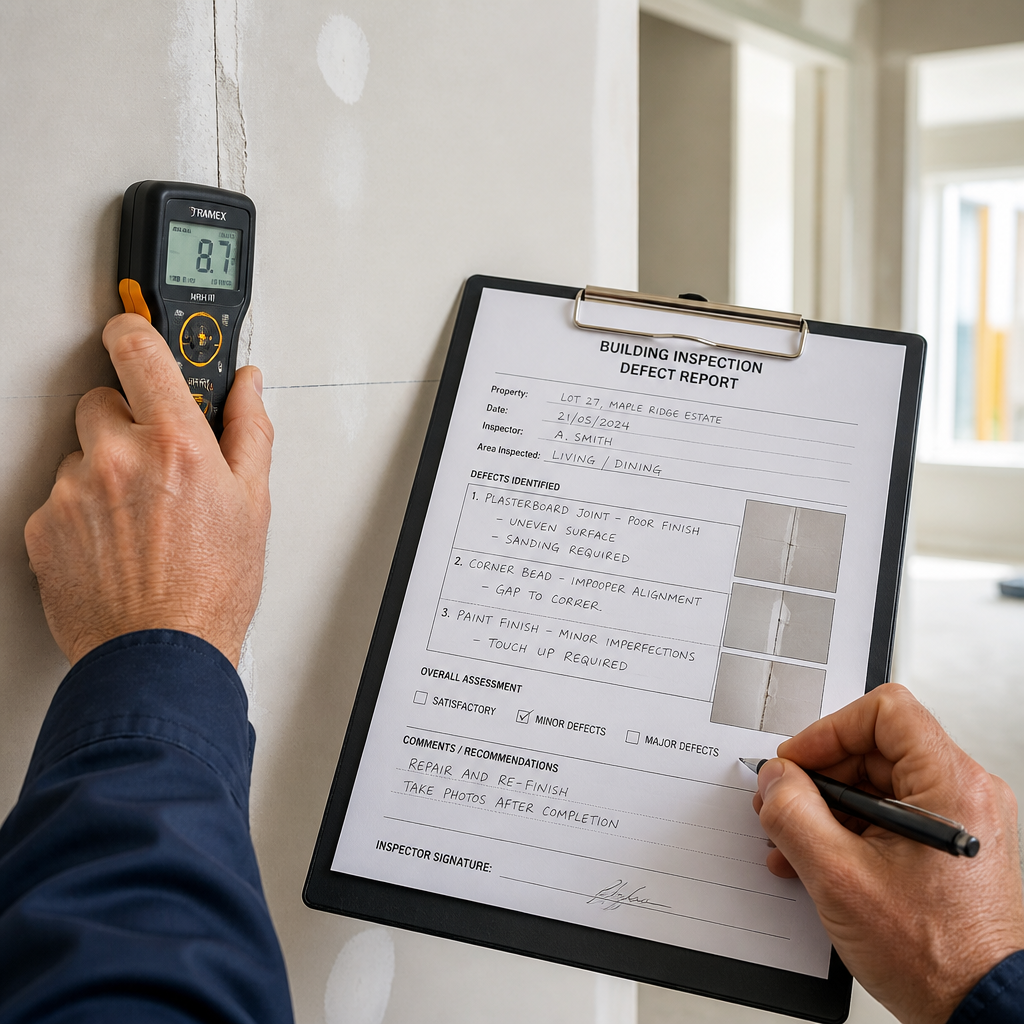
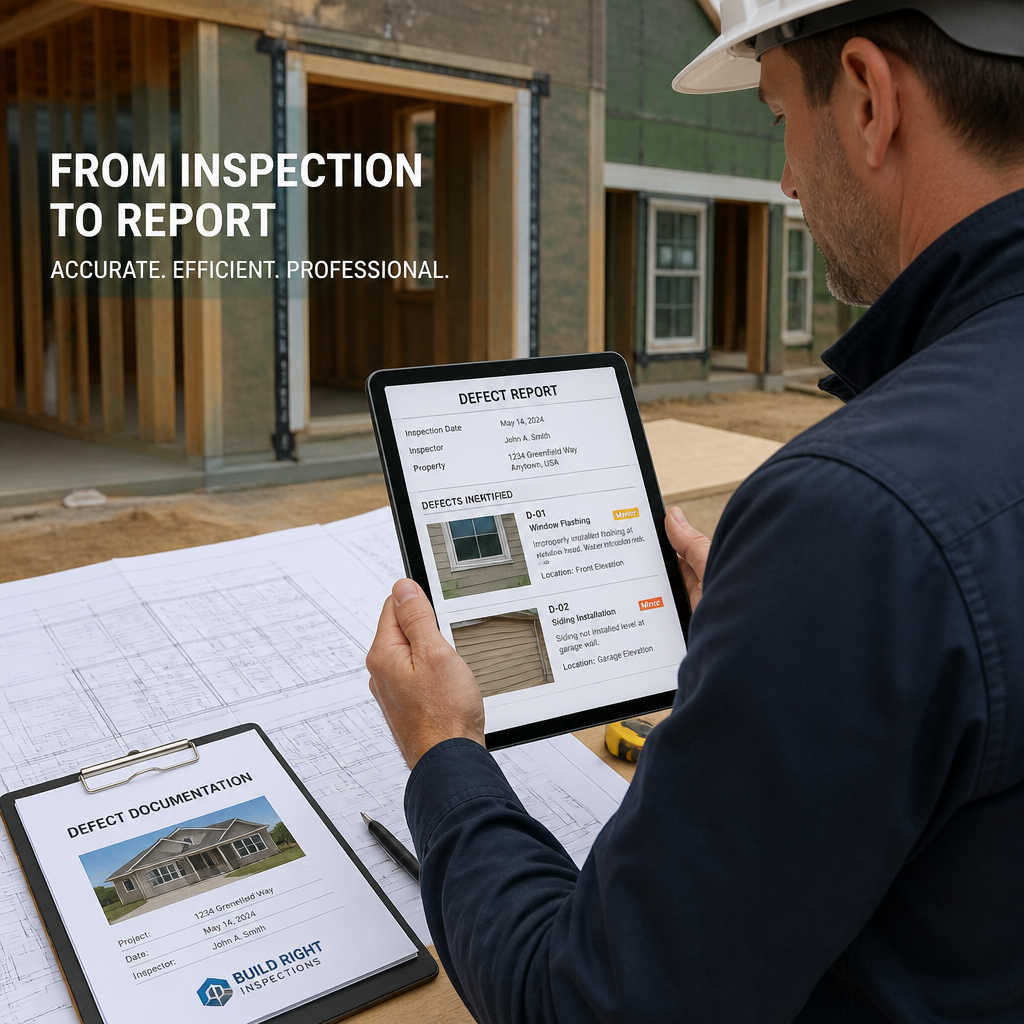
The inspection itself is only half the service. The defect report is where the value is delivered. A report that lists “paint defect in bedroom 2” without a photograph, location reference, or trade attribution is nearly useless when you try to get it rectified. A well-structured report changes the entire dynamic of your conversation with the builder.
A high-quality defect report includes a photograph of each defect, a location description, a reference to the relevant Australian Standard or contract specification, and, critically, an attribution of which trade is responsible. That last element matters because builders managing multiple subcontractors often push back on defects by claiming another trade is responsible. When the report already identifies the responsible party, that argument loses its force immediately.
Same-day reporting is not a luxury. The longer the gap between inspection and report, the more opportunity for a builder to argue that a defect was repaired or that conditions changed. A report delivered the same day as the inspection, with timestamped photographs, is significantly more defensible if a dispute proceeds to the QBCC or to formal dispute resolution.
Pro tip: When reviewing your inspection report, pay specific attention to any defects categorised as structurally significant or non-compliant with Australian Standards. These are not negotiating points, they are rectification requirements. Do not accept handover until these are resolved in writing.
Comparing Inspection Approaches for New Homes
| Inspection Approach | Coverage and Depth | Best Suited For |
|---|---|---|
| Statutory certifier inspections only | Covers mandatory regulatory checkpoints as required by Queensland building legislation. Confirms legal compliance, not workmanship quality or contract specifications. | Minimum legal requirement for the builder, not sufficient for protecting the buyer’s interests. |
| Single practical completion inspection (PCI) | Comprehensive assessment of the finished home at handover. Identifies visible defects across all trades. Produces a defect list for the builder to rectify before keys are handed over. | Homeowners and investors who want thorough coverage at the most critical point in the build without monitoring every stage. |
| Full staged construction inspections (all five stages) | Inspection at slab, frame, lock-up, fixing, and practical completion. Catches defects at each stage before they are concealed. Produces cumulative defect documentation across the entire build. | Buyers who want maximum protection across the full construction process, particularly for high-value builds, dual occupancies, or complex site conditions. |
Why Independence Matters in Queensland’s Construction Market
South East Queensland has seen sustained new home construction across Brisbane, Logan, Gold Coast, Ipswich, and Redland Bay. That volume of work means builders and their subcontractors are managing multiple projects simultaneously, and the pressure on quality control at any individual site can be significant. That is not an accusation, it is a structural reality of a busy construction market.
The QBCC provides a framework for homeowners to lodge complaints and pursue rectification after handover. But pursuing a complaint after you have accepted the keys is slower and more stressful than identifying and requiring rectification before you accept them. A pre-handover inspection by a licensed independent inspector, producing a photographic defect report that is handed to the builder before settlement, is the most efficient and least adversarial route to getting defects fixed.
For investors and developers managing multiple lots or high-rise units, the calculation is even clearer. A defect report that covers an entire floor of a residential tower, with defects assigned by trade and room, enables the builder to coordinate rectification efficiently rather than responding to individual owner complaints piecemeal. Customised reporting for high-rise developments is a practical necessity, not an upgrade.
For homeowners buying off-the-plan in Brisbane or on the Gold Coast, the pre-settlement inspection serves the same function. You are entitled to inspect the property before settlement completes. An independent inspector attending on your behalf ensures that the unit or townhouse you are buying matches what was specified, not just what looks acceptable on a quick walk-through.
Pro tip: If you are purchasing a new home through a volume builder, request your inspection report at least five business days before the scheduled handover date. That gives the builder time to rectify minor items before you attend the final walk-through, rather than having a list of outstanding defects drag on into the post-settlement period.
Frequently Asked Questions
What is the role of a building inspector in a new home construction?
A building inspector for a new home assesses the quality and compliance of construction work at key stages of the build. They check structural elements, waterproofing, workmanship, and finish quality against the National Construction Code, Australian Standards, and your building contract specifications. An independent inspector works for the homeowner or investor, not the builder, and produces a written defect report that can be used to require rectification before handover is accepted.
When should I hire an independent building inspector for my new home?
The most important point to hire an independent inspector is at the practical completion or pre-handover stage, before you accept the keys from your builder. If your budget allows, engaging an inspector at the slab and frame stages as well gives you the best coverage, because defects caught early are easier and cheaper to fix. Once concrete is poured or walls are plastered, rectification becomes far more invasive.
What is the difference between an independent building inspector and a building certifier?
A building certifier is a statutory appointment who processes legal approvals and conducts mandatory government-required inspections. They work within the regulatory framework and their obligation is to compliance, not to your personal interests. An independent building inspector is engaged directly by you, checks against your contract specifications, and produces a detailed defect report designed to support your negotiation with the builder. Most workmanship defects in new homes are not code violations, which is why only an independent inspector, checking against your contract, will reliably find them.
What does a building inspector check at the practical completion stage?
At practical completion, the inspector conducts a systematic assessment of every accessible element of the finished home. This includes paintwork quality, tiling and grouting, wet area sealing, cabinetry and joinery, all door and window operation, plumbing fixtures and fittings, electrical points and switches, roof covering and guttering from the ground level, external cladding, fencing, driveways, and landscaping. Every defect identified is photographed and documented in the report, with trade responsibility attributed where possible.
How long does a new home building inspection take?
A thorough practical completion inspection for a standard house typically takes two to four hours on site, depending on the size and complexity of the home. A townhouse or unit inspection may be shorter. High-rise apartment or multi-unit inspections take longer per project but are often structured across multiple sessions. The report, when delivered same-day, is ready within hours of the inspection completing.
Can a building inspector identify defects that are already hidden behind walls?
An independent building inspector conducts a visual inspection of all accessible elements. They cannot inspect what is already concealed behind plasterboard, tiling, or concrete without invasive investigation. This is precisely why staged inspections, at slab, frame, and lock-up, are valuable: they allow an inspector to assess elements before they are covered. At practical completion, a good inspector will identify symptoms of hidden problems, such as surface cracking, moisture staining, or inconsistent plasterboard finishing, that warrant further investigation.
Are building inspection reports useful after handover if defects are discovered later?
Yes. A detailed inspection report produced at or before handover establishes a documented baseline of the property’s condition. If new defects emerge during the statutory warranty period (Queensland builders carry structural warranty obligations under the QBCC framework), a pre-handover report confirms that the defect did not exist at the time of the inspection, which can strengthen your warranty claim. Similarly, if a dispute proceeds to the QBCC, a photographic inspection report from an independent licensed inspector carries significant evidentiary weight.
Have you had a building inspection on a new home before handover? Share your experience below, including what surprised you most about the defect report, so other buyers know what to expect.
References
- Queensland Building and Construction Commission: Practical completion inspection guidance for homeowners
- Builders Academy Australia: Overview of building inspector roles and responsibilities in Australia
- Owner Inspections: Inspector responsibilities at each construction stage in Australia
- Contracts Specialist: Understanding the role of building inspectors in home building projects