
A new sliding door should be checked in use, not just photographed while closed. A door can look neatly installed yet scrape, catch or resist movement when you try to open it.
In an anonymised GoInspect handover sample report, one item records a sliding door binding on its bottom track when opening. The report includes two photographs documenting that observation.
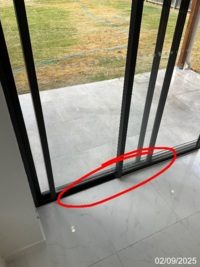
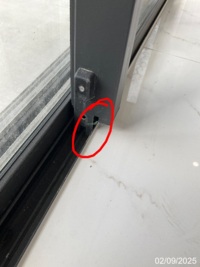
What does binding mean?
Binding describes resistance or interference during operation. It may happen at a particular part of the track or as the door approaches its closed position. The observation should say where it happens and what the door does, rather than guessing the underlying cause.
The sample report identifies binding on the bottom track. It does not establish the cause from a photograph alone. The builder or door installer should investigate and determine the appropriate rectification.
What should be recorded?
- The door’s room or location.
- Whether it catches when opening, closing or both.
- The point along its travel where resistance occurs.
- Any visible damage or interference around the track.
- Whether the latch and lock operate during ordinary use.
An overview photo helps identify the door. A close-up helps identify the affected area. A brief video of ordinary operation can also help explain the symptom, provided it is safe to record.
What does Queensland’s guide say?
Section 9.7 of the QBCC Standards and Tolerances Guide treats binding or jamming caused by a contractor’s poor workmanship as defective within the first 12 months after completion. The cause and applicable requirements still need assessment. Difficulty moving a door is not, by itself, a diagnosis of structural movement.
What should the owner avoid?
Do not force a door that is catching, remove the door panel or make adjustments simply to mask the issue before it has been documented. Report the symptom to the builder and ask the relevant installer to check it. Follow the manufacturer’s operating and maintenance instructions.
How does a handover inspection help?
GoInspect checks the operation of accessible doors and windows as part of the agreed handover scope. A photographic entry gives the builder a location and description to investigate. Where rectification is arranged, a follow-up inspection can check the reported operation within the agreed scope.
An operation check does not replace a specialist water-ingress investigation or prove that concealed installation details are correct. Discuss additional testing when booking if water entry is your concern.
See more examples of defects we identify, or get a handover inspection quote for your new home.