
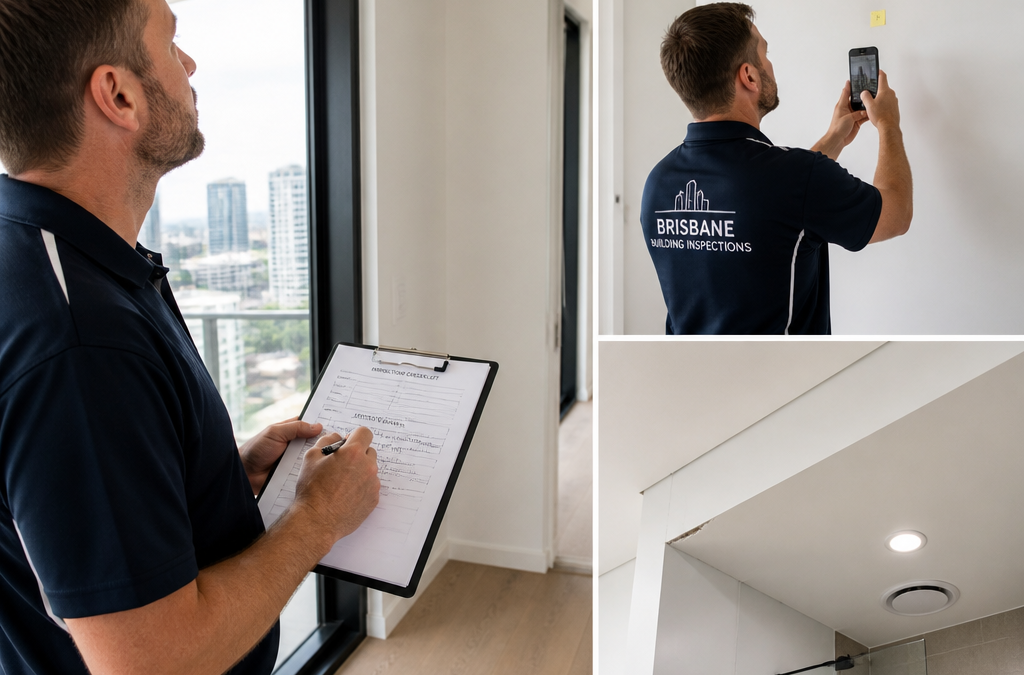
Buying an off-the-plan apartment is one of the most significant financial commitments most people ever make, yet thousands of buyers each year accept their keys without a proper apartment handover inspection and discover costly defects months later. Research has found that the overwhelming majority of new apartment buildings contain at least one defect, and in many cases, those defects span multiple categories including waterproofing, structural elements, and fire protection systems. Skipping or rushing the pre-settlement inspection is not a minor oversight. It is the single most expensive mistake an off-the-plan buyer can make, because once you settle, your legal position shifts dramatically and your practical ability to force rectification weakens with every passing week.
Table of Contents
- Quick Takeaways
- Why Off-the-Plan Apartments Carry Unique Risk
- What a Qualified Inspector Actually Checks
- Most Common Defects Found in New Apartments
- Inspection Types Compared
- Queensland Legal Protections You Need to Know
- What Happens After Your Defect Report
- Choosing the Right Inspector for Your Apartment
- Frequently Asked Questions
- References
Quick Takeaways
| Key Insight | Explanation |
|---|---|
| Your inspection must happen before settlement, not after | Once you settle and take possession, holding the developer accountable for pre-existing defects becomes significantly harder. The pre-handover inspection is your primary legal and practical leverage point. |
| Cosmetic checks are not enough | Waterproofing failures, structural cracking, and non-compliant fire systems are invisible to the untrained eye. A licensed building inspector identifies defects that a casual walkthrough will never catch. |
| Photo-enhanced reports carry real legal weight | Date-stamped, annotated photographs of each defect provide hard evidence if the developer disputes the finding or delays rectification. A verbal list achieves nothing. |
| Common property defects affect your investment too | Defects in lobbies, car parks, landscaping, and shared services are your problem as a lot owner. A thorough inspection covers both your individual unit and common areas. |
| The Queensland Home Warranty Scheme has strict timeframes | Structural defects must be claimed within 6 years and 6 months. Missing those windows means losing statutory protection, regardless of how clear the defect is. |
| Trade-specific reporting speeds up rectification | Reports that assign each defect to a specific trade (tiler, painter, plumber) eliminate the blame-shifting that typically delays builder responses by weeks or months. |
| Same-day reporting is operationally important | Developers and builders work to settlement deadlines. A report delivered the same day as the inspection keeps you in a position to negotiate before the clock runs out. |
Why Off-the-Plan Apartments Carry Unique Risk
When you buy an off-the-plan apartment, you are purchasing a product you cannot fully inspect until it is built, often years after you signed the contract. The apartment you walk into at handover may differ from the display suite in ways your contract permitted, from substituted finishes and fixtures to reconfigured floor plans. That gap between expectation and reality is where most buyer frustration begins, but it is rarely where the most serious problems hide.
Construction quality is the deeper concern. High-density apartment buildings are complex projects involving dozens of subcontractors working in sequence, and the quality of each trade’s work directly affects the next. A waterproofing membrane applied incorrectly in the bathroom will not fail visibly for months, by which point tiles will need to be stripped and relaid at significant cost. The same pattern applies to concrete, framing, and mechanical systems. Off-the-plan buyers carry this risk because they have no opportunity to monitor construction progress the way an owner-builder would.
Practical completion is the point at which the builder formally notifies you that the work is ready for inspection and, in their view, substantially complete. Receiving that notice does not mean the apartment is defect-free. It means the builder believes it is finished to a standard that meets the contract. Your job, assisted by a licensed inspector, is to verify that independently before you sign off.
Pro tip: Bring a physical copy of your sale contract and the full inclusions schedule to your handover inspection. Every item listed there, from appliance brands to tile specifications, is contractually owed to you. If it is missing or substituted, that is a documented defect, not a minor inconvenience.
What a Qualified Inspector Actually Checks
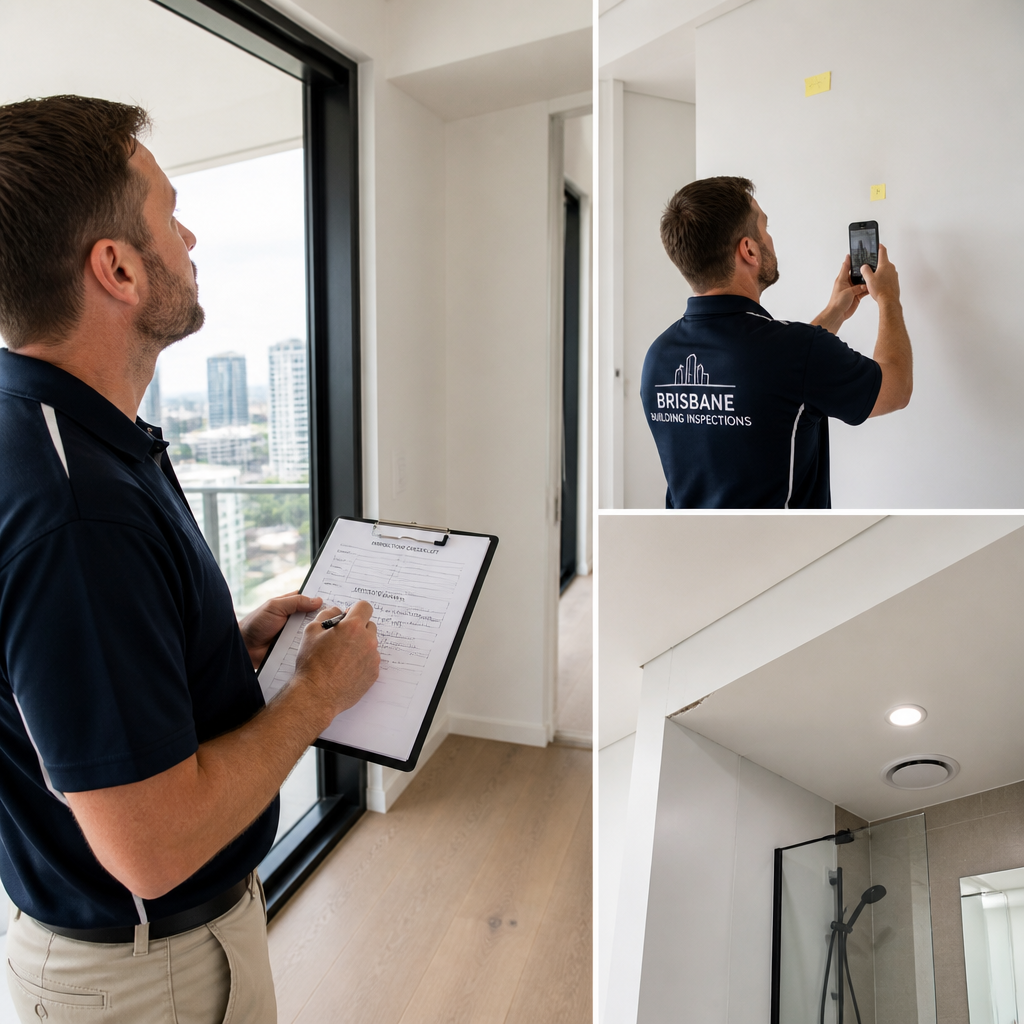
A professional apartment handover inspection is systematic and follows the structure of the building from the outside in, from floor to ceiling, and from structural elements through to finishing details. What separates a qualified inspector from a diligent buyer doing their own walkthrough is not just knowledge of what to look for, but the tools and benchmarks to measure whether something meets the relevant Australian Standard or the National Construction Code.
Structural and Building Fabric
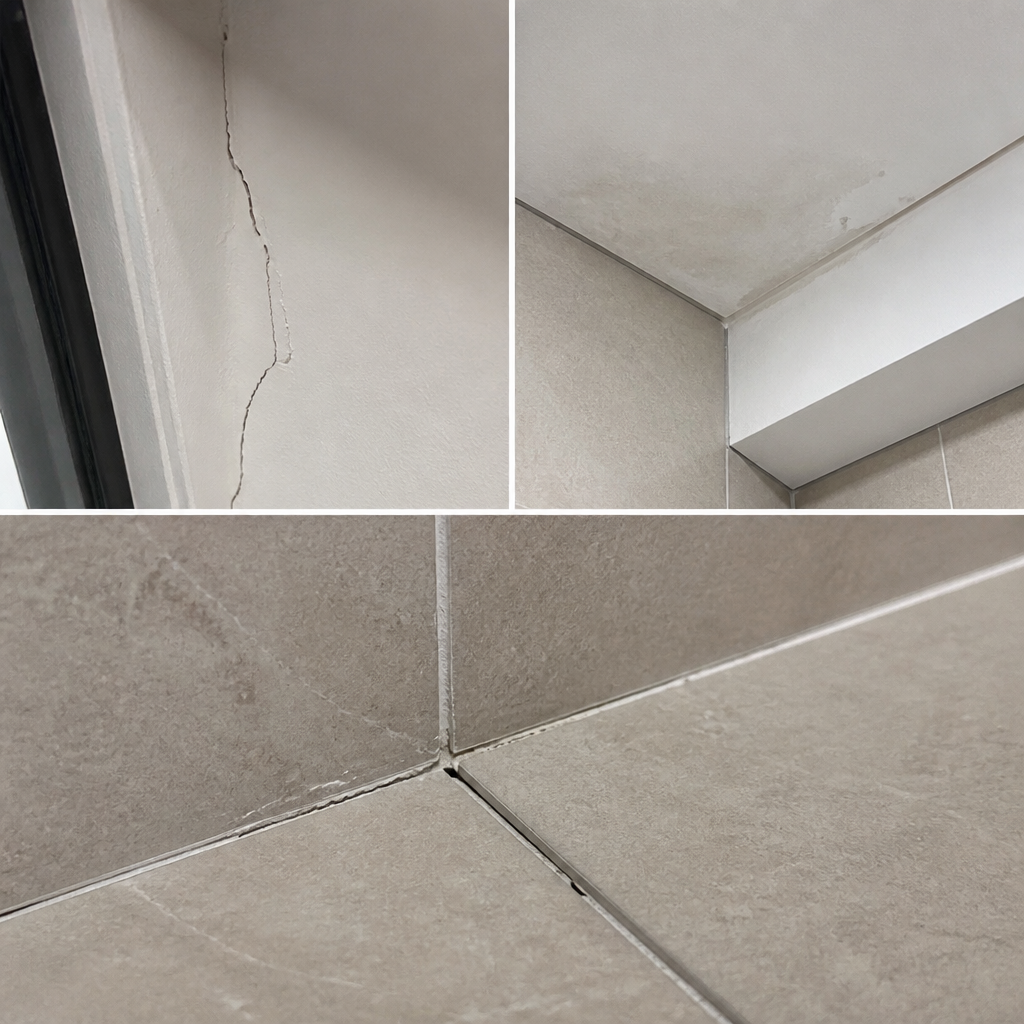
Inspectors assess concrete slabs, walls, and columns for cracking that exceeds normal shrinkage tolerances. They check for spalling concrete, movement in foundations, and any deflection in floors or structural members. These defects are rare but catastrophic when they occur, and they require documentation before they are concealed by finishes or furniture.
Waterproofing and Wet Areas
Australian Standard AS 3740 sets out requirements for waterproofing of domestic wet areas. Inspectors verify that bathroom, ensuite, laundry, and balcony waterproofing has been applied correctly and that drainage falls meet specification. Waterproofing failures account for a disproportionate share of post-settlement disputes because the damage is gradual and expensive.
Services, Fixtures, and Mechanical Systems
Every electrical outlet, light fitting, plumbing fixture, exhaust fan, range hood, and air conditioning system gets tested during a thorough inspection. Inspectors confirm that installed appliances match the contract specification, that hot water systems function correctly, and that smoke alarms and safety switches are operational and compliant.
Finishes and Workmanship
Paint finishes, tiling, joinery, flooring, door alignment, window operation, and sealing all fall under workmanship assessment. Common issues include uneven paint coatings, visible brush marks, grout inconsistencies, scratched glass, and cabinetry that does not close properly. These defects are cosmetic but are contractually owed at the standard specified in your agreement.
Common Property Areas
For apartment buyers, the inspection should not stop at the front door of your individual lot. Car park drainage, lobby finishes, letterbox quality, lift operation, garden areas, and basement waterproofing are all common property that affects your strata obligations and your investment value. A comprehensive report covers all of it.
Pro tip: Schedule your inspection appointment for the middle of the day when natural light is strongest. Many paint defects, surface scratches, and tiling issues that are invisible in artificial lighting become obvious in direct sunlight through windows. If the builder offers only an early morning or evening time slot, push back.
Most Common Defects Found in New Apartments
Research from UNSW City Futures found that 85% of buildings in an apartment defect study had at least one defect, with waterproofing, building fabric and cladding, fire protection, roof and rainwater disposal, and structural systems among the categories most frequently identified. That figure should recalibrate how confident any off-the-plan buyer should be about receiving a defect-free apartment without independent verification.
Your inspection must happen before you sign off on settlement. Once you settle and take possession, it becomes significantly harder to hold the developer accountable for defects that should have been rectified at handover.
In practice, the defects found most often during new apartment inspections fall into predictable categories. Understanding them before your inspection helps you ask the right questions and resist being reassured too quickly by builders or developers who describe serious issues as “normal” or “within tolerance.”
Paint and surface finishes generate the highest volume of individual defect items. Uneven coatings, visible roller marks, inconsistent colour, missed patches behind doors and inside wardrobes, and paint overspray on hardware are all non-compliant and must be rectified. They are also the defects developers most frequently attempt to dismiss as cosmetic.
Tiling defects including uneven grout lines, chipped tiles, hollow-sounding tiles indicating failed adhesion, and tiles that do not meet the required fall toward drains are widespread and structurally significant when they involve wet areas. Cracked or poorly aligned tiles in bathrooms and balconies are often early indicators of underlying waterproofing problems.
Joinery, door, and window faults including misaligned doors that do not close flush, stiff or rattling windows, damaged flyscreen mesh, and poorly fitted cabinetry are standard findings. Scratched glass is another common issue, particularly on sliding doors and shower screens. Once you take possession, establishing that scratches were pre-existing becomes almost impossible without a pre-settlement report.
Plumbing issues, including dripping taps, slow drainage, water hammer in pipes, and incorrectly installed fixtures, require testing at the time of inspection. Running every tap, flushing every toilet, and operating every shower is not optional during a professional inspection. It is the minimum standard.

Inspection Types Compared
Off-the-plan apartment buyers encounter several different inspection terms during the settlement process, and understanding what each one actually involves helps you avoid being funnelled into an inadequate process by a builder or developer.
| Inspection Type | Who Conducts It | What It Covers and When to Use It |
|---|---|---|
| Builder’s Practical Completion Walk | Builder’s site supervisor | The builder identifies items they consider outstanding before handing over. This is a builder-led process, not an independent assessment. It does not substitute for an independent inspection. Treats minor items as defects and may overlook structural or hidden issues entirely. |
| Pre-Handover / Pre-Settlement Inspection by a Licensed Inspector | Independent licensed building inspector | Conducted before you sign the defects list or accept practical completion. Covers your individual lot and common property. Produces a documented, photo-enhanced defect report referenced against Australian Standards and the National Construction Code. This is the inspection that actually protects you. |
| Post-Settlement Defect Inspection | Independent licensed building inspector | Conducted after you have moved in. Identifies defects that have emerged over time, particularly waterproofing failures and structural movement. More limited in terms of holding the original builder accountable, but still important for warranty claims under the QBCC scheme. Useful when defects were missed or developed after handover. |
The pre-handover inspection is the one that counts most. It is the only inspection conducted at a point where you retain maximum negotiating power, before settlement is finalised and before legal responsibility shifts toward you as the incoming owner. All other inspection types are conducted from a weaker position.
Queensland Legal Protections You Need to Know
Queensland buyers purchasing new apartments benefit from several layers of statutory protection, but those protections come with strict conditions and timeframes that must be met. Assuming protection exists without understanding the requirements is a common and costly mistake.
The Queensland Home Warranty Scheme
The Queensland Home Warranty Scheme, administered by the Queensland Building and Construction Commission (QBCC), provides insurance protection against defective or incomplete residential building work. Coverage begins when a fixed-price contract is signed, the premium is paid, or physical work starts, whichever comes first. For structural defects, claims must be lodged within 3 months of noticing the defect and within the 6-year-and-6-month coverage period. Missing those timeframes eliminates your claim regardless of the severity of the issue.
The Importance of a Licensed Builder
Checking that your builder holds a current licence registered with the QBCC is an essential step before and during the handover process. A licensed builder is financially accountable under the scheme. An unlicensed contractor leaves you significantly more exposed, because several of the statutory protections available under Queensland law depend on the work being performed under a licensed, insured contract.
Who You Are Actually Contracting With
In many off-the-plan apartment purchases in Queensland, the buyer’s contract is with the developer, not the builder. The builder is a separate contracting party engaged by the developer. This distinction matters if defects arise, because your direct statutory warranty rights may be against the developer or the builder differently, depending on how the contracts are structured. A case considered by QCAT illustrated this point: without a direct contract between buyers and a builder, a claim had to proceed under negligence rather than statutory warranty. Getting legal advice on your specific contract structure before handover is worth the cost.
What Happens After Your Defect Report
A defect report is not the end of the process. It is the beginning of a rectification process that needs to be managed carefully to be effective. The quality and format of the report you receive directly determines how efficiently that process moves.
Once the report is in hand, you submit the defect list to the developer, builder, or their representative in writing. Verbal notifications accomplish nothing. Written notification creates a documented timeline. You request written acknowledgement of the defect list and a clear timeline for rectification. Keep copies of every piece of correspondence.
A well-structured report that assigns each defect to the responsible trade, for example, identifying a silicone sealing issue as a plumbing trade responsibility versus a painting issue as a painting trade responsibility, removes the ambiguity that builders use to delay action. When the defect is attributed to a specific trade, the builder cannot redirect responsibility internally without it being apparent. This is one of the practical advantages of an inspection report built around trade-specific attribution rather than a generic defect list.
Pro tip: If the builder agrees to rectify items before settlement, book a reinspection after the work is completed and before you sign the final completion certificate. Do not accept verbal assurances that work has been done. A reinspection confirms it independently and ensures no new defects were created during the rectification work.
If a developer refuses to acknowledge defects or delays rectification without reasonable cause, your written documentation and photo-enhanced report become the foundation of a formal QBCC complaint or, if necessary, a QCAT proceeding. Without that documentation, your position is your word against theirs.
Choosing the Right Inspector for Your Apartment
Not every building inspector who advertises pre-settlement inspections has the experience or qualifications to assess high-density apartment buildings. The inspection requirements for a 20-storey apartment tower are materially different from those of a detached house, and your choice of inspector should reflect that difference.
Qualifications That Actually Matter
In Queensland, building inspectors must hold a current licence issued by the QBCC. This is a non-negotiable baseline. Beyond the licence, look for inspectors with demonstrated experience in multi-storey residential construction, not just house inspections. Ask specifically whether they have inspected high-rise developments and whether their reports reference Australian Standards and the National Construction Code rather than offering only a general description of issues.
What a Useful Report Looks Like
A useful report is photo-enhanced, meaning every defect is documented with a clear, date-stamped photograph that shows location, nature, and extent. The report should describe each defect precisely, reference the applicable standard where relevant, identify the responsible trade, and recommend a rectification action. A report that lists defects in vague terms without photographs is difficult to act on and easy for a builder to dispute.
Turnaround Time
Settlement timelines in apartment developments are frequently tight. A report that takes several business days to arrive may arrive after the window for pre-settlement negotiation has effectively closed. Same-day reporting is not a luxury feature. It is an operational requirement for buyers who need to act quickly in a time-pressured settlement process.
GoInspect provides fully licensed apartment handover inspections across Brisbane, Gold Coast, Logan, Ipswich, and Redland Bay, with same-day photo-enhanced reports, trade-specific defect attribution, and customised reporting for both individual units and high-rise developments. Pre-handover inspections start from $550 including GST. If you are approaching practical completion on an off-the-plan purchase, book your inspection before you receive the builder’s practical completion notice so you can schedule promptly when the notice arrives.
Frequently Asked Questions
When should I book an apartment handover inspection?
Book your inspection as soon as you receive the builder’s practical completion notice, or ideally arrange an inspector in advance so you can schedule immediately when the notice arrives. Builders are required to give at least five days’ written notice in Queensland before the inspection date, giving you a narrow window to organise an independent inspector. Do not delay. The inspection must happen before you sign the defects list and accept practical completion.
Can I do the inspection myself instead of hiring a licensed inspector?
You can, but the limitations are significant. An untrained walkthrough will catch obvious cosmetic issues but will miss waterproofing failures, non-compliant structural elements, services faults, and defects that require measurement or testing to identify. A licensed inspector assesses the apartment against the National Construction Code and relevant Australian Standards, which is a fundamentally different process. For an asset worth hundreds of thousands of dollars, a professional inspection is not a significant additional cost relative to the risk it mitigates.
What if the builder refuses to fix defects before settlement?
Start with your defect report and written correspondence establishing the defects and requesting rectification with a timeline. If the builder refuses or delays without reasonable cause, you have several options in Queensland: a formal complaint to the QBCC, a claim under the Queensland Home Warranty Scheme (if applicable to the specific work), or a QCAT proceeding. The strength of your position in any of these processes depends entirely on the quality of your documentation. A photo-enhanced, trade-attributed defect report is your most important asset.
Does the inspection cover common property areas like lobbies and car parks?
It should, and you should confirm this with your inspector before booking. Common property defects, including damaged lobby tiles, car park drainage issues, basement waterproofing failures, and landscaping that does not match development plans, affect all lot owners through strata obligations. As a new purchaser, defects in common areas identified before settlement can be raised with the developer in exactly the same way as defects in your individual unit.
What is the difference between a minor and a major defect?
A minor defect affects appearance, finish, or maintenance without compromising the structural integrity or function of the building. Examples include small paint issues, minor surface scratches, and small cosmetic cracks. A major defect is more serious and affects the structural performance or habitability of the building, such as waterproofing failures, structural cracking, or non-compliant fire safety systems. Both types must be documented and raised before settlement, but major defects carry different legal implications and warranty coverage periods under Queensland law.
How long does an apartment handover inspection take?
The time depends on the size and complexity of the apartment and whether common property is included. For a standard two-bedroom apartment, allow roughly two to three hours for a thorough independent inspection. Larger apartments, penthouses, and inspections covering common property areas will take longer. Do not accept a rushed inspection. A proper inspection cannot be completed in 30 minutes, and a report produced from a brief walkthrough is unlikely to capture the full scope of defects present.
Is a new apartment covered under QBCC warranty even if I buy it from a developer?
Yes, in most cases, but the specifics depend on how the development was contracted. The Queensland Home Warranty Scheme covers residential construction work performed under a licensed, fixed-price contract. Subsequent purchasers who buy within the warranty period may also have rights to lodge claims for eligible defects, provided the original construction was carried out under a valid QBCC-insured contract. Seek legal advice on the specific structure of your purchase contract if you have any doubt about your warranty entitlements.
Have you recently gone through an apartment handover inspection in Brisbane or South East Queensland? Share what you found or what you wish you had known before settlement.
References
- QBCC guidance on practical completion inspections for Queensland homeowners
- Queensland Home Warranty Scheme explained by the QBCC
- Overview of common defects found in off-the-plan apartment inspections across Australia
- Legal rights and remedies for building defects in new Queensland homes
- Practical steps for conducting a final handover inspection on an off-the-plan apartment