
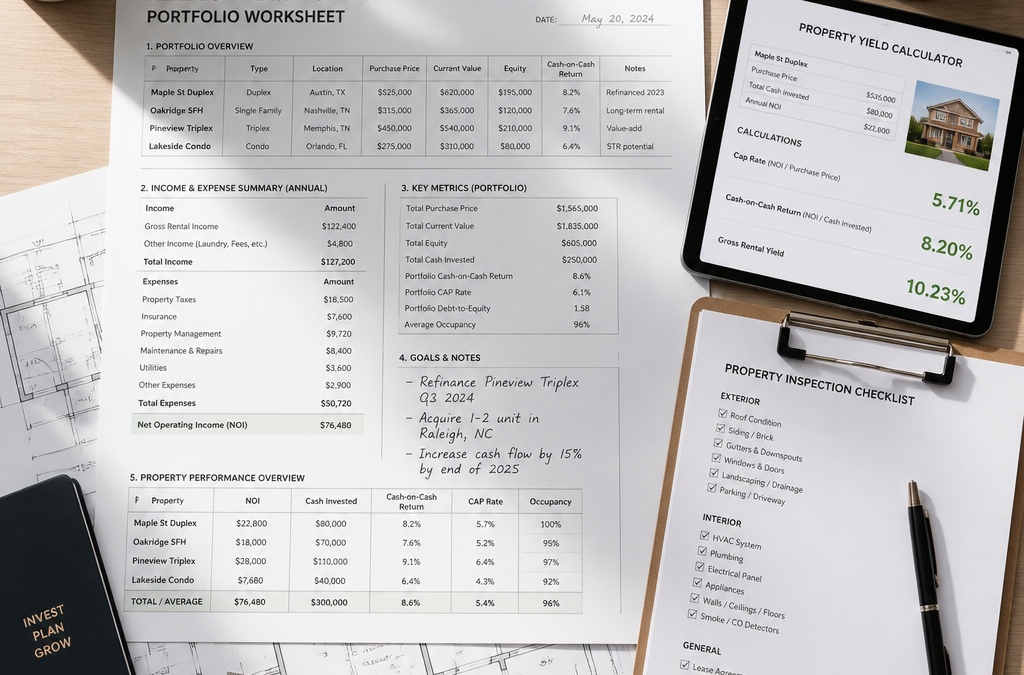
Most property investors spend months researching suburbs, running yield calculations, and reviewing contracts, then hand over hundreds of thousands of dollars at settlement without ever having an independent professional inspect what they are actually buying. That is not caution, it is optimism dressed up as efficiency. A new home inspection for investors is not a box-ticking exercise, it is the single most direct way to verify that the asset you are taking ownership of actually matches the asset you agreed to buy. Defects found before settlement are the builder’s problem to fix. Defects found after settlement are yours. That distinction carries serious financial weight for anyone building a property portfolio in Brisbane, the Gold Coast, Logan, Ipswich, or Redland Bay.
Table of Contents
- Quick Takeaways
- Why New Builds Are Not Automatically Defect-Free
- Reason 1: Protect Your Yield Before Day One
- Reason 2: Builders Are Legally Responsible Before Settlement
- Reason 3: Defect Reports Give You Documented Negotiating Power
- Reason 4: Rental Compliance Starts at Handover
- Reason 5: Photo Evidence Is What Builders and Trades Respond To
- Reason 6: High-Rise and Multi-Unit Investments Have Unique Risks
- Reason 7: The QBCC Has Time Limits You Cannot Ignore
- Reason 8: Same-Day Reports Keep Settlement on Schedule
- Reason 9: The Cost of Inspection Is Trivial Against the Cost of Missed Defects
- Inspection Approaches Compared
- Frequently Asked Questions
- References
Quick Takeaways
| Key Insight | Explanation |
|---|---|
| Defects become your liability after settlement | Once you sign off and take ownership, you generally lose the right to hold the builder responsible for issues that existed at handover but were not documented. |
| New does not mean defect-free | New homes in Queensland routinely carry defects at handover, including waterproofing failures, cracking, and drainage faults, that a builder will only fix if they are formally identified in writing. |
| A defect report assigns trade responsibility | A professional report does not just list problems. It identifies which trade is responsible, which makes rectification faster and avoids the builder dismissing items as “someone else’s scope.” |
| Rental compliance can fail at handover | Issues such as faulty smoke alarms, non-compliant balustrades, or defective electrical work can prevent a property from being lawfully tenanted immediately after settlement. |
| QBCC time limits make speed important | Queensland’s warranty scheme has strict time limits for reporting defects. Investors who delay discovery can lose the right to a formal rectification process entirely. |
| Photo-documented reports produce faster results | Builders and subcontractors respond to visual evidence. A report with clear photographs of each defect, referenced to a specific trade, removes the scope for disputing whether an issue exists. |
| Inspection cost is small relative to defect repair cost | The Queensland Home Warranty Scheme reported that the average cost to fix defective waterproofing alone was $25,000 per claim in 2024-25. A pre-settlement inspection costs a fraction of that. |
Why New Builds Are Not Automatically Defect-Free
The assumption that a freshly completed home is, by definition, a clean asset is one of the most expensive beliefs a property investor can carry into a settlement. New construction involves multiple trades working under deadline pressure, and quality control gaps are common across every price point, from entry-level houses in Logan to prestige developments on the Gold Coast.
Queensland’s construction sector has produced consistent evidence that defects at handover are not rare exceptions. Data from the Queensland Home Warranty Scheme shows that the most frequent problem categories include driveways, walls, roofs, and floors, and that waterproofing failures alone averaged $25,000 per rectification claim in 2024-25. For an investor, that figure is not an abstract industry statistic. It is a direct threat to the net return on a specific asset.
The Queensland Building and Construction Commission (QBCC), which regulates the building industry and administers the state’s home warranty scheme, is clear that a home at handover must be “suitable for occupation,” meaning it has functioning power, water, and weatherproofing. That is a relatively low legal bar. It does not mean every detail is correct, every fitting is properly installed, or every surface is finished to a standard that will satisfy a tenant or future buyer. Reaching that higher standard requires an independent eye before the keys are handed over.
A property investor who skips the pre-settlement inspection is effectively accepting the builder’s own quality assessment as sufficient. That is a position no experienced investor takes on any other part of the transaction.
Reason 1: Protect Your Yield Before Day One
Every week a newly settled investment property sits vacant because of a defect that prevents tenanting is a week of lost rent. Missed defects do not just cost money to repair. They cost time, and time is the variable investors most consistently underestimate when calculating yield on a new build.

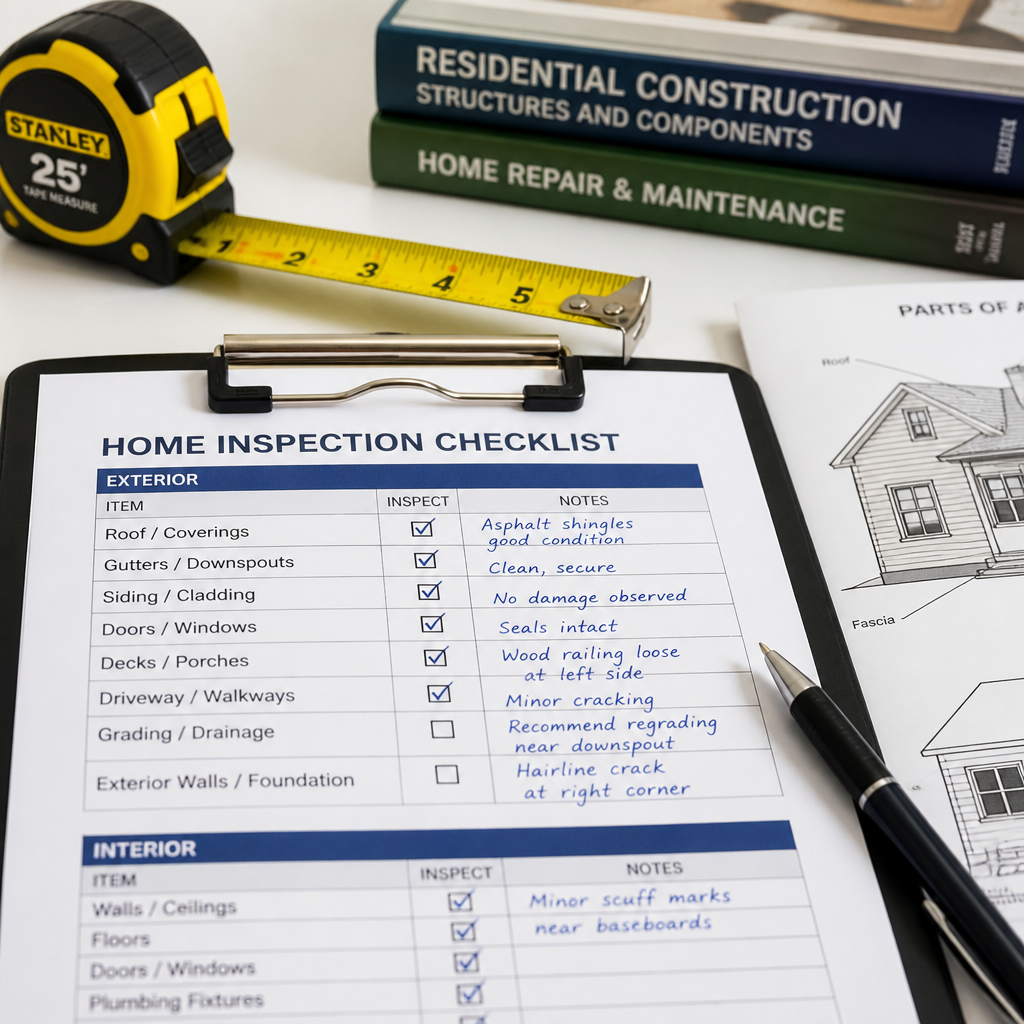
Defects that directly affect tenantability, such as a faulty hot water system, a leaking shower enclosure, or an incomplete kitchen fit-out, cannot be addressed quietly after the tenant moves in. They must be rectified first, which means delays in listing, delays in leasing, and a yield calculation that starts slipping before the property has earned its first dollar.
An investment property inspection Brisbane investors arrange before settlement identifies exactly those issues while the builder is still contractually obligated to fix them, at no additional cost to the investor. That is the clearest possible definition of yield protection.
Pro tip: When booking a pre-settlement inspection, ask the inspection provider whether their report format identifies defects by trade category. A report that groups plumbing defects separately from electrical and carpentry issues gives the builder’s site manager a clear action list and reduces the time between report delivery and rectification completion.
Reason 2: Builders Are Legally Responsible Before Settlement
The legal dynamics of a new home transaction shift decisively at settlement. Before that date, the builder carries responsibility for the condition of the work. After settlement, that responsibility transfers to the owner, except where a formal defect claim is lodged under the applicable warranty scheme.
Queensland law, administered through the QBCC, provides protections for owners of newly constructed homes through the Queensland Home Warranty Scheme. But those protections depend on defects being identified, documented, and reported within specific timeframes. An investor who settles without an inspection has no contemporaneous record of the property’s condition at handover. That absence of documentation is the single most common reason defect claims are disputed or dismissed.
The QBCC recommends that owners arrange an on-site inspection approximately one week before the nominated handover date. This gives both the builder and the owner a genuine opportunity to identify and address outstanding issues before the final payment is made and the contractual dynamic changes permanently.
Reason 3: Defect Reports Give You Documented Negotiating Power
A verbal conversation about defects at handover achieves very little. A builder’s site supervisor who agrees to “get that sorted” during a walkthrough is not making a legally binding commitment. A formal written defect report referenced in correspondence with the builder is a different matter entirely.
Professional inspection reports produced by qualified inspectors do more than list problems. They photograph each defect, describe its location with precision, note the applicable Australian Standard or NCC requirement where relevant, and identify the responsible trade. That level of documentation removes the most common builder response to defect claims, which is to dispute whether the issue exists or whose scope it falls under.
For an investor who cannot always be physically present in Brisbane or on the Gold Coast at settlement time, this written record is the mechanism through which defect rectification actually happens. Without it, following up on issues becomes a subjective argument. With it, the investor has a formal reference document that the builder must respond to in writing.
Pro tip: Request that your inspection provider deliver the report on the same day as the inspection. Settlement timelines are tight, and a report that arrives three days later leaves very little time to formally notify the builder and negotiate rectification before the settlement date passes.
Reason 4: Rental Compliance Starts at Handover
Queensland’s rental compliance framework places specific obligations on landlords, and a number of those obligations relate to building elements that can be defective in a brand-new property. Smoke alarm installations that do not meet the current Queensland standard, balustrades that are incorrectly height, electrical outlets that are incorrectly wired, and exhaust fans that do not vent to the exterior are all examples of defects that a builder can overlook and that an investor must correct before a tenant can lawfully occupy the property.
A property investor building inspection conducted by a licensed inspector who understands both building standards and rental compliance requirements identifies these issues as part of a single pre-settlement assessment. That means investors can approach settlement knowing whether any compliance issues need to be resolved before the property management engagement even begins.
For investors managing multiple properties across South East Queensland, the efficiency of catching these items at the inspection stage, rather than during a property manager’s incoming condition report or a tenant’s maintenance request, is significant. One inspection. One report. One set of builder rectifications. The property is ready to lease on settlement day.

Reason 5: Photo Evidence Is What Builders and Trades Respond To
The building industry does not respond to vague descriptions. A note that says “the bathroom finish looks uneven” will generate a site visit, a disagreement, and no action. A photograph showing a specific tile lippage measurement, a cracked grout line, or a silicone bead that has separated from the substrate produces a direct, documented outcome because there is nothing to argue about.
GoInspect’s reports are built around this principle. Each identified defect is photographed, described with its exact location within the property, assigned to the relevant trade, and formatted for immediate action by the builder’s team. The software behind the reports took eight years to develop specifically to make defect rectification faster and to reduce the back-and-forth that costs investors time and money.
For an investor who may be managing a portfolio across Brisbane, Logan, and the Gold Coast simultaneously, receiving a same-day report that their property manager or conveyancer can forward directly to the builder’s supervisor is a practical advantage that compounds across every property in the portfolio.
Reason 6: High-Rise and Multi-Unit Investments Have Unique Risks
Investors in apartment buildings and high-rise developments face a specific category of risk that does not apply to detached housing. Common property defects, which affect shared areas like lobbies, car parks, stairwells, and external facades, are legally distinct from lot-specific defects inside an individual unit. Both categories need to be documented separately and pursued through different channels.
Lot-Specific Defects in Apartments
Inside a purchased unit, defects in waterproofing, joinery, plumbing, and electrical fit-out are the investor’s direct concern. These must be identified and formally reported before settlement, because once the building is occupied and the defect liability period begins, isolating responsibility for individual unit defects becomes progressively harder.
Common Property Defects and Body Corporate Implications
Defects in common property areas become the responsibility of the body corporate after settlement. An investor who identifies these issues before settlement has the option to raise them formally with the developer before taking ownership, which is far more effective than attempting to pursue a body corporate claim years later when the developer has moved on.
GoInspect offers customised inspection programs specifically designed for high-rise developments and housing projects, producing individual unit reports that developers and investors can use to manage defect rectification efficiently across an entire building. This is particularly relevant for off-the-plan investors settling units in Brisbane’s inner suburbs or on the Gold Coast, where high-density development has accelerated significantly in recent years.
Reason 7: The QBCC Has Time Limits You Cannot Ignore
Queensland’s building warranty framework operates within strict statutory timeframes. If a defect is not reported within the applicable period after practical completion or discovery, the right to have it addressed under the Queensland Home Warranty Scheme can be lost entirely. For investors who are often not present at the property on a daily basis, this creates a real risk that defects will be noticed too late for formal action.
The QBCC deals with complaints about defective building work and can in some circumstances issue a Direction to Rectify, which is a formal direction requiring a builder to fix defective or incomplete work. However, the commission considers each complaint individually and looks carefully at whether the statutory requirements and time limits have been met. An investor without a dated, professionally produced inspection report is in a much weaker position when making that case.
A pre-settlement inspection creates a dated, professional record of the property’s condition at the exact point where the investor’s legal rights are strongest. That record does not expire and can be used in any subsequent QBCC process, body corporate dispute, or direct negotiation with the builder.
Reason 8: Same-Day Reports Keep Settlement on Schedule
Settlement in Queensland typically follows a tight timeline. Finance must be confirmed, conveyancers must exchange documents, and any pre-settlement issues must be resolved or formally noted before the transfer of title occurs. An investor who receives a defect report three days after the inspection has very limited time to act on it before settlement proceeds.
Same-day reporting, which GoInspect provides, is not a convenience feature. For investors, it is a practical necessity. The report needs to be in the hands of the investor’s solicitor or conveyancer, and formally communicated to the builder, before the settlement date. A delay in reporting is functionally equivalent to not reporting at all if settlement has already passed by the time the document arrives.
Investors who have coordinated pre-settlement inspection investor appointments with GoInspect specifically for this reason consistently cite the speed of report delivery as one of the most operationally important features when managing multiple settlements across Brisbane, the Gold Coast, and surrounding regions.
Reason 9: The Cost of Inspection Is Trivial Against the Cost of Missed Defects
GoInspect’s pre-handover inspections start from $550 including GST. That is the comparison point. Not the cost of the inspection relative to doing nothing, but the cost of the inspection relative to what a single missed defect class costs to rectify after settlement.
The Queensland Home Warranty Scheme data is specific on this point: defective waterproofing rectification averaged $25,000 per claim in 2024-25. That is a single defect category. Structural cracking, drainage failures, and faulty cladding installations each carry their own repair cost profile, all of which are materially higher than the cost of a professional inspection that would have caught them before settlement.
For investors who view property as a long-term yield and capital growth vehicle, the calculation is straightforward. An inspection fee is a fixed, known cost. A post-settlement defect dispute is an open-ended cost with an uncertain timeline, a likely solicitor involvement, and a real possibility of being unable to recover anything at all if the builder disputes the claim or has entered insolvency. The inspection is not an expense, it is a yield protection mechanism built into the acquisition cost.
Inspection Approaches Compared
Not every approach to pre-settlement inspection serves investors equally well. The table below compares the three main options investors in South East Queensland typically consider.
| Approach | What It Involves | Investor Suitability |
|---|---|---|
| Self-inspection walkthrough | The investor or their property manager walks through the property without professional assistance, using a personal checklist | Poor. Untrained eyes miss concealed defects in plumbing, electrical systems, and waterproofing. No formal documentation is produced, so there is nothing to present to the builder. |
| Generalist building inspector | A licensed inspector conducts the inspection and produces a written report, but without trade-specific defect assignment or same-day reporting | Moderate. The report has legal standing but may lack the operational specificity investors need to drive fast rectification across multiple properties or high-density developments. |
| Specialist new-home inspector (GoInspect) | A fully licensed inspector with specialist new-build and handover experience produces a photo-enhanced report with trade-specific defect assignment and same-day delivery | Best fit for investors. Report format is designed for builder action, not just record-keeping. Customised programs available for high-rise and multi-unit developments. Covers Brisbane, Gold Coast, Logan, Ipswich, and Redland Bay. |
Frequently Asked Questions
Is a pre-settlement inspection legally required for investment properties in Queensland?
A pre-settlement inspection is not a legal requirement in Queensland. However, if defects are discovered after settlement, the buyer generally has very limited recourse against the builder for issues that existed at handover but were not formally documented. For investors, the absence of a legal requirement does not change the practical reality: settling without an inspection means accepting the builder’s own quality assessment as final.
When should I book a pre-settlement inspection for an investment property?
Book the inspection as close to the nominated handover date as possible, ideally in the week before settlement. The QBCC recommends this timing for all new home buyers. For investors, the additional constraint is same-day reporting: the report needs to be ready before settlement proceeds so that any identified defects can be formally communicated to the builder in writing with enough time to negotiate rectification or note unresolved items on the settlement documents.
What defects do investors most commonly find in new properties at handover?
The most commonly identified categories in new Queensland homes include waterproofing defects in wet areas and roofing, drainage failures, cracking around door frames and slab edges, incomplete or incorrectly installed fixtures and fittings, faulty electrical outlets, poorly installed balustrades, and incomplete external works including driveways and landscaping. Many of these are not visible to an untrained eye without the right tools and knowledge of applicable Australian Standards.
Can I use a pre-settlement inspection report to delay settlement if defects are found?
Whether a defect report gives you grounds to delay settlement depends on your contract terms and the nature of the defects identified. This is a question for your solicitor or conveyancer, not your inspector. What the inspection report does provide is a formal, dated, professionally produced document that your legal representative can use in correspondence with the builder before settlement. In practice, most pre-settlement defect negotiations result in a written commitment from the builder to rectify items after settlement, recorded in the settlement documents, rather than a delay.
Do I need a separate inspection for common property areas in a high-rise investment?
Yes. Defects in common property areas, such as lobbies, car parks, pool equipment, and external facades, are legally distinct from defects inside your individual unit. A specialist new-home inspector who works with high-rise developments will document both categories separately, which is important because common property defects are pursued through the body corporate rather than directly with the developer. GoInspect provides customised inspection programs for high-rise developments that produce individual unit reports alongside documentation of lot-specific and common area issues.
What is the difference between a pre-settlement inspection and a building and pest inspection?
A building and pest inspection is typically conducted before contracts are exchanged, usually on an existing property, to assess structural integrity and identify pest activity. A pre-settlement inspection, also called a pre-handover or practical completion inspection, is conducted on a newly completed home before the final payment and title transfer. Its purpose is to verify that the construction matches the contract specifications and that the build quality meets applicable Australian Standards, not to assess for pre-existing pest damage.
How does GoInspect’s reporting format specifically help investors manage multiple properties?
GoInspect’s inspection software, developed over eight years, assigns each identified defect to the responsible trade and documents it with photographs and precise location references. For investors managing multiple new builds across Brisbane, the Gold Coast, Logan, Ipswich, or Redland Bay, this format means the report can be forwarded directly to each builder’s site supervisor without any additional preparation. The builder receives a clear action list rather than a narrative to interpret. That reduces the back-and-forth that costs investors time between settlement and first rental income.
If you have settled a new investment property recently, we would genuinely like to know what you found during your pre-settlement inspection and whether it changed how you approach handovers now.
We would love your feedback and any insights you would share with others. What perspective would you add?
References
- Queensland Building and Construction Commission: What happens at handover and what documentation you should receive
- Queensland Building and Construction Commission: Builder responsibilities at practical completion and handover
- Smart Property Investment: How Queensland investors are losing thousands to defective building work
- ABKJ Lawyers: Understanding building defects in new Queensland homes and your legal options
- Amazing Architecture: The link between property inspections and protecting rental yields for investors