
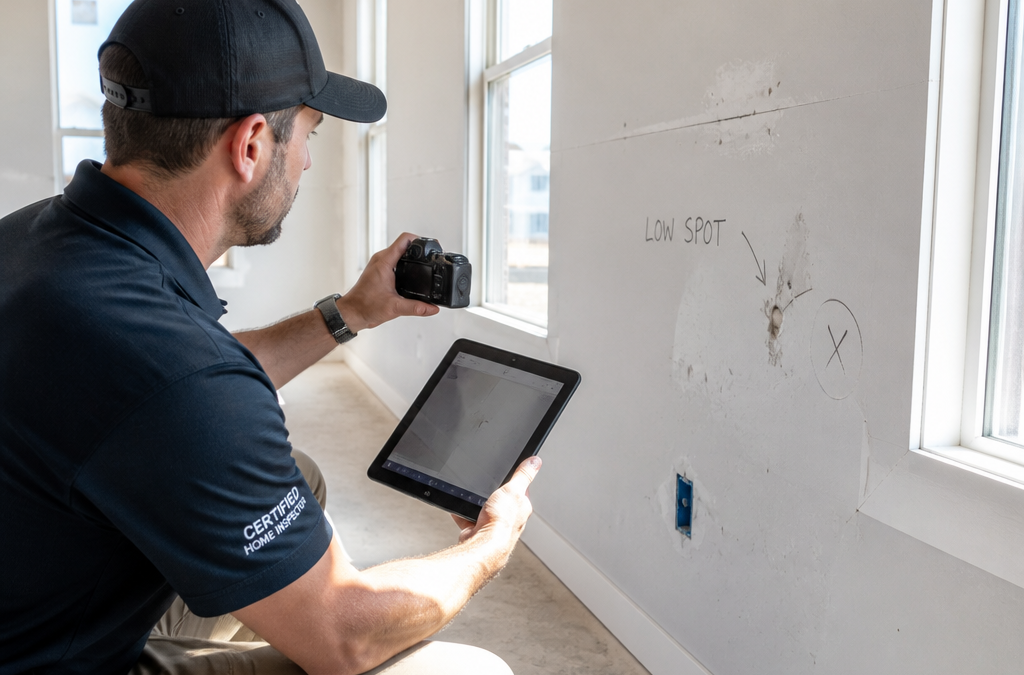
Logan is one of Southeast Queensland’s fastest-growing regions, with suburbs like Yarrabilba, Greater Flagstone, Park Ridge, Logan Reserve, and Holmview delivering thousands of new homes every year. That pace of construction creates real pressure on trades, timelines, and quality control. A new home inspection in Logan is not a luxury or a formality. It is the single most effective step you can take before you hand over your final progress payment and take the keys on a property that may have defects you cannot see from the driveway. This guide explains exactly what to expect, what typically goes wrong, and why the inspection process in Logan has specific local considerations every buyer and investor should understand.
Table of Contents
- Quick Takeaways
- Why Logan Buyers Need a Pre-Handover Inspection
- What a New Home Inspection in Logan Actually Covers
- Common Defects Found in Logan New Builds
- Inspection Types Compared
- The QBCC Framework and Why Documentation Matters
- How to Choose a Building Inspector in Logan, Queensland
- Frequently Asked Questions
- References
Quick Takeaways
| Key Insight | Explanation |
|---|---|
| New homes are not defect-free by default | Construction defects at handover are common across all price points, from entry-level estates in Yarrabilba to larger builds in Park Ridge. A brand-new home has never been lived in, which means faults have never been stress-tested. |
| Timing the inspection correctly is non-negotiable | A pre-handover inspection in Logan must happen before you sign off on practical completion and before your final payment clears. Once you accept the keys, defects become your problem to argue about, not your builder’s immediate obligation. |
| Photo-enhanced reports accelerate rectification | A written list of defects without photos gives builders room to dispute or delay. Reports with timestamped photos tied to specific trades remove that ambiguity and speed up the rectification process. |
| Logan’s construction volume adds quality risk | Logan City is projected to need tens of thousands of new dwellings over the coming decades. High construction volume means trades are stretched thin, and quality control suffers at the finishing stage most often. |
| The QBCC Home Warranty Scheme has strict timeframes | Queensland’s statutory warranty scheme covers defects, but claiming it requires written notice to the contractor within tight windows. An inspection report is your timestamped evidence for any future claim. |
| Same-day reporting matters in a hot market | Logan settlement timelines can be tight. A same-day inspection report gives you the evidence you need to request rectification without delaying settlement or losing your position. |
| Investors need inspections just as much as owner-occupiers | A rental property with unresolved defects carries ongoing maintenance liability and potential tenant safety issues. Getting a clean pre-handover report protects your asset from day one. |
Why Logan Buyers Need a Pre-Handover Inspection
Logan’s growth corridor is real and significant. The city’s estimated resident population has surpassed 400,000 and is projected to exceed 500,000 by 2036, with Logan and neighbouring Ipswich predicted to grow faster by percentage than any other council region in Southeast Queensland over the next two decades. The Priority Development Areas of Greater Flagstone and Yarrabilba alone represent tens of thousands of new dwellings in various stages of construction at any given time.
That scale of building activity has a direct consequence for buyers: trades are in high demand, supervision is stretched across multiple sites, and finishing-stage quality control is where corners get cut. The assumption that a brand-new home is automatically defect-free is one of the most common and costly mistakes new build buyers make in this market.
A pre-handover inspection in Logan puts an independent, licensed set of eyes on your property before you commit to the final progress payment. It is the only point in the process where you still have clear contractual leverage to require rectification at the builder’s cost. After you accept the handover, that dynamic shifts considerably.
What a New Home Inspection in Logan Actually Covers
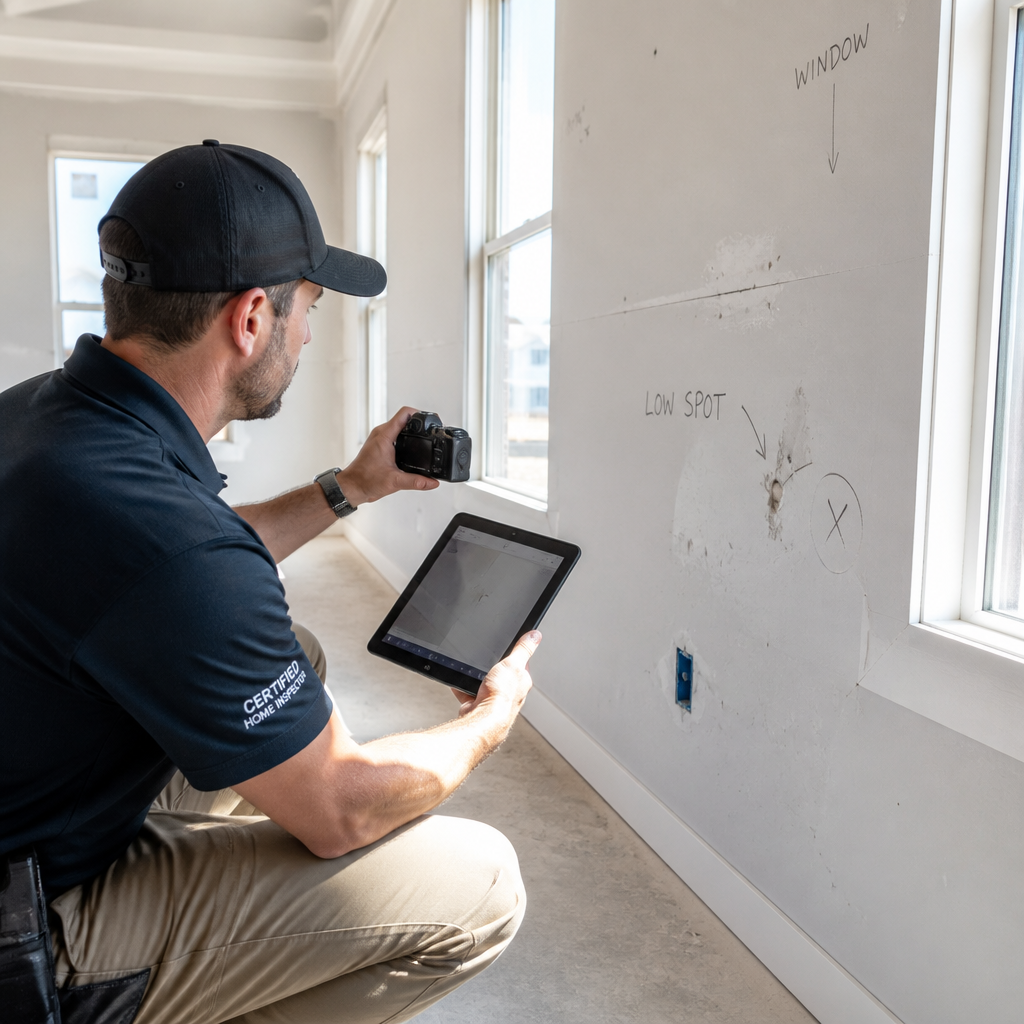
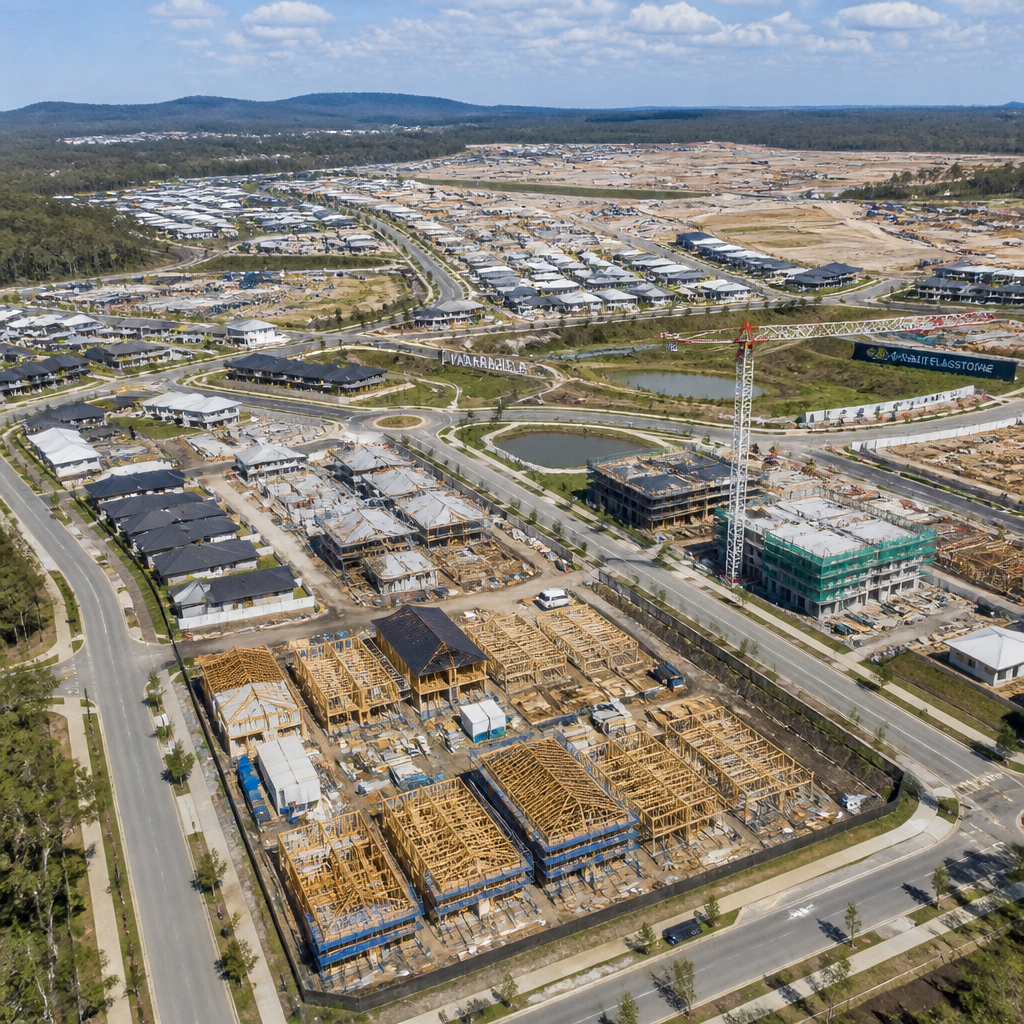
A thorough new home inspection is not a walkthrough with a notepad. It is a systematic assessment of the completed structure against Australian building standards, the building contract specifications, and industry-accepted workmanship tolerances. Here is what a qualified building inspector in Logan, Queensland should be examining.
Structural and Exterior Elements
This includes the roof covering, gutters, downpipes, fascia, external cladding, brickwork, render, and window and door installation. In Logan’s climate, roof drainage is particularly important. Properties built on slabs across flatter ground in areas like Holmview and Logan Reserve need correct fall-away grading around the perimeter to prevent water ingress.
External defects are among the most visually obvious, but they are also among the most commonly disputed. Cracked render, gaps in brickwork mortar, and poorly seated window frames are easier to identify before painting is complete, which is another reason staging your inspection correctly matters.
Internal Finishes and Fixtures
Wall and ceiling plasterboard for cracking, nail pops, and tape joins. Tiling for lippage, cracking, and grout inconsistency. Joinery for alignment, correct fixing, and finish quality. Painting for coverage, runs, missed sections, and surface preparation quality. Flooring for levelness, gaps, and installation defects.
These are the defects that are most often described as “cosmetic” but that carry real cost to rectify once you have moved in. Finding them at pre-handover means they are addressed before your furniture is in the way and before the builder’s tradespeople move on to the next job.
Waterproofing and Wet Areas
Bathrooms, ensuite, laundry, and any tiled outdoor areas need waterproofing membrane verification. Failed or inadequate waterproofing in wet areas is a significant defect category and one that causes disproportionate long-term damage. This is particularly important in new builds where the membrane has been laid and tiled over without any opportunity for the buyer to verify it was applied correctly.
Mechanical, Electrical, and Plumbing Rough-Ins
While a pre-handover inspection does not replace licensed trades certificates, a competent inspector will check that all fixtures are correctly installed, functional, and free from obvious defects. Power points, light switches, tapware, toilet suites, hot water system installation, and exhaust fans all get assessed for correct operation and finish quality.
Common Defects Found in Logan New Builds
Based on practical experience in the Logan market, certain defect categories appear consistently across new home inspections in this region. Knowing what to expect makes the inspection process less surprising and helps you understand why every item in a detailed report has real value.
Most defects found at handover are fixable, but finding them before you have paid the final cent and taken the keys is the whole point. A defect list after settlement is a negotiation. A defect list before settlement is a contract obligation.
Painting Defects
Incomplete coverage, runs, missed sections near cornices and around window reveals, and surface preparation failures are among the most frequently recorded defects in Logan new builds. Painting is typically the last trade on site and the one most likely to be rushed when a developer is trying to meet a settlement date.
Door and Window Alignment
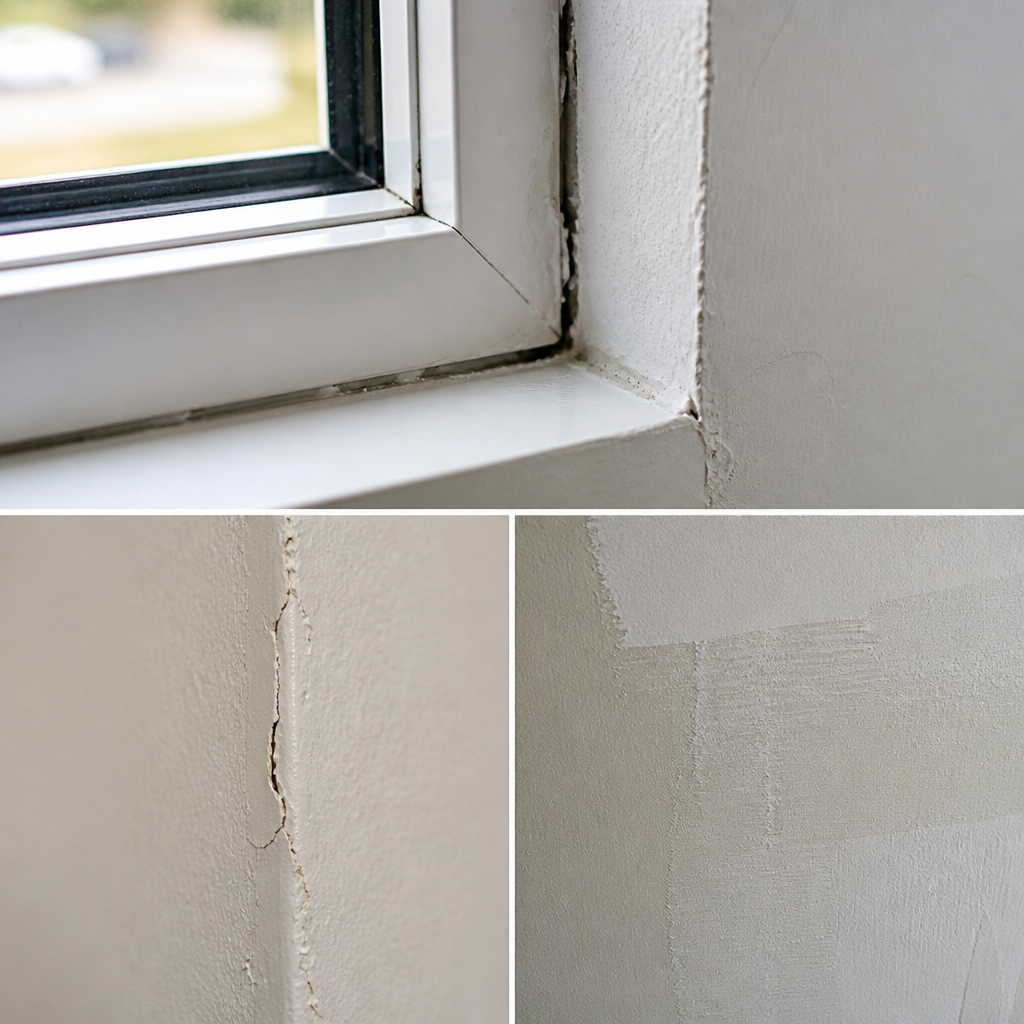
Doors that do not hang correctly, windows that are difficult to open or that sit proud of their frames, and sliding door tracks that are misaligned are common findings. These are rarely structural, but they indicate that installation was not properly checked by the supervising trades on site.
Drainage and Site Fall
Logan’s flat to gently undulating terrain means that site drainage relies heavily on correct grading and fall-away from the structure. Inadequate drainage fall around the perimeter, pooling at the base of retaining walls, and downpipes that discharge too close to the slab edge are recurring findings in this area.
Tiling and Wet Area Defects
Lippage in floor tiling, cracked or missing grout, and silicone joint failures around shower bases and baths are consistent findings. In fast-moving estate builds, tiling is often completed by subcontractors working across multiple sites simultaneously, and the quality varies considerably.
Plasterboard Finishing
Nail pops, visible tape joins, and poorly finished cornice joins are common in new builds where plasterboard has been installed before the structure has fully settled into its slab. These are not major structural concerns but they are genuine defects that a builder is obligated to rectify before practical completion sign-off.
Pro tip: When you receive your inspection report, prioritise defects by trade, not by room. A report that groups issues by responsible trade (painter, tiler, carpenter, plumber) makes it far easier to hand to your builder’s site supervisor and get a clear rectification timeline from each contractor.
Inspection Types Compared
Not all inspections serve the same purpose, and choosing the right one for your situation matters. The table below outlines the three most relevant inspection types for new home buyers in Logan.
| Inspection Type | When It Happens | What It Covers |
|---|---|---|
| Pre-Handover / Practical Completion Inspection | Before you sign off on practical completion and before the final progress payment is made | Full assessment of completed construction against contract specifications and Australian standards. Identifies defects the builder must rectify before you accept the property. |
| Pre-Settlement Inspection | In the days immediately before settlement, after rectification work should have been completed | Confirms that defects identified in the pre-handover inspection have actually been rectified. Verifies the property is in the agreed condition before funds are released. |
| Construction Stage Inspections | At key stages during the build: slab, frame, lock-up, and pre-plaster | Identifies problems while they are still accessible and cheap to fix, before subsequent trades cover them up. Particularly valuable for buyers building in large estates where site supervision may be divided across multiple projects. |
For most Logan buyers purchasing a completed new home from a developer or builder, the combination of a pre-handover inspection followed by a pre-settlement check is the minimum standard. If you are building from scratch with a volume builder in Yarrabilba, Flagstone, or Park Ridge, adding construction stage inspections is worth the additional cost given the complexity of catching covered-up defects after the fact.
Pro tip: Do not accept a builder’s own site supervisor sign-off as a substitute for an independent inspection. The supervisor works for the builder. Their job is to keep the project moving toward handover, not to produce a comprehensive defect list on your behalf.
The QBCC Framework and Why Documentation Matters
The Queensland Building and Construction Commission (QBCC) is the regulator for the Queensland building industry. It administers the Queensland Home Warranty Scheme, which is a statutory insurance scheme that covers homeowners for loss suffered if their contractor fails to complete contracted works or rectify defects. Most residential building work in Queensland valued at more than $3,300 is covered under this scheme.
The warranty scheme covers both structural and non-structural defects, but the process for making a claim has specific requirements. You must give your contractor written notice of every defective or unfinished item before you can escalate to QBCC. Cover for non-structural defects extends for 6 months from the date works are completed, and claims must be lodged with the QBCC within 7 months of the completion date. Structural defect cover operates over a longer period.
This is exactly why a timestamped, photo-enhanced inspection report is not just a document for the builder. It is your evidence base for any QBCC complaint or Home Warranty Scheme claim. A vague written list with no photos and no date is far easier for a builder to dispute or for QBCC to set aside. A report that shows specific defects with clear photographs, tied to trades and dated before practical completion, is the documentation standard that actually supports a claim if rectification does not happen.
When selecting a building inspector in Logan, Queensland, confirm that their reports are structured to meet this documentation standard. A report that reads as useful evidence in a QBCC complaint is a fundamentally better product than a generic checklist, regardless of the price difference.
How to Choose a Building Inspector in Logan, Queensland
The quality of your inspection report is directly tied to the experience and approach of the inspector you choose. Here is what matters when making that decision for a Logan new home inspection.
Licensing and Qualifications
In Queensland, building inspectors must hold an appropriate QBCC licence. For new home inspections, the inspector should have direct experience with residential construction, not just existing building assessments. Confirm that the inspector you are booking is licensed, not a subcontractor working under a company licence without direct oversight on your job.
Report Quality and Format
Ask to see a sample report before you book. A quality inspection report for a Logan new build should include photographs for every defect, a clear description of the issue, the relevant Australian Standard or contract obligation it relates to, and a trade assignment so your builder knows exactly who is responsible for rectification. Reports that provide this level of detail dramatically shorten the rectification timeline.
Same-Day Reporting
In a market where settlement dates are fixed and delays carry real financial consequences, a same-day report is a meaningful differentiator. If your inspector cannot deliver your report until two or three days after the inspection, you are losing time you may not have. Confirm turnaround time before booking.
Local Market Knowledge
An inspector who regularly works across Logan, including the newer estates of Yarrabilba, Greater Flagstone, Park Ridge, Logan Reserve, and Holmview, will be familiar with the volume builders active in those areas and the defect patterns those builds tend to produce. Local experience is not just a nice-to-have. It means the inspector knows what to look for based on the specific construction methods and subcontractors common to that area.
GoInspect operates across Brisbane, Gold Coast, Logan, Ipswich, and Redland Bay, providing fully licensed inspectors who deliver photo-enhanced defect reports with same-day turnaround. Reports are structured to assign defects to specific trades, making the rectification process direct and efficient. Pre-handover, pre-settlement, and practical completion inspections are available for both house-and-land projects and high-rise developments, starting from $550 including GST. You can learn more about the inspection process and book directly at goinspect.com.au.
Frequently Asked Questions
What is a pre-handover inspection and do I really need one for a new Logan home?
A pre-handover inspection is an independent assessment of your newly completed home conducted before you accept practical completion and make your final progress payment. Yes, you need one. New builds in Logan’s high-volume construction areas are completed under significant time and trade pressure, and defects at the finishing stage are common. The inspection gives you a documented defect list that your builder is contractually obligated to address before you accept the property.
How much does a new home inspection in Logan cost?
Pricing varies by property size, build type, and the detail of the report provided. GoInspect offers new home inspections in Logan starting from $550 including GST. When you consider that a single undetected defect, such as failed waterproofing in a wet area or drainage that directs water toward the slab, can cost far more than that to rectify after settlement, the inspection cost is straightforward to justify.
When exactly should I book a pre-handover inspection in Logan?
Book your inspection as soon as your builder advises that practical completion is approaching, typically a week to ten days before your scheduled handover date. This gives you time to receive the report, request rectification, allow the builder to complete that rectification, and do a follow-up pre-settlement check before you release the final payment. Do not book the inspection on the day of handover. That timeline leaves no room for anything to be fixed before you are expected to sign off.
Can I use the inspection report to make a QBCC complaint if my builder refuses to fix defects?
Yes, and this is one of the most important functions of a thorough inspection report. The Queensland Building and Construction Commission requires that you give your builder written notice of defects before lodging a formal complaint. A timestamped, photo-enhanced report that identifies specific defects before practical completion serves as exactly that written notice and provides the evidence base for any subsequent QBCC complaint or Queensland Home Warranty Scheme claim.
Do investors need a new home inspection, or is it mainly for owner-occupiers?
Investors need it equally. A new home purchased as an investment in Logan and rented without a pre-handover inspection carries all the same construction defect risks, plus additional liability if those defects affect tenant safety or cause property damage. An undetected waterproofing failure, for example, does not care whether you are living in the property or not. Getting a clean pre-handover report protects your investment from the day the first tenant moves in.
What areas of Logan does GoInspect service?
GoInspect provides new home inspections across Logan, including the major growth corridors of Yarrabilba, Greater Flagstone, Park Ridge, Logan Reserve, Holmview, and surrounding suburbs. The service covers pre-handover inspections, pre-settlement inspections, and practical completion inspections for both individual house-and-land builds and larger housing and high-rise developments.
What is the difference between a pre-handover inspection and a practical completion inspection?
In practice, these terms are often used interchangeably to describe the same inspection: the independent assessment conducted before you accept your new home from the builder. Some contracts use the term “practical completion” to define the stage at which the builder considers the work done and ready for acceptance. A practical completion inspection is therefore conducted at that stage, before you formally agree that the build is complete. The key point is that the inspection must happen before sign-off, not after.
Have you recently gone through the handover process for a new home in Logan? Share what you found in your inspection or any challenges you encountered with the rectification process, your experience could help other buyers prepare.
References
- Queensland Home Warranty Scheme explained by the QBCC
- QBCC guide to defective work claims and cover timeframes under the Home Warranty Scheme
- Logan City population growth and economic data from the Logan Economic Development team
- Logan City Council Housing Study summary covering new dwelling construction trends
- Legal overview of building defects in new Queensland homes and QBCC obligations