
Most new homeowners walk through their completed build and assume that because it looks finished, it is finished correctly. That assumption costs real money. According to data from the Queensland Building and Construction Commission (QBCC), internal paint defects alone were identified across hundreds of complaint cases in a single year, and waterproofing failures in residential bathrooms averaged nearly $25,000 in rectification costs per claim. A thorough new home inspection checklist is not a formality you complete to satisfy the builder. It is your single best opportunity to document every defect before legal responsibility shifts and rectification becomes a prolonged negotiation with a trade who has already moved on to their next job.
Table of Contents
- Why a Checklist Is Not Enough Without the Right Inspector
- Quick Takeaways
- The 15-Item Pre-Handover Inspection Checklist
- Structural Elements: The Non-Negotiables
- Waterproofing and Wet Areas
- Roof and External Cladding
- Electrical and Plumbing Systems
- Interior Finishes, Doors, and Windows
- External Works and Site Drainage
- Compliance Certificates You Must Receive
- DIY vs. Builder-Arranged vs. Independent Inspection
- Frequently Asked Questions
- References
Why a Checklist Is Not Enough Without the Right Inspector
A checklist gives you categories. A qualified inspector gives you findings. The distinction matters enormously when defects are buried inside wall cavities, underneath tile beds, or concealed behind freshly painted plasterwork.
In practice, a professional pre-handover inspection of a standard Brisbane new home takes between two and four hours, working systematically from the exterior inward and from the roof down. What makes that time valuable is not the checklist itself but the inspector’s ability to identify whether a defect is a cosmetic issue or a symptom of a deeper construction failure, and then assign that defect to the responsible trade in writing. When a builder receives a report with defects photographed, described, and tagged to specific trades, the rectification process moves faster because there is no ambiguity about who owns the problem.
GoInspect operates this way across Brisbane, Gold Coast, Logan, Ipswich, and Redland Bay, delivering same-day photo-enhanced defect reports that name the defect, show the evidence, and identify the responsible trade. That structure is what separates a useful report from a document that sits on a desk while a builder disputes every item.
Quick Takeaways
| Key Insight | Explanation |
|---|---|
| Waterproofing failures are among the most expensive defects in Queensland | QBCC data shows bathroom waterproofing claims averaged nearly $25,000 in rectification costs during 2024-25. Inspectors must assess membranes in all wet areas before handover. |
| Paint defects are the most commonly reported building complaint in Queensland | The QBCC Industry Snapshot identified 1,875 defect items across 315 complaint cases for internal paint application. These are easy to miss during an owner walkthrough. |
| Queensland’s warranty period for non-structural defects is only 12 months | Unlike structural defects covered for 6 years and 6 months, non-structural defects must be reported quickly. A pre-handover inspection starts the clock on the right foot. |
| Live services must be active during the inspection | An inspector cannot properly assess electrical fittings or plumbing without power and water connected. Confirm this with your builder before the inspection date. |
| Bring your building contract and approved plans to the inspection | Finishes, fixtures, and fittings can differ significantly from what was agreed. The inspector needs the contract to check specification compliance, not just construction quality. |
| Around 70% of newly built Australian homes contain defects at handover | A professional inspection is not pessimistic – it is statistically justified. The cost of a thorough inspection is a fraction of even one waterproofing or structural rectification. |
| Trade-assigned defect reports resolve faster | Reports that link each defect to the responsible trade (painter, tiler, plumber, carpenter) remove dispute friction and give builders a clear rectification workflow. |
The 15-Item Pre-Handover Inspection Checklist
This checklist is structured around the areas where defects actually appear in Queensland new builds, not around what looks impressive in a brochure. Your inspector should be working through every one of these during a pre-handover, pre-settlement, or practical completion inspection.
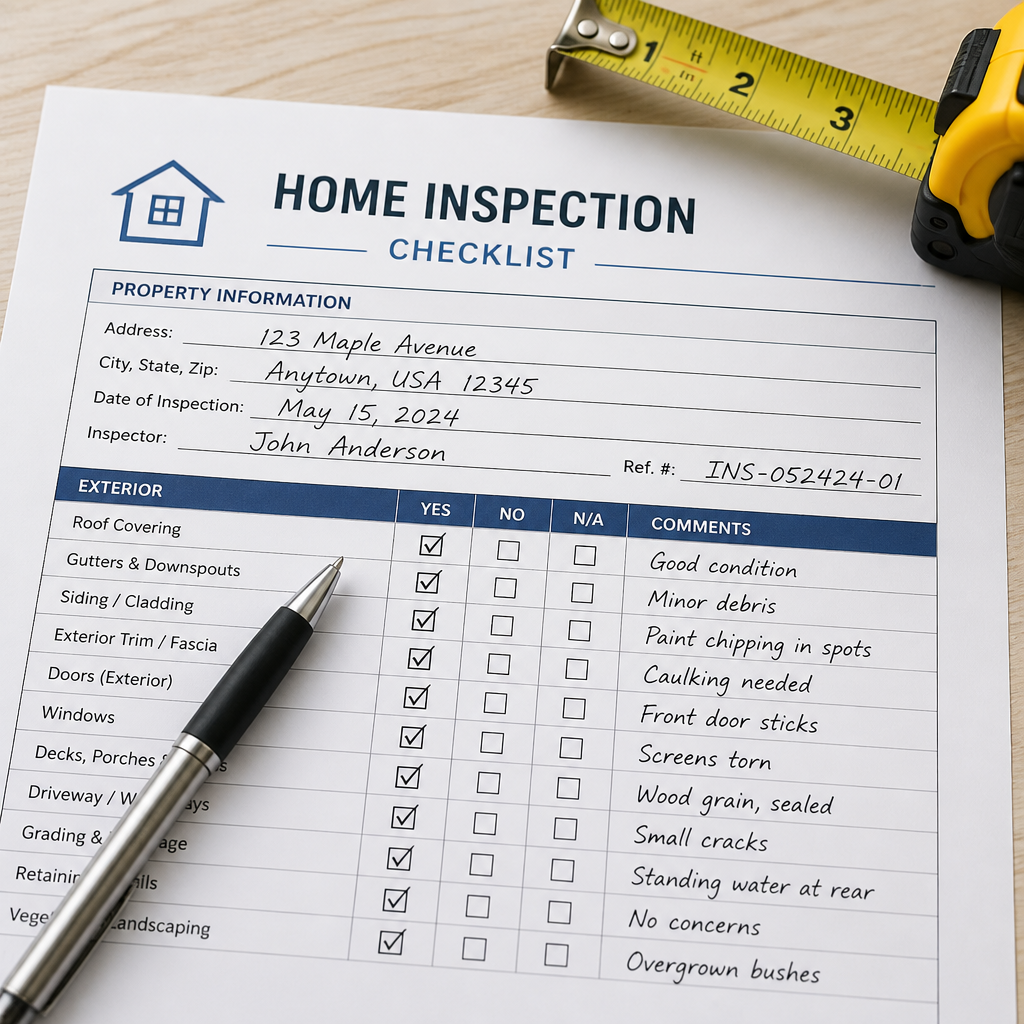
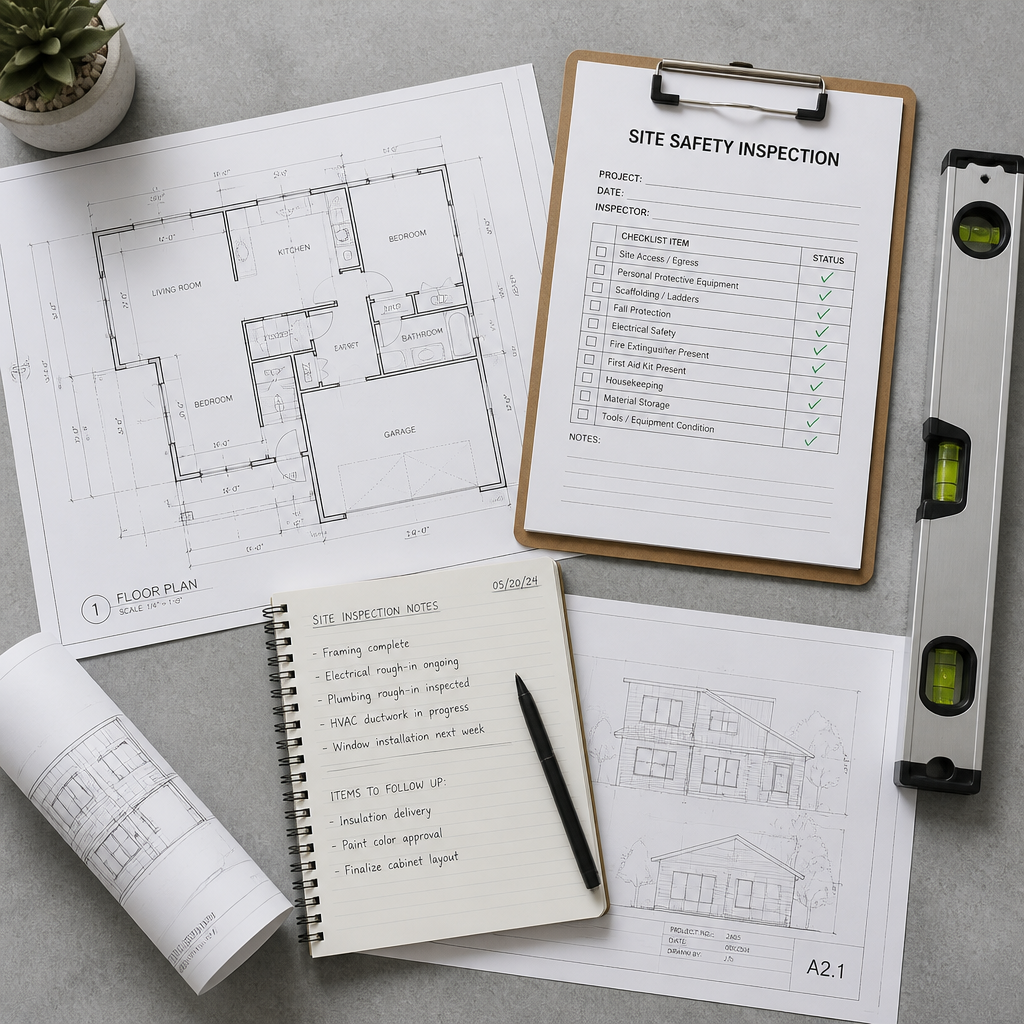
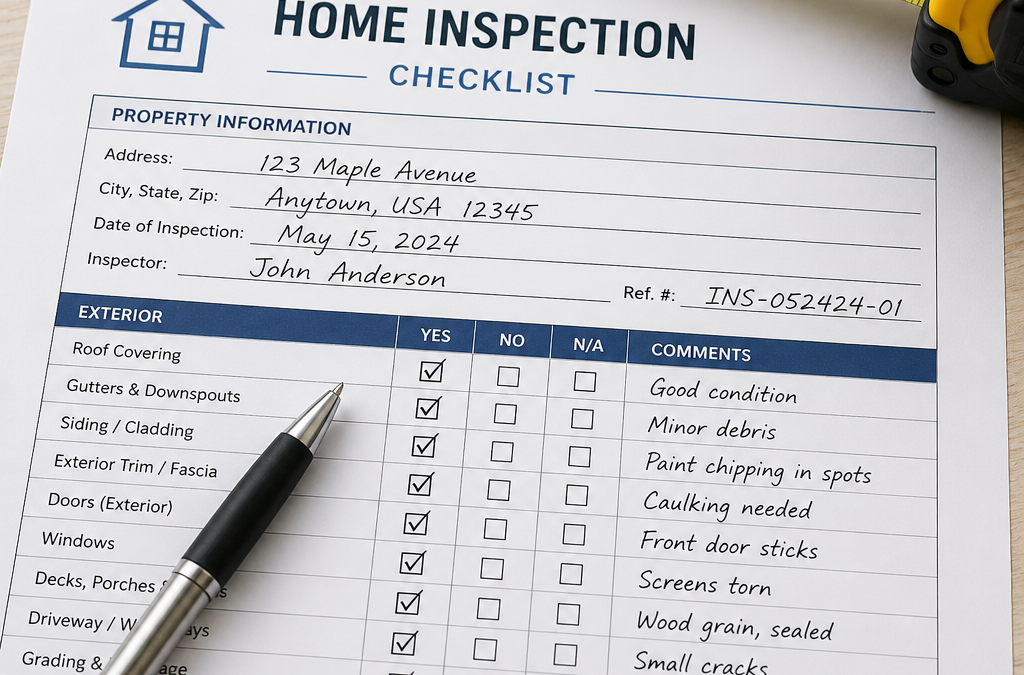
Use this as a reference before your inspection date. If your inspector’s scope does not cover these areas, ask why before signing anything.
Structural Elements: The Non-Negotiables
Slab and Foundation
The concrete slab is the starting point for everything else. Your inspector should check for visible cracking, uneven surfaces, moisture penetration, and compliance with Australian Standard AS 2870 for residential slabs and footings. Slab edge exposure should also be verified against engineering specifications. Minor surface crazing is common but wider or deeper cracks warrant closer assessment.
What gets missed by owners: Moisture beneath the slab is invisible at walkthrough but becomes a mould and structural issue within months of occupation. Inspectors use specific tools and knowledge to identify early signs that a general walkthrough will not catch.
Structural Frame and Load-Bearing Walls
Visible framing should be straight, properly connected, and compliant with AS 1684 for residential timber-framed construction. Load-bearing walls need to be checked for plumb alignment and correct lintels above openings. These elements are covered by Queensland’s 6-year-and-6-month major defects warranty, which means getting them documented before handover is essential to preserving your rights.
Roof Frame
Truss connections, bracing, and tie-downs must comply with engineering specifications and wind load requirements, which are significant considerations across South-East Queensland given the region’s exposure to severe storm events. An inspector with local knowledge understands the regional engineering expectations that apply here.
Pro tip: Ask your inspector specifically whether the roof frame has been inspected for compliance with cyclonic or high-wind-load provisions relevant to your site classification. This is not automatic in every inspection scope.
Waterproofing and Wet Areas
Waterproofing is item two on the QBCC’s list of most-reported defects, and the cost data makes the reason clear. Every wet area in your new home, including bathrooms, laundry, and balconies, must have correctly installed membrane waterproofing and proper caulking at joints and penetrations.
The problem with waterproofing failures is that they are hidden. By the time water damage becomes visible through tiles or on ceilings below a bathroom, the membrane has already failed and the repair involves demolishing completed finishes. A pre-handover inspection with a qualified inspector is the only point at which waterproofing can be assessed before tiles are laid and defects are buried.
Waterproofing failures are not only frequent and costly, they are also preventable. The expense of repairing a failed membrane far exceeds the cost of getting it right during construction.
Your inspector should also check that shower screens are correctly sealed, that floor wastes drain freely, and that there is no evidence of grout cracking or tile hollowness that might indicate a poor tile bed installation over the membrane.
Pro tip: Request the waterproofing compliance certificate before accepting handover. In Queensland, this is a document you are entitled to receive, and its absence is a red flag that should stop the handover process until it is produced.

Roof and External Cladding
Steel roof sheet cladding and flashings are among the most frequently reported defect categories in the QBCC Industry Snapshot, ranking second overall for Queensland. This is not surprising: roofing work is completed in variable weather by a trade that moves quickly, and errors in flashing installation or sheet alignment are easy to make and easy to overlook from ground level.
What Your Inspector Should Check on the Roof
A proper roof inspection covers sheet alignment and fastening, the integrity of all flashings at ridges, hips, valleys, and roof penetrations, and the condition of any box gutters or internal gutters. Roof ventilation and sarking under the roofing material should also be checked. On tiled roofs, inspectors look for cracked or slipped tiles, inadequate bedding and pointing, and unsealed gaps at ridgelines.
Cladding and Brickwork
For brick veneer construction, the inspection should cover mortar consistency and strength, chipped or cracked bricks, weep holes at the base of the brick course, and the correct installation of wall ties. Rendered or other cladding systems should be checked for cracking, bowing, or inadequate fixing that could allow water ingress.
Electrical and Plumbing Systems
Electrical and plumbing inspections require live services. Make sure power and water are connected to the property before the inspection date. An inspector cannot properly test switches, power points, safety switches, or plumbing fixtures without them.
Electrical Checklist Items
Every power point and light switch should be tested for correct function. Safety switches (RCDs) must be present and operational on all circuits as required under Queensland electrical standards. Light fittings should be securely fixed and correctly wired. The switchboard should be labelled, accessible, and correctly configured. Inspectors also check that exhaust fans in bathrooms and kitchens are properly ducted to the outside and not discharging into the roof cavity.
Plumbing Checklist Items
All taps, toilets, showerheads, and hose connections should be tested for leaks and correct water pressure. The hot water system should be checked for correct installation and temperature delivery. Drainage should flow freely at every fixture with no slow draining that suggests installation issues. External plumbing, including stormwater connections and any downpipe connections to the drainage system, should also be verified.
Interior Finishes, Doors, and Windows
Interior finishes are where the most visible defects accumulate, and where the QBCC’s top-ranked complaint category, internal paint application, lives. Paint defects range from obvious issues like runs, drips, and unpainted areas, to subtler problems like thin coverage over plasterboard joins, poor cutting at edges, and inconsistent sheen levels between walls and ceilings.
Paintwork and Plasterwork
The inspector should assess paint coverage, edge cuts, and finish consistency under both natural and artificial light. Plasterboard joints, cornices, and set work should be smooth without cracking, bubbling, or tape edge visibility. Poorly set plasterboard is a common trade shortcut that shows up within months of occupation as the board settles.
Cabinetry, Benchtops, and Flooring
Kitchen and bathroom cabinetry should be checked for correct alignment, secure fixing, functioning hinges and drawer runners, and damage-free surfaces. Benchtops should be level, correctly joined at mitres, and free of chips or damage. Flooring, whether tiles, timber, or carpet, should be assessed for adhesion, level, grout consistency, and surface defects.
Doors and Windows
Misaligned doors and windows are a consistent defect category in Queensland new builds. Sliding doors that do not sit correctly on track, hinged doors with uneven gaps around the frame, and windows that do not lock or seal correctly all appear regularly. Every door and window in the home should be opened, closed, and locked during the inspection. This sounds obvious but it is routinely skipped in builder-arranged walkthroughs.
External Works and Site Drainage
The exterior of the property is where some of the costliest long-term problems originate, and where builder attention tends to drop off near the end of a project. Driveways and paths are among the most commonly reported defects across Queensland, according to QBCC data, and site drainage failures can cause ongoing moisture problems under and around the slab.
Drainage and Stormwater
Surface drainage must direct water away from the building and not towards it. Soil erosion or pooling adjacent to the slab is a warning sign that the site has not been correctly shaped or that stormwater systems are inadequate. The inspector should check that downpipes connect correctly to the stormwater system and that no surface water is being directed toward neighbouring properties in a way that will create disputes.
Driveway, Paths, Fencing, and Landscaping
The driveway should be checked against the contract scope: correct width, finished surface, no cracking or subsidence, and correct crossover height at the street. Any fencing included in the contract should be checked for correct height, correct placement on the boundary, and secure fixing. Retaining walls, where present, should be inspected for correct construction and drainage behind the wall to prevent hydrostatic pressure buildup.
Compliance Certificates You Must Receive
A physical inspection of the property is only part of what handover involves. Before accepting the keys, you should receive a specific set of compliance certificates and documentation. Many buyers do not know to ask for these and discover gaps only when they need to make a warranty claim or sell the property.
| Certificate or Document | What It Covers | Why It Matters |
|---|---|---|
| Occupation Certificate | Confirms the building is suitable for occupation and complies with approved plans and the National Construction Code | Without this, the building is technically not approved for habitation |
| Waterproofing Certificate | Certifies that waterproofing in all wet areas was installed correctly | Essential for warranty claims and proves compliance before tiles covered the membrane |
| Electrical Certificate of Compliance | Certifies that all electrical work meets the relevant Australian Standard | Required for insurance purposes and safety verification |
| Plumbing Certificate of Compliance | Certifies that all plumbing and drainage work is compliant | Necessary for connection to services and insurance cover |
| Termite Protection Certificate | Certifies that a compliant termite management system has been installed | Queensland’s climate makes termite risk significant. No certificate means no evidence of treatment. |
| Home Warranty Insurance Documentation | Confirms that Queensland Home Warranty Scheme cover is in place | Protects you if the builder fails to complete work or fix defects |
If any of these documents are missing at handover, that is not a paperwork delay you should accept and move past. It is a substantive deficiency in the handover process that needs to be resolved before you sign.
DIY vs. Builder-Arranged vs. Independent Inspection
There are three ways a new home inspection can be handled, and they produce very different outcomes. Understanding the difference helps you make a clear decision rather than accepting the path of least resistance.
| Inspection Approach | Who Conducts It | Key Limitations |
|---|---|---|
| DIY Owner Walkthrough | The homeowner, often accompanied by the builder’s site supervisor | No technical training for identifying construction defects. Social pressure in a builder-led walkthrough reduces the likelihood of raising issues. No formal report produced. |
| Builder-Arranged Inspection | A third party engaged by or recommended by the builder | Conflict of interest risk. The inspector’s commercial relationship is with the builder, not with you. Report scope may favour the builder’s interests. |
| Independent Professional Inspection | A fully licensed inspector engaged directly by the homeowner | Higher upfront cost but no conflict of interest. Report is yours, findings are yours, and follow-up is on your terms. |
GoInspect’s model is built specifically around the third approach. Inspectors are fully licensed, reports are photo-enhanced and trade-specific, and the process is designed to give you usable documentation rather than a list of vague observations. For Brisbane, Gold Coast, Logan, Ipswich, and Redland Bay new builds, independent inspection starts from $550 including GST, which covers a pre-handover, pre-settlement, or practical completion inspection depending on your stage.
A professional inspection report carries significantly more weight in disputes than a DIY walkthrough. If a builder disputes a defect finding, your documented report from a licensed inspector is the evidence that supports your position, not your own recollection of what you saw on a walkthrough.
For high-rise developments, GoInspect also provides customised reports that account for the scale and complexity of apartment builds, where trade-specific defect attribution across dozens of units is essential for coordinated rectification by developers.
Frequently Asked Questions
What is a pre-handover inspection checklist and when should it be used?
A pre-handover inspection checklist is a structured list of construction elements, finishes, services, and compliance items that a licensed inspector assesses before a homeowner accepts their new build from the builder. It should be used at practical completion, which is the point when the builder declares the home finished and before the final payment is made. This is your last formal opportunity to document defects before ownership transfers and rectification becomes a warranty dispute rather than a contract obligation.
How long does a new home inspection typically take in Brisbane?
A professional pre-handover inspection of a standard Brisbane new home typically takes between two and four hours, depending on the size and complexity of the build. Larger homes, homes with multiple bathrooms, or builds with significant external works like pools, decks, or retaining walls take longer. That time should not be rushed. An inspector working through the home systematically will take longer than a site supervisor doing a walkthrough, and that additional time is exactly the point.
What is the warranty period for building defects in Queensland?
In Queensland, the QBCC provides 6 years and 6 months of warranty coverage for structural defects and 12 months for non-structural defects, both measured from practical completion. This means that minor defects not reported promptly can fall outside the warranty window. Conducting a thorough pre-handover inspection and submitting the report in writing immediately after is the most effective way to preserve your warranty rights for all categories of defect.
What is the difference between a pre-handover inspection and a pre-settlement inspection?
The terms are often used interchangeably but can refer to slightly different stages depending on the context. A pre-handover inspection happens at practical completion, when the builder declares the home complete. A pre-settlement inspection typically refers to the final inspection before settlement on a property purchase, which may be an existing home or an off-the-plan purchase nearing completion. For new builds, both inspections are essentially the same event: a formal assessment of the completed property before funds are released and keys are handed over. GoInspect conducts both, along with stage inspections during construction.
Can I use the builder’s own inspector for my new home inspection?
You can, but it introduces a conflict of interest that is difficult to manage in practice. An inspector engaged by or recommended by the builder has a commercial relationship that may influence what gets reported and how defects are described. For a report that you can use to enforce rectification, the inspector needs to be engaged by you, report to you, and have no ongoing business relationship with the builder. Independent inspection is the only arrangement that produces a report without that conflict built into it.
What should I do if defects are found during my new home inspection?
Present the inspection report to the builder in writing immediately after the inspection. Do not accept handover or release the final payment until the defects are either rectified to a satisfactory standard or formally agreed to be rectified within a specific timeline that is documented in writing. If the builder refuses to address defects, you can lodge a complaint with the QBCC, which administers the Queensland Home Warranty Scheme and has enforcement powers over licensed contractors. The stronger your documentation, including photos, trade attribution, and a signed report from a licensed inspector, the stronger your position in any dispute.
Do I need a new home inspection even if the builder has a quality assurance process?
Yes. Builder quality assurance processes are internal checks conducted by people whose primary relationship is with the builder. They are not independent and they are not your advocate. The QBCC Industry Snapshot data on defect rates in Queensland new homes makes clear that internal quality checks do not reliably prevent defects from reaching handover. An independent inspection is the external check that protects your interests, and it is the only check that produces a report in your name that you control.
If you have recently gone through a pre-handover inspection in Brisbane, Gold Coast, or anywhere in South-East Queensland, share what defects your inspector found and whether the rectification process went smoothly. Your experience helps other buyers know what to expect.
We would love your feedback and any insights you would share with others. What perspective would you add?
References
- QBCC: Waterproofing defects and rectification costs under the Queensland Home Warranty Scheme
- QBCC: Internal paint application as Queensland’s most commonly reported building defect
- QBCC Industry Snapshot: Top 10 building defects and licensing data for Queensland
- Pre-occupancy inspection checklist for new buildings including compliance certificates and warranty periods
- Pre-settlement defect inspection guide covering structural, plumbing, and statutory warranty rights in Australia