

Short answer: apartment sliding-door inspections work best as a repeatable, unit-by-unit quality-assurance process. Check normal operation, latching, tracks, visible hardware, frame finish, glass and safety markings in every dwelling, then record each finding against its apartment, level, area and responsible trade. That gives a builder or developer a usable close-out record instead of a collection of verbal notes.
For a multi-residential project, one good door does not prove the same detail is right elsewhere. Installation, adjustment and finish can vary between apartments and levels. A practical completion inspection (PCI), also called a handover inspection, should therefore include the agreed sliding-door checks in each accessible apartment rather than treating one sample as representative of the whole building.
Why sliding-door QA needs a project-wide method
A sliding door brings several visible elements together: the moving panel, frame, track, handle, latch, fasteners, glass, seals and surrounding finishes. Some findings are functional, such as a door that does not latch or contacts its track. Others concern incomplete hardware or surface damage. They may require different rectification actions even when they look similar on a summary list.
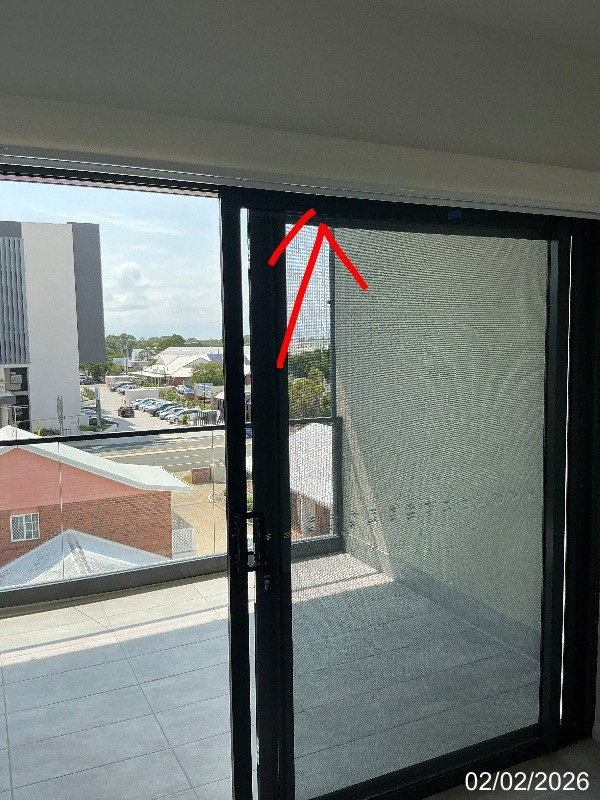
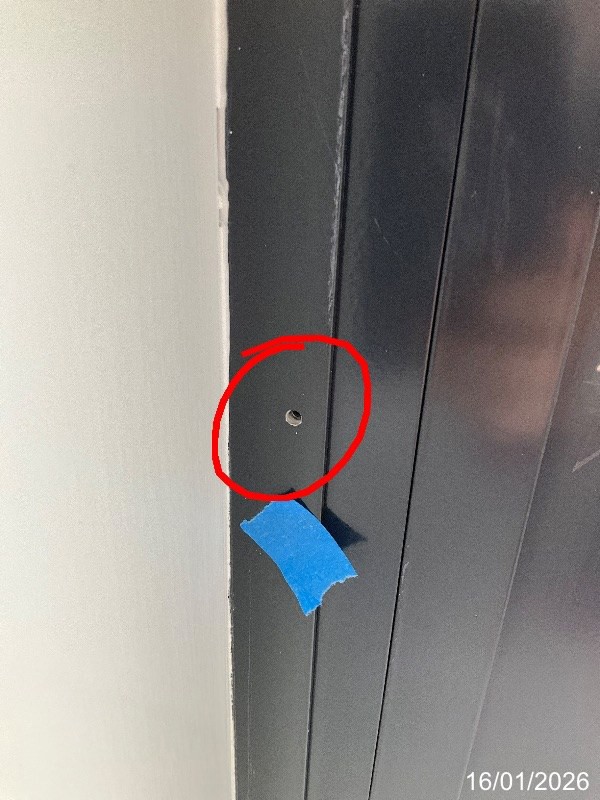
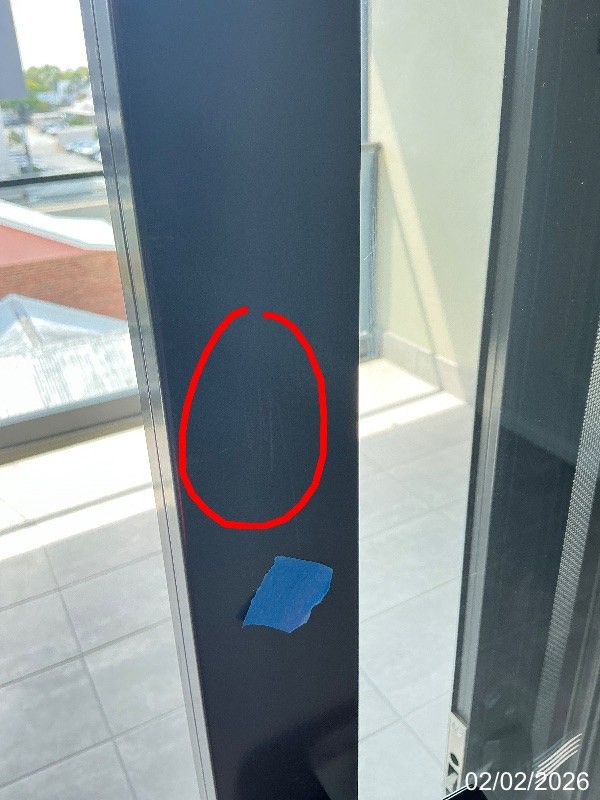
Across one recent GoInspect apartment project, inspectors recorded a side window binding on its track, a balcony sliding door that did not latch correctly, another sliding door scratching in its top track, a missing frame rivet, scratched frames and peeling safety decals. These are examples from inspected dwellings, not a claim about how often each condition occurs across apartment projects.
The project value comes from recording each observation consistently. The team can see the affected unit, the exact location, the photographs and the nominated trade, while retaining the original inspection evidence for follow-up.
What an apartment sliding-door inspection can check
Normal movement and contact points
The inspector can operate an accessible door through normal movement and record binding, scraping or visible contact. The description should name where the contact was observed instead of using a vague instruction such as “adjust door”. If the door scratches at the top track, the trade can start with the right location and review the cause.
A visual handover inspection records what can be safely observed during normal operation. It does not dismantle the door, diagnose a concealed installation detail or certify the complete door system.
Latches, handles and visible fasteners
Handles and latches should be included in the agreed inspection sequence. A door may move while still failing to latch correctly. Visible fasteners and covers can also be checked for missing or incomplete work. These findings should remain separate because they may need different repair tasks and different evidence at follow-up.
Frames, glass, markings and surrounding finishes
Visible frame scratches, dents or inconsistent finishes can be photographed before handover. Glass damage and peeling safety markings can also be recorded where visible. The report should describe the observed condition without guessing how it occurred or assigning contractual liability.
Surrounding junctions matter as well. The inspector can record visible gaps, incomplete sealant or damaged finishes adjacent to the frame when they fall within the agreed scope. A finished-surface inspection cannot verify concealed flashing, membranes or the full weatherproofing installation. Water testing and specialist performance testing also need an express scope and suitable method.
Make every report item useful to the repair team
A photograph is most useful when it remains connected to a precise location and a clear action. For a multi-unit apartment inspection, each item should retain:
- project, level and apartment reference;
- room or area, such as meals/family or balcony;
- a plain description of the observed condition;
- one or more photographs showing the item;
- the nominated trade or work group; and
- a status or follow-up record that explains what evidence supports closure.
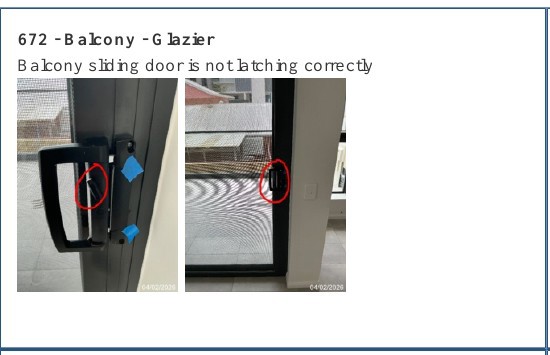
GoInspect uses InspectaMate to keep this information attached to the original finding. That structure lets the same inspected data be presented in report views that suit different people without retyping the defect list.
Choose report types for the next decision
| Report type | Practical use |
|---|---|
| Apartment or dwelling report | Keeps all findings for one unit together for handover or lot-level review. |
| Level or inspection-batch report | Lets the site team review the apartments inspected in an agreed area or visit. |
| Trade-specific worklist | Groups the glazier’s or door installer’s assigned items across apartments and levels. |
| Follow-up report | Returns to the original item and records what was observed during a later inspection. |
Trade allocation is a coordination tool. It does not decide contractual responsibility by itself. Likewise, a trade response, a completion photograph and an independent return inspection are different forms of evidence. The project team should define which one is required before an item is marked complete.
Set the scope before apartment inspections begin
A useful brief should identify the dwellings and levels, access arrangements, agreed inspection stage, report outputs and any exclusions. It should also state whether follow-up visits are required and how completed work will be presented for review.
The Queensland Building and Construction Commission’s quality-control guidance recommends project-specific supervision plans and detailed inspections before handover. Its practical completion guidance also explains that defects and incomplete work identified at the final inspection should be documented in a defects list. An independent apartment inspection can support that process, but it does not replace the builder’s supervision, statutory certification or specialist testing.
For a broader unit-by-unit sequence, see the apartment building inspection checklist. Homeowners looking for a general new-home checklist can use the window and door handover guide, while the separate sliding-door binding article explains that single symptom in more detail.
Plan apartment sliding-door inspections with the close-out process in mind
Builders and developers can include sliding doors within a coordinated multi-residential inspection program. GoInspect can structure reports by apartment, level, trade and follow-up stage so the project team receives evidence that matches the repair workflow.
Request a builder and developer inspection quote with the project size, location, inspection stage and required report types.