
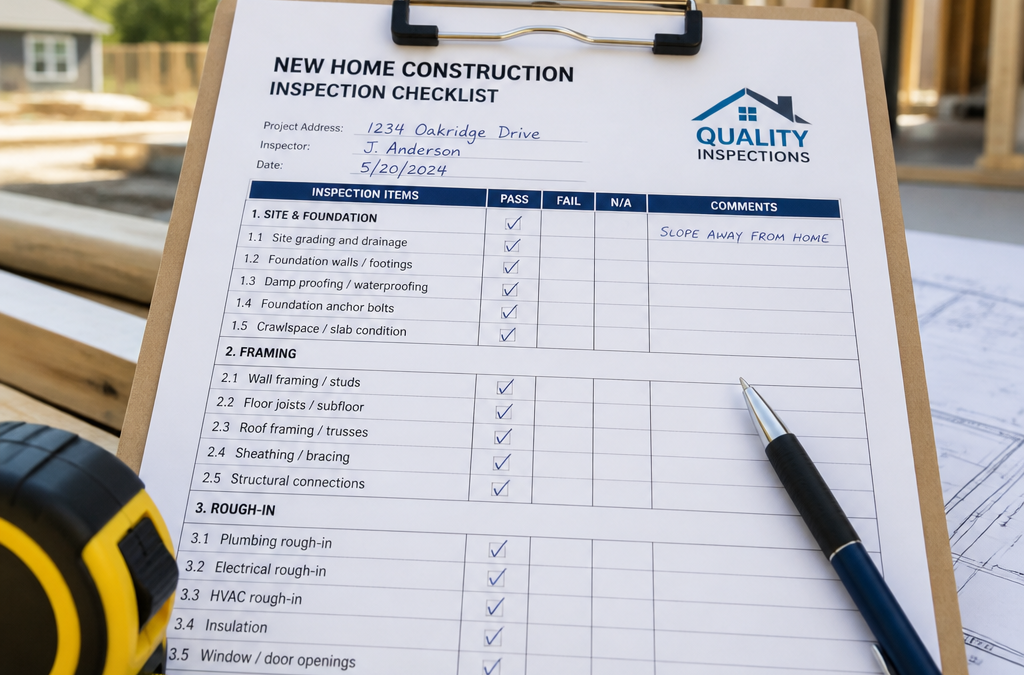
Most new home buyers spend months choosing finishes, tracking construction milestones, and waiting for the keys. Then they walk through the finished home with the builder, nod along, sign the paperwork, and discover three months later that the bathroom tiles are cracking or the roof flashing was never sealed. A handover inspection report is the document that stops that from happening. It is a formal, written record of every defect, incomplete item, and non-compliant element identified by an independent inspector before you accept handover of your new home. Without it, you are relying on memory, goodwill, and your own untrained eye to protect an investment that typically runs into hundreds of thousands of dollars.
Table of Contents
- What Is a Handover Inspection Report?
- Quick Takeaways
- What a Handover Inspection Report Must Include
- The Inspection Areas a Report Must Cover
- Why Photo Evidence and Trade Assignment Change Everything
- Comparing Report Formats: What Actually Works
- Your Legal Rights in Queensland After the Report Is Issued
- When to Book Your Handover Inspection
- Frequently Asked Questions
- References
What Is a Handover Inspection Report?
A handover inspection report, also called a Practical Completion Inspection (PCI) report or pre-settlement report, is the documented output of an independent assessment of a newly built property at or near practical completion. Practical completion is the point at which the contractor has fulfilled their contractual obligations except for minor defects. It is the moment the builder formally notifies you the home is ready, and it triggers your obligation to make the final payment under the contract.
The report is not a conversation or a walkthrough note. It is a structured, written document produced by a licensed building inspector who is independent of the builder. Its purpose is to create a clear, defensible record of every issue identified, so the builder has a specific list of items to rectify before you hand over the final payment or shortly after, depending on the terms of your contract.
In Queensland, the Queensland Building and Construction Commission (QBCC) confirms that owners can engage a licensed building inspector to check building work on their behalf. This is not a bureaucratic formality. It is the mechanism that gives your defect list legal weight when you present it to your builder.
Quick Takeaways
| Key Insight | Explanation |
|---|---|
| A handover inspection report is not optional for new builds | Queensland builders are required to fix defects identified before or at practical completion. After you accept handover without a formal report, enforcement becomes far more complex and expensive. |
| The report must assign defects to specific trades | A report that simply lists problems without identifying which trade is responsible creates confusion and delays rectification. Assigning responsibility to the plasterer, tiler, or painter speeds up the process. |
| Photo evidence is not optional, it is essential | Written descriptions of defects are routinely disputed by builders. Photographs anchored to specific locations remove ambiguity and prevent “that was always like that” disputes. |
| Same-day reporting has real dollar value | When the report is delivered the same day as the inspection, buyers can present defects to their builder before the handover meeting concludes, keeping the builder accountable at the strongest leverage point in the process. |
| Non-structural defects have a short claims window in Queensland | Under Queensland law, non-structural defects are covered for 6 months from completion, with a 7-month limit to lodge a QBCC complaint. A late inspection means you may miss the window entirely. |
| Wet areas and roof flashings are the highest-risk items | These are the areas most likely to produce expensive post-settlement problems. A thorough report specifically targets waterproofing, tiling, gutters, and flashings before any water damage can accumulate. |
| The report covers compliance, not just cosmetics | A quality handover inspection report checks whether what has been built actually matches the approved plans and applicable standards, not just whether it looks finished. |
Understanding what goes into a handover inspection report helps you read one critically rather than just file it away. The sections below break down exactly what a rigorous report must contain and why each element matters.
What a Handover Inspection Report Must Include
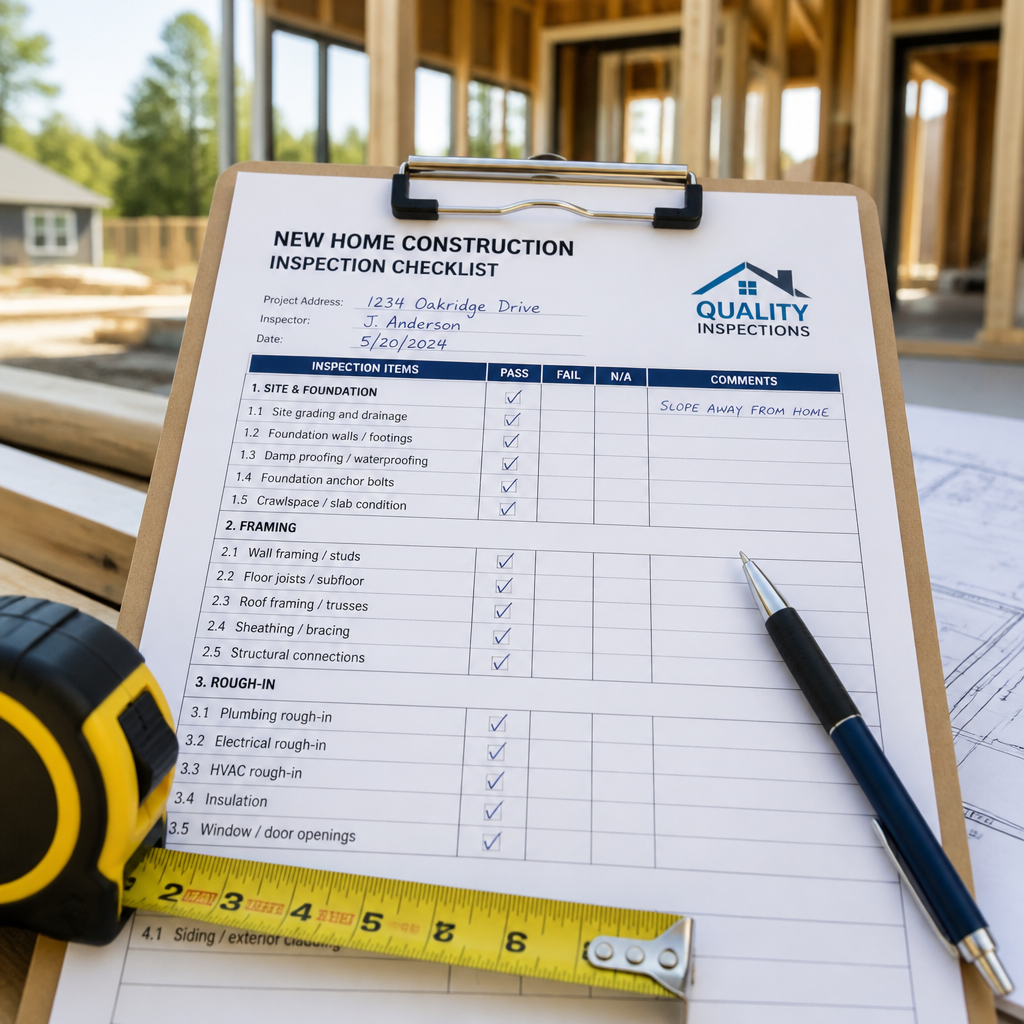
Not all inspection reports are created equal. A bare-bones checklist ticked off in 45 minutes is not the same as a structured, photo-enhanced report produced by a licensed inspector. Here is what a proper handover inspection report must contain to be useful and defensible.
Inspector Credentials and Inspection Details
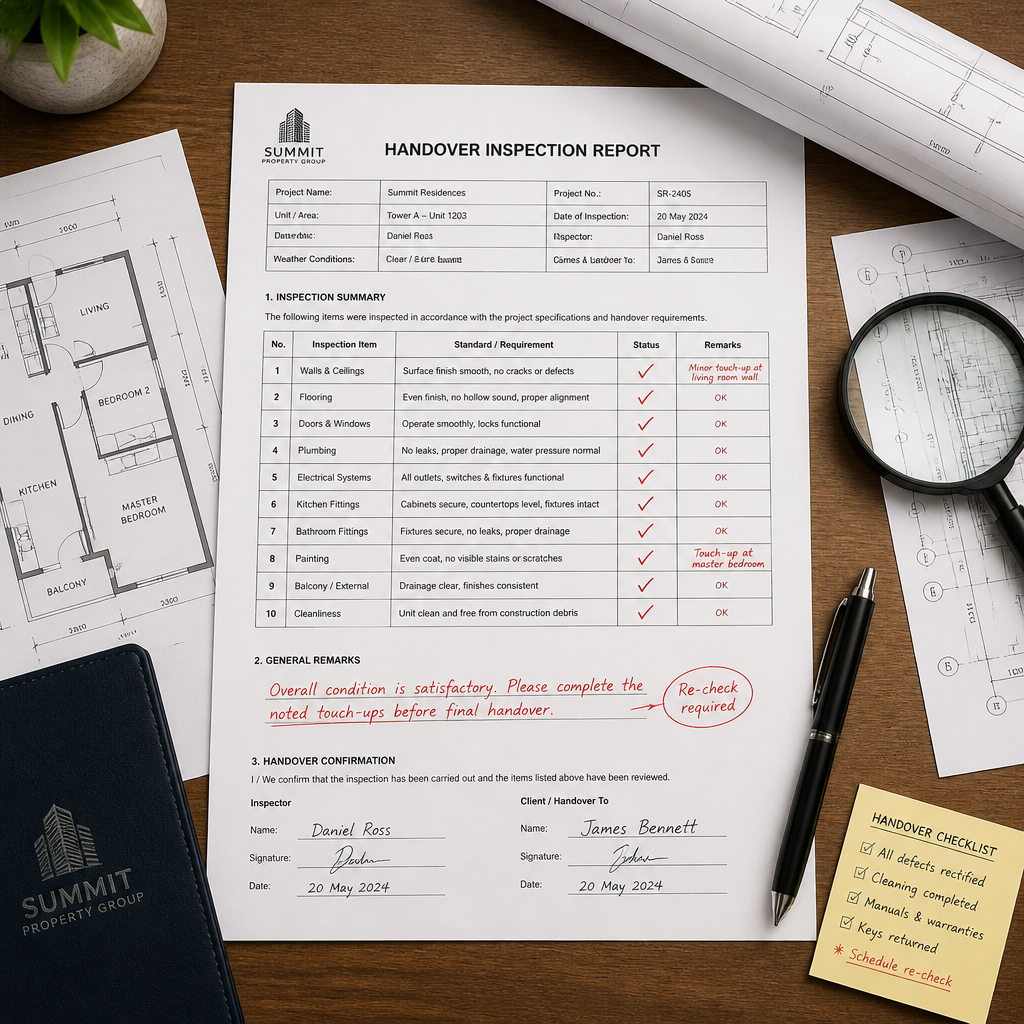
The report must open with the inspector’s name, licence number, and the licence class relevant to the work assessed. In Queensland, that means a QBCC licence. It should also include the property address, the date of inspection, weather conditions (relevant to assessments of drainage and external surfaces), and the names of anyone present during the inspection.
If the report does not state the inspector’s licence number, treat it as a red flag. An unlicensed opinion carries no weight with a builder, a solicitor, or the QBCC.
A Clear Scope of Inspection
The report must state what was inspected and what was not accessible. This protects both parties. Areas that were locked, obstructed, or inaccessible due to stored materials should be explicitly noted, so there is no ambiguity later about whether those areas were assessed.
Itemised Defects with Descriptions
Every defect must be described clearly enough for a tradesperson who was not present at the inspection to understand exactly what is wrong and where it is located. Vague language like “paint issues in bedroom” is not acceptable. “Paint finish incomplete on the south-facing wall of bedroom 3, approximately 1.2 metres above skirting, requiring a full re-coat” is a defect description that gets fixed.
Photographic Evidence for Every Defect
Photographs must accompany every identified defect. The photo should show the defect in context (location within the room or on the building) and, where possible, in close-up detail. Photos are the single most effective tool for preventing “that defect was caused by the owner” disputes after handover.
Trade Responsibility Assignment
Each defect must be assigned to the trade responsible for rectification. Whether the issue belongs to the plasterer, tiler, carpenter, painter, concretor, or plumber, naming the responsible trade in the report means the builder’s supervisor can allocate the work immediately rather than spending days in meetings deciding whose problem it is.
Pro tip: When you receive your report, check that every single defect has a trade assigned. If more than a handful are listed as “builder to determine,” the report is shifting work back to you and your builder to sort out, which defeats the purpose of paying for an independent inspection.
Defect Priority or Severity Classification
A well-structured report categorises defects by severity: major defects (items affecting structural integrity or habitability), minor defects (workmanship issues that do not affect function), and incomplete items (work listed in the contract that simply has not been done yet). This classification helps you negotiate with your builder about what must be fixed before you accept handover versus what will be addressed in the defect liability period.
Compliance Notes
The report should note where work does not match the approved plans or applicable Australian Standards, even if the non-compliance is not immediately visible as a defect. A garage slab that is poured at the wrong level may look fine but could be non-compliant with your drainage approval. Compliance issues are harder to identify without plan review, which is one reason a licensed inspector adds value that a friend walking through the site cannot.
The Inspection Areas a Report Must Cover
A comprehensive new home handover Brisbane inspection and its resulting report should address every visible and accessible area of the property. The following breakdown reflects what a thorough inspection covers.
Structural Frame and Slab
Where visible, the frame, slab, and roof structure are assessed for alignment, cracking, and any signs of movement or non-compliant work. In Queensland’s climate, slab edge cracking wider than acceptable tolerances and inadequate subfloor ventilation are both worth documenting.
External Walls, Cladding, and Brickwork
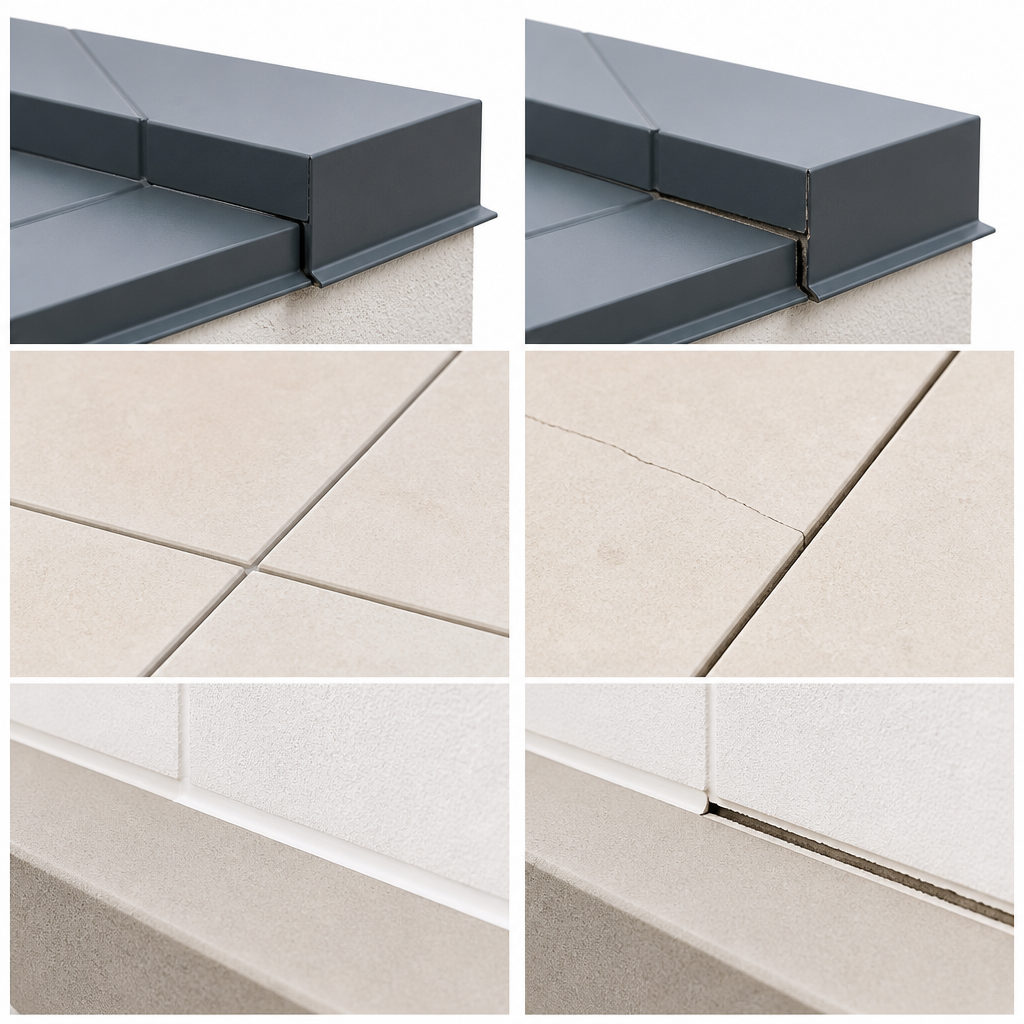
External walls are checked for paint defects, mortar inconsistencies, chipped brickwork, inadequate cleaning, and loose bricks. Cladding is checked for gaps, inadequate fixings, and any areas that could allow water ingress. Control joints in concrete paths and driveways are a common item on building defect reports in Queensland, as cracks wider than accepted tolerances are a legitimate defect, not normal settling.
Roof Coverings, Gutters, and Flashings
The roof is inspected for coverage, flashings, gutters, and downpipes. Poorly seated roof tiles, missing ridge caps, and incorrectly installed flashings are among the most consequential defects on any building defect report Queensland inspectors produce, because the resulting water damage compounds quickly once the home is occupied.
Internal Walls, Ceilings, and Floors
Internal surfaces are checked for paint finish quality, plaster cracking, floor tile lippage, floating floor gaps, and skirting alignment. Misaligned cabinetry and missing fittings are common items at practical completion and should be listed explicitly so they are not overlooked.
Wet Areas: Bathrooms, Laundry, and Kitchen
Wet areas receive particular attention because waterproofing failures are expensive and slow to manifest. The inspection checks grout consistency, tile lippage, silicone seals, taps and mixers, and any visible signs of inadequate waterproofing membrane application. Wet areas are where problems sit, to borrow a phrase used by experienced inspectors in Brisbane.
Windows, Doors, and Joinery
All windows and doors are opened, closed, and locked to check operation. Sticking doors, poorly seated frames, and windows that do not seal correctly are documented. Joinery checks include cabinetry alignment, drawer operation, and handle installation.
External Areas: Driveway, Paths, Fencing, and Landscaping
The inspection covers driveways (cracks wider than accepted tolerances, missing control joints), footpaths, letterbox installation, clothesline installation, street number signage, kerb condition, and utility pit lids. The termite management system notice in the meter box is a frequently overlooked item that a thorough report will flag if absent.
Pro tip: Before your inspector arrives, walk through the home yourself and note anything that looks wrong, even if you are unsure it is a defect. Give that list to your inspector. They may confirm it, upgrade it to a formal defect, or explain why it is within tolerance. Either way, you have a record that you raised it.
Why Photo Evidence and Trade Assignment Change Everything
A written defect description without a photo can be disputed. A photo without a written description can be contextually ambiguous. Together, they create a record that is difficult to dismiss and impossible to misplace in translation between the builder’s office and the subcontractor on site.
The practice of assigning each defect to the responsible trade is not just an administrative nicety. In practice, a builder managing a new estate with dozens of subcontractors has limited bandwidth to triage a defect list. A report that says “Defect 14: Grout incomplete in ensuite shower, north wall, bottom three courses. Responsible trade: tiler” means the builder’s supervisor can forward that item directly to the tiling subcontractor without a site visit to diagnose who is responsible. That compression of the rectification timeline is one of the clearest practical benefits of a well-structured report.
A handover inspection report that assigns defects to specific trades turns a list of problems into a rectification schedule. That is the difference between a document that gets filed and one that actually gets work done.
GoInspect’s approach in Brisbane, Gold Coast, Logan, Ipswich, and Redland Bay is built around exactly this: photo-enhanced reports that identify defects, assign trade responsibility, and are delivered the same day. Same-day delivery is not a marketing point. It means the report lands while the handover meeting is still active or within hours of it, keeping the builder accountable at the moment when their motivation to resolve issues is highest.
Comparing Report Formats: What Actually Works
Not every report format serves the buyer equally well. The table below compares three common formats used in Brisbane and South East Queensland.
| Report Format | Strengths | Weaknesses |
|---|---|---|
| Generic PDF checklist (tick-box style) | Quick to produce; gives a broad coverage overview | No photos; no trade assignment; defect descriptions are often too vague to action; easily disputed by builders |
| Narrative written report with photos embedded | Detailed; photo evidence reduces disputes; can be emailed directly to builder | Slower to produce if not supported by specialist software; less effective if defects are not assigned to trades |
| Photo-enhanced report with trade assignment and same-day delivery | Each defect has photographic evidence; trade responsibility is explicit; delivered before builder has left the site or within hours; easiest for builders to action into subcontractor schedules | Requires a more experienced inspector and supporting systems; reflects in the inspection fee |
The third format is the standard GoInspect applies to every inspection. It is also the format that experienced buyers, investors, and developers working across Brisbane’s new home market have come to expect when they need defects actually fixed, not just documented.
Your Legal Rights in Queensland After the Report Is Issued
The handover inspection report does not exist in a legal vacuum. In Queensland, the defect liability framework gives the document real teeth, but only if you use it within the correct timeframes.
Once the list of defects is agreed and shared between the builder and the homeowner, the builder is responsible for fixing those items within a reasonable timeframe after practical completion. The QBCC confirms this obligation directly on its website. The word “reasonable” has teeth because the defect list creates a documented obligation, not a verbal promise.
For non-structural defects in Queensland, coverage applies for 6 months from completion, with a 7-month limit to lodge a QBCC complaint. Structural defects carry a longer protection period. If you miss these windows, you may lose your right to claim, regardless of how clear the defect is.
This is why the timing of the inspection matters. Booking a handover inspection after you have already accepted the home and made the final payment weakens your position significantly. The report carries the most weight when it is produced before or at the point of practical completion, before the final payment is released.
If a builder refuses to rectify documented defects, the process is: notify the builder in writing (your report is your evidence), then, if unresolved, lodge a complaint with the QBCC. Having a formal, inspector-produced report with dated photographs makes every step of that process cleaner and faster than a verbal dispute over what was or was not agreed at the walkthrough.
When to Book Your Handover Inspection
Book your inspection as soon as your builder gives you written notice that the home has reached or is approaching practical completion. In Queensland, builders are generally required to give owners at least a few days’ written notice before the practical completion inspection, though the exact notice period depends on your contract terms.
Do not wait for the builder’s own walkthrough and then try to add your inspector afterward. The most effective approach is to have your independent inspector attend before or alongside the builder’s walkthrough, so the defect list is produced while both parties are still in the room or within the same day.
For high-rise apartments and multi-lot developments, timing is more complex. Common areas, building services, and individual lots each require their own assessment. GoInspect provides customised reports for high-rise developments that address both the individual lot and the shared building elements, which is a category of inspection that generic building inspection services rarely handle well.
For investors purchasing multiple lots in a single development, coordinating inspections to align with the developer’s practical completion schedule, rather than reacting to each handover individually, saves time and ensures consistent defect documentation across the portfolio.
Frequently Asked Questions
What is the difference between a handover inspection report and a standard building inspection report?
A standard building inspection report is typically used when purchasing an existing property and focuses on identifying defects relative to the property’s age and condition. A handover inspection report is used specifically for new builds at practical completion. It assesses whether the construction meets contract specifications, approved plans, and applicable standards, and it produces a defects list that the builder is contractually obligated to address. The two serve very different purposes and are not interchangeable.
Does the builder have to fix everything listed in the handover inspection report?
The builder is obligated to fix defects and incomplete items that fall within the scope of the contract and applicable standards. In Queensland, once a defect list is agreed and shared between both parties, the builder is responsible for rectifying those items within a reasonable timeframe after practical completion. Items that are considered within acceptable tolerances, or that relate to owner preferences rather than contract specifications, may be contested. This is why having a licensed, independent inspector produce the report, rather than making your own list, gives the document far more authority.
How long does a handover inspection take, and when will I receive the report?
A typical new home handover inspection takes between two and four hours, depending on the size and complexity of the build. High-rise apartment inspections may vary. With GoInspect, reports are delivered the same day as the inspection, which means you can present the defect list to your builder the same day rather than waiting days for a report to be compiled after the fact.
What happens if defects are found after I have already accepted handover?
Defects found after you have accepted handover and made the final payment can still be pursued, but the process is more complex. In Queensland, non-structural defects are covered for 6 months from completion, with a strict window to lodge a QBCC complaint. Structural defects carry a longer protection period. You must notify the builder in writing and give them an opportunity to fix the issue before escalating to the QBCC. Having a formal pre-handover inspection report that documented the defect before settlement significantly strengthens your position, because it shows the issue existed prior to handover.
Can the builder’s inspector do the handover inspection, or does it need to be independent?
The builder’s inspector can conduct their own practical completion inspection, but that assessment protects the builder’s interests, not yours. An independent inspection, carried out by a licensed inspector engaged by the homeowner, produces an unbiased report that you own and can use to negotiate with the builder, lodge complaints, or support legal action if needed. The QBCC explicitly supports homeowners engaging their own licensed building inspector for this purpose. Independence is not optional if you want a report that carries real weight.
Is a handover inspection report relevant for investors as well as owner-occupiers?
Yes, and in some ways it matters more for investors. An investor who accepts a defective new property without a formal inspection report has no documented evidence of pre-existing defects, which complicates both warranty claims and any future tenant-related disputes about the condition of the property at the time of handover. For investors managing multiple new-build properties across Brisbane, Gold Coast, Logan, Ipswich, or Redland Bay, consistent pre-handover inspection reports across the portfolio protect the investment and simplify defect management.
If you have recently been through a handover inspection in Brisbane or South East Queensland, what was the most surprising defect your report uncovered? Share your experience below.
References
- QBCC guidance on practical completion inspections and the builder’s defect obligations in Queensland
- Guide to understanding pre-handover inspections for new home buyers in Queensland
- Overview of defective building work rights for new homeowners in Queensland
- What a handover inspection covers for new builds in Brisbane
- Detailed handover inspection checklist covering exterior, structural, and internal defect categories