

Every new home settles in with a few marks on its walls and a door that sticks in summer. The trouble starts when a buyer has to decide whether a crack, gap or stain is ordinary wear and tear or a construction defect the builder must fix. Get it wrong and you either pay for repairs that should have been covered, or you let a builder write off a genuine fault as normal use. This guide explains how to tell new home defects vs wear and tear apart, using the same tests our inspectors apply on handovers across Brisbane, the Gold Coast, Logan, Ipswich and Redland Bay.
Table of Contents
- Quick Takeaways
- What Is a Building Defect in Australia?
- Normal Wear and Tear in a New Home
- Telling a Defect From Wear: Practical Tests
- Common Defects Across South East Queensland
- Defects, Wear and Tear Compared
- Who Pays: Builders, Developers and Owners
- Documenting Issues So They Stick
- Frequently Asked Questions
- References
Quick Takeaways
| Key Insight | Explanation |
|---|---|
| Wear comes from use, defects come from the build | Scuffs and fading come from living in a home. A defect is a failure in workmanship, materials or design that exists whether or not anyone uses the home. |
| Check whether the problem is getting worse | Wear is slow and static. A crack that is wider at the second inspection, or a door that now needs a shoulder to close, is an active defect. |
| Read crack width and pattern before deciding | Fine hairline cracks at plasterboard joints are common as timber dries. Stepped cracks in brick, cracks that reappear after repair, or cracks that run from door corners need assessment. |
| Treat any water where it should not be as a defect | Staining below wet areas, soft skirting and failed grout at shower bases are never normal wear. Report them immediately with photos. |
| Date and photograph every item | A dated wide shot and a close shot with scale make it far harder for a builder to relabel a defect as wear or as tenant damage later. |
| Name the likely responsible trade | A specific item with a likely trade, such as waterproofer or tiler, gets a faster response than a general complaint about the bathroom. |
What Is a Building Defect in Australia?
A building defect is a fault in a home that comes from how it was designed, built or finished, not from how the owner has lived in it. In plain terms, something was installed wrongly, built from the wrong material, or left incomplete. That is the working building defect definition Australia buyers use when they raise a problem with a builder, although the exact legal test depends on the contract and the rules that apply in your state.

In practice, we sort defects into three groups. The first is workmanship, such as a wall that is out of plumb or a tile that sounds hollow because the adhesive did not fully bond. The second is product failure, such as a tap that starts dripping in its first month because the washer was poorly fitted or the cartridge was faulty.
Design faults sit in a third group. A drainage fall that sends water back toward the slab, or a window head flashing installed without a proper lap, is a defect even if the trade installed it exactly as drawn. The problem is the plan itself, and the builder still carries responsibility for fixing it.
Defects Are Failures, Not Ageing
A defect shows up when something fails to do the job it was built to do under normal conditions. A door that binds because the frame was never set plumb is failing its job. A door that swells a few millimetres in a humid Queensland summer may be working exactly as designed, which is why the cause matters more than the symptom.
Why the Definition Matters at Handover
Builders and developers often describe small issues as “cosmetic” or “within tolerance” to close out a defect list. Your report needs to name the fault, its location and the likely trade responsible, so the conversation is about a specific item rather than a vague feeling that the home is poorly finished. A clear building defect record is what turns an argument into a rectification job.
Normal Wear and Tear in a New Home
Wear and tear is the gradual decline that comes from ordinary living in a property. Scuffs on skirting boards, worn grout near a front door and fingerprints around light switches all belong here. Nobody is at fault for them, and no reasonable buyer expects a builder to repair them.
Rental guidance draws the same line. NSW Fair Trading describes fair wear and tear as things like faded curtains, frayed cords and a worn kitchen benchtop, while damage includes burns, cuts and broken glass. That framing helps, but a new home adds a complication: a brand-new house is expected to move a little in its first year, even when nothing is wrong.
Settling and Drying Movement in the First Year
Timber framing dries out after handover, and plasterboard moves with it. This produces hairline cracks at stopping joints, slight gaps where cornice meets the wall, and occasional nail pops. These are usually cosmetic, and a good builder will patch and repaint them during the defects period.
The key is pattern. A single fine line along a plasterboard joint is normal movement. A crack that runs diagonally from a door corner, or one that reappears after you have had it repaired, is a question for the builder and, if it persists, a structural assessment.
Use Marks Versus Damage From Use
Scuffs from moving furniture, a slight fade on a sunlit wall and minor chips on a laundry tub are wear. A gouge in timber flooring from a delivery trolley is damage caused by the occupant, and paint peeling in a shower recess where the sealant was never applied is a defect. Owners are responsible for the first, and the builder should answer for the second.
A common mistake is logging every mark as a defect. That weakens your list, because builders dismiss a report padded with scuffs and become less willing to look closely at the genuine faults.
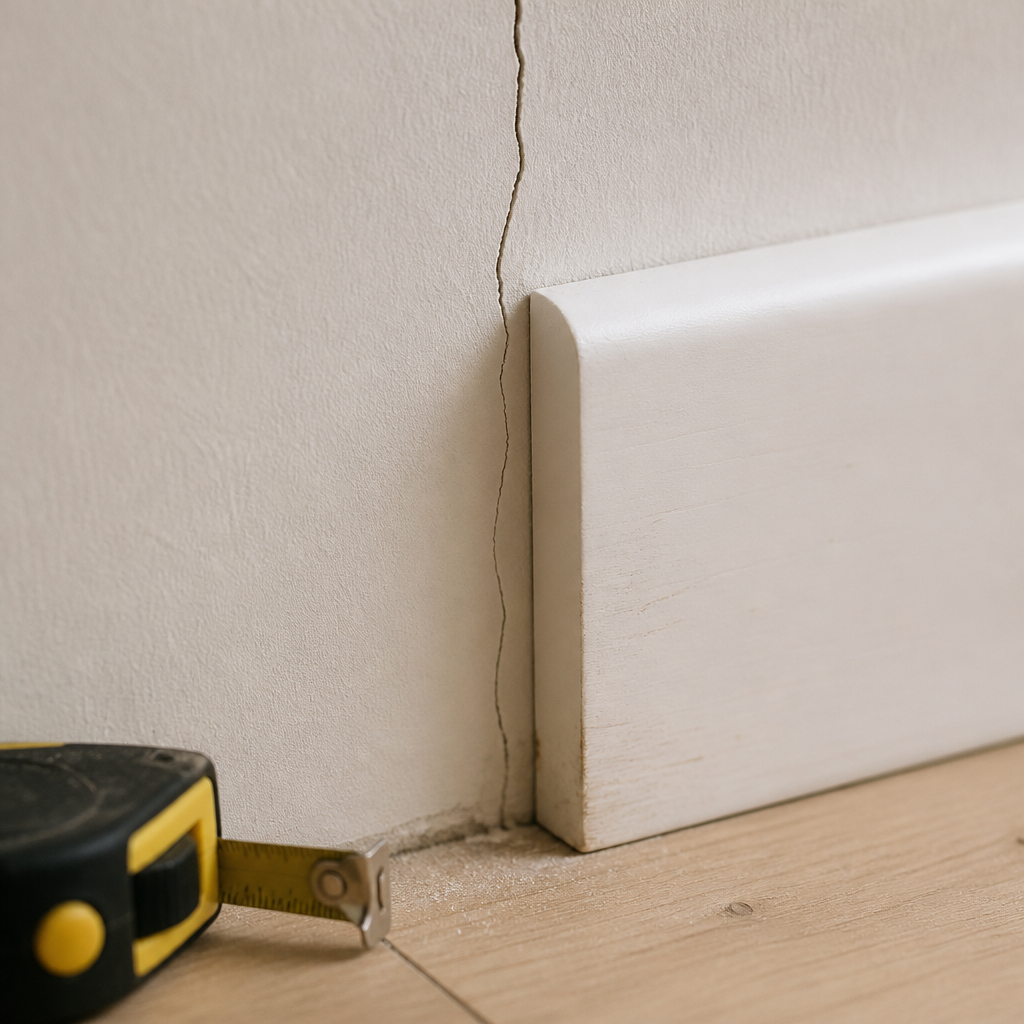
Pro tip: Photograph each item with a wide shot that shows the room and a close shot that shows the fault, with a coin or tape measure for scale. That combination makes it much harder for a genuine defect to be relabelled as wear.
Telling a Defect From Wear: Practical Tests
When you are standing in a room with a defect list, four questions do most of the sorting. Was it caused by use? Is it getting worse? Does it affect how the item functions? And was it installed to the standard the contract requires?
Ask Whether It Is Getting Worse
Wear is static or slow. A crack that is wider at the second inspection than at the first, a door that now needs a shoulder to close, or a floor that has dipped since move-in signals an active defect. Date every photo so the change can be shown rather than remembered.
Wear happens to a building that is working. A defect is a building that was never working properly in the first place.
Check Whether Function Is Affected
A marked wall is cosmetic. A window that will not lock, a shower that leaks onto the floor or a gate that drags across concrete is a functional failure. In our reports we flag functional issues first, because they tend to get worse and they carry the most risk to the owner.
Hold the Work to the Contract, Not Your Expectations
Many disputes come down to “I expected better than this.” The contract, the approved plans and the relevant building standards define what is acceptable. A tile with a slightly raised edge at a grout line may sit within what the contract allows, but a tile that has cracked because it was bedded on an uneven base is not.
A useful test is whether a reasonable builder would accept the same finish in their own home. If the answer is no, it belongs on the list.
Pro tip: Check doors and windows at the start and end of a wet season. A door that sticks only after heavy rain and frees up in dry weather usually reflects moisture movement, but a door that never closes cleanly was most likely hung out of square.
Common Defects Across South East Queensland
Certain defects turn up again and again on new homes across Brisbane, the Gold Coast, Logan, Ipswich and Redland Bay. Humid summers, fast build programs and tight handover dates all contribute to them. Knowing the usual suspects helps you check faster on handover day.
Water Ingress and Wet Area Failures
Water finding its way where it should not go is never normal wear. Look for staining on ceilings below bathrooms, soft skirting near wet areas and cracked grout at shower bases. These often trace back to waterproofing problems, so treat them as urgent.
A common mistake is waiting for a stain to spread before reporting it. By then, moisture has often reached the framing or the wall lining, and the scope of repair grows with it.
Doors, Windows and Hardware
Doors that rub at the head or the hinge side, window sashes that stick and handles that loosen within weeks all point to installation problems. Hardware that loosens under normal use is usually a fixing issue rather than wear, so ask for the fixings to be checked and recorded.
Tiles, Floors and Finishes
Hollow-sounding tiles, tiles lifting at the edges and floors that slope noticeably across a room point to bedding, base or levelling problems. Paint runs, roller marks visible in direct light and missed coats around switches are finishing defects. They are easy to photograph and hard for a builder to dispute.
Defects, Wear and Tear Compared
Buyers often ask whether one inspection is enough or whether they need several. Each stage catches different things, and the three checks most relevant to a new home are compared below.
| Inspection Stage | When It Happens | What It Catches |
|---|---|---|
| Pre-handover inspection | Before the builder hands over the keys | Visible workmanship faults, incomplete items and finishes that do not meet the contract |
| Pre-settlement inspection | Shortly before the buyer settles the purchase | Changes since the earlier stages, damage during fit-out and items the builder has not yet rectified |
| Practical completion inspection | Around the builder’s declaration of practical completion | Whether the works match the plans and specification before the milestone is reached |
Pre-handover and pre-settlement checks are the two stages most owners can act on directly. Use the first to find defects while the builder is still on site, and the second to confirm they were fixed and nothing new has appeared.
Items raised early are easier to get fixed, because the builder’s trades are still mobilised on site. Waiting until the keys are in your hand means booking separate trades, which many builders deprioritise.
Who Pays: Builders, Developers and Owners
Responsibility generally follows the cause. A defect caused by the builder or one of its trades falls to the builder to rectify, usually through the contract’s defects process and any statutory warranty that applies. Wear and tear falls to the owner, and so does damage caused by the owner, their guests or their removalists.
The problem is that the cause is often unclear at handover. Two trades may have worked on the same wall, and a leak can come from a plumber, a roofer or a waterproofer. A report that assigns each defect to a likely trade saves weeks of finger-pointing.
Naming the Responsible Trade
A defect list that says “bathroom leak” sends the builder hunting. One that says “shower base waterproofing, likely waterproofer, photos 4 to 6 attached” gets a faster response. Specificity moves the job along.
Investors and Off-the-Plan Buyers
Investors often inspect unseen. They may not visit until a tenant moves in, which means small defects are missed and surface later as a “tenant damage” dispute. A pre-settlement check creates a dated record of condition before the lease starts, and it stops anyone from blaming the tenant for a fault that was already there.
Pro tip: Ask for the defect list in writing with a rectification date against each item. A verbal promise to “sort the cracks out” has no deadline, and without a date there is no clear point at which to escalate.
Documenting Issues So They Stick
A defect is only as strong as the evidence behind it. Use one consistent format for every item: location, description, photo, date and suggested responsible trade. Keep the same numbering when you re-inspect so each item can be tracked from handover through to rectification.
Photos That Prove the Point
Take a wide shot of the room, then a close shot of the fault with a scale reference. For cracks and gaps, add a second angle so the width and direction are clear. Keep original files with their timestamps, because an edited image invites argument.
Escalating When Repairs Stall
If the builder disputes an item, respond in writing and refer to the specific contract clause and the matching photos. Statutory warranty periods differ by defect type and run from set dates, so check them early rather than near the end of the period.
A common mistake is waiting for a perfect list before lodging anything. Submit the clear items now, and keep the uncertain ones in a separate list to resolve as they emerge.
Frequently Asked Questions
Is a hairline crack in a new house a defect?
Not always. Fine cracks at plasterboard joints are common as timber dries and framing settles in the first year. Cracks that are wider, stepped in brick, growing or reappearing after repair should be assessed and reported to the builder.
Can a builder refuse to fix normal wear and tear?
Yes, if the item is genuinely wear from use. The builder is responsible for defects arising from its work, not for scuffs or the ordinary fading of finishes. If you are unsure, list the item anyway so the builder responds to it on record.
What is the difference between a defect and damage?
Damage usually means harm caused by someone’s action or misuse, such as a gouge from moving furniture or a hole in a wall. A defect is a fault from how the home was built or finished. The same mark can fall into either category depending on its cause, which is why photos and dates matter.
Does a door sticking in summer mean there is a defect?
It can. Timber doors swell in humid weather, and that is expected. If a door never sits correctly across seasons, or the gap is uneven at the hinge side, the frame was likely set out of square and should be reported.
Should I get an independent inspection if the builder carries out its own checks?
Yes. Builder checks focus on the builder’s own work, and a second set of eyes often spots items missed in the rush to handover. An independent report also gives you a documented baseline for the defects period.
How soon should defects be reported?
As early as possible, and in writing. Early reporting keeps trades on site, makes rectification cheaper and avoids disputes about when a fault first appeared. Check your contract for any notice deadlines.
Have you ever argued with a builder over whether a crack was a defect or normal settling? Tell us what you found and how it was resolved.