

Your builder’s inspector is not on your side of the table. They are engaged by the company that built your home, they report to the same managers who schedule the trades, and they sign off work the builder is responsible for fixing. That does not make them dishonest, but it means the person checking your new home has a different job from the one you assume. Across Brisbane, the Gold Coast, Logan, Ipswich and Redland Bay, many buyers only discover the difference after the keys have changed hands. An independent building inspector works for you alone, and that single change in who they answer to is why their report so often reads very differently.
Table of Contents
- Quick Takeaways
- Why Your Builder’s Inspector Works for the Builder
- The Gaps Between Builder Sign-Off and Your Keys
- What Pre-Handover, Pre-Settlement and Practical Completion Inspections Cover
- Reading a Defect Report Without Getting Lost in It
- Builder’s Inspector, Independent Inspector, or Your Own Walkthrough
- Assigning Responsibility and Getting Defects Fixed Before Settlement
- Frequently Asked Questions
- References
Quick Takeaways
| Key Insight | Explanation |
|---|---|
| Check who engages the inspector | A builder’s inspector is engaged by the builder, so their priority is closing the job. An independent inspector is engaged by you and writes for you. |
| Book before the final week | Schedule the independent inspection ahead of the handover walkthrough, so the builder has time to respond to the report before settlement. |
| Compliance is not the same as quality | Passing a code check means the minimum was met. Cracked tiles, uneven doors and poor finishes can pass code and still cost you money later. |
| Photos end arguments | A photo beside each defect lets the builder see the fault without a site visit, which removes most of the back-and-forth about what was meant. |
| Name the trade on every defect | When each item is assigned to a plasterer, tiler, plumber or electrician, rectification starts faster and nobody can pass the job to someone else. |
| Get the report the same day | Every day spent waiting for a report is a day lost from the builder’s rectification window before settlement. |
| Re-inspect what was fixed | A repair that looks finished on the day can fail later. Insist on a second look at wet areas, electrical work and any structural item. |
Why Your Builder’s Inspector Works for the Builder
A builder’s handover walkthrough is usually run by the site team that built your home. They know the trades, they know the schedule, and their job is to get you to sign the handover form so the project can close. Nothing about this is unusual. Builders need supervisors and quality staff to coordinate hundreds of decisions, but the person measuring the work is rarely the person who gains from it being accepted.

The key issue is who controls the defect list. When the builder’s team writes the report, they also decide what goes on it, how it is worded and who fixes it. A chipped benchtop becomes a minor cosmetic note, a sticking door becomes something that will settle, and a cracked tile with no trade named gets folded into a general list. Nobody has to lie for this to happen. The report is simply shaped by the people who have to fix it.
What the builder’s inspector is actually there to confirm
Most builder-side checks confirm that the house is complete enough to hand over. They look for missing items, obvious finishing faults and whether the building is safe to occupy. That is a reasonable goal, but it is not the same as confirming the house meets the standard you paid for.
A US builder’s article on building inspectors makes a useful distinction. Building codes set minimum standards, and some builders design to exceed them. Your builder’s team can truthfully say the work meets code while still leaving a list of faults you would never accept on a resale.
The conflict built into the handover walkthrough
In practice the conflict shows up in small, predictable ways. Items get handled verbally in the meeting rather than recorded, photos are not taken, and defects are downgraded with a note that the owner should keep an eye on them. The walkthrough runs on time, the keys change hands, and the list that was never written down becomes your problem alone.
A defect list is only as honest as the person who gains nothing from making it shorter.
Pro tip: Ask the builder for their handover checklist before the walkthrough. If it covers finishes but says nothing about waterproofing, services or structure, that gap is your cue to book an independent inspection.
The Gaps Between Builder Sign-Off and Your Keys
The areas most often missed are the ones you cannot see from the front door. Wet areas, waterproofing membranes, roof space, switchboards, hot water installation, drainage falls, and the alignment of doors and windows all sit behind finishes that look fine on the day. A builder’s team will check what they know to check, and the thoroughness of that check depends on the experience of the person holding the clipboard.
Official inspections do not close this gap by default. Council and certifier inspections happen at defined stages and check specific items at those stages. They are not designed to catch every finishing fault in the building, and buyers should not assume they are. An Arizona inspection company’s overview of poor new home construction makes the same point: code inspectors are overworked, individual trades come and go, and errors slip through as a result.
Subcontractor turnover and the defects it leaves behind
A new home can pass through a dozen trades in a few months. Plasterers, tilers, electricians and carpenters rotate on and off site, and the supervisor who briefed the first crew may not be on site when the last crew finishes. The Arizona overview argues that wherever people are involved, defects will appear, and the risk rises when workers change often. An independent inspection gives you one person who looks at the finished product across all trades, rather than at each trade’s work in isolation.
Why the timing of your inspection matters
Booking an independent inspection the day before settlement leaves the builder no room to rectify anything before you are committed. The buyers who get the best results are usually the ones who book early enough that the report reaches the builder with time to respond. A report delivered on the walkthrough day turns into a negotiation. A report delivered a week or more earlier turns into a schedule.
What Pre-Handover, Pre-Settlement and Practical Completion Inspections Cover
These terms get used loosely, so it helps to be exact. Practical completion is usually a contractual milestone under the building contract, and it generally marks the point where the builder considers the works complete. A pre-handover inspection is the check before the builder gives you possession. A pre-settlement inspection sits closer to the date your finance settles, and it is often the last realistic chance to get defects into the builder’s rectification plan. Each stage asks slightly different questions.
Practical completion is the builder’s milestone, not yours
Reaching practical completion means the builder believes the work is finished. It does not mean the house is free of defects, and it does not mean you have accepted anything. Many buyers assume that signing handover paperwork closes the question. Read what the paperwork says about defects listed after handover, and get advice on the contract terms from a solicitor if anything is unclear.
Off-the-plan buyers and pre-settlement deadlines
Buyers on a finance timeline face a squeeze. Settlement dates are fixed, rectification takes time, and the lender will not wait for an open list to close. Plan the pre-settlement inspection early, and tell the builder in writing which items must be fixed before settlement and which can be carried as agreed defects. A vague promise to look at something later creates most of the disputes we see.
Multi-unit handovers for investors and developers
Investors and developers often inspect several units in one week. The risk is inconsistency, where one unit gets a thorough report and the next gets a rushed walkthrough. Using the same checklist across every unit, with photos and trade assignments, gives you a clean comparison and a defect record you can hand to the builder in one package.
Reading a Defect Report Without Getting Lost in It
A useful defect report is not simply a long list. It is a structured record that tells the builder what is wrong, where it is, how serious it is, and who is responsible for fixing it. Without that structure, a report running to dozens of pages can stall a handover, because nobody knows which item to start with.
Photos, locations and severity
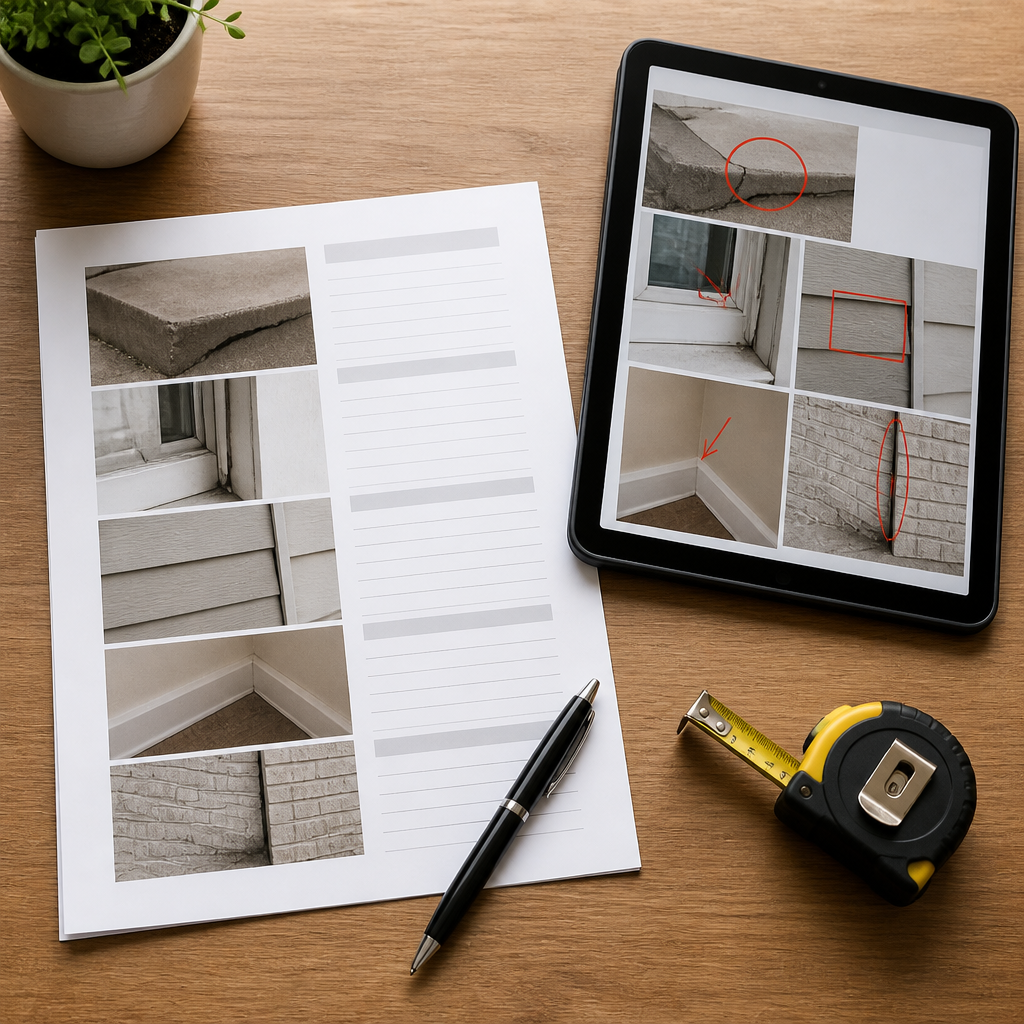
Every defect should carry a photo, a location reference and a clear description. A note reading scratch on kitchen floor leaves the builder guessing. A note reading scratch about 300 mm long on the vinyl at the kitchen island, near the sink, with a photo attached, can be fixed on the first visit. Severity should also be stated plainly, separating safety issues and functional faults from cosmetic defects that still need correcting.
Why trade assignment changes the outcome
When a defect is assigned to a specific trade, rectification moves. Without an assigned trade, the builder’s site manager has to work out who should fix a cracked skirting board or a leaking shower screen, and that work often becomes a debate about whose job it is. Naming the responsible trade, whether it is the plasterer, tiler, plumber or electrician, shortens the path from report to repair.
Pro tip: Ask for the report in a format you can sort by trade. The builder can then send each subcontractor their own list, and you can track closure without rereading the entire document.
Builder’s Inspector, Independent Inspector, or Your Own Walkthrough
Buyers usually weigh three options: rely on the builder’s handover, hire an independent building inspector, or walk through the home with a checklist themselves. Each has a place, but they answer different questions. The table below sets out where each one fits and where each one falls short.
| Approach | Who Engages It | What You Get |
|---|---|---|
| Builder’s handover walkthrough | The builder’s site team | Confirms the house is ready for possession, but the defect list is shaped by the party responsible for fixing it. |
| Independent building inspector | You, as the buyer, investor or developer | A written, photo-referenced report with trades assigned, prepared for your benefit alone. |
| Self-guided walkthrough with a checklist | You, working from a checklist | Useful for spotting obvious faults, but unlikely to catch concealed or technical issues without trade experience. |
In practice, the independent option wins on coverage and accountability, not on price. A self-guided walkthrough costs nothing but time, and it will catch scratches and paint runs. It will not reliably catch a poorly installed hot water system or a waterproofing gap behind a tile. The builder’s walkthrough costs you nothing extra, and it is the least independent of the three.
Our inspections start from $550 including GST, and that figure should be measured against the rectification bill, the cost of a delayed settlement and the expense of living with hidden defects for years. For most buyers, the comparison is not close.
Assigning Responsibility and Getting Defects Fixed Before Settlement
A report only protects you if it leads to repairs. Once the defect list is in the builder’s hands, your job is to set the timeline, confirm who is responsible for each item, and insist on re-inspection of everything marked as fixed. Written confirmation matters far more than verbal assurances made at the walkthrough.

What to ask before you book
Ask whether the inspector is licensed, whether every defect comes with a photo, whether each item names a responsible trade, and when you will receive the report. Ask how re-inspections after rectification are handled and whether they are included. Most importantly, ask who engaged them, because the answer tells you exactly who they are working for.
Re-inspection and closing out the list
Repairs need checking. A patch that looks finished on the day can fail later, and a builder’s email saying all items have been addressed is not the same as a second inspection. Book a re-inspection for the items that matter most, especially wet area sealing, electrical fixes and any structural item.
Pro tip: Keep a simple spreadsheet listing each defect, its trade, its status and the date it was rectified. When the list shrinks in one place and grows in another, you will see it immediately, rather than discovering it after settlement.
Frequently Asked Questions
Is an independent building inspector worth it for a new home?
For most buyers, yes. The cost is small compared with a single major defect, such as a waterproofing failure or an electrical fault that surfaces after you have moved in. An independent inspector also gives you a written record that supports every request you make to the builder.
What is the real difference between a builder’s inspector and an independent inspector?
The builder’s inspector is engaged by the builder and reports within the builder’s process. An independent inspector is engaged by you, works only for you, and produces a report you control. The inspection standard may look similar on paper, but the person who benefits from the outcome is different.
When should I book an independent inspection?
Book it before the handover walkthrough if you can, and no later than a week or two before settlement. Early booking gives the builder time to respond to the report, which is where most of the value comes from.
Can I rely on council or certifier inspections instead?
No. Those inspections check specific items at defined stages, and they are not designed to catch every finishing fault or workmanship problem. They are a useful layer of oversight, but they do not replace a full inspection of the finished home from your point of view.
Who pays to fix defects found by an independent inspector?
That depends on your contract and on whether the defect falls within the builder’s obligations at the time. The independent report does not decide liability by itself, but it documents the issue clearly, which makes it far easier to get the builder to accept responsibility and set a timeline.
Do I still need an inspection if the builder offers a free walkthrough?
Yes, because a free walkthrough is usually run by the party responsible for fixing the defects. Accept the builder’s walkthrough as one step, and book your own independent inspection alongside it so you have a second, separate record.
Tell us what your handover walkthrough turned up, or what you wish you had checked before you signed, because real experiences from Queensland buyers, investors and builders make these checks far more useful for everyone.
We would love your feedback and any insights you would share with others. What perspective would you add?
References
- Comparison of building inspectors and home inspectors, covering code compliance and maintenance focus
- Reasons new homes can be poorly constructed and why independent oversight matters
- Guide to deciding whether to hire an independent building inspector for a new build
- Overview of home inspections for new construction and the value of an unbiased assessment