
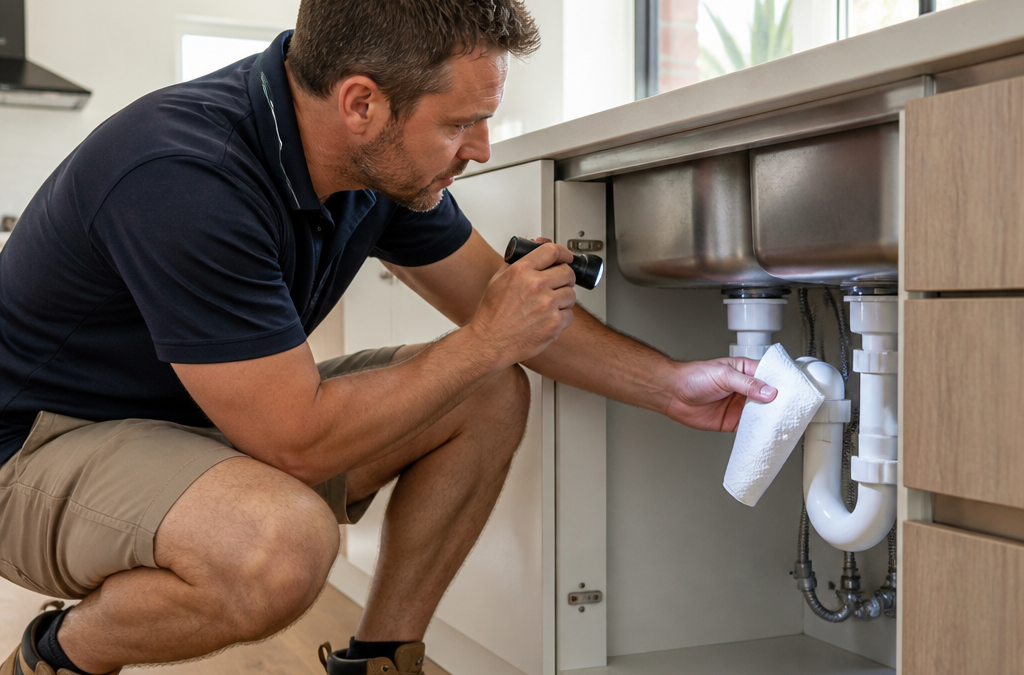
Most buyers walk through a new home checking whether the tiles are straight and the paint is clean. Few think to look under the kitchen sink or inside the laundry cupboard. Yet plumbing defects are among the issues we record most often during pre-handover inspections across Brisbane, the Gold Coast, Logan, Ipswich and Redland Bay. Knowing what to check, and who should fix what you find, is the difference between a clean settlement and months of chasing trades over plumbing defects in a new home in Queensland.
Table of Contents
- Quick Takeaways
- Why Plumbing Defects Stay Hidden Until Handover
- The Plumbing Defects We Find Most Often
- Hot Water Systems and Pressure Relief Valves
- Drainage, Sewer Lines and Floor Waste
- Who Pays to Fix Plumbing Defects
- Comparing Plumbing Inspection Approaches
- Frequently Asked Questions
- References
Quick Takeaways
| Key Insight | Explanation |
|---|---|
| Run every tap for at least a minute | Connections often leak only under sustained flow, so a quick turn on and off misses most of them. |
| Check under every sink with a torch and a paper towel | A dry towel after running water is what a sound connection looks like. A damp edge means the fitting needs redoing. |
| Confirm the hot water pressure relief valve discharge route | A discharge pipe that is blocked, capped or pointed into a wall cavity is a defect to record on the day. |
| Test floor wastes with a bucket of water | Slow clearing at real volume usually points to a gradient or trap fault, which a plunger will not fix. |
| Photograph each defect with its location and responsible trade | A named trade and clear photos speed up rectification and remove most arguments about who should fix what. |
| Book the inspection before the final clean | Debris, cabinetry and fresh sealant can hide leaks that are obvious on a bare bathroom. |
| Ask for the plumbing compliance paperwork | Commissioning records and certificates show the work was signed off, not just finished. |
Why Plumbing Defects Stay Hidden Until Handover
Most of a new home’s plumbing is buried before the walls go up. Pipes run through framing, sit under the slab and disappear behind cabinetry, plasterboard and tiles. By practical completion, the only realistic window to examine that work is the handover inspection, and that window closes quickly once the kitchen is installed and the bathrooms are sealed.
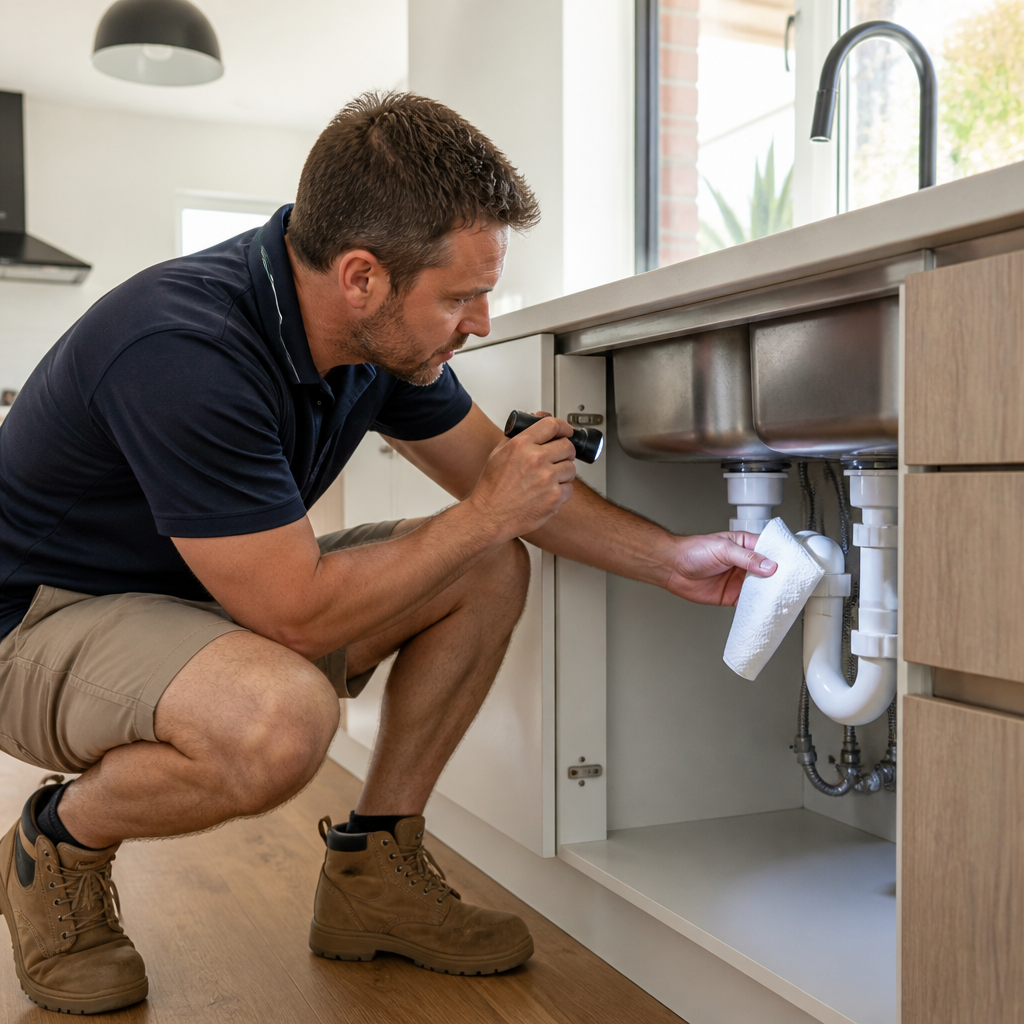
Most plumbing defects in new homes are installation faults rather than design failures. A compression fitting that was not fully tightened, a pipe clipped too hard against a joist, or a waste trap sitting slightly out of square will all pass a quick glance. They usually show up later as slow drips that soak into a cabinet base or subfloor before anyone notices the damp smell.
Queensland conditions make this worse. Humid summers, heavy storm rain and long stretches of hot weather push a new home’s systems harder than many buyers expect. A joint that looks dry on a cool morning can weep after the hot water unit has been running all afternoon. That is why we run taps, flush toilets and check for movement under load rather than only looking at the fixtures.
Buyers often assume the builder’s final walkthrough catches everything. In practice, that walkthrough is designed to confirm the job is finished, and it is often run by the same team that did the work. An independent inspection adds a second set of eyes, with the time to test every fixture and the habit of checking what most people skip, such as the space under the sink and the outdoor tap.
The Plumbing Defects We Find Most Often
Some defects turn up on almost every new build we inspect, while others appear only on certain jobs. The most frequent are small connection faults that are easy to miss and easy to fix. Practitioners in trade and inspection discussion groups describe loose or leaking plumbing joints and P-traps as one of the most common defects in new construction, and our own reports show the same pattern.
Loose and Leaking Joints Under Sinks
Under-sink joints are the first place we check. Supply connections, flexible hoses and compression fittings can all look tight while leaking under pressure. We run each tap for a full minute, then check the cabinet floor with a torch and a paper towel. A dry towel after a minute of running is a good sign. A damp edge means the connection has to come apart and be redone properly.
P-Traps and Waste Connections
A P-trap that is not seated properly is one of the most common findings in new kitchens and bathrooms. Slip nuts can be left finger-tight, washers can be missing or flattened, and traps can sit at an angle that lets water seep out at the join. The fix is quick, but the damage can be slow and hidden. A buyer who finds a water stain on a cabinet back panel six months after settlement will rarely know whether it started with a trap nobody tightened.
Toilet Bases and Cistern Fittings
A toilet that rocks when you sit on it, or shifts when you press on the cistern, is a defect even if it has not leaked yet. Loose pan fixings, incomplete sealant at the base and cistern fittings that were not set correctly all let water get under tiles. We also check for a cistern that keeps running. That usually points to a float or fill valve that has not been adjusted, and it wastes water every hour the house is occupied.
Hot Water Systems and Pressure Relief Valves
The hot water system is the component buyers most often ignore until it fails, and it is also one of the easiest to get wrong at handover. Plumbing checklists written for buyers list the water heater alongside water pressure and shut-off valves as core checks, and we agree. A system can run without fault for weeks and still carry an installation problem that only shows up once the household is using it heavily.
Pressure Relief Valve Discharge Pipe
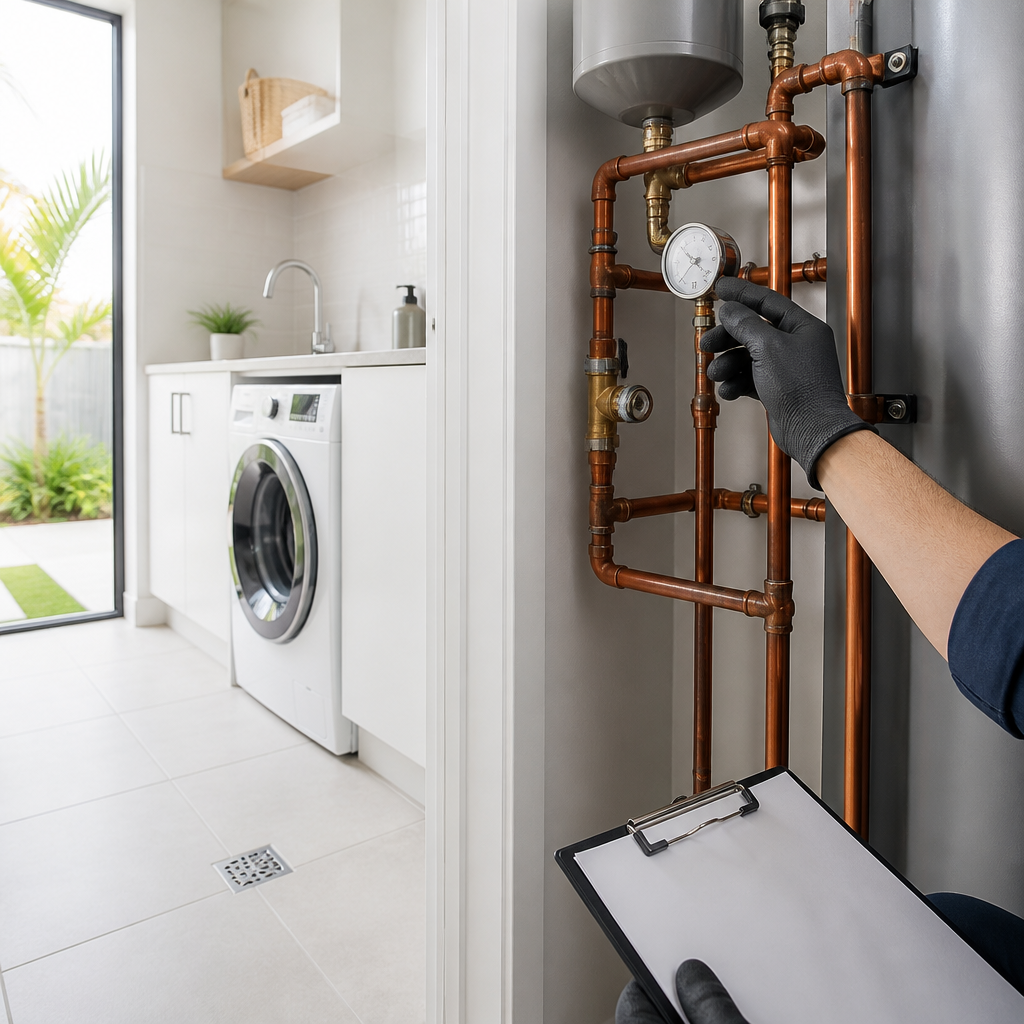
The pressure relief valve is designed to release water when pressure or temperature rises beyond safe limits. Its discharge pipe must run to a safe, visible drain point, not be left blocked, capped or pointed into a wall cavity. We look at the discharge route first, then check the valve for weeping or staining. A discharge pipe that drips continuously is a defect for a licensed plumber to correct, not a cosmetic issue to be painted over.
Tempering Valves and Outlet Temperatures
Many new homes have a tempering valve that mixes hot water with cold to limit the temperature reaching the taps. When that valve is missing, set incorrectly or installed in the wrong place, hot water can reach bathroom outlets at temperatures that are unsafe for children and older residents. Check where the valve sits and make sure the commissioning record is in the handover pack. If nobody can show you the paperwork, ask for it before you accept the keys.
Pro tip: Run the hot tap in the main bathroom for two minutes, then ask the inspector to check the outlet temperature with a thermometer. A tap that runs excessively hot is a defect to log, not a setting for you to adjust yourself.
Drainage, Sewer Lines and Floor Waste
Drainage defects are less visible than supply leaks, and they are usually more expensive to correct once a slab, wall or floor finish is in place. A buyer checklist from a plumbing company lists examining the sewer line and testing drains as standard checks, and that advice is worth following at handover. You are looking for slow drains, gurgling, unpleasant smells and anything that suggests water is not moving the way it should.
Falls and Gradients in Drain Runs
Drain pipes need a consistent fall so waste moves through under gravity. Too little fall and solids settle, while a run that is too steep can leave liquid behind and lose its flow. A drain that looks fine from above can be running flat, and the only reliable way to spot that is to pour a bucket of water into a floor waste or basin and watch how quickly it clears. A bathroom that takes a long time to empty points to a gradient problem that needs a plumber, not a plunger.
Testing Drains Under Real Flow
We run several fixtures at once where possible. A basin, shower and toilet all draining together reveal what a single tap test will hide. Floor wastes in laundries and showers are a common weak spot, particularly where the outlet sits too close to the wall or the trap sits lower than the waste line. Slow drainage under combined load is worth recording with photos, because it is hard for a builder to argue that it is normal use.
Who Pays to Fix Plumbing Defects
The question buyers ask most often after an inspection is who is responsible for fixing what. The honest answer is that it depends on the contract, the defect and when it is found. There is a practical way to stop that question turning into a months-long argument, and it starts with the report. A report that names the defect, the location, the likely trade and the photo evidence gives everyone a shared starting point.
A defect that is clearly described, photographed and assigned to a trade is almost always fixed faster than one written up as a general concern.
Matching Each Defect to a Trade
Plumbing defects can come from the plumber, the site supervisor, the tiler who cut around a waste or the carpenter who moved a bearer. A useful report does more than say “bathroom leak”. It states which fitting is leaking, which trade installed it and whether the fault is a connection, a seal or a pipe position. That level of detail lets a builder assign the rectification without a week of phone calls.
Contract, Warranty and Rectification Timelines
Read your contract before you settle, particularly the clauses on defect rectification and the builder’s obligations after handover. Every contract is different, so ask the builder for a written rectification process and a named contact. If a defect is not fixed or the response is slow, the Queensland Building and Construction Commission (QBCC) is the right place to ask about your options. Do not wait until you are frustrated to start that conversation, because a clear written record from handover is what makes any later claim straightforward.
Pro tip: Put every defect in writing on the day of handover, even if the builder agrees to fix it verbally. A signed defect list with photos is the only record that will still matter if the relationship breaks down.
Comparing Plumbing Inspection Approaches
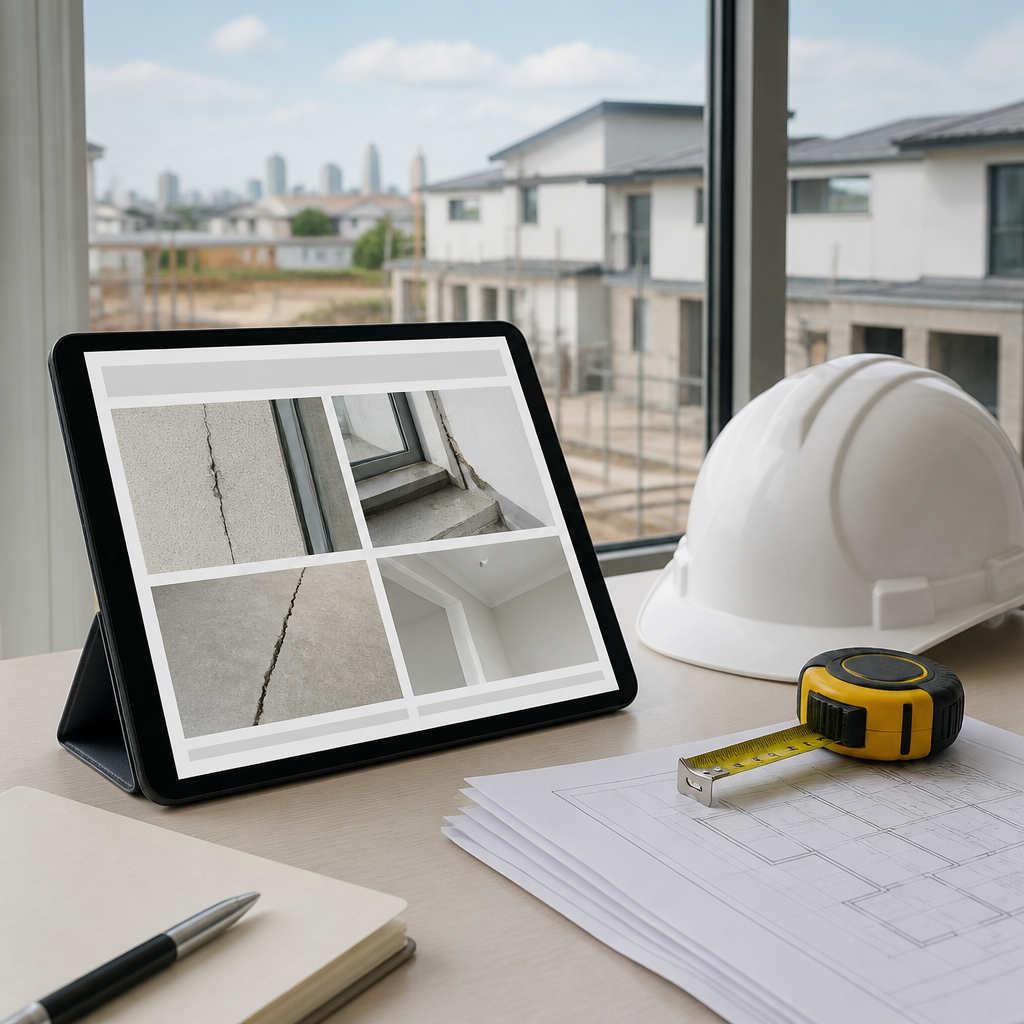
Buyers usually have three options for checking plumbing before settlement: their own walkthrough, the builder’s final inspection, or an independent pre-handover inspection. Each has a place, but they catch different things. We do not think a buyer should rely on any single one of them alone.
Buyer Self-Checks
A self-check is free and worth doing. Run every tap, flush every toilet and look under every sink with a torch. The limitation is that most buyers do not know what a defect looks like, and they rarely test drains or check hot water outlets under load. A self-check is a good first pass, not a substitute for a trained eye.
Builder Final Walkthroughs
The builder’s final walkthrough confirms the job is ready for handover and often covers the obvious items. Its strength is that the builder can fix issues on the spot. Its weakness is that the same organisation is assessing its own work, and buyers can feel pressure to accept a short list rather than a full one.
Independent Pre-Handover Inspections
An independent inspection adds a documented, impartial review carried out with time to test under load. At GoInspect, our pre-handover inspections produce photo-enhanced defect reports that identify the trade responsible for each item, with same-day reporting. Pricing starts from $550 including GST, which is small next to the cost of opening a wall to fix a concealed leak.
| Approach | What It Covers Well | Where It Falls Short |
|---|---|---|
| Buyer self-check | Free and quick, catches obvious leaks at taps, toilets and sinks | Buyers rarely know what defects look like and seldom test drains under load |
| Builder final walkthrough | Fast fixes on the spot for issues the builder already knows about | The builder assesses its own work, and the list can be shorter than it should be |
| Independent pre-handover inspection | Impartial, documented, tests under load and assigns each defect to a trade | Adds a cost before settlement and works best when booked before the final clean |
Frequently Asked Questions
Can I still get plumbing defects fixed after settlement?
Yes, in most cases, but it becomes slower and more adversarial. Once keys change hands, the builder has less incentive to respond quickly, so the defect list you sign at handover is your strongest lever. Put every item in writing and keep copies of the photos.
Do plumbing defects need a licensed plumber to fix?
Work on pipes, fittings, hot water systems and drainage should be carried out by a licensed plumber and signed off. Small items such as a loose cistern lid can be handled by the builder’s own trades, but you should still ask for a record of who did the work.
Is a leak in a new home always a sign of poor workmanship?
Not always, but it is always a sign that something needs attention. A fitting can be disturbed by another trade, or a joint can shift as the building settles. A leak at handover should still be treated as a defect until the builder explains the cause and shows the repair.
Should I attend the handover inspection myself?
Yes, if you can. Walking the house with the inspector lets you see defects in context and ask about the likely cause. If you cannot attend, make sure the report has photos and locations clear enough to act on without you.
How early should I book a plumbing inspection before settlement?
Book it as soon as the builder confirms a handover date, and aim for before the final clean and before cabinetry is fully sealed. That gives the builder time to fix defects before settlement rather than after.
What does a pre-handover inspection cost in Queensland?
GoInspect’s inspections start from $550 including GST. Confirm the scope before booking so you know exactly what the quote covers, including whether plumbing is tested under load and whether the report names the responsible trade.
What plumbing defect did you find in your new Queensland home, and how quickly did the builder respond to it?
References
- Essential plumbing checklist for home buyers covering water pressure, leaks, water heaters and drains
- Home plumbing inspection checklist covering faucets, toilets, drains and visible pipes
- Discussion of common construction defects found in new homes during inspections