
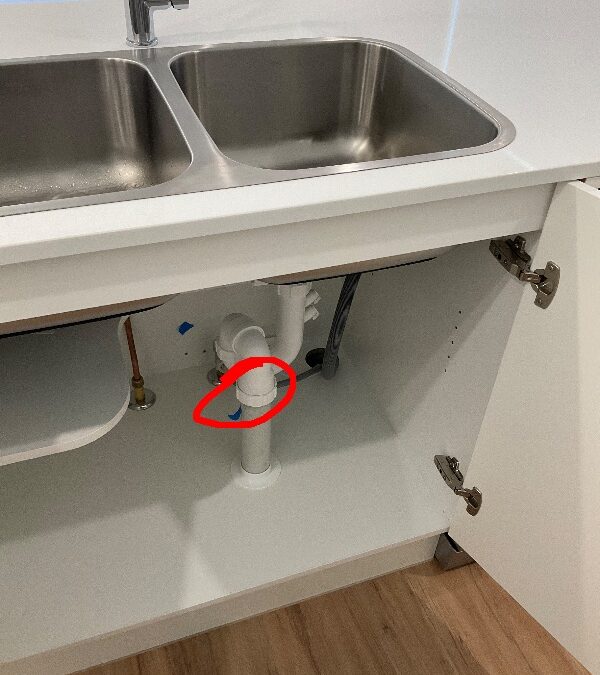
Plumbing defects in new homes can range from a leaking sink waste or cistern tap to a loose toilet, slow drainage and unfinished stormwater work. Check accessible fittings during ordinary use, record the exact location and raise concerns with your builder before they cause further damage.
This new home plumbing checklist covers 12 types of defects and warning signs worth looking for before handover. The photographs show findings from GoInspect inspections, including leaks, loose fittings, damaged pipework and incomplete work.
1. Leaking sink, basin and laundry waste connections
Look inside accessible cabinets for drips, water marks, swollen shelving or dampness around the trap and waste connections. A leak may appear while a sink is emptying rather than while the tap is simply running.
The kitchen sink waste shown at the top of this article was recorded as leaking in a GoInspect handover report. The useful information for the builder is the affected connection and when it leaks. Photograph the whole cabinet as well as the wet area; avoid tightening or dismantling fittings to diagnose the cause yourself.
2. Leaking taps, cistern valves and water connections
Check for water around tap bases, toilet cistern taps, flexible connections and other visible supply fittings. A small drip deserves attention, particularly beside a wall penetration or inside cabinetry.
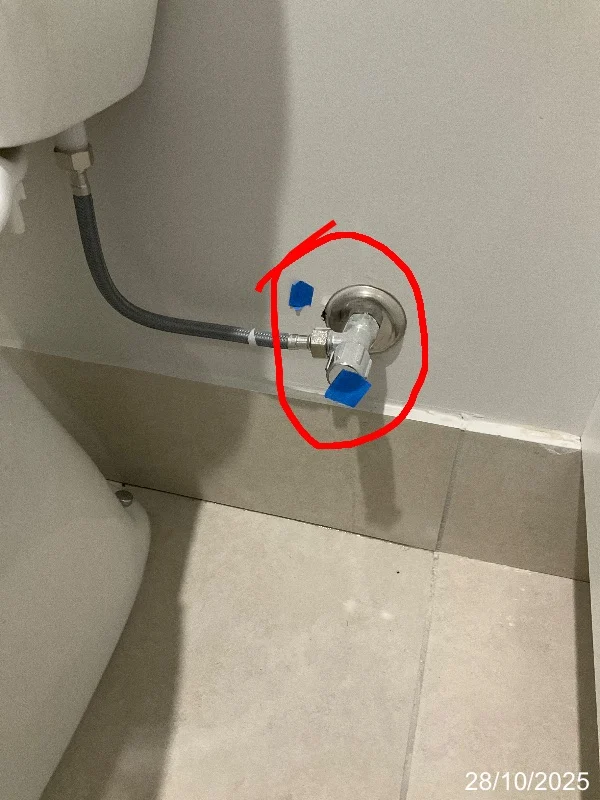
One inspection recorded water leaking from a toilet cistern tap and called for the surrounding area to be checked. Report an active leak promptly, with a close-up and an overview showing the fitting’s location.
3. Loose mixers, spouts and tap flanges
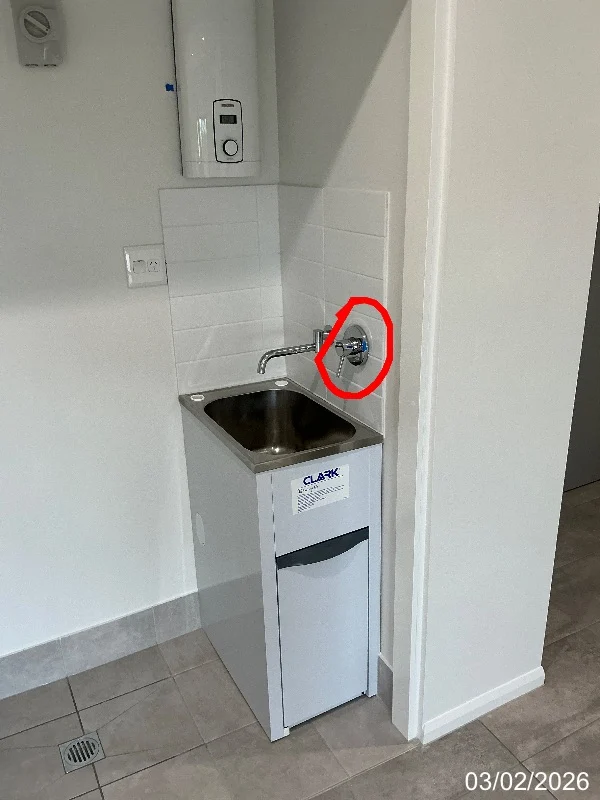
A mixer, spout or cover flange that moves during ordinary use should be recorded for assessment. Be specific about which part is loose: a moving decorative flange is different from movement of the tap body or pipework.
The laundry fitting below was reported with a loose mixer flange. Note the room and fitting rather than writing a broad description such as “all plumbing needs checking”. Do not force a fitting to demonstrate movement.
4. Loose toilet pans, seats and lids
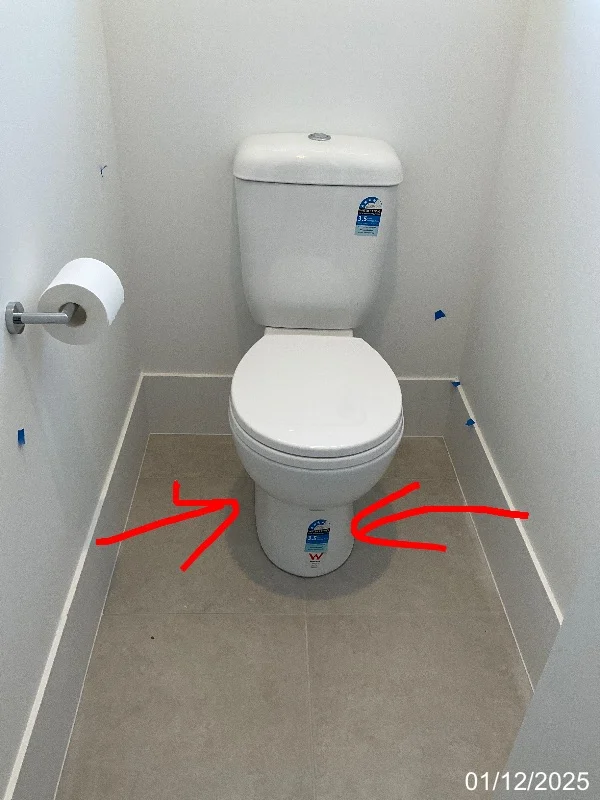
A toilet pan that moves during normal use needs attention. Loose seats, misaligned seat brackets and damaged or poorly operating lids should also be listed separately so the builder can arrange the correct repair.
GoInspect reports have recorded both an inadequately secured toilet pan and a seat that was not mounted correctly on its brackets. These are different defects, even though they affect the same fixture. Ask for the installation to be checked against the product’s requirements.
5. Toilets that keep running or do not flush properly
During normal operation, note a cistern that continues running, water entering the bowl after filling should have stopped, or a flush that does not operate as expected. Describe what happens and whether it is consistent or intermittent.
Keep this separate from an external leak at the cistern tap or pan. A clear description helps the plumber investigate the correct component; it does not require the owner to remove the cistern cover or adjust its mechanism.
6. Slow drainage, blockages and gurgling
Record a sink, basin or shower that drains slowly, backs up or repeatedly gurgles during ordinary use. Identify the fixture and whether another fitting was in use at the time. Persistent unusual odours are also worth reporting.
Slow drainage is a symptom, not proof of the gradient or condition of a buried pipe. Depending on the concern, a plumber may need to investigate further or arrange a separately scoped drain-camera inspection. Do not pour buckets across bathroom or laundry floors to test drainage.
7. Shower ponding and water escaping the enclosure
Note where water remains after ordinary shower use and where it escapes the enclosure. Water passing beneath a screen, a drainage concern and a tile-fall concern may need different trades to investigate.
Photograph the affected area and describe when it occurs. Neat tiles, intact grout or a quick surface check cannot establish the condition of the waterproofing beneath them. Our wet-area defects guide explains that distinction.
8. Hot-water leaks and unusual operation
Look for visible leakage, damage or incomplete connections around a safely accessible hot-water system. Record concerns about hot-water delivery and give the contractor the actual model details.
Some relief-valve discharge during heating can be normal, as explained in Rheem’s troubleshooting guidance. The applicable owner’s instructions matter. Do not cap discharge pipes, adjust safety valves or assume a routine handover inspection includes specialist temperature, pressure or commissioning tests.
9. Missing grates and unfinished drainage fittings
Check accessible finished work for missing grates, covers or other incomplete components. Record the exact location and ask the builder to complete the installation to the relevant requirements.
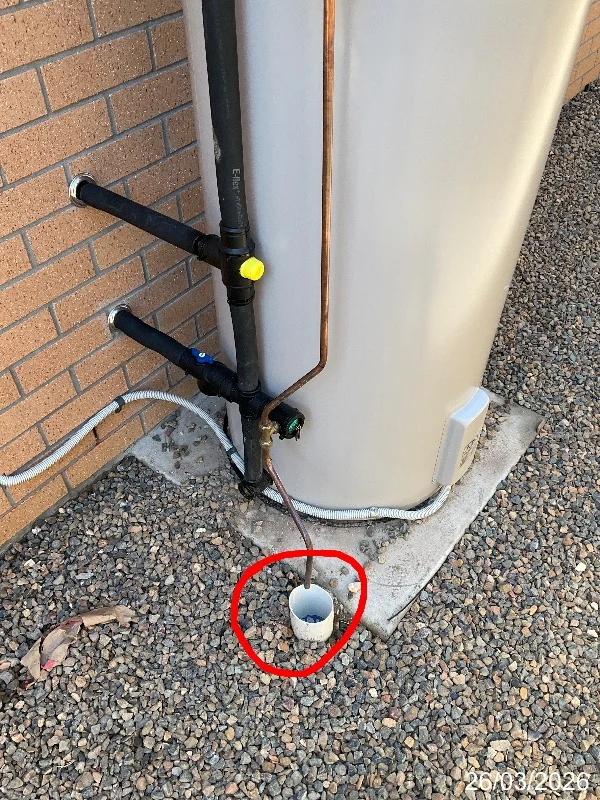
In the example below, a GoInspect report called for a grate to be fitted to the hot-water system’s overflow drain. The missing component is a separate item from the operation of the hot-water unit itself.
10. Damaged downpipes and blocked stormwater outlets
From a safe position, look for damaged accessible downpipes, incomplete joints and debris blocking visible outlets. Do not climb onto the roof or assume that an open outlet proves the underground stormwater system is clear.
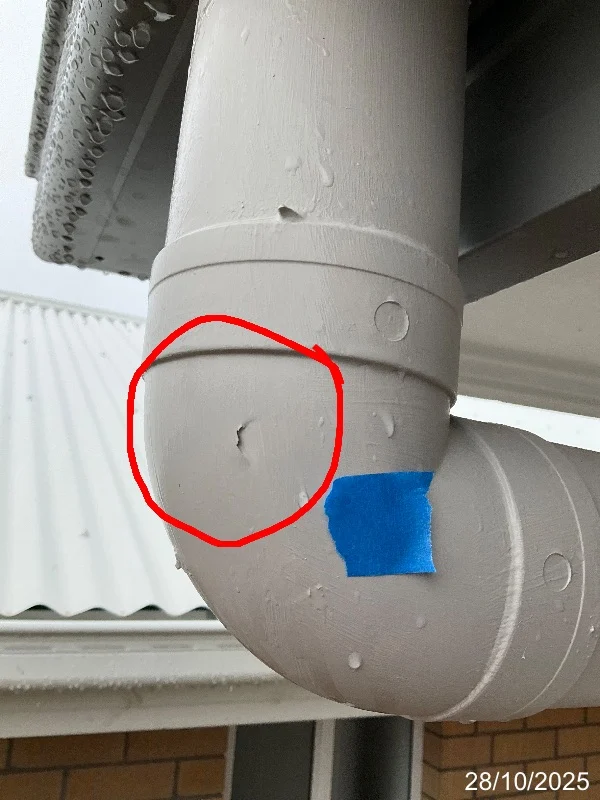
GoInspect findings have included debris in a stormwater kerb adaptor and damage to a downpipe bend near the fascia. The close-up below shows the damaged section, giving the builder a precise repair location.
11. Pipework in the wrong position or conflicting with framing
Some plumbing concerns are best checked before walls or floors conceal the work. These include a waste position that needs checking against the plans or a pipe conflicting with the wall frame.
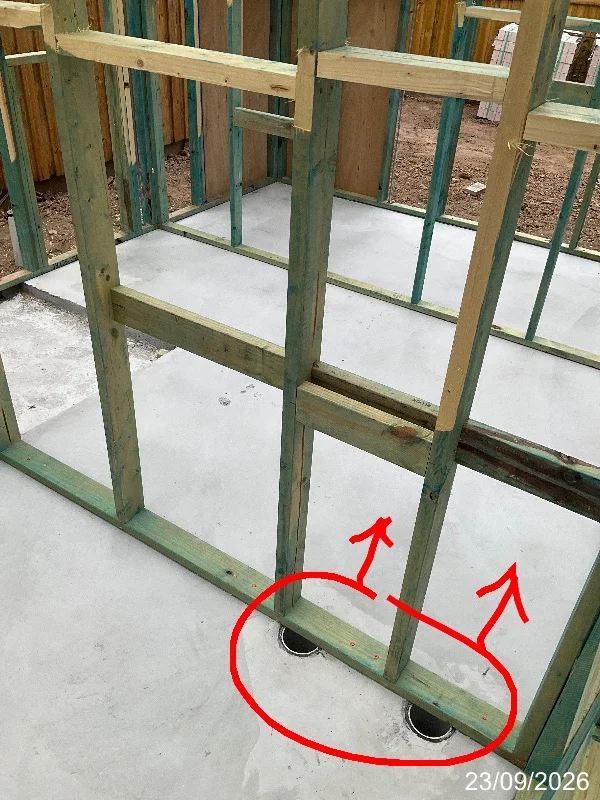
A GoInspect frame-stage report identified the waste-pipe conflict shown below. The solution needed coordination between the relevant trades without compromising the structure or termite barrier. It is a reason to plan construction-stage inspections early, rather than expecting a finished-home inspection to see inside walls.
12. Missing fixtures or water unavailable for assessment
List missing fixtures and incomplete installations against the agreed scope and specifications. If water is turned off or unavailable, record which checks could not be completed and arrange the necessary follow-up once the home is ready.
An unavailable water supply is a limitation to resolve, not evidence that every fitting is sound or defective. Likewise, noting that an appliance is not installed does not mean a routine building inspection includes testing that appliance.
Turn the checklist into a useful defect list
For each concern, record the room, exact fitting, observed problem and when it occurs. Add an overview photo and a close-up, then keep the builder’s response and repair record with the inspection report. Trade allocation helps route the work; the builder remains the main contact for coordinating subcontractors.
A GoInspect handover inspection in Brisbane or the Gold Coast documents visible, safely accessible work within the agreed scope. Book when the home is substantially finished and clean enough to assess. Concealed pipework, appliance testing and specialist plumbing tests require separately confirmed services.
Notify the builder promptly if a concern appears after moving in rather than waiting for a 12-month maintenance inspection. For a current property-specific price, use our quote and booking form.
Further guidance: QBCC’s plumbing guidance for home owners and regulated plumbing work requirements. Regulated plumbing and drainage work needs an appropriately licensed contractor.