

For Brisbane homeowners, a knockdown rebuild inspection is one of the most useful things you can book before the keys change hands. A knockdown rebuild can take a year or more from design to handover, and the finished house either holds up or starts showing faults in those final weeks. Once walls are lined and tiles are grouted, many defects are hidden, so the cheapest time to find them is before you sign off. This guide covers when to inspect, what to look for on a new build, and how to make sure every defect lands with the trade responsible for fixing it.
Table of Contents
- Quick Takeaways
- Why Knockdown Rebuilds Carry Their Own Defect Risks
- How the Queensland Approval Pathway Shapes Inspection Timing
- Pre-Handover Inspection Timing for Brisbane Knockdown Rebuilds
- Common New Build Defects in Knockdown Rebuilds
- Assigning Each Defect to the Right Trade
- Pre-Handover, Pre-Settlement and Practical Completion Inspections Compared
- What a Useful Defect Report Must Include
A defect report is the document you will use to hold the builder to account, so its structure matters as much as its content. A useful report is specific, located, photographed and assigned. If any of those four is missing, expect delays when the builder starts work.Photos tied to location and trade
Each defect needs a wide shot for context and a close shot for the fault. Label each photo with the room and the trade responsible. Blurry images or photos that show nothing identifiable waste time on both sides and give the builder an excuse to push the item back.Same-day reporting and rectification deadlines
A report should reach you on the day of inspection, while the details are fresh and the builder is still engaged. At GoInspect, our reports are photo-enhanced, assign each defect to a specific trade, and are issued the same day, because a delay of even a few days gives builders room to move on. Ask that the rectification schedule includes a deadline for each item, and that a re-inspection is booked before settlement.Pro tip: Before you pay the final instalment, confirm in writing that the builder has accepted the defect list, with a completion date for each item. Verbal assurances disappear once the keys are handed over.
Frequently Asked Questions
- References
Quick Takeaways
| Key Insight | Explanation |
|---|---|
| Book the pre-handover inspection before the final clean | Once the site is tidied, defects are harder to see and builders push for a quick walk-through. Book your inspector once practical completion is close, so every defect is recorded while the builder still has time to fix it. |
| Plan around your approval pathway | A block that needs a Development Application can add 3 to 6 months, and that stage decides when your handover actually happens. |
| Ask for photos from the early stages | Framing, wiring and plumbing are hidden by walls before handover. Request the builder’s photos from slab, frame and pre-plaster, or arrange an earlier inspection. |
| Check wet areas and drainage first | Tile falls, waterproofing and stormwater falls cause the damage that turns into water in the wrong place. Test showers with water and check whether water drains away from the slab after rain. |
| Name the trade for every defect | A defect list that says “bathroom finish poor” lets the builder pass the problem around. Each entry should point to the trade most likely responsible. |
| Get the rectification schedule in writing before settlement | Verbal promises fade after the keys are handed over. Confirm dates for each item and book a re-inspection before you settle. |
Why Knockdown Rebuilds Carry Their Own Defect Risks
A knockdown rebuild looks simpler than building on vacant land, because the block is already surveyed and the services are already connected. In practice, the old house leaves behind problems that only show up once the new slab is down. Old services are capped, fill is placed, and the soil moves. Those are the places where the first cracks and drainage faults usually start.

Why the old house still affects the new build
Demolition leaves disturbed ground, old pipe stubs and sometimes loose fill where the previous house stood. The question to ask your builder is whether the old stormwater line was removed or only capped, and whether the fill under the slab was compacted and tested. A builder who did the work properly will have records for both. A builder who did not will tend to change the subject.
Defects hidden behind finished surfaces
Once plasterboard, tiles and cabinetry go in, the inspection shifts from looking at finished work to checking what it sits on. Wall framing, wiring positions and waterproofing membranes are all covered before handover. A pre-handover inspection checks the outcome, but it cannot replace the stages that came before it.
On a knockdown rebuild, the defects that cost the most are usually the ones you cannot see after handover, so the inspection has to test what sits behind the finishes.
How the Queensland Approval Pathway Shapes Inspection Timing
Your approval pathway sets the rhythm of the whole project, and it determines when your inspection window opens. One practical guide puts a typical knockdown rebuild at 12 to 18 months from the start of design to handover, with 3 to 6 months added where a Development Application is required. Those months sit outside your control, so the inspection date should follow the approved program, not the original contract date.
Code assessable blocks and Development Applications
Some blocks move through a straightforward building approval, while others need a Development Application before any work can start. The difference is decided by zoning and overlays, not by how you draw the house. Confirm which pathway applies before you lock in a builder, because a delayed approval pushes every later stage, including the handover inspection, into a different season.
Why the Queensland inspection guideline matters to you
The Queensland Government publishes a guideline on inspections of assessable building work for class 1 and class 10 buildings. It sets out the legislative provisions that apply to those inspections. Read it before you sign a building contract, so you know which inspections are required by law and where a private inspection fills a gap.
What a private inspection cannot do
A private pre-handover inspection is not an approval. It cannot certify compliance on behalf of council or a certifier. What it can do is document the finished condition against your contract and the relevant standards, so the defect list is in writing before you take possession. That written record is often more useful than any single statutory sign-off when a dispute begins.
Pre-Handover Inspection Timing for Brisbane Knockdown Rebuilds
Timing matters more than most owners expect. One guide puts the final inspection stage at 2 to 4 weeks, while construction durations differ between sources, from 6 to 9 months in one case to 8 to 12 months in another. Build your inspection date from the builder’s current program, and check it again each time the program changes.
Booking the pre-handover inspection window
Book once the builder confirms completion is close and the house is clean enough to see defects properly. Booking too early means paying for a second visit. Booking too late means the crew has already left site, and the rectification window starts to slip before you have written the list.
Getting the early stage checks on record
Ask the builder for photos at slab, frame and pre-plaster stages, or arrange an inspection while walls are still open if your budget allows. Inspecting only at handover means you see the tiles, paint and cabinetry, but not the frame or wiring hidden behind them. Early records are the cheapest insurance on a knockdown rebuild.
Common New Build Defects in Knockdown Rebuilds
Most defects on knockdown rebuilds fall into four groups. Many are minor on their own, but together they tell you how carefully the job was run. Walk each group in the same order every time, so nothing gets skipped when you are standing in a room full of unpacked boxes.
Slab, footings and internal levels
Check floors with a long level and look for cracks wider than hairline in the slab and at door thresholds. Doors that stick or bind often point to slab movement or frame set-out problems. If cracks appear in the first months after handover, ask the builder for the footing and slab sign-off documents rather than accepting a paint-over.
Wet areas and waterproofing
Showers and laundries are where leaks usually start. Look for tile falls that hold water, gaps in silicone at corners, and shower screens that are not plumb. Run water in the shower for several minutes, then check the floor waste and the wall junctions for moisture.
Drainage, falls and external finishes
Water should move away from the house, not toward it. Check the falls around the slab edge, the stormwater connection and the downpipe outlets. After heavy rain, look for pooling beside the slab and any discharge that runs back toward the footings. Also check flashings and sealant around windows, because those details are rarely visible once the external finishes are on.
Assigning Each Defect to the Right Trade
A defect list is only useful if it tells the builder who must fix each item. Vague entries let the builder assign the problem to nobody, and the item drifts to the bottom of the queue. The fastest way to get work done is to name the likely trade in every line.
Mapping each defect to the responsible trade
Tile falls usually go to the tiler, but a leaking waste or a loose shower mixer goes to the plumber. Window seals may sit with the glazier, while flashings may fall to the roofer or carpenter. Naming the trade lets the builder send the right person straight away, without a round of phone calls to work out who is responsible.
Using photos to settle disputes
A photo with a room reference, a measurement and a short description carries more weight than a page of notes. Record the date and the trade in each entry. When a builder disputes an item, the photo shows the condition at handover, not what someone remembers weeks later.
Pro tip: Ask for the defect list in a spreadsheet with columns for room, trade, photo reference and rectification date. Builders can work through a spreadsheet far faster than they can work through a PDF, and you can track each item to closure.
Pre-Handover, Pre-Settlement and Practical Completion Inspections Compared
The three inspections people often mix up are not interchangeable. Each serves a different party and sits at a different point in the project. Knowing which one you are relying on stops you assuming that a builder’s walk-through has covered your interests.
Comparing the three inspection stages
| Inspection | Typical Timing | Main Purpose |
|---|---|---|
| Practical completion inspection | Near the end of construction, usually run by the builder or their representative | Confirms the build is ready for handover under the contract |
| Pre-handover inspection | After the builder confirms completion, before your final walk-through | Documents defects so they can be rectified before you take possession |
| Pre-settlement inspection | Shortly before settlement, often used by investors | Checks that rectification is complete and the property is in the agreed condition |
Which inspection to prioritise
For owner-occupiers, the pre-handover inspection carries the most weight, because it is the last point where you can ask for work to be done before moving in. Investors should add a pre-settlement check, since tenants will live with any defects the moment they move in. The gap that costs most owners money sits between practical completion and their own check. For you, the builder’s completion is the start of the defect list, not the end of the job.
What a Useful Defect Report Must Include
A defect report is the document you will use to hold the builder to account, so its structure matters as much as its content. A useful report is specific, located, photographed and assigned. If any of those four is missing, expect delays when the builder starts work.
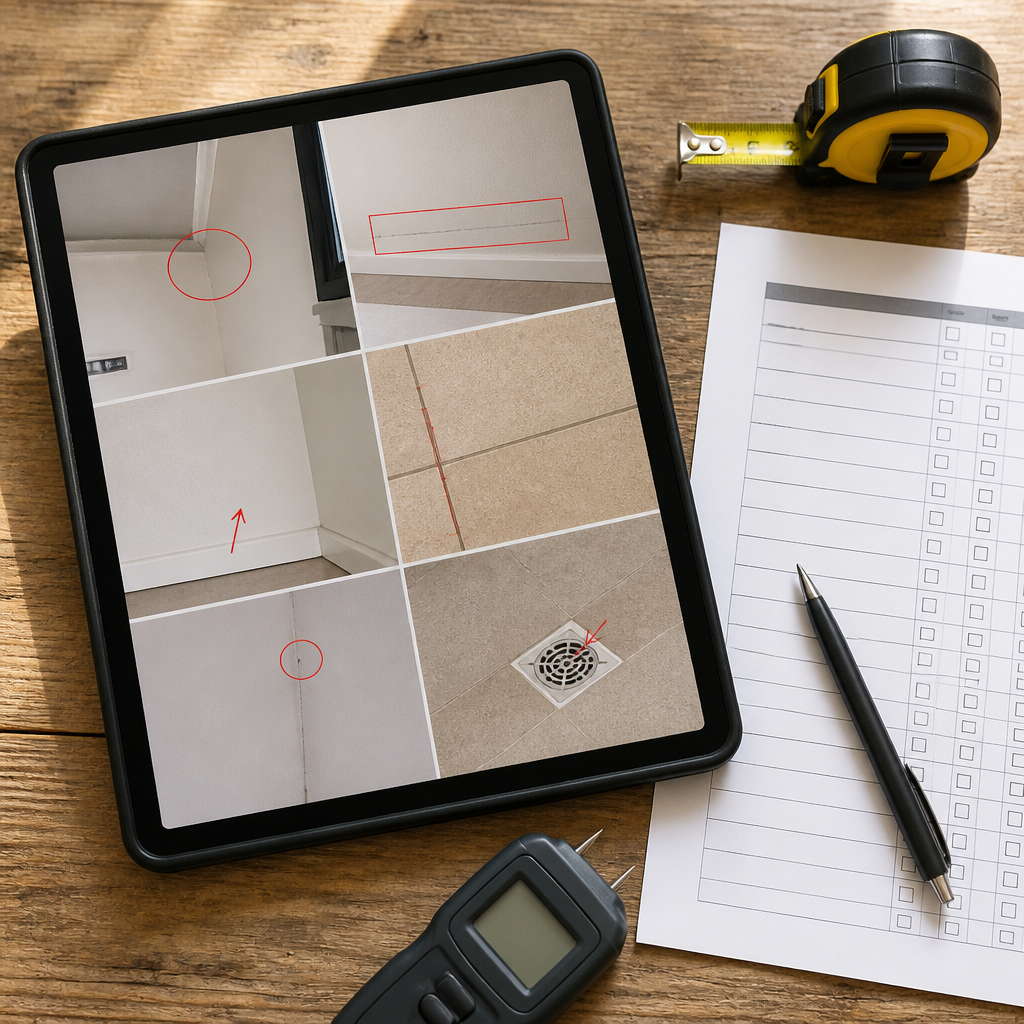
Photos tied to location and trade
Each defect needs a wide shot for context and a close shot for the fault. Label each photo with the room and the trade responsible. Blurry images or photos that show nothing identifiable waste time on both sides and give the builder an excuse to push the item back.
Same-day reporting and rectification deadlines
A report should reach you on the day of inspection, while the details are fresh and the builder is still engaged. At GoInspect, our reports are photo-enhanced, assign each defect to a specific trade, and are issued the same day, because a delay of even a few days gives builders room to move on. Ask that the rectification schedule includes a deadline for each item, and that a re-inspection is booked before settlement.
Pro tip: Before you pay the final instalment, confirm in writing that the builder has accepted the defect list, with a completion date for each item. Verbal assurances disappear once the keys are handed over.
Frequently Asked Questions
How long before handover should I book a knockdown rebuild inspection in Brisbane?
Book once the builder confirms that practical completion is close and the house is clean enough for defects to be seen properly. Booking too early means paying for a second visit, while booking too late squeezes the rectification window.
Does a private pre-handover inspection replace council or certifier inspections?
No. A private inspection documents the finished condition against your contract and relevant standards, but it does not replace the statutory inspections that apply to assessable building work. Check the Queensland guideline on inspections for class 1 and class 10 buildings to see which inspections are required.
Why do knockdown rebuilds have different defects from new builds on vacant land?
The old house leaves behind capped services, disturbed ground and fill that may not have been compacted or tested. Those factors can show up as slab movement, drainage problems or door and window issues that would not appear on a fresh block.
What should I do if the builder disputes a defect?
Refer to the dated photo, the room reference and the trade assigned to the item. A clear photo recorded at handover is much harder to dispute than a verbal complaint made weeks later, so keep the originals and the report together.
How much does a pre-handover inspection cost?
GoInspect’s knockdown rebuild inspections start from $550 including GST. The final price depends on the size of the home and the scope of the inspection, so ask for a quote that lists exactly what is included before you book.
Have you been through a knockdown rebuild handover in Brisbane, Gold Coast, Logan, Ipswich or Redland Bay, and which defect surprised you most?