
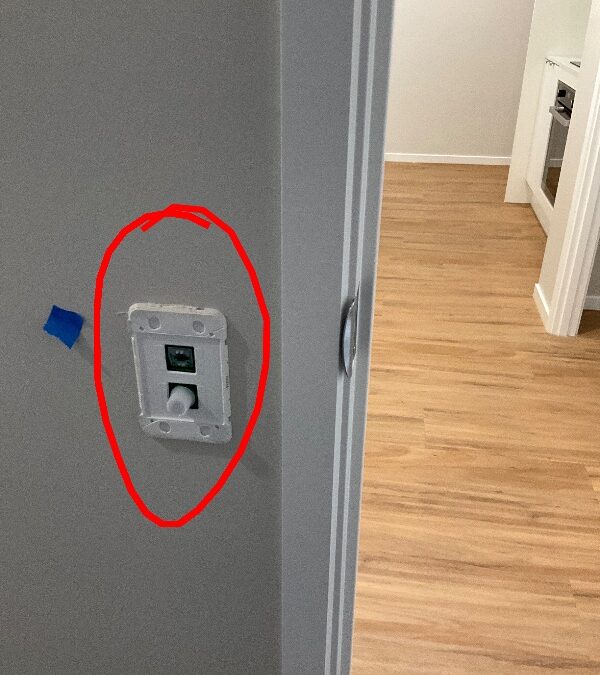
Electrical defects in new homes can include missing switch covers, damaged fittings, unfinished installation and items that do not match the electrical plan. Before handover, record the room, fitting and visible problem, then ask your builder to arrange the appropriate trade. Concerns about wiring, circuit protection or electrical safety need an appropriately licensed electrician.
This checklist covers ten types of electrical and related fit-off concerns worth flagging. The examples come from GoInspect handover reports. They show why an accurate description helps: a missing cover, an unfinished wall opening and a fan that rattles are different jobs.
Your new-home electrical defect checklist
1. Missing switch covers or damaged faceplates
Look for missing covers, cracked plates, damaged switches and unfinished fittings. The missing switch cover shown at the top of this article was recorded in a GoInspect report as an item for the electrician to complete.
Describe the actual part and location. “Bedroom light-switch cover missing” gives the builder a specific task. Do not remove another cover for comparison or try to repair the fitting yourself. Queensland’s Electrical Safety Office guidance explains why electrical work needs a licensed professional.
2. Unfinished openings and poorly fitted power points
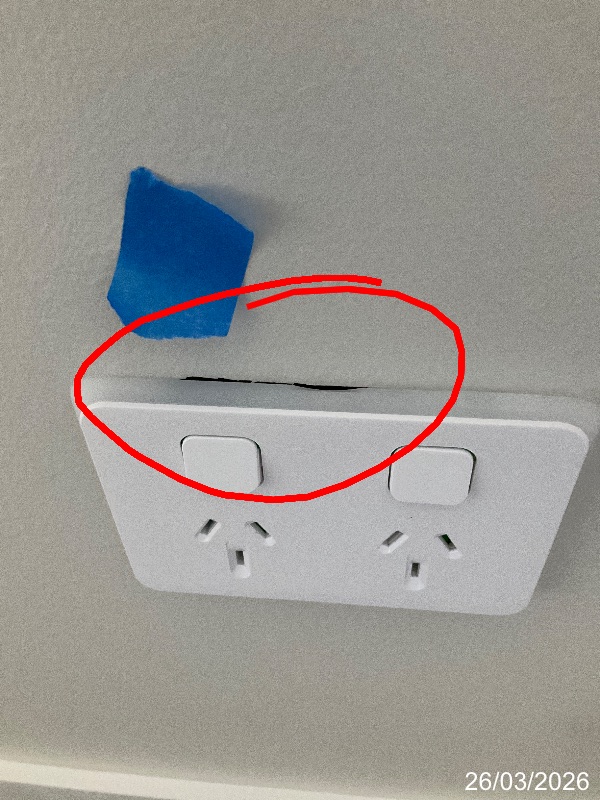
Record visible gaps around a power point, a plate sitting away from the wall or movement noticed during ordinary use. Do not pull the fitting to demonstrate a concern or assume that an uneven plate proves a loose electrical termination behind it.
The example below was reported as a hole above the power point requiring completion. The opening is the established finding; the condition of the concealed wiring is a separate question.
3. Missing, damaged or poorly finished light fittings
Compare the installed fittings with your agreed selections. Note missing lights, cracked diffusers, visible damage, unfinished surrounds or an obviously uneven fitting. Keep damage to the fitting separate from paint or plaster work around it so the builder can coordinate both repairs.
If a light flickers or fails during a normal demonstration, record which light and switch were involved. A light turning on is not evidence that its circuit, connections and protective devices have passed electrical safety testing.
4. Lighting and power-point positions that need a plan check
Take the current electrical plan and approved variations to your walkthrough. Check the number and position of fittings, including lights over benches and outlets intended for particular locations. Ask the builder to explain a difference before deciding whether it is an installation error or an agreed change.
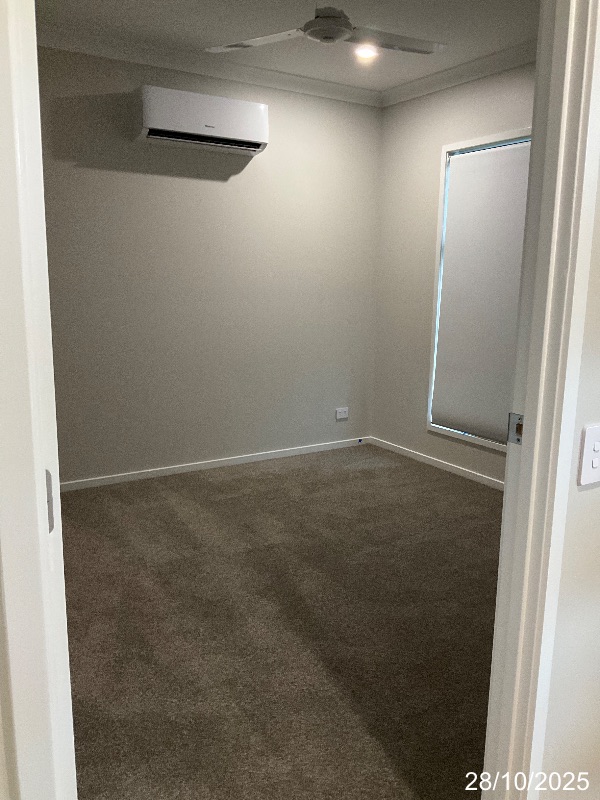
One GoInspect report flagged poor bedroom lighting associated with a single downlight near a corner and asked for the electrical plan to be checked. It did not declare a measured lighting-level failure. That distinction keeps a specification question clear and useful.
5. Ceiling fans that wobble, rub or operate unexpectedly
During a builder demonstration or normal use, note excessive movement, rubbing, unusual noise or a control that does not behave as expected. Identify the room, speed setting and control used. A short video can help explain an intermittent operation concern.
A GoInspect apartment report called for a bedroom fan to be adjusted to remove wobble on high speed. Report the behaviour and let the contractor assess the installation and actual product instructions. Do not reach towards moving blades or adjust the mounting yourself.
6. Rattling exhaust fans and visible incomplete ventilation work
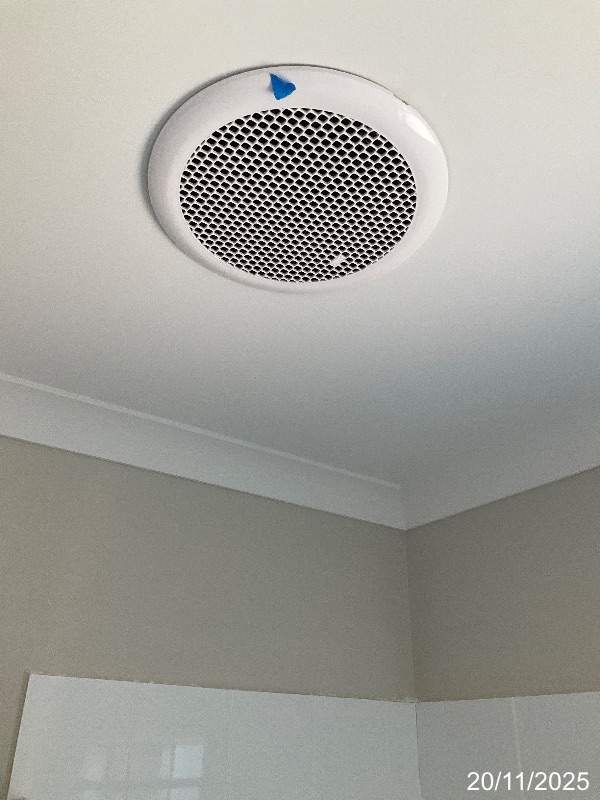
Record a rattling grille, visible debris, a missing component or a fan that fails to operate during a normal demonstration. Describe what happens without assuming the cause is wiring or an unseen duct connection.
In the example below, the inspector recorded debris in the bathroom exhaust fan causing it to rattle and allocated the item to the electrician. The request was to remove the debris. Checking a room-side grille does not establish the condition of concealed ductwork.
7. Missing appliances and unfinished fit-off
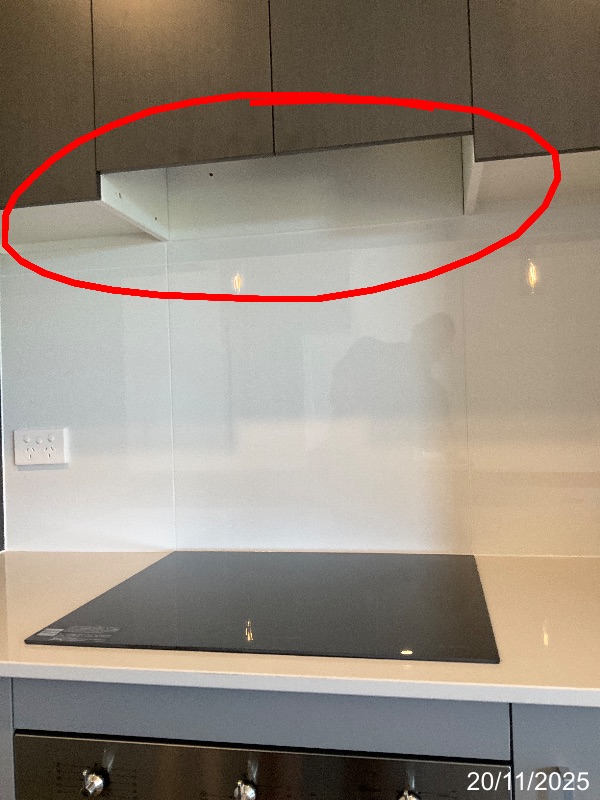
Check whether the agreed rangehood and other specified equipment have been installed, with the intended trims and controls supplied. List missing installation work separately from a request for appliance commissioning or performance testing.
A GoInspect report called for the rangehood shown below to be installed. That is a clear completion item. Once fitted, it still needs the appropriate installer checks; its presence alone is not an appliance test result.
8. Damaged or incomplete external fittings
From safe ground-level positions, note damaged accessible lights, cracked covers, missing components or unfinished work around external electrical equipment. Identify the fitting and photograph its location without opening an enclosure or handling wiring.
The suitability of outdoor equipment, its protection and its installation needs assessment against the actual product and electrical requirements. Appearance alone cannot confirm the rating or safety of a fitting. Solar, battery, pool and vehicle-charging systems may require their own specialist assessment.
9. Smoke-alarm installation or operation concerns
Ask the builder to demonstrate the alarm system and supply its instructions. Note an apparently missing alarm, damage or an alarm that does not respond during the demonstration. Checking that one device sounds does not establish that every alarm is correctly interconnected.
The Queensland Fire Department explains the applicable alarm type, location and interconnection requirements, including hardwired, interconnected alarms in new dwellings. Use that guidance and the relevant installer to resolve a concern; do not identify the power supply from the alarm’s appearance.
10. Unclear switchboard labels or safety-switch concerns
Ask the builder or electrician to explain the switchboard and identify the circuits. Report missing or unclear labels and anything you have noticed during ordinary use. Leave switchboard covers, terminations and internal wiring to the electrician.
A safety switch’s test button has a genuine role: the Electrical Safety Office provides push-button testing guidance. That user check does not replace installation testing or establish every aspect of circuit safety. Follow the official instructions and seek an electrician’s advice if a switch fails or you are unsure.
Which electrical documents should you ask for?
Ask your builder for the relevant electrical handover documentation. WorkSafe Queensland explains that electrical installation work requires a certificate of testing and compliance. Where the builder engaged the electrical contractor, the certificate is supplied to the builder. Keep the applicable documents with your manuals, plans and inspection report.
A GoInspect defect report records findings within the agreed inspection scope. It does not replace the electrical contractor’s testing or certificate, and it does not decide whether a final payment may be withheld. Obtain appropriate advice about any disputed completion or payment issue.
Give the builder a clear electrical defect list
For each item, include the room, fitting, observed problem, photograph and any relevant plan reference. Keep the builder’s response and repair record against the same item number. Trade allocation helps organise attendance; it does not prove who caused a defect.
Book a GoInspect handover inspection when the home is substantially finished, clean and safely accessible. Tell us about specific concerns so the scope and any need for specialist assessment can be discussed. Use the current inspection quote form for your property and service.