

Buyers agents who acquire off-the-plan or recently completed homes in South East Queensland often inherit the same problem. The client is interstate or overseas, the settlement date is fixed, and the builder’s handover walk is often the only check anyone performs on the property. If you are searching for building inspection buyers agents Brisbane, you usually need one thing: an independent set of eyes on the build before the keys change hands. This article explains how GoInspect structures pre-handover, pre-settlement and practical completion inspections for investment purchases across SEQ, and how that work fits alongside the due diligence your agency already runs.
Table of Contents
- Quick Takeaways
- Why Buyers Agents Need an Independent Inspector on New Builds
- What a Pre-Handover Inspection Covers
- Timing Across Handover, Practical Completion and Settlement
- How Photo-Enhanced Reports Assign Responsibility to Trades
- Investment Checks Beyond the Defect List
- Comparing Inspection Approaches for Investment Purchases
- Who Owns the Inspection Report
- Pricing and Scope for Multi-Lot and High-Rise Purchases
- Frequently Asked Questions
- References
Quick Takeaways
| Key Insight | Explanation |
|---|---|
| Book the inspection when the handover date is confirmed | Do not wait until the keys are offered. An inspection booked early gives you a defect list to put to the builder while the rectification conversation is still open. |
| Check wet areas and roof drainage first | In practice, these are the areas where defects become expensive once the client owns the property, so they deserve the most time on site. |
| Treat flood maps and overlays as a purchase condition | Check council flood maps and overlays for the specific lot before you sign, and ask the builder for any fill or engineering documentation. |
| Require a photo and a trade for every defect | A defect without a photo and a responsible trade is hard to rectify. The builder’s site team needs both to act without a phone call. |
| Visit during peak traffic hours | The REIQ buyer’s agent guidance suggests testing noise between 7.30am and 9am, and again between 3pm and 5.30pm, when the street is at its busiest. |
| Send the report to the client, not only to the agent | The client signs the contract and pays for the defects. They should read the full report, not a summary written by someone else. |
| Confirm scope by property type before booking | A detached house, a townhouse and a high-rise unit each need a different checklist. Confirm the scope and the quote up front. |
Why Buyers Agents Need an Independent Inspector on New Builds
A buyers agent’s due diligence, as outlined in the REIQ buyer’s agent chapter, covers a title search, flood and noise checks, neighbourhood review, zoning, contract review and a valuation. Those searches tell you whether the land and location are worth buying. None of them confirm that the dwelling was built to plan, to specification and to the standard the contract promises.

The conflict is structural. The builder’s handover walk is run by the party that wants to hand over the keys and close the file. A buyers agent arranging the inspection often works for a client who cannot attend, so the report has to stand on its own and read as the work of someone with no stake in the sale.
That independence matters most on investment purchases. An investor is buying rental income and resale value, so a cracked slab or a failed waterproofing membrane is not a cosmetic issue. It becomes a tenant complaint, a repair bill and a valuation discount, usually within the first year of ownership.
The defect you do not document before settlement is usually the defect you pay for after it.
What a Pre-Handover Inspection Covers
A pre-handover inspection takes place before the builder’s formal handover, while the property is still close to its final state. The scope is broader than a quick walk-through. Our inspectors work through the structure, the building envelope, wet areas, services and finishes, and record each defect with a photo and a location reference.
Waterproofing in wet areas
Bathrooms, ensuites and laundries are where investors get the most surprises. We check that tiled floors fall toward the waste outlet, that sealant junctions are continuous, and that shower screens and fittings are fixed without damage to the membrane. Where the builder allows it, a flood test is a reasonable step, because water pooling in the wrong place is much easier to see before settlement than after the first tenant moves in.
Roof and drainage at completion
Check flashing around roof penetrations, gutter falls, downpipe connections and whether stormwater discharges onto neighbouring land or pools against the slab. Drainage faults often look minor until the first heavy downpour, which is exactly when a Queensland property gets tested.
Electrical, hot water and ventilation
Check that the switchboard is labelled, that safety switches are present, and that bathroom exhaust fans vent outside rather than into the roof space. Confirm that hot water units are accessible for servicing. Small faults in these systems are cheap to fix before handover and disruptive to fix afterwards.
Pro tip: Ask the builder for the handover checklist and the scope of works before the inspection date. That lets you compare the finished property against what was promised, not against what looks acceptable on the day.
Timing Across Handover, Practical Completion and Settlement
Pre-handover, practical completion and pre-settlement get used interchangeably, and buyers agents lose negotiating position when the timing is wrong. Practical completion is generally the stage where the building is substantially finished and the remaining defects are minor. Pre-handover is the buyer’s chance to inspect before the keys move, and pre-settlement is the final check before funds transfer.
Pre-handover: the window for the major list
Book the inspection as soon as the handover date is confirmed. Structural and waterproofing items carry the most weight at this stage, because the builder still has a strong reason to fix them before the rectification period begins.
Practical completion and the contract clock
Read the defects clause in your contract before the inspection. It will set out which items the builder must fix before handover and which can be carried into the defects liability period. Knowing that split tells you where to focus your time on site and how firmly to press each item.
Pre-settlement: the reinspection
A pre-settlement inspection confirms that the agreed rectifications were completed. Schedule it with enough time to raise any remaining items with the builder’s site manager before settlement is due. Leaving the reinspection until the week of settlement usually means accepting outstanding items under pressure.
Pro tip: Put the defects clause and the handover date side by side on one page before the inspection. The number of days between them is the window you have to get fixes done.
How Photo-Enhanced Reports Assign Responsibility to Trades
A defect list without photos and locations is an opinion. GoInspect reports pair each defect with a photo, a room or elevation reference and the trade responsible for rectification. That combination lets a builder’s site team act on the report without a phone call to clarify what was meant.
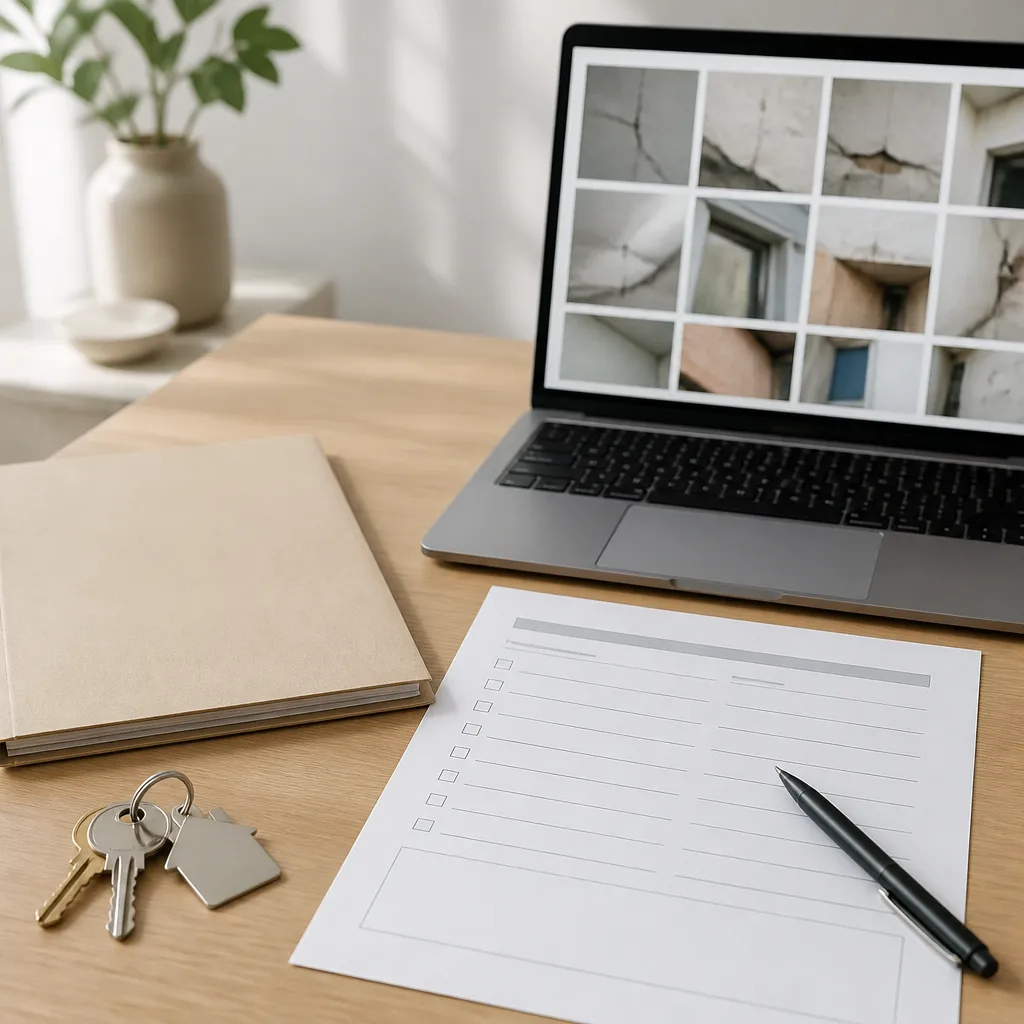
Photo evidence that holds up
Photos taken during the inspection, with the date and location recorded, are far harder to dispute than a verbal description. Keep the original image files. A screenshot or a cropped copy invites questions about what the photo actually shows.
Assigning each defect to a trade
Tiling defects go to the tiler, flashing defects to the roofer, and door alignment to the carpenter. When a defect does not clearly belong to one trade, the report says so rather than guessing. In those cases we recommend the builder’s site supervisor decides who fixes it, so the item does not sit unowned until settlement.
Same-day reporting and the negotiation window
Same-day reporting matters because the builder’s site team is still active on the project. The agent can send the list while the conversation is fresh. A report that arrives a week later becomes one item in a long email chain, and items get lost.
Pro tip: Ask for the original photo files, not compressed copies, and store them with the contract file. If a defect is later disputed, the original file is the evidence that counts.
Investment Checks Beyond the Defect List
Building quality is only one part of an investment purchase. The REIQ guidance covers searches around the dwelling itself, and a new home inspection should sit alongside them rather than replace them.
Flood and overlay checks on new estates
Queensland has areas prone to flooding and cyclones, and new estates are often built on land that has been reshaped. Check council flood maps and overlays for the specific lot, not just the suburb. Ask the builder whether the lot was filled and whether any engineering or fill documentation exists.
Noise and access in peak hours
Visit during the peak periods the REIQ guidance recommends, between 7.30am and 9am and between 3pm and 5.30pm. A new estate can feel quiet on a Saturday midday visit and then sit beside a busy road or a school run for years. Note construction noise separately, because it is temporary and will not reflect the street once the neighbours move in.
Title and contract review before the walk
The title search shows easements, covenants and caveats that can affect use of the property. A solicitor or conveyancer should review the contract for unfavourable terms before you spend money on a physical inspection. Sorting the legal position first keeps the inspection focused on the building.
Comparing Inspection Approaches for Investment Purchases
Three approaches come up when a buyers agent plans an investment purchase. The table below shows where each one fits and where it falls short.
| Approach | Where It Works | Where It Falls Short |
|---|---|---|
| Builder’s own handover walk | No extra cost and fast to arrange | The party handing over the keys is also judging the work, and it rarely produces photo evidence tied to a trade |
| General building and pest report | Covers the structure and pest activity in a general way | Not designed around new-build handover items such as the defects clause, rectification sequencing and trade responsibility |
| Independent pre-handover inspection by GoInspect | Independent, photo-enhanced, trade-assigned and reported the same day | Adds a fee and needs booking before the handover date to be useful |
For an investor buying off the plan or at completion, the independent option is a small cost. The starting fee of $550 including GST is modest next to the cost of a single waterproofing repair or a re-laid tile floor.
Who Owns the Inspection Report
The report should be addressed to the client, not only forwarded to the buyers agent. The agent works for the client, and the client signs the contract and absorbs the cost of any defect that is missed. Some providers route reports only through the agent, which leaves the owner reading a summary they did not write.

Why the client should receive the report
Many investment clients are interstate or overseas, and they need the full report to make settlement decisions. A direct copy to the client also protects the buyers agent later, because the client has seen exactly what was found and when.
When the buyers agent wants a softer report
Occasionally an agent asks for minor items to be removed to keep the builder cooperative. Our answer is no. We will discuss how items are presented and prioritised, but we do not remove defects on request. An inspection that edits itself to suit the sale is not worth paying for.
Pro tip: Confirm in writing before the inspection who receives the report and in what format. That removes any later argument about which version the client actually saw.
Pricing and Scope for Multi-Lot and High-Rise Purchases
GoInspect inspections start from $550 including GST, and the final quote depends on the property type and size. Scope changes between a detached house, a townhouse and a unit in a larger development, so confirm the scope before booking. You can find full service details on the GoInspect homepage.
Houses and townhouses
A detached house or townhouse is typically inspected room by room, with the roof space, subfloor where accessible, external drainage and boundary features included. The checklist is built around the dwelling and the lot it sits on. Townhouses also need a check of shared walls and common boundaries.
Units in high-rise developments
Units in high-rise developments need a different checklist. Balcony waterproofing, fire-rated doors, lift lobby finishes and common property defects all sit outside a standard house inspection. We customise reports for high-rise developments and housing projects so the list reflects the building type.
Multi-lot investor purchases
If you are buying several lots in one estate, book them together so the same team and report format apply to each. Consistent reporting across lots makes it much easier to see which builder issues repeat from one house to the next.
Frequently Asked Questions
Can a buyers agent book an inspection for a client who cannot attend?
Yes. The buyers agent can arrange access with the builder and coordinate timing, and the client can receive the full report directly if they ask for it.
When should a buyers agent book a pre-handover inspection?
Book it as soon as the handover date is confirmed. Waiting until the keys are offered leaves little time to get the builder to rectify structural or waterproofing items before the handover process moves on.
Does a new home inspection replace a building and pest report?
No. A new home inspection focuses on construction quality, handover items and rectification responsibilities. A pest inspection checks for termite and other pest activity. For a new build, the two can be useful together, but they cover different ground.
Which areas does GoInspect cover?
GoInspect covers Brisbane, the Gold Coast, Logan, Ipswich and Redland Bay. If your purchase falls outside those areas, contact the team before booking so the scope and travel can be confirmed.
How much does a new home inspection cost?
Inspections start from $550 including GST. The final quote depends on the property type, its size and whether the purchase involves several lots or a multi-level development.
How quickly do clients receive the report?
Reports are designed for same-day delivery, so the buyers agent can send the defect list to the builder while the handover conversation is still active.
Buyers agents and investors working across SEQ, what has your experience been with handover defects that only surfaced after settlement, and which checks would you add to this list?