
The balcony was already tiled when GoInspect found incomplete waterproofing at the base of the balustrade. We marked the junction in the handover report and assigned it to the waterproofer for completion. In another apartment on the same project, we recorded a separate job for the sealant installer: seal the floor tile edge beside the balustrade.
Both items were at a balcony edge. By stating the work required and assigning each item to the relevant trade, the reports gave the site team two clear instructions.
Two balcony findings that needed different responses
Apartment one: complete the waterproofing at the balustrade base. GoInspect marked the junction where the balustrade met the floor tiles. The work order gave the waterproofer a precise location and a clear instruction: complete the detail to the project requirements.
Apartment two: seal the adjacent tile edge. This item went to the sealant installer. The mark in the photo shows the exact corner where the floor tile meets the glazing frame and balustrade. The installer could go straight to that corner without guessing which part of the perimeter needed work.
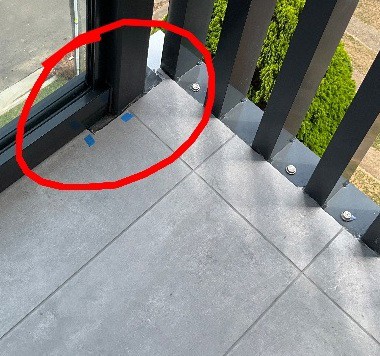
On a multi-residential project, keeping those instructions separate helps the site team brief each trade and check the right work on the return visit.
What does a balcony waterproofing inspection record after tiling?
At a practical completion inspection (PCI), GoInspect records visible, safely accessible work that needs attention. At a balcony edge that means identifying the junction, describing the condition and taking a photo that points the trade to the right spot. Where the close-out review also needs to verify waterproofing beneath the tiles, use construction photos and project records, and arrange specialist review where required.
The QBCC Standards and Tolerances Guide points to the applicable building requirements, external waterproofing standards and manufacturer instructions. The approved project detail and actual system instructions are the references for completing the waterproofing work.
Turn the findings into clear work orders
Give the waterproofer the approved detail for the relevant balcony type along with the marked photo. Give the sealant installer the location and the specific edge to finish. Keep both work orders linked to the original findings so each can be checked separately.
- Locate the junction precisely. Record the apartment, balcony, edge or corner and the component beside it. Include an overview and close-up in the project record.
- State the required work. Keep the instruction specific to the item: complete waterproofing at the marked balustrade base or seal the marked tile edge.
- Check comparable details. If several apartments use the same balcony detail, ask the site team to check comparable locations. Keep a record of areas actually reviewed.
- Agree what closes each item. A visible finishing item may be checked on a return visit. For a question about concealed work, agree what technical evidence or specialist review is needed before changing its status.
Get a better record before the next balcony is covered
When the next batch is still under construction, agree who will check the junctions before they disappear under the finishes. Photograph the relevant work while it’s exposed, identify the apartment and balcony on the project record, and keep the detail revision with it. If a change is made after that check, record what changed. QBCC’s guidance on supervision and quality control is a useful starting point for planning project checks.
For coordination across a full development, see GoInspect’s apartment balcony inspection guide. If you need independent QA across multiple dwellings, the developer project quote form lets you brief the inspection stages, which balconies are in scope and what should be revisited after rectification.