
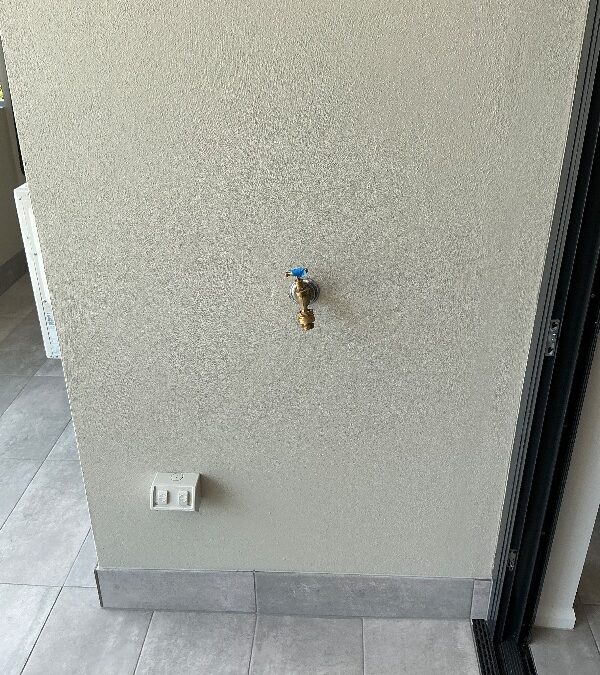
An apartment balcony inspection program should treat every balcony as a named inspection area within its dwelling, with consistent visible-finish checks and every finding tied to the apartment, level and relevant trade. That structure helps a builder or developer compare repeated details across a project, issue clear worklists and return to the same item during close-out.
At a practical completion inspection (PCI), also called a handover inspection, balconies should be included expressly in the project brief. A new-build apartment inspection does not prove concealed waterproofing, drainage performance, balustrade engineering or services commissioning from finished surfaces. It can record visible, safely accessible work and identify matters that need the right trade or specialist review.
Takeaway: inspect balconies when finishes are complete and access is safe, use the same location and photo method in every apartment, and keep visual defects separate from specialist testing and certification.
Define the balcony inspection scope by apartment and level
A balcony is part of an individual dwelling, but its finishes and junctions can involve several trades. Before the inspection starts, confirm which apartments and levels are included, how each balcony will be identified and whether any areas remain inaccessible or incomplete. Use the same dwelling and level names in the site schedule, the inspection record and the rectification list.
The agreed visible scope may include:
- floor and wall tiles, grout and visible sealant;
- sliding-door frames, tracks and glass surfaces;
- visible wall and ceiling finishes;
- accessible pipe, bracket and penetration finishes;
- balustrade surfaces and visible damage;
- installed fixtures such as hose cocks and clotheslines; and
- outlets, overflows and adjacent finishes that can be viewed safely.
Record unfinished work and access restrictions rather than treating an unready balcony as inspected. Indoor corridors, lobbies and stairs need their own area schedule; see GoInspect’s guide to apartment common-area inspections.
Check repeatable finishes and junctions
Balcony QA becomes more useful when the same categories are reviewed in every dwelling. That does not mean every balcony will have the same defect. It gives the inspector and project team a consistent route: floor finishes, perimeter junctions, openings, visible penetrations, installed fixtures and final cleaning.
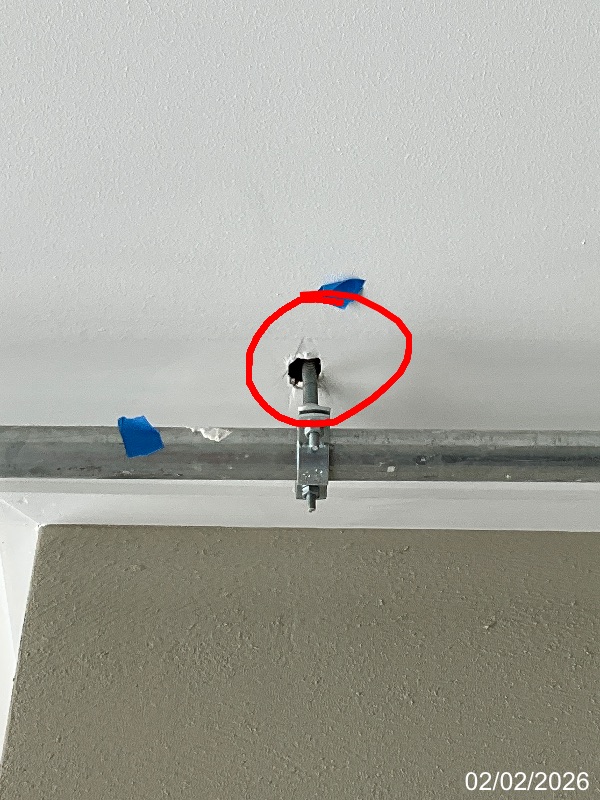
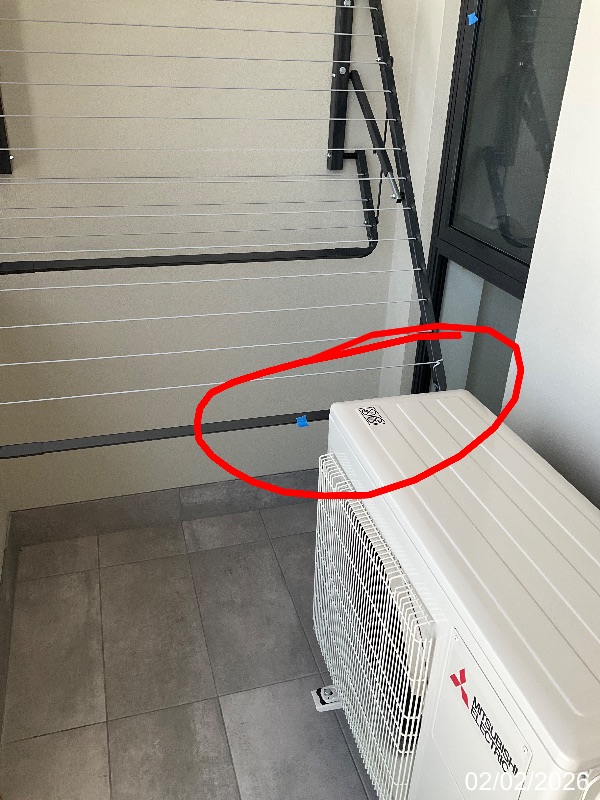
Three complete GoInspect handover reports from different apartments in one multi-unit project showed several visible balcony findings. The examples included missing grout, chipped or cracked tiles, a ceiling gap around a bracket, scratches to frames and an installed clothesline that contacted an outdoor air-conditioning unit. These examples demonstrate the range of work that may need coordination; they do not establish how often a defect occurs across other projects.
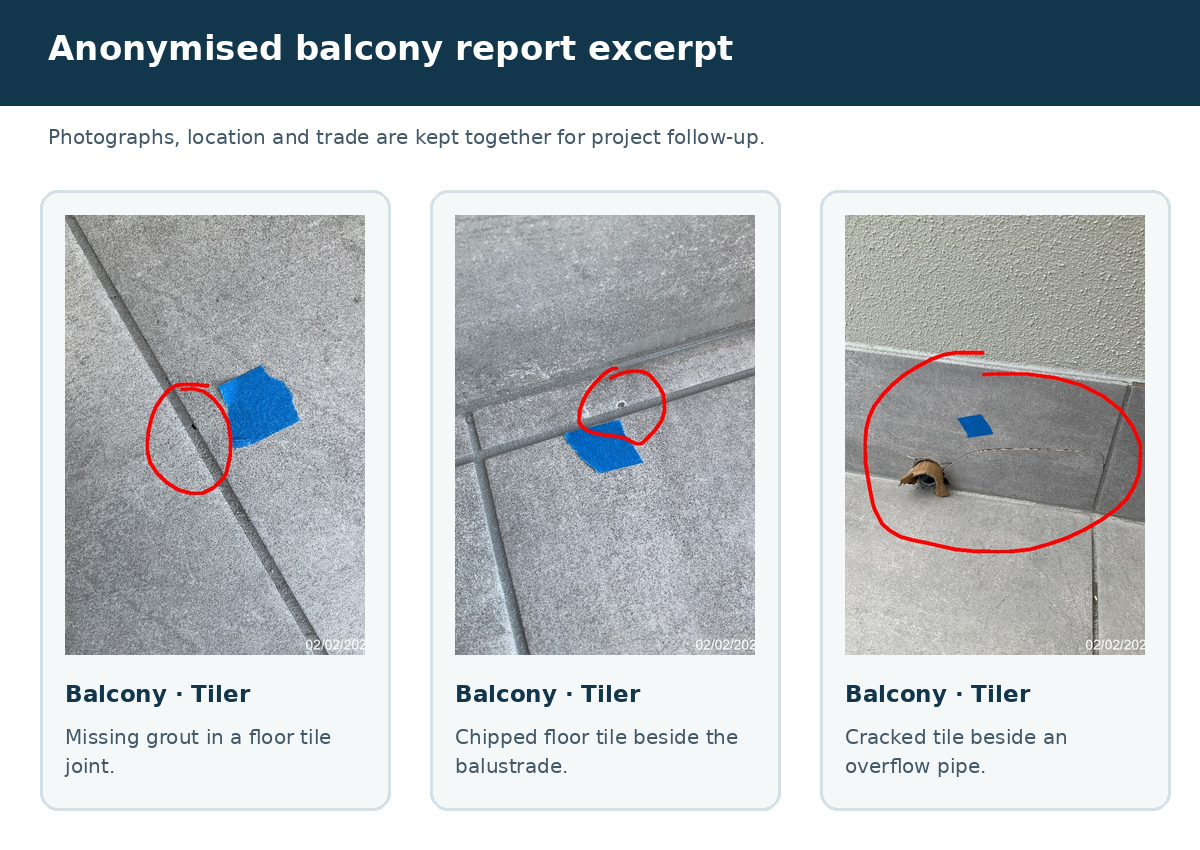
The excerpt shows why the photograph, location and trade should stay connected. “Balcony tile” is too vague when the same finish repeats across dozens of dwellings. A finding that identifies the apartment, balcony, visible condition and relevant trade gives the site team a practical destination and a clearer work item.
Record gaps and incomplete finishes without guessing behind them
Visible junctions around brackets, pipes and frames can be photographed and described. The report should state the condition that can be seen, rather than infer a concealed cause or prescribe a repair without the necessary design and trade information.
In one project report, the inspector recorded a visible gap in the balcony ceiling at a sprinkler-pipe bracket. The observation can be directed to the appropriate project team for review while the fire-services scope and any specialist requirements remain separate.
A finished-surface inspection also cannot confirm the continuity, thickness or installation of concealed waterproofing. If visible damage, water entry or another concern requires further investigation, agree a separate scope with the appropriately qualified person. Do not represent a visual handover report as a waterproofing certificate or a performance test.
Check whether fixtures can use the space provided
Apartment balconies often combine doors, windows, air-conditioning equipment, clotheslines and other fixtures in a limited area. A visible QA check can record when installed components contact each other during normal movement. It should not be presented as commissioning or performance testing of the equipment.
The clothesline below contacted the outdoor air-conditioning unit when opened. The photograph and description give the project team enough information to review the layout and coordinate the relevant installer without making a claim about the operation of the air-conditioning system.
Use report types that match the rectification task
GoInspect uses InspectaMate for photographic defect reporting. The original finding can retain its dwelling, level, area, description, photographs and trade allocation, then be presented in report views that suit different project users.
| Report type | Practical use |
|---|---|
| Apartment or dwelling report | Keep all findings for one apartment together for handover or lot-level review. |
| Level or inspection-batch report | Review the apartments inspected in an agreed visit or project area. |
| Trade-specific worklist | Give a trade its assigned balcony items across multiple apartments and levels. |
| Follow-up record | Return to the original item and record what was actually checked on a later visit. |
Trade allocation helps route work; it does not decide contractual liability by itself. The builder or developer can coordinate responsibility while preserving the original observation and location. A trade response, a completion photograph and an independent return inspection are different forms of evidence, so the status should say which one supports it.
Keep project QA separate from certification
The QBCC recommends project-specific supervision and quality-control inspections, including checks before handover. It also explains that a building certifier is not responsible for supervising the work. For class 2 to 9 buildings, Business Queensland describes a separate risk-based framework for certification inspections.
An apartment balcony inspection can support the project team’s QA and close-out process, but it does not issue occupancy approval, replace statutory certification or verify specialist systems outside the agreed scope. Where a visible concern relates to a balustrade, waterproofing, fire service, drainage performance or another specialist area, record it clearly and refer it to the appropriate qualified person.
Plan the balcony batch and follow-up
Before the first visit, provide a dwelling and level schedule, confirm which balconies are ready and identify any access controls. After the report is issued, assign work while keeping the original item reference and location. For a return visit, nominate the items said to be ready rather than reopening every apartment without a defined list.
GoInspect can discuss apartment, balcony and common-area inspections as part of a coordinated builder and developer quality-assurance program. To brief a high-rise or multi-residential project, use the builder and developer quote form and include the approximate number of apartments, levels, inspection areas and expected readiness sequence.