

Most people who buy a house and land package in South East Queensland sign the contract, watch the slab go down, and assume someone is checking the build. In practice, nobody is, unless you pay for an independent check. A house and land package inspection is that check, carried out between the builder declaring the home complete and you taking the keys. Book it too late, or scope it too narrowly, and every defect you find becomes your problem to chase rather than the builder’s problem to fix. This guide explains what the package really includes, when to book, which defects show up most often in Brisbane, Gold Coast, Logan, Ipswich and Redland Bay builds, and how to get them fixed.
Table of Contents
- Quick Takeaways
- What a House and Land Package Actually Includes
- Timing Your Inspection: Pre-Handover, Pre-Settlement and Practical Completion
- Common Defects We Find in SEQ New Homes
- Assigning Responsibility and Getting Defects Fixed
- Comparing Ways to Check a House and Land Build
- What to Budget for and What to Check in a Quote
- Frequently Asked Questions
- References
Quick Takeaways
| Key Insight | Explanation |
|---|---|
| Book the inspection after the builder’s completion notice, before the handover meeting | At that stage the builder still needs to close items out, so your defect list carries real weight. After handover the same list becomes a request. |
| Test wet areas with water, not just your eyes | Run taps, flush toilets and watch the waste and wall junctions. Waterproofing failures rarely show up on a dry visual check. |
| Read the specification before the inspection | An inspector checking against the contract specification finds different problems than one checking against general good practice. Mark any variations. |
| Name the trade responsible for every defect | “Bathroom needs attention” lets a builder stall. “Waterproofer to check ensuite floor waste junction” gets scheduled. |
| Photograph everything and get the report the same day | Verbal agreements at handover rarely survive a dispute. A dated photo and a written report are your evidence. |
| Plan for a re-inspection before anyone leaves site | Fixes that are not booked tend to slip. Agree a re-check date while the trades are still in the room. |
What a House and Land Package Actually Includes
A house and land package bundles a block of land with a building contract, usually from a builder working closely with the estate developer. Buyers tend to think of it as one purchase, but it is really two agreements with different obligations, different deadlines and different points where risk moves to you. The land and the build rarely run on the same timeline, so you may be paying for one long before the other is finished.

Most of the disputes we see start with a gap between what the buyer assumed was included and what the contract actually specifies. The sales brochure, the display home and the verbal promise at the estate sales office are not the document that binds the builder. The signed contract and its specification schedule are.
Where the Builder’s Scope Stops
The builder’s scope is defined by the approved plans, the specification schedule and the colour and fixture selections you signed off. Anything outside that paperwork sits in a grey area. Front fencing, retaining walls on sloping blocks, driveway crossovers and site drainage are the items most likely to fall between the developer and the builder, and the ones most likely to be missed when nobody is looking at the lot as a whole.
If a feature is not in the specification, it may not count as a defect in the contract sense, even if it looks wrong on the day. Ask the builder to point to the clause that covers each item you are worried about. If they cannot, you have learned something important before settlement, not after.
Checking the Inspection Against the Contract Specification
A useful inspection starts with the specification, not with a generic list of what good building work looks like. If the contract calls for a particular waterproofing system, tile type or wall bracing, the inspector should check the work against that document. Otherwise you can end up with a report full of cosmetic notes that misses the item that actually matters to your contract.
Pro tip: Request the signed building contract and the specification schedule at least two weeks before your inspection, then mark up every item you changed during the build. Variations often live in emails and selection forms, not in the original documents, and that is where the gaps tend to appear.
Timing Your Inspection: Pre-Handover, Pre-Settlement and Practical Completion
Three timing terms come up in South East Queensland new home work, and people often use them loosely. A pre-handover inspection happens after the builder tells you the home is complete, but before you formally take possession. A pre-settlement check is usually for buyers who are financing the purchase and want the property checked close to the finance settlement date. Practical completion is the stage the builder nominates when the home is finished enough to occupy, and most contracts use it to start the handover timing.
Why Booking Early Protects Your Position
The best window is after the builder confirms completion and before the handover meeting. At that point the builder still needs to close out items before handover, so your report carries weight. Once the keys are in your hand, the same defect list becomes a request that the builder can schedule whenever suits them.
Pro tip: Ask the builder for the handover date as early as possible, then book the earliest inspection slot after their completion notice. A booking made on the morning of handover leaves no time for a follow-up walk, and the builder knows it.
The Settlement Trap for Investors
Investors often delay booking because the lender sets the settlement date and tenants may already be waiting. The risk is that a fixed settlement pushes the inspection into a rushed week when rectification cannot be completed before the property is tenant-ready. Work backwards from the settlement date. If your report arrives with weeks of fixes ahead of you, request any delay in writing before settlement, not after it.
Common Defects We Find in SEQ New Homes
Defects in new homes are rarely random. They cluster around the trades that work in the wettest, most hidden or most rushed parts of the build, and South East Queensland’s humidity, heavy summer rain and sloping allotments make some of them more likely. The sections below cover the areas where we see problems most often, though every build has its own pattern.
Wet Area Waterproofing and Tiling
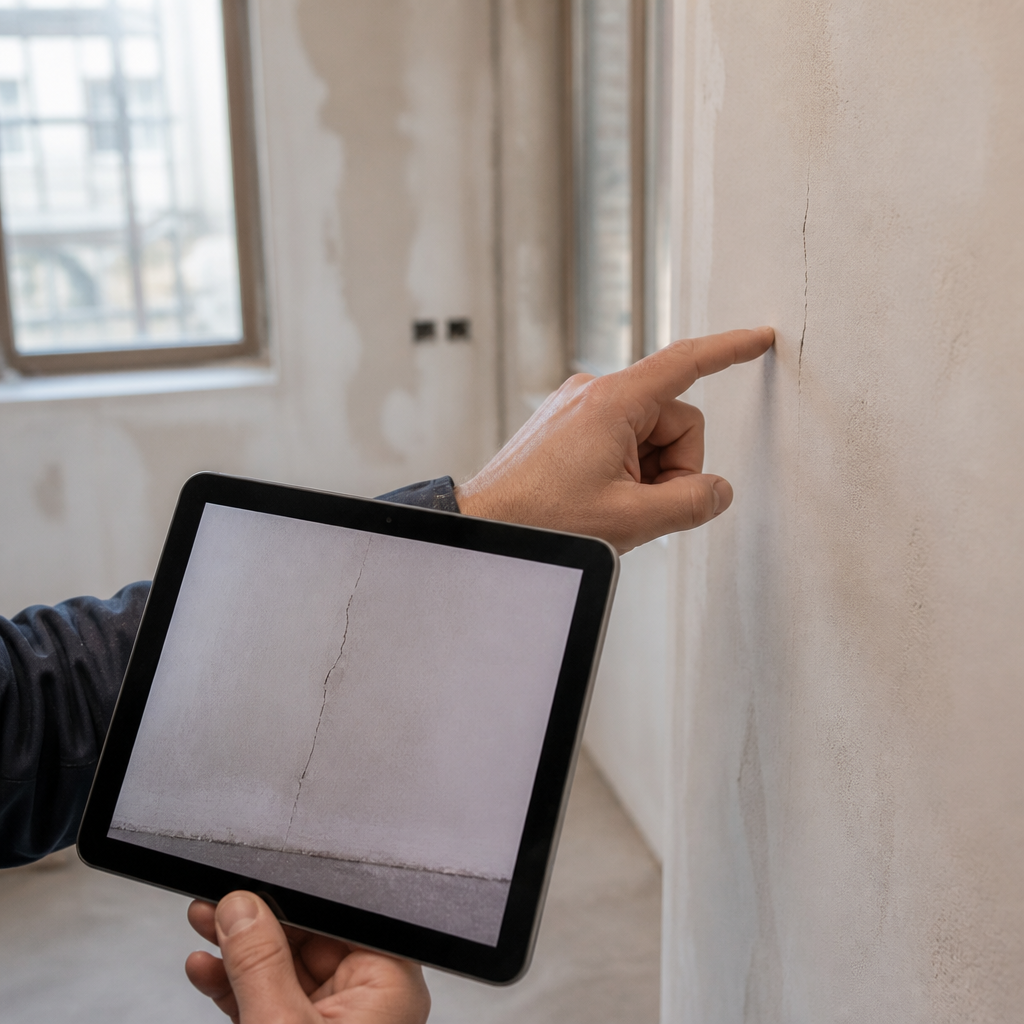
Bathrooms, laundries and ensuites are where the most expensive problems hide. Waterproofing sits beneath the tiles, so a visual check tells you very little. Look for ponding on the floor, confirm the falls direct water toward the waste, and run taps and flush toilets while you watch the tile edges and the junction with the walls.
Listen for hollow-sounding tiles, and look for cracked grout at the wall junction and gaps around shower screens and vanity units. Each of these can point to a membrane that was not finished properly. Ask for the waterproofing certificate or installer documentation, because the builder should be able to produce it without a fuss.
Frames, Doors, Windows and External Cladding
Doors that do not close square, windows that rattle and wall lines that look bent are often signs of frame or installation issues that get worse over time. Check the sealant around window and door frames, the junction between cladding and roofing, and any visible flashing. Sun, rain and wind will find every gap that was not sealed properly, usually within the first wet season.
The defects you can prove on handover day are the ones the builder cannot talk you out of later.
Driveways, Fencing and Site Drainage
External works are where a house and land package is most likely to disappoint. Check that the driveway falls away from the garage, that stormwater drains toward the legal point of discharge rather than pooling against the slab, and that fencing sits on the correct boundary rather than being set back or running into a retaining wall. Drainage problems on sloping blocks are expensive to fix once landscaping is in place.
Assigning Responsibility and Getting Defects Fixed
A defect list is only useful if the builder can act on it. The most common failure is a report that says “bathroom needs attention” or “hallway finish poor,” which gives the builder room to argue, delay or send the wrong trade. Every item needs a location, a description, a severity rating and a responsible trade, so it can be scheduled and closed.
Writing Defects the Builder Can Act On
Good defect wording names the room, the element and the problem. For example: “Ensuite shower floor, tile edge at the wall junction, hollow sound across two tiles, likely waterproofing or tiling.” Assign a trade wherever possible, such as waterproofer, tiler, plasterer, electrician or plumber, because a named trade is much harder to pass to somebody else.
Separate items that must be fixed before handover from items that can wait for the defects liability period. Mixing the two gives the builder an easy reason to deprioritise the whole list. Put the handover-critical items at the top, with a clear date for each.
Photos, Same-Day Reporting and Re-Inspection
Photos are evidence. A clear picture of a cracked tile with a tape measure beside it, or a dated image of ponding water, gives you something concrete to point to if the builder disputes an item. Same-day reporting matters for the same reason: the builder is still on site, the trades are still available and the problems are fresh for everyone.
Pro tip: Ask for the report to go to the builder, the site supervisor and you at the same time, then agree a re-inspection date before anyone leaves site. A re-check that is not booked tends to slip until the keys are already in your hand.
Comparing Ways to Check a House and Land Build
Buyers have three realistic options for checking a new home before they take possession. Each has a place, but they produce very different results. The table below compares them on the things that matter most when a defect list has to get a builder moving.

Where Each Approach Falls Short
A self-guided walkthrough is free, and it catches obvious issues such as paint marks, missing light fittings and broken fixtures. Its weakness is method. Without a structured checklist, most buyers spend their time on the finishes they like or dislike, and they miss the wet area, roof space and external drainage checks that take real effort.
The builder’s final inspection is part of its quality process, and it is useful for seeing what the builder already knows about. The catch is that the builder is grading its own work against its own standards. Inspection practice has long recognised this kind of problem: an announced check gives people time to fix things before the examiner arrives, which can distort what the check finds.
An independent pre-handover inspection costs money and takes time, but it creates a written record organised by room, tied to trades and backed by photos. That record is what tends to hold up when a defect is disputed.
| Approach | What It Covers | Main Limitation |
|---|---|---|
| Self-guided walkthrough on handover day | Visible finishes, fixtures and obvious damage | No structured method, rushed timing and no trade attribution |
| Builder’s own final inspection | The builder’s checklist measured against its own quality standards | The builder assesses its own work, so your specific concerns may not be recorded |
| Independent pre-handover inspection with photo report | Structured room-by-room checks, photos, trade-assigned defects and same-day reporting | Adds a cost and still needs follow-up to confirm fixes are completed |
What to Budget for and What to Check in a Quote
Inspections with GoInspect start from $550 including GST. The final price depends on the size and complexity of the home, the scope you need and whether the property has features such as multiple levels or extensive external works. A cheap quote only represents value if it covers the areas most likely to cause you trouble later.
Questions to Ask Before You Book
Ask whether the report includes photos, whether defects are assigned to specific trades, and whether same-day reporting is part of the standard service rather than an add-on. Confirm that the inspector is fully licensed and that the scope covers external works, roof space and wet areas, not just the living spaces. Ask how re-inspections are handled and whether they carry an extra cost.
Budgeting for Rectification Time
Budget for the inspection, but also for the time between handover and final sign-off. Rectification often needs trades to return, and the schedule drifts when the defect list is vague. Investors should allow for a possible delay to rent or tenancy start dates, and owner occupiers should plan for at least one follow-up visit.
For builders and developers, the same report works in the other direction. A structured defect list with trade assignments and photos gives the site team a clear work plan, reduces repeat call-backs and leaves a record if a dispute goes further than the site meeting.
Frequently Asked Questions
Is a house and land package inspection still worth it if the builder offers a warranty?
Yes. Warranty cover protects you against defects that show up after you own the home, but it does not give you a documented starting point. A pre-handover inspection finds problems while the builder still has to fix them on site, which is usually faster and cheaper for everyone.
When should I book a new home inspection in South East Queensland?
Book after the builder issues its completion notice and before the formal handover meeting. That timing gives the builder time to fix items while you still have leverage. If settlement is fixed and close, ask for the handover date early so you have room to schedule a re-inspection.
Should I attend the inspection myself?
Yes, if you can. Walking the site with the inspector lets you see the issues in context and ask questions about how they should be fixed. If you cannot attend, make sure you receive the full photo report and that someone with authority to accept or reject items is present for the handover.
What is the difference between a pre-handover and a pre-settlement inspection?
A pre-handover inspection focuses on the home’s readiness for you to take possession, and it is usually the most useful check for owner occupiers. A pre-settlement check is often timed around finance and is common among buyers who want the property verified close to the settlement date. In practice, the best outcome comes from completing the inspection before handover and then confirming the fixes before settlement.
Do investors buying a completed house and land package really need an inspection?
Investors need one more than most buyers, because they have less time to deal with problems and a tenant may be waiting. Defects that go unreported at handover can delay rent, increase repair costs and make the property harder to manage from a distance. An inspection gives you a record and a clear list of items to close before the property is rented.
Tell us in the comments what your handover walkthrough missed, or what you wish you had checked before you settled.
We would love your feedback and any insights you would share with others. What perspective would you add?
References
- Wikipedia overview of inspection as an organised examination and why announced checks can differ from surprise checks
- Canstar guide to how much a building inspection costs in Australia
- Australian property community discussion on whether new builds need building and pest inspections
- Community post on how pre-handover inspections help identify defects before buyers take possession