
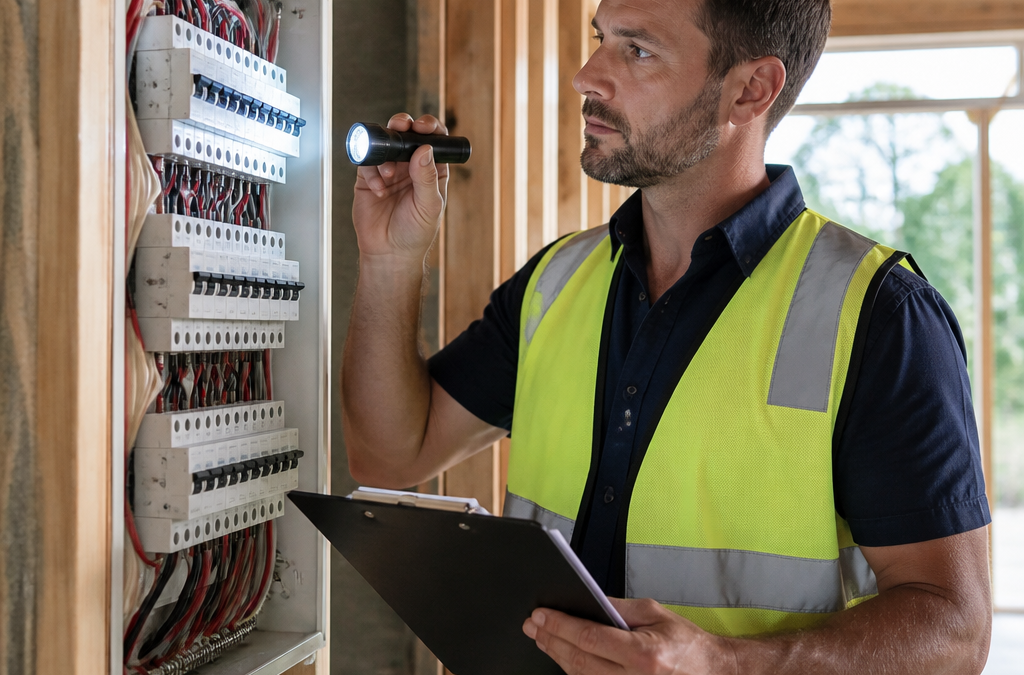
Most new homes in Brisbane, the Gold Coast, Logan, Ipswich and Redland Bay look finished at handover, yet electrical faults often hide behind plasterboard, inside switchboards and under insulation. In practice, electrical items appear on almost every handover defect list we review, and they are the defects most likely to cause real harm if they are missed. This article explains what inspectors flag in new home electrical work, why those faults get past builders and trades, and how to separate a cosmetic scuff from a fault that needs a licensed electrician before you accept the keys. Use it as a walk-through guide, because electrical defects in a new home inspection are easy to miss without a plan.
Table of Contents
- Quick Takeaways
- Why Electrical Defects Slip Through
- Switchboard Defects That Matter Most
- Power Points, Switches and Light Fittings
- Safety Devices and Smoke Alarms
- Outdoor and Coastal Fittings
- Assigning Responsibility for Electrical Defects
- Comparing Ways to Catch Electrical Defects
- Frequently Asked Questions
- References
Quick Takeaways
| Key Insight | Explanation |
|---|---|
| Check the switchboard first | Mislabelled circuits and loose terminations are among the costliest faults to fix later, so open the board and compare every label with the circuit it controls. |
| Ask for RCD test results | Residual current devices protect people from electric shock. A button that clicks is not a test, so request the trip-time results from the electrician. |
| Look for downlights in insulation | Downlights that are not rated for direct insulation contact can overheat. Check for the rating label and the clearance around each fitting. |
| Test every power point, including outdoor ones | Plug in a tester or a lamp at each point. Outdoor power points without weatherproof covers are a common defect on Gold Coast and Redland Bay homes. |
| Confirm smoke alarms are hardwired and interconnected | A standalone battery alarm in a new dwelling is a compliance defect, not a minor finish issue. |
| Assign each fault to the trade that caused it | Electrical defects often come from cable damage by plumbers, carpenters or plasterers. A report that names the responsible trade speeds up the fix. |
Why Electrical Defects Slip Through
Electrical work is hidden by design. Once cable runs, junctions and earthing are covered by plasterboard, insulation and tiles, nobody can see them without opening the wall again. The handover inspection is often the first time anyone looks at the finished electrical installation as a whole, rather than one trade at a time.
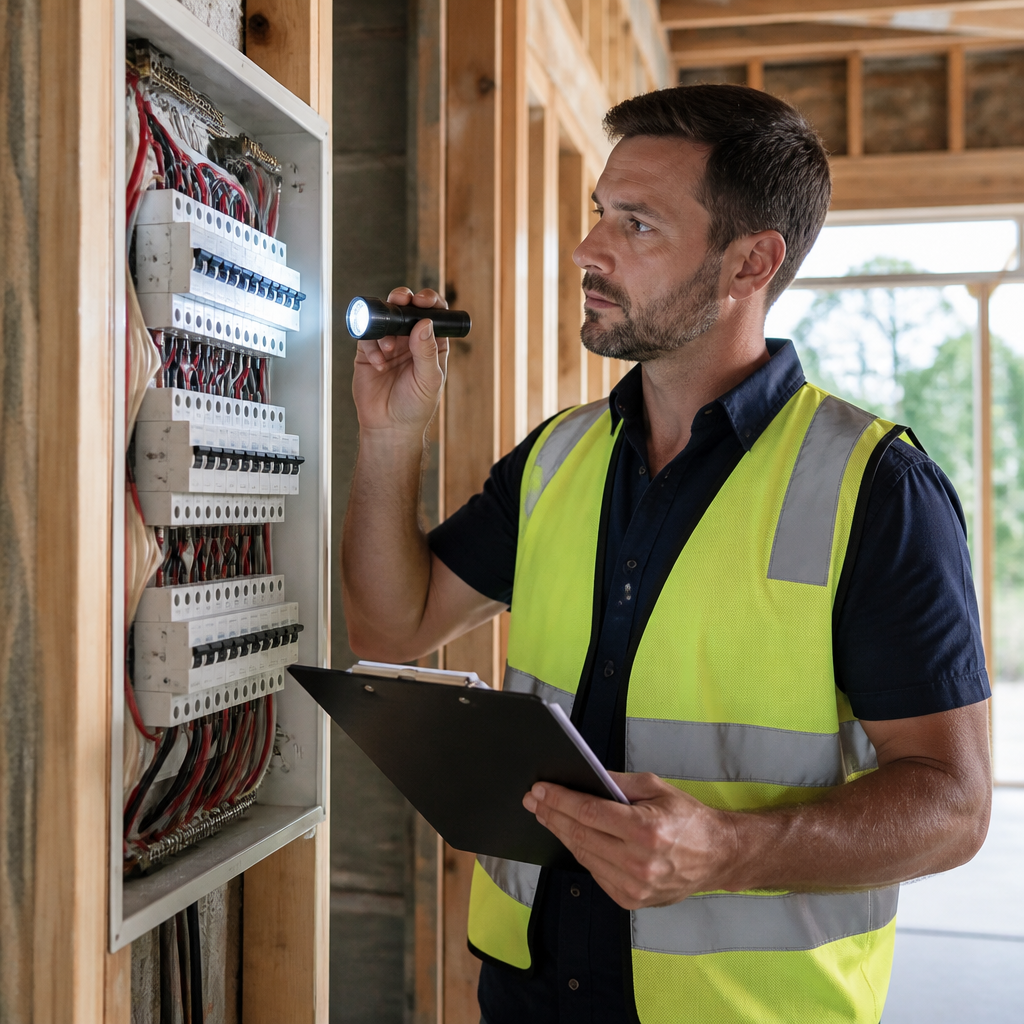
The sequence on a typical build explains most of the problems. An electrician installs the first-fix wiring, then plasterers, carpenters, plumbers and tilers work around it. Each of those trades can nick a cable, drive a fixing through a conduit or pull a wire out of a box without realising the damage matters. By the time the electrician returns for second fix, the cable that was damaged weeks earlier is buried behind a finished wall.
Testing is the second gap. Many electrical faults only show up when a circuit carries load or when a protective device is tested. A light that works when switched on can still have a poor connection that heats up under sustained use. A power point that delivers power can still have reversed polarity. These are the faults a visual check misses, which is why a good handover inspection combines a close look at the finish with functional checks at every outlet and fitting.
Electrical work that looks finished at handover is often work that nobody has tested under load yet.
Switchboard Defects That Matter Most
The switchboard is where most electrical problems in a new home start, and it is the first place we open at every handover. A well-built board tells you exactly how the house is wired. A poorly built one tells you that the next electrician to work on the home will spend hours guessing. Switchboard defects are not always dangerous on day one, but they make every later fault harder to find and fix.
Circuit labels and directory accuracy
Each circuit breaker should be labelled with the area or appliance it controls, and the directory on the inside of the door should match. We regularly find labels that are missing, faded or pointing to the wrong room, usually because the electrician labelled the board before the final room layout was confirmed. Compare each label with the actual circuit by switching breakers off one at a time. Mismatches are cheap to fix at handover and expensive to unravel during a future storm callout.
RCD testing and what a failed test looks like
Residual current devices cut power when they detect leakage current, which is what protects people from electric shock. Pressing the test button on the device only confirms that the mechanism moves. A proper test uses equipment to measure trip times and confirms that each protected circuit trips within the required time. Ask for the test records. If the board has no records, or if the electrician cannot explain what was tested, treat that as a defect.
Pro tip: Ask the electrician to leave the switchboard door open during your inspection and to walk you through the RCD test results. Electricians who have done the work properly are usually happy to show it.
Cable tails and terminations
Cable tails should be long enough to reach the terminals without strain, and each conductor should be terminated neatly in the correct position. We see short tails pulled tight against the terminal, loose neutral connections bundled into one bar, and earth wires that are not secured. These defects do not always cause an immediate failure, but they create heat and movement over time, which is why they need correcting before the homeowner moves in.
Power Points, Switches and Light Fittings
Power points and light fittings are the parts of the electrical system that owners touch every day, so they generate the most visible complaints. Many of the defects here are cosmetic, but some are functional or safety related. The trick is to test each item rather than assume it works because it looks right.
Power point heights and placement
Power points that sit at the wrong height, too close to a bench, or behind a fridge location are a design and installation defect that the owner will live with for years. Check the placement against the plans, and note any outlet that has been moved without approval. Pay particular attention to kitchen benches, where a point placed under a cabinet overhang can be impossible to reach with an appliance plugged in.
Loose power points and cover plates
A power point that wobbles when you plug in a lead is usually a sign that the box is not fixed securely or that the plasterboard has been cut too wide around it. Cover plates that do not sit flush can indicate the same problem. Look for cracked plates, paint on the switch faces, and outlets that do not seat firmly. These are small defects that take minutes to fix when the trade is still on site, and they become arguments later if no one wrote them down.
Downlights and insulation clearance
Downlights are one of the most important items to check in a new home because they sit inside the ceiling where heat builds up. Fittings must be rated for the way they are installed, and insulation must be kept clear of the fitting as the manufacturer requires. We look for the rating label, the clearance around each fitting and any signs of scorching on the insulation or the plasterboard. A downlight that is buried in batts without the correct rating is a defect that should be corrected before handover, not after a fire report.
Safety Devices and Smoke Alarms
Safety devices are the defects that most owners underestimate, because they are small, cheap and easy to overlook during a walk-through. They also carry some of the highest consequences. A smoke alarm that does not connect to the others, or a protective device that is incorrectly installed, can leave a family with less warning than they expect.
Smoke alarms and interconnection
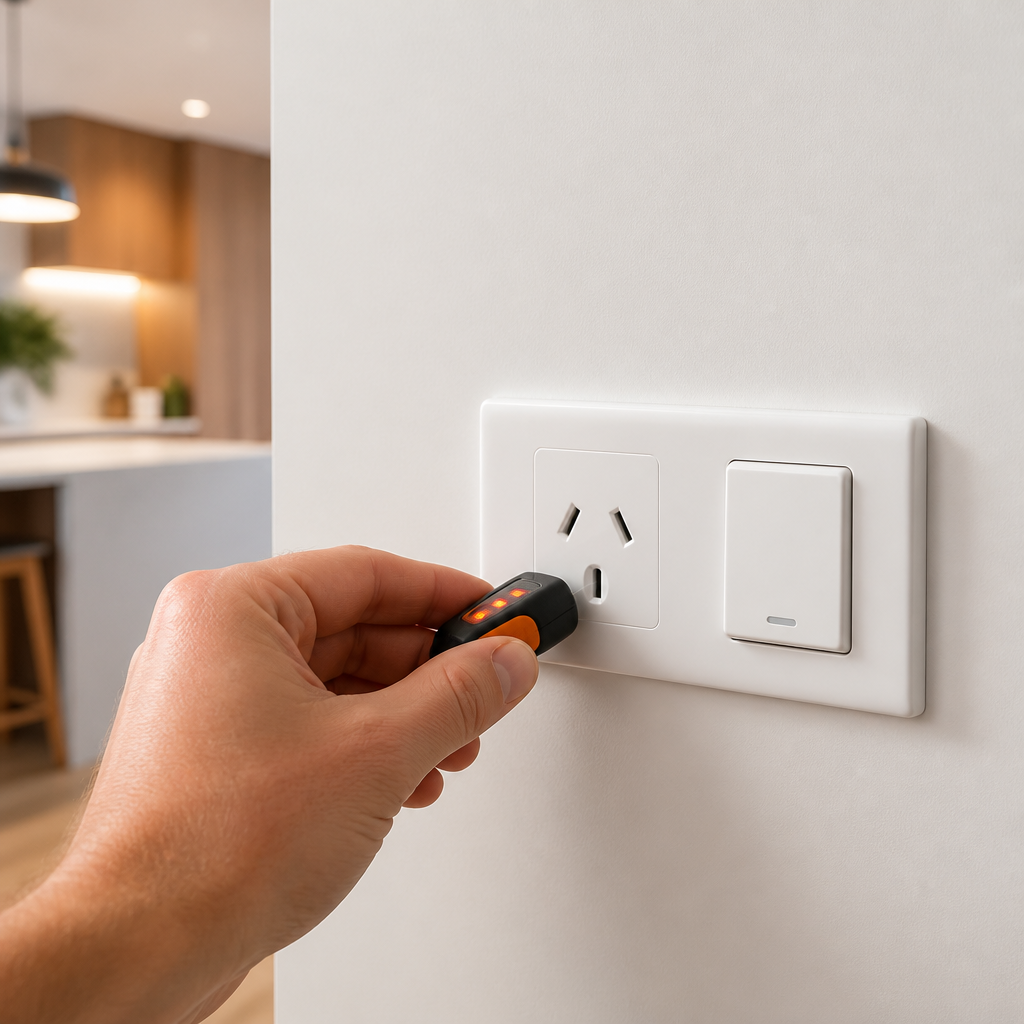
Queensland building rules require smoke alarms in new dwellings to be hardwired and interconnected, so that when one alarm activates, all of them sound. A standalone battery unit in a new home is a defect, even if it works when you press the test button. Check every bedroom and hallway, confirm that each alarm is connected to the building supply, and test at least one alarm from a different room to confirm the others respond. If the alarms are wired but the interconnection does not work, ask the electrician for a written explanation before you accept the handover.
Surge protection and earthing checks
Brisbane and the surrounding region see frequent summer storms, and electrical surges are a real risk for appliances and electronics. Surge protection devices, where they are fitted, should be correctly labelled and installed in the board. Earthing is the other check that matters. Look for a visible earth connection to the main earth point and confirm that the electrician has recorded the earth resistance or continuity results where the installation requires it. A missing or poorly connected earth is a serious defect, and it should never be signed off as a cosmetic item.
Outdoor and Coastal Fittings
Homes on the Gold Coast, in Redland Bay and in other coastal pockets of the region face a harsher environment than inland builds. Salt air, UV exposure and wet-season rain attack outdoor electrical fittings faster than most owners expect. Defects that look minor at handover often turn into corrosion, water ingress or failed fittings within the first few years.
Weatherproof fittings and covers
Outdoor power points, external light fittings and sensors should be rated for wet locations and fitted with weatherproof covers where the installation requires them. We regularly find outdoor outlets without covers, light fittings with visible gaps around the cable entry, and non-corrosion-resistant screws on exposed plates. Check the rating marked on each fitting, look for gaps where water could enter, and confirm that any cable entry is sealed. Replacing a corroded fitting is quick at handover and much more disruptive once the render is finished.
Air conditioners, pool equipment and dedicated circuits
Dedicated circuits for air conditioners, pool pumps, hot water systems and electric vehicle chargers need correct protection, isolation and labelling. Look for an isolator within sight of each outdoor unit, a circuit that is clearly labelled at the board, and cable that is protected where it runs outside the wall. Pool equipment has its own bonding and protection requirements, and the electrician should be able to show the paperwork. If a pool pump circuit lacks clear labelling or a visible isolator, record it as a defect and request correction before the pool is used.
Assigning Responsibility for Electrical Defects
A defect that nobody owns is a defect that never gets fixed. Electrical faults in new homes often come from one trade and are discovered by another, which is why the report matters as much as the inspection itself. A report that says “electrical fault, bedroom 2 power point” leaves the builder to guess who should attend. A report that includes a photo, the location, the likely cause and the trade responsible gives the builder a clear job to schedule.

Responsibility usually sits with the electrician for wiring, termination, protection devices and switchboard work. Plasterers, carpenters, plumbers and tilers are responsible when their work damages cable, boxes or fittings. Builders carry responsibility for coordinating trades and ensuring the final installation meets the approved plans and the relevant standards. Good defect reports name the trade for each item, because that is the only way to avoid a cycle where each party points at another.
In our experience, the fastest rectifications happen when the builder receives a same-day report with photos and a clear list of trades. Our handover reports are built that way, and inspections start from $550 including GST. For owners who want to understand what the builder should answer before settlement, the guide on common electrical mistakes in new builds is a useful companion to the report, and you can read more about our approach at GoInspect.
Pro tip: Write each electrical defect in plain language with the room, the fitting and the problem, for example “Kitchen GPO behind fridge location, loose in box.” Builders act faster on specific items than on general complaints like “electrical issues in kitchen.”
Comparing Ways to Catch Electrical Defects
Owners and builders have several options for checking electrical work before handover. Each one catches different faults, and none of them is complete on its own. The table below compares the most common approaches and where each one falls short.
| Approach | What It Catches | Where It Falls Short |
|---|---|---|
| Owner walk-through with a torch and checklist | Visible finish issues, missing fittings, obvious damage and cover plates that are not flush | Cannot test RCDs, check terminations or confirm the circuit labels match the actual wiring |
| Builder’s internal final check | Items the builder has already planned to fix, and common finish defects across the home | Builders often check the work they supervised, so independent testing and a fresh pair of eyes are missing |
| Electrician’s certificate and test records review | Compliance paperwork, RCD trip-time results and confirmation that the installation was tested | Paperwork does not show cosmetic damage, wrong placement or defects made by other trades after the electrician left |
| Independent photo-based handover inspection | Visible defects, functional tests at outlets and fittings, cable damage that other trades caused, and clear responsibility for each item | Does not replace a licensed electrician’s testing, so any fault that needs specialist work still requires an electrical contractor |
The strongest approach combines the electrician’s test records with an independent visual and functional check. The electrician proves the installation was tested, and the independent check catches what happened after the electrician left the site. Owners who rely on only one of these options usually find the gap after they move in.
Frequently Asked Questions
Are electrical defects common in new homes?
Yes, electrical items appear on many handover defect lists, especially switchboard labelling, cover plates, outdoor fittings and smoke alarm connections. Frequency depends on the builder, the trades and the stage at which the inspection takes place, so each home needs its own check.
Should I hire an electrician to check a new home before handover?
An electrician is the right person to test RCDs, check terminations and confirm the installation meets the relevant standards. A building inspection adds an independent visual and functional check that looks for damage made by other trades, and both are useful for different reasons.
Is a power point that does not work at handover always a defect?
Yes, until the cause is identified and corrected. A dead outlet can come from a tripped device, a loose connection, a missing circuit or a wiring error, and the builder should provide the fix and the test result before you accept the item as complete.
What does a proper RCD test involve?
A proper RCD test uses specialised equipment to measure how quickly the device trips when it detects leakage current. Pressing the test button only checks the mechanism, so ask the electrician for the recorded results for each protected circuit.
How much does a new home electrical inspection cost?
Our handover inspections start from $550 including GST, and the final price depends on the size and type of property. Separately, some electrical contractors price standalone electrical safety inspections in Brisbane from around A$150 for a basic visual check, though that is a different service from a full new home inspection.
Can I check the electrical work myself?
You can check visible items such as cover plates, labels, smoke alarm placement and the condition of outdoor fittings. Testing, rectification and certification should be carried out by a licensed electrician, and any fault you cannot confirm should be recorded in writing for the builder to address.
Tell us about the electrical fault you found at handover and how your builder responded, because real handover experiences are what sharpen the checks we run on every new home.
We would love your feedback and any insights you would share with others. What perspective would you add?
References
- Common issues found during under construction inspections and why they matter
- Guide to common electrical mistakes in Australian new builds and how to spot them at handover
- Brisbane price guide for home electrical safety inspections, from basic checks to thermal imaging