
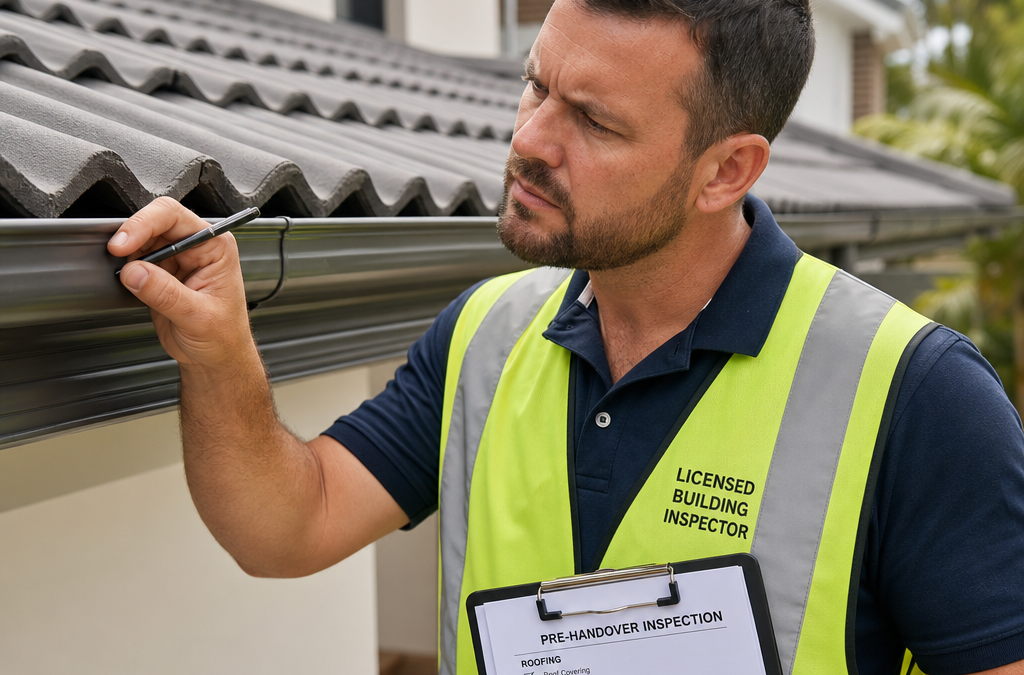
Most new homeowners assume a brand-new build is defect-free. The reality is far more uncomfortable. Queensland builders regularly hand over properties with dozens of unresolved defects, from cracked render to incomplete waterproofing, and buyers only discover them after they have signed off. A thorough new home inspection checklist is not a formality. It is the only systematic defence between you and thousands of dollars in post-settlement repair costs that are entirely your responsibility once you accept the keys.
Table of Contents
- Quick Takeaways
- Why a Structured Checklist Matters Before Handover
- Exterior Inspection: What Inspectors Check First
- Roof and Ceiling Inspection Points
- Living Areas and Bedrooms: The Detail Work
- Kitchen Inspection: Trades Convergence Zone
- Bathrooms and Wet Areas: Waterproofing Is Non-Negotiable
- Garage and Laundry Checks
- Electrical and Plumbing: What a Visual Check Covers
- Comparing Inspection Approaches: DIY vs. Builder’s Rep vs. Independent Inspector
- Building Inspection Checklist Queensland: Regulatory Specifics
- Frequently Asked Questions
- References
Quick Takeaways
| Key Insight | Explanation |
|---|---|
| New builds are not defect-immune | Construction defects appear even in premium builds. Independent inspectors consistently find 20 to 60 items per new home inspection in Queensland. |
| Wet area waterproofing is the highest-risk category | Bathrooms and laundries account for the majority of post-settlement structural claims. Inspectors check membrane continuity, falls to waste, and silicone integrity. |
| Defect responsibility must be assigned to a specific trade | A report that simply lists defects is far less useful than one that attributes each defect to a specific trade, which is what GoInspect’s photo-enhanced reports do. |
| Same-day reporting changes the leverage at handover | Having a report in hand at the handover meeting means defects can be formally disputed before keys are accepted, not chased up weeks later. |
| The handover inspection checklist covers more than aesthetics | Inspectors look at structural, waterproofing, compliance, and finish items. Cosmetic defects are only one layer of a complete inspection. |
| Queensland’s QBCC standards define acceptable tolerances | The Queensland Building and Construction Commission sets measurable tolerances for items like wall plumb, floor flatness, and surface finishes. Inspectors apply these, not personal preference. |
| Investors lose more than homeowners if they skip this step | A defective property that goes to rental is harder to rectify and creates landlord liability. Pre-settlement inspection is especially critical for investment properties. |
Why a Structured Checklist Matters Before Handover
A pre-handover inspection without a structured checklist is just a walkthrough. Inspectors who rely on memory or intuition miss items, and those missed items become your problem after settlement. A room-by-room checklist ensures systematic coverage, from the ridge capping on the roof to the silicone bead around the base of a toilet.
In practice, the checklist also creates a defensible record. When a builder contests a defect claim, the dated, photo-linked inspection report becomes the primary evidence. Inspectors at GoInspect structure their reports to attribute each defect to the responsible trade, whether that is the tiler, the waterproofer, the plasterer, or the electrician, because that specificity is what forces action.
The other reason a checklist matters is psychological. Builders know that most buyers will not check systematically. A buyer who is excited about moving in tends to overlook things that an independent inspector treats as standard failure points. The checklist removes emotion from the process and replaces it with methodology.
Exterior Inspection: What Inspectors Check First
The exterior of a new build tells a significant story before you even open the front door. Inspectors start here because exterior defects often indicate broader construction quality issues across the build.
Brickwork and Render
Inspectors check for cracked, hollow, or debonded render, spalled brickwork, and mortar joint inconsistencies. Render cracks wider than one millimetre or cracks at control joints that have not been sealed are defects under Queensland standards. Hollow sections of render, identified by tapping, indicate adhesion failure and must be rectified before handover.
Driveway, Paths, and Site Drainage
Concrete paths and driveways are checked for cracking, surface honeycombing, and adequate drainage fall away from the building. A common mistake is accepting a driveway that pools water near the garage because it does not have the correct fall. Once you have signed off, this becomes a landscaping issue that is entirely yours to fix.
Fascias, Gutters, and Downpipes
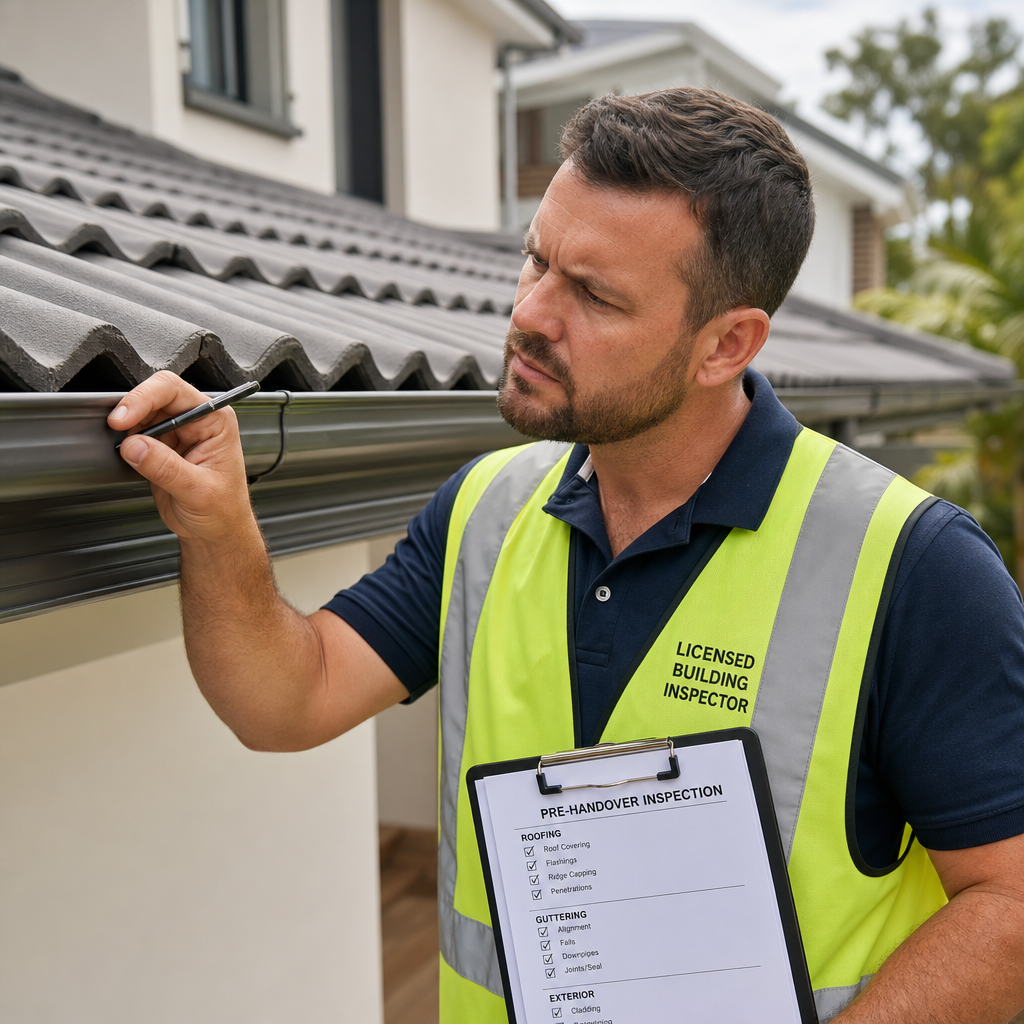
Gutters must be installed with the correct fall toward downpipes. Inspectors check for low points, inadequate fixings, missing end caps, and downpipes that discharge water too close to the foundation. In Brisbane and South East Queensland’s high-rainfall events, a poorly installed gutter system can direct water under slab edges within weeks.
Window frames and external doors are also checked at this stage. Inspectors look at sealing, flashings, operation, and whether weather seals are intact. Missing or poorly fitted flashings above windows are a leading cause of internal water ingress in new builds.
Roof and Ceiling Inspection Points
Roof inspections require either roof space access or a qualified inspector using appropriate tools to assess what is visible. GoInspect’s licensed inspectors conduct this assessment as part of every standard inspection across Brisbane, Gold Coast, Logan, Ipswich, and Redland Bay builds.
Roof Covering and Ridge Capping
Ridge capping bedding and pointing is one of the most frequently defective items on a new home inspection checklist in Queensland. Inspectors check for inadequate mortar coverage, cracked pointing, or ridge caps that are not properly secured. Loose ridge capping in a storm event is both a safety hazard and a major water ingress risk.
Roof Space: Insulation and Sarking
Inspectors check that insulation batts are correctly laid, not compressed, and that sarking is continuous and lapped correctly at joins. Missing sarking or incorrectly installed insulation creates immediate energy performance issues and can void compliance certifications. In practice, roof space inspections frequently reveal insulation that has been placed on top of ceiling joists rather than between them, meaning the builder has failed the installation outright.
Ceiling Condition Inside the Home
Plasterboard ceilings are checked for cracking, sagging, nail pops, and tape join failure. Inspectors also look for water staining that could indicate roof penetration leaks or inadequate roof space ventilation leading to condensation. Any brown staining on a brand-new ceiling plasterboard is a serious defect that must be investigated and rectified before settlement.
Living Areas and Bedrooms: The Detail Work
Living areas and bedrooms involve the highest concentration of plasterboard, paint, flooring, joinery, and window installation work. These rooms bring together multiple trades, and the interaction points between trades are where defects concentrate.
Walls and Plasterboard
Inspectors check wall plumb and surface flatness against QBCC tolerances. A wall that bows more than three millimetres over a one-metre span is outside tolerance. Paint inspections are conducted in raking light conditions, which reveal surface irregularities invisible under standard room lighting. Builders who know an inspection is coming will sometimes repaint problem areas, but raking light cuts through this.
Flooring: Tiles, Timber, and Carpet
Tiled floors are checked for hollow tiles, lippage, grout voids, and correct joint sizing. Hollow tiles indicate inadequate adhesive coverage, which leads to cracking under load. Lippage exceeding two millimetres between adjacent tiles is a defect under Australian standards. Timber flooring is assessed for cupping, gapping, squeaking, and fixings that are not flush. Carpet is checked at joins, around architraves, and at transition strips.
Doors, Windows, and Joinery
Every door and window in the property is operated during inspection. Inspectors check that doors open and close without binding, that latches engage correctly, and that gaps around the door frame are consistent and sealed. Wardrobe joinery is checked for level shelving, correct door operation, and that fixings into framing are adequate rather than just into plasterboard.
“The most common defects in new Queensland homes are not structural failures. They are finish defects across flooring, painting, and joinery that the builder considers minor but that compound into significant remediation costs when left unaddressed.” Queensland Building and Construction Commission, Defects and Disputes Overview
Pro tip: Bring a torch to your inspection walkthrough and hold it at a low angle against walls and ceilings. This raking light technique reveals surface imperfections that are invisible under normal overhead lighting. If your inspector does not do this systematically, they are missing defects.
Kitchen Inspection: Trades Convergence Zone
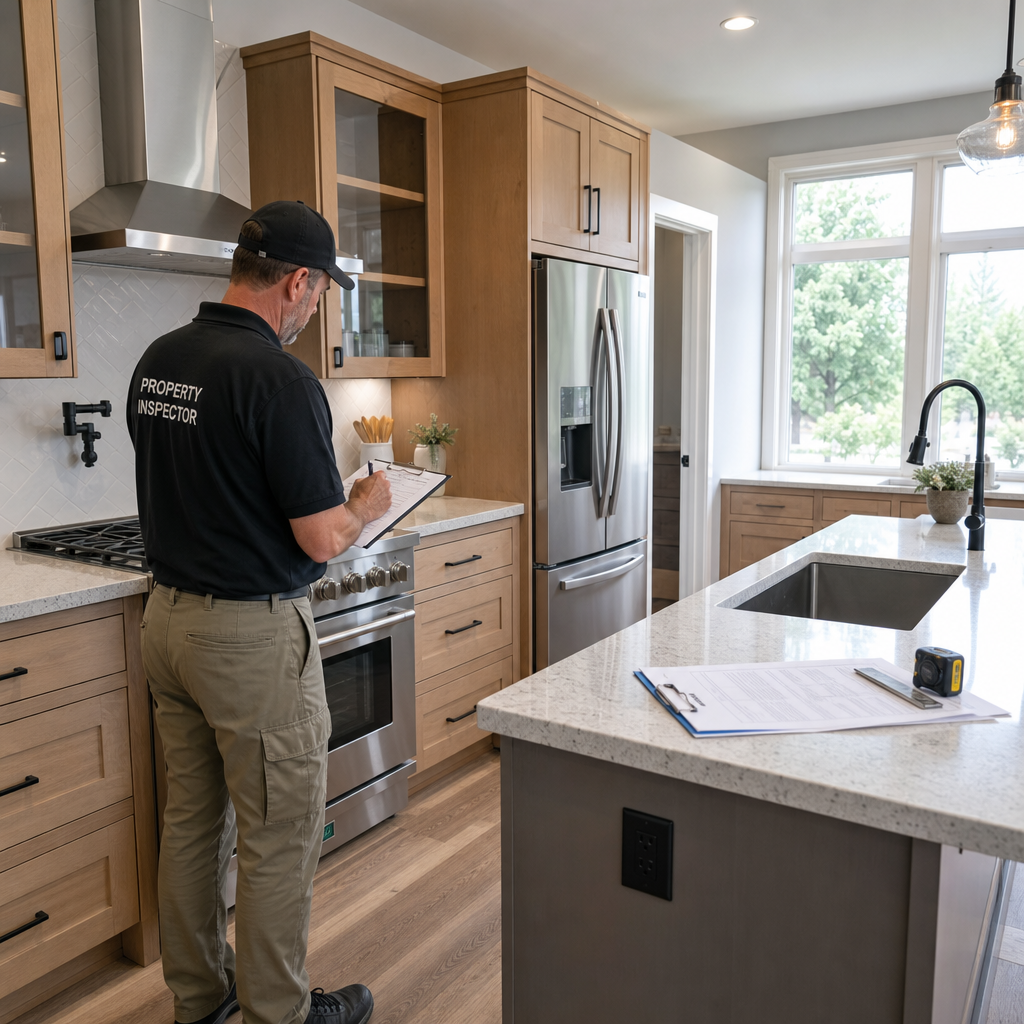
The kitchen is where more trades converge than almost anywhere else in the home. Cabinetry installers, plumbers, electricians, tilers, plasterers, and painters all work in this space, and the handoffs between them create predictable defect points.
Cabinetry and Benchtops
Inspectors check that overhead and base cabinets are level to within two millimetres over their full run, that doors and drawers operate smoothly and align correctly, and that soft-close mechanisms function. Benchtop joints are checked for gaps, delamination, and that silicone sealant is continuous at the wall and sink interfaces. A benchtop that is not correctly sealed at the wall will develop mould in the gap within months.
Splashback and Wet Zone Tiling
Splashback tiles are checked for correct adhesive coverage, hollow sections, and appropriate expansion joints at internal corners. Stone or engineered stone splashbacks are checked for chips, scratches, and that the stone has not been installed directly against the cooktop without a heat-resistant buffer.
Sink, Tapware, and Dishwasher Connections
The inspector tests all tapware for leaks at connection points, checks that the sink waste and overflow function correctly, and confirms that the dishwasher is plumbed with a high loop or air gap to prevent backflow. These are simple functional checks, but they are missed in builder walk-throughs with alarming frequency.
Bathrooms and Wet Areas: Waterproofing Is Non-Negotiable
Bathroom and wet area failures are the most expensive post-settlement defects in new Queensland homes. Water damage behind tiles can remain hidden for years, rotting framing and substrate before it becomes visible. This is why waterproofing inspection is non-negotiable on any building inspection checklist in Queensland.
Waterproofing Membrane Assessment
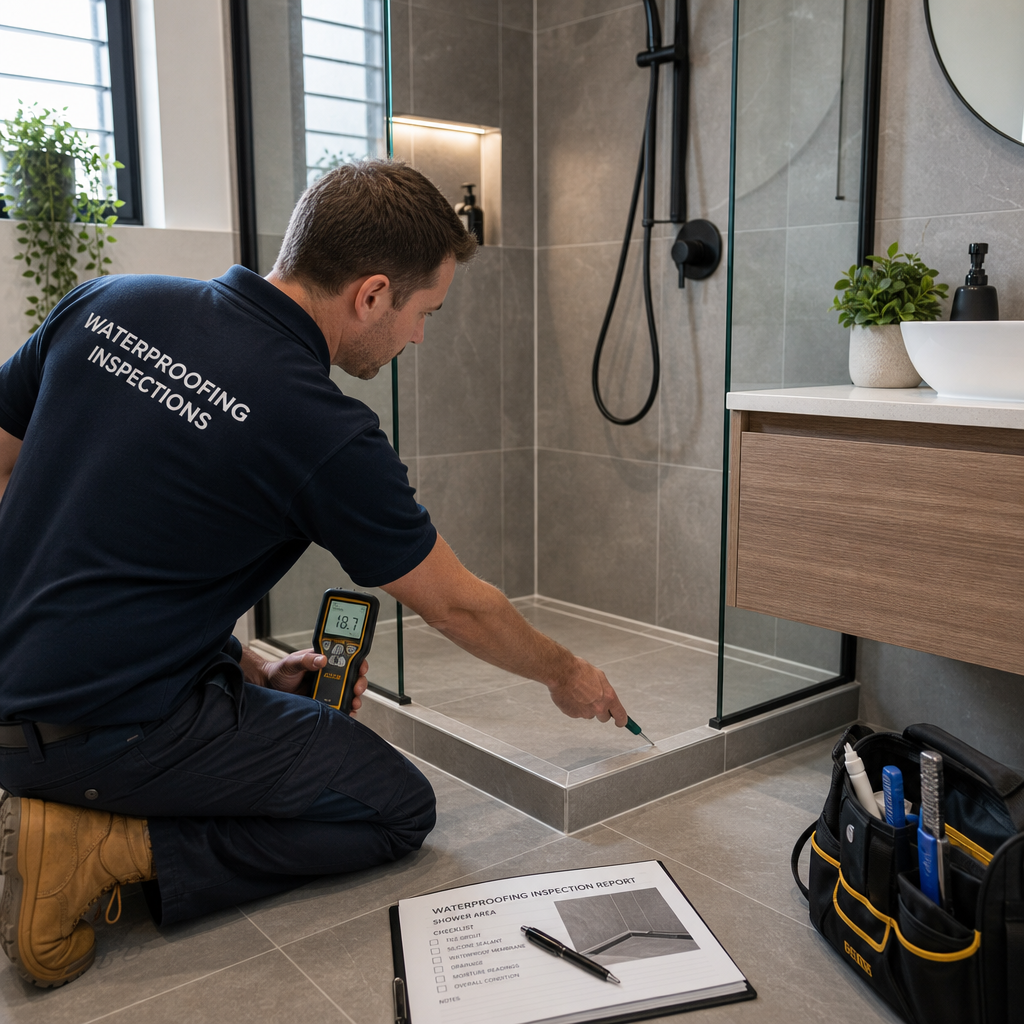
Inspectors check that waterproofing has been applied to the correct height on walls, that the membrane extends under the floor waste and is properly integrated, and that the bond breaker is present at all internal corners before tiling. Under AS 3740, bathroom floors and walls to shower enclosures require specific waterproofing coverage. Inspectors check compliance against this standard, not against what the builder has stated in documentation.
Shower Screen and Silicone
Shower screens are checked for correct fitting, that there are no gaps at the wall junction, and that silicone is continuous and bubble-free. Failed silicone at the base of a shower screen is one of the most common and preventable causes of subfloor water damage in new homes. Inspectors compress silicone joints to check for voids and disbonding.
Floor Falls and Waste Grates
Shower floors must fall to the waste at the correct gradient to prevent pooling. Inspectors use a level to verify fall direction and adequacy. A shower floor that pools water will eventually force water under silicone joints regardless of how well those joints were initially sealed.
Pro tip: If your builder is pushing back on a re-inspection of waterproofing after rectification, that resistance is a warning sign, not a negotiating position. All rectified waterproofing work must be independently verified before tiling over it. Once tiles go down, there is no way to verify the membrane without destructive testing.
Garage and Laundry Checks
The garage and laundry are frequently treated as afterthoughts by builders, which means they contain a disproportionate share of defects on a new home inspection checklist.
Garage Door Operation and Safety
The garage door is tested for smooth operation, correct balance, and auto-reverse function. Auto-reverse failure is a safety defect, not a cosmetic one. Inspectors also check that the garage floor has the correct drainage fall toward the door opening, that any step-down into the house from the garage meets fire-rating requirements, and that the door from the garage into the home is a compliant fire door where required.
Laundry Fitout and Connections
The laundry trough, tapware, and waste connections are tested. Inspectors check that the washing machine recess is level, that hot and cold connections are correctly positioned, and that the dryer vent outlet is directed externally. Missing or internally-directed dryer vents are a common defect that creates moisture and mould issues in enclosed laundry spaces.
Electrical and Plumbing: What a Visual Check Covers
A building inspection is a visual and functional assessment, not a licensed electrical or plumbing trade inspection. That distinction matters for setting expectations. However, there is significant value in what a visual check can reveal.
Electrical Switchboard and Outlet Testing
Inspectors check that the switchboard is correctly labelled and that all GPOs, switches, and light fittings are tested for basic operation. Outlets that do not function, light switches wired to incorrect circuits, and missing RCD protection on required circuits are all identifiable at this stage. The inspector documents these for referral to a licensed electrician for formal certification, but the visual identification is still the critical first step.
Plumbing Functional Checks
All taps, showers, toilets, and external hose taps are operated. Inspectors check for drips at connection points, slow drainage that may indicate partial blockages in new waste lines, and adequate water pressure at fixtures. Toilets are flushed and the cistern refill time is observed. External hose taps that drain back into the wall cavity rather than externally are a defect that is consistently missed in builder walk-throughs.
Comparing Inspection Approaches: DIY vs. Builder’s Rep vs. Independent Inspector
Not all pre-handover inspections are equal. The approach you use determines the quality of defects identified and your ability to hold the builder accountable.
| Inspection Approach | What It Covers | Key Limitation |
|---|---|---|
| DIY Buyer Walkthrough | Visible finish items, items the buyer knows to look for based on personal experience | No knowledge of QBCC tolerances, no systematic methodology, emotional bias toward the property, no defensible documentation |
| Builder’s Site Supervisor Walk | Items the site supervisor chooses to disclose and has already prepared the property to present well | Fundamental conflict of interest. The supervisor works for the builder, not the buyer. Defects that require trade call-backs cost the builder time and money. |
| Independent Licensed Inspector (GoInspect) | Systematic room-by-room assessment against QBCC standards, photo-enhanced defect attribution to specific trades, same-day reporting, valid for QBCC dispute processes | Has an upfront cost starting from $550 including GST, which is consistently outweighed by the value of defects identified and rectified at builder’s cost |
The data consistently shows that independent inspectors identify defects that builder representatives do not raise, largely because the financial incentive to disclose those defects runs in opposite directions. A GoInspect report that identifies 35 defects and gets 30 of them rectified at the builder’s cost before handover represents a return that dwarfs the inspection fee.
Building Inspection Checklist Queensland: Regulatory Specifics
Queensland has specific regulatory requirements that shape what an inspection checklist must cover. The QBCC administers the Queensland Home Warranty Scheme, which provides statutory insurance on new homes. Understanding the regulatory framework helps you understand what defects are formally actionable and what timeframes apply.
QBCC Defect Categories and Timeframes
Under the Queensland Home Warranty Scheme, defects are categorised as either structural or non-structural. Non-structural defects must be claimed within three months of practical completion or three months of the defect becoming apparent. Structural defects carry a six-year insurance period. This timeline makes the pre-handover inspection even more important, because identifying non-structural defects before you accept the keys ensures they fall within the builder’s obligation to rectify under the contract, not the insurance timeline.
Practical Completion vs. Pre-Settlement Distinction
In Queensland, a practical completion inspection occurs when the builder declares the home is substantially complete and ready for occupation. This is distinct from financial settlement, which may occur later if the home is a new build under a house and land package contract. GoInspect conducts both practical completion and pre-settlement inspections because the timing of each creates different defect disclosure opportunities and different contractual obligations on the builder.
High-Rise and Multi-Unit Considerations
For investors purchasing off-the-plan apartments in Brisbane or the Gold Coast, the inspection checklist must be adapted to the common property elements as well as the individual lot. GoInspect provides customised inspection reports for high-rise developments, covering car parks, lobby areas, amenity spaces, and individual unit fit-outs. Common property defects that are missed at handover become the responsibility of the body corporate, meaning all owners share the remediation cost.
The building inspection checklist for Queensland high-rise buildings also needs to address fire safety compliance, lift and plant room access areas where applicable, and the integration between balcony waterproofing and the facade drainage system. These are not items that a DIY walkthrough will capture.
Frequently Asked Questions
What is a new home inspection checklist and why do I need one?
A new home inspection checklist is a systematic, room-by-room framework that licensed inspectors use to assess a new build against Australian construction standards and QBCC tolerances before the buyer accepts the keys. You need one because new builds routinely contain defects across every trade category, from waterproofing to electrical to finishing, and identifying those defects before handover is the only way to have them rectified at the builder’s cost rather than yours.
How many defects does a typical new home inspection find in Queensland?
In practice, licensed inspectors conducting pre-handover inspections on new Queensland homes identify anywhere from 20 to 80 individual defects per property. The number varies based on the builder’s quality control processes, the number of subcontractors involved, and the complexity of the build. Single-storey homes with simpler specifications tend toward the lower end of that range. Multi-storey or architecturally detailed homes regularly exceed 50 items.
Can I do my own pre-handover inspection instead of hiring GoInspect?
You can conduct your own walkthrough, but it will not function as a defensible inspection. You will not know the QBCC tolerances for wall plumb, floor flatness, or waterproofing coverage. You will not be able to identify hollow render, substandard silicone, or incorrect drainage falls without the right tools and training. More importantly, a builder can and will contest defect claims that are not backed by a report from a licensed inspector. The cost of missing even one significant waterproofing defect consistently exceeds the cost of an independent inspection by a multiple of ten or more.
What does a GoInspect report include that a standard inspection report does not?
GoInspect’s reports are photo-enhanced and attribute each identified defect to the specific trade responsible for rectification. This means the report does not just say a problem exists. It says which subcontractor caused it and what the required rectification is. This specificity removes ambiguity from builder-buyer communications and makes the defect management process faster for all parties. Reports are delivered the same day as the inspection, which is critical for pre-handover meetings where timing determines your ability to dispute before accepting the keys.
What is the difference between a practical completion inspection and a pre-settlement inspection?
A practical completion inspection occurs when the builder formally declares the home substantially finished and triggers the occupation certificate process. A pre-settlement inspection is conducted immediately before the financial settlement date. These can be the same event or separate events depending on your contract structure. Both are valuable because defects found at practical completion give you maximum leverage before legal ownership transfers. GoInspect conducts both types across Brisbane, Gold Coast, Logan, Ipswich, and Redland Bay.
Are building inspections required by law in Queensland?
There is no legal requirement for a buyer to obtain an independent pre-handover inspection in Queensland. However, the absence of such an inspection eliminates your strongest practical tool for identifying and documenting defects before you accept the property. The QBCC provides statutory warranty coverage for qualifying defects, but making a successful claim is significantly harder without a contemporaneous inspection report that predates your acceptance of the keys. Independent inspection is strongly recommended by the QBCC itself and by consumer protection bodies.
How much does a new home inspection cost through GoInspect?
GoInspect’s pre-handover inspections start from $550 including GST. This covers the full room-by-room inspection, the photo-enhanced defect report with trade attribution, and same-day delivery of the report. For high-rise and multi-unit developments, a customised fee applies based on the scope of the inspection. For context, a single waterproofing failure that is not identified before handover can cost $5,000 to $30,000 to rectify destructively after tiles have been laid. The inspection fee is not an expense. It is risk management.
Have you recently gone through a new home handover inspection in Queensland? Share what defects surprised you most, your experience helps other buyers and investors know what to look for before accepting the keys.
References
- Queensland Building and Construction Commission official site covering home warranty, defect claims, and construction standards for Queensland homeowners
- Queensland legislation database including the Queensland Building and Construction Commission Act and associated residential construction regulations
- Australian Competition and Consumer Commission guidance on consumer rights in new home construction contracts and defect dispute processes
- Forbes coverage of real estate due diligence, property investment risk management, and pre-purchase inspection best practices
- Statista data on Australian residential construction volume, new dwelling approvals, and housing defect statistics by state