
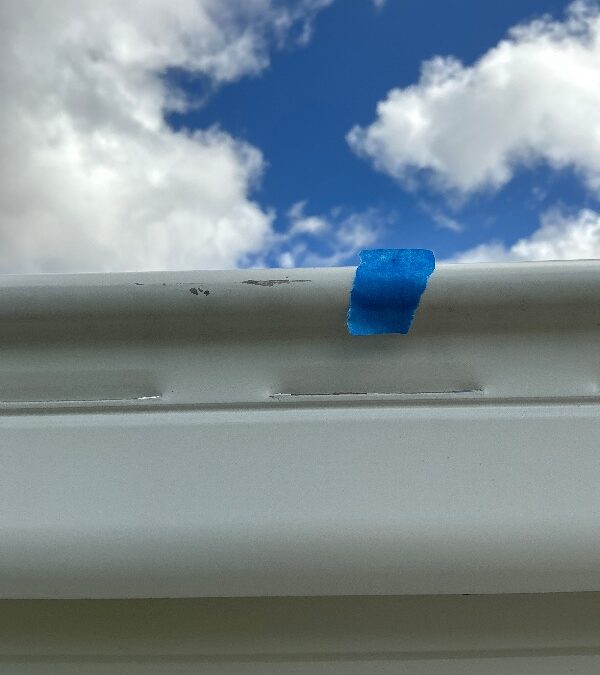
Gutter defects in new homes can include visible damage, incomplete fixings, debris and drainage concerns. Before handover, check the roof edge as well as the rooms inside. Record the particular section and condition, then ask the builder for the appropriate assessment and rectification.
The eaves are the overhanging roof edge, with the soffit forming the underside. Fascia runs along the roof edge, while gutters collect rainwater and discharge through outlets and downpipes. Checking these elements together helps you identify a concern without assuming that every mark or gap has the same cause.
This guide includes three findings from GoInspect reports and a practical roof-edge checklist for your practical completion inspection (PCI). The takeaway: keep finish damage, incomplete work and water behaviour as separate items, with clear locations and an agreed response.
A checklist for eaves, fascia and gutters before handover
Walk around the house from safely accessible ground positions. Check each elevation rather than only the front entrance. Where visible, look for:
- Eaves and soffits: damaged or loose-looking lining, unfinished joints, missed paint, staining and untidy junctions with walls or trims.
- Fascia: dents, distorted sections, scratches, unwanted paint deposits and visibly unfinished corners or joins.
- Gutters: damaged edges, obvious sagging, loose-looking components, debris and staining around joints.
- Outlets and downpipes: incomplete connections, missing fixings, damage and visible material obstructing an opening.
- Water concerns: the position of a drip, overflow, damp patch or water remaining in a gutter, and the conditions when you noticed it.
This is a checklist of observations to raise, rather than a rule that every visible joint or opening must be sealed. Some details serve ventilation or drainage functions. If a junction looks unfinished, ask the builder to identify the intended detail before requesting that it be filled.
Do not climb onto a roof, lean from a ladder or probe fascia with a screwdriver to demonstrate a defect. A clear ground-level location is enough to raise the concern and arrange the right access for closer assessment.
Scratched gutter roll: record the damage before choosing a repair
The opening photograph shows scratches on the rolled edge of a gutter beside blue inspection tape. In that inspection, GoInspect recorded the gutter roll as scratched above the garage and allocated the finding to the roofer.
The location and description make the concern straightforward to find again. They do not identify the coating brand or establish the correct repair. Ask the builder to identify the product and explain the proposed treatment against its manufacturer’s guidance.
For example, BlueScope does not recommend touch-up paints on COLORBOND steel, because air-drying paint weathers differently from the factory finish and can develop a patchy appearance. This is a useful reason to check the actual product instructions, rather than automatically accepting a colour-matched spray. It does not establish that the gutter pictured is COLORBOND steel.
Keep cleaning and coating damage distinct. If the response is to remove a deposit, ask for the surface beneath it to be checked afterwards. A cleaning task should not silently close a separate scratch or dent finding.
Dented fascia: identify the section needing rectification
A separate GoInspect report called for rectification of dented fascia and gutter at the front of a house. The photograph below shows a marked area of fascia beneath the gutter.
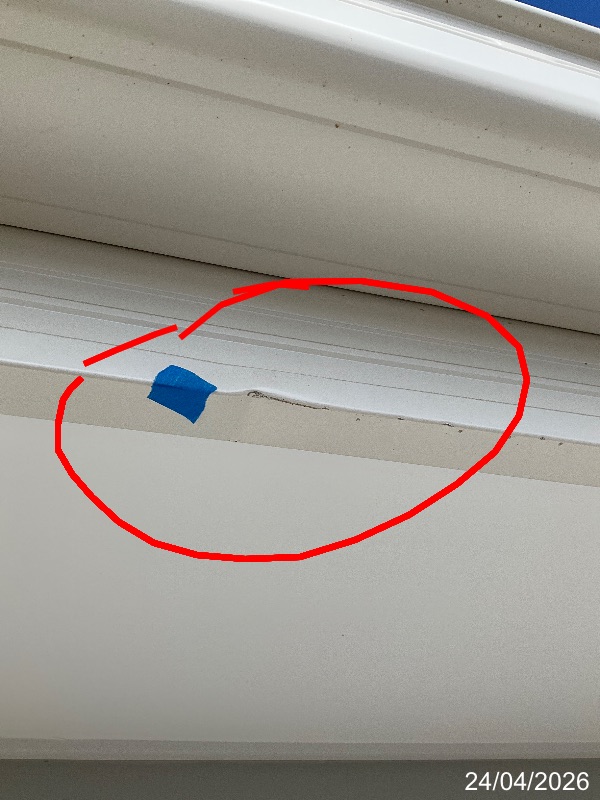
Record the dented section separately from scratches elsewhere along the roof edge. Ask what work is proposed and how the surrounding finish and adjacent components will be treated. The report finding does not, by itself, establish a leak or identify how the damage occurred.
Use an overview showing the corner or elevation as well as a close-up. That helps the supervisor match the response to the correct section, especially where several similar gutter runs surround the house.
Downpipe fixings: a small missing item deserves its own entry
In another finding from the first inspection, GoInspect recorded a missing downpipe saddle fixing on the side of the house. The close-up shows the empty fixing hole in the support bracket.
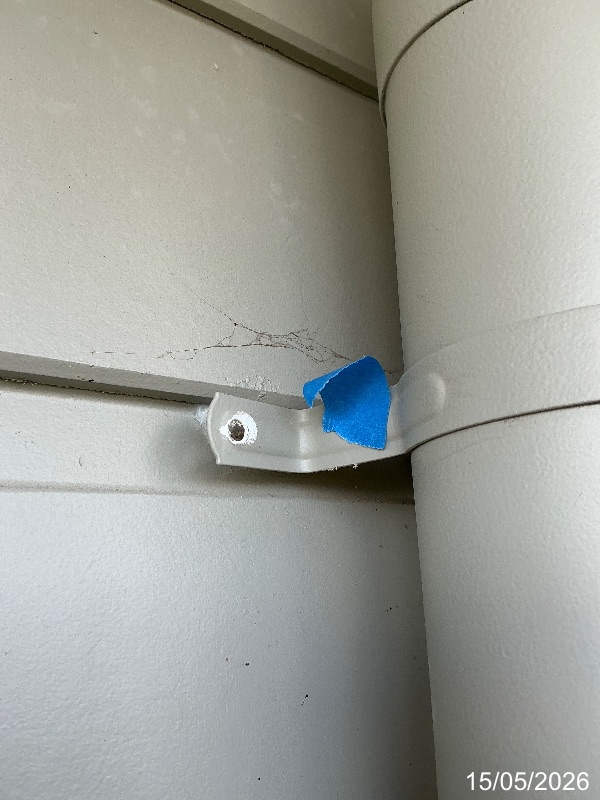
The QBCC Standards and Tolerances Guide, section 8.5, addresses secure fixing of gutters and downpipes. The appropriate fixing and support arrangement still needs to suit the actual installation.
Give the builder the location and ask for completion to the relevant requirements. You do not need to pull on the pipe or loosen the bracket to make the point. A trade allocation helps route the item, while the builder coordinates the response.
Water remaining in gutters: ask what was assessed
A gutter can have an appearance concern, a drainage concern or both. A scratch does not prove that water drains incorrectly, and a still photograph does not measure fall, catchment capacity or overflow performance.
Section 8.3 of the QBCC guide identifies gutters retaining water deeper than 10 mm as defective. That reference is not a complete drainage-design assessment or a reason to accept every shallower puddle. The relevant design, installation, outlets and applicable requirements also matter.
When water remains or escapes unexpectedly, record the section, the rainfall conditions and whether it is coming through a joint, behind the gutter or over an edge. If you cannot see inside the gutter safely, say so. Ask for assessment of the actual system instead of treating a short hose test as proof that it will perform in every storm.
LYSAGHT’s gutter guidance identifies debris at downpipe entries and overflow locations as inspection concerns. Its installation-cleaning advice also explains why metal particles should be removed from roofs and gutters. These references support checking for debris; they do not identify the material in an unverified stain or prove that a concealed pipe is clear.
Arrange the inspection and follow-up around the actual concern
Tell GoInspect about known roof-edge damage or water concerns when booking your handover inspection. Confirm which areas can be viewed safely and whether another inspection method is needed. Standard inspection does not include roof walking unless safe access and suitable edge protection are provided. A drone roof inspection may offer another view, subject to weather, access and flight restrictions.
Keep the finding, original photographs and builder response together. Ask what will be addressed, when it can be reviewed and what remains unresolved. Minor outstanding work does not automatically determine whether handover or payment can proceed; refer to your contract and QBCC’s handover guidance.
You can request an inspection quote with your property details and specific concerns. A clear record of the roof edge gives the builder practical items to locate, assess and rectify.