
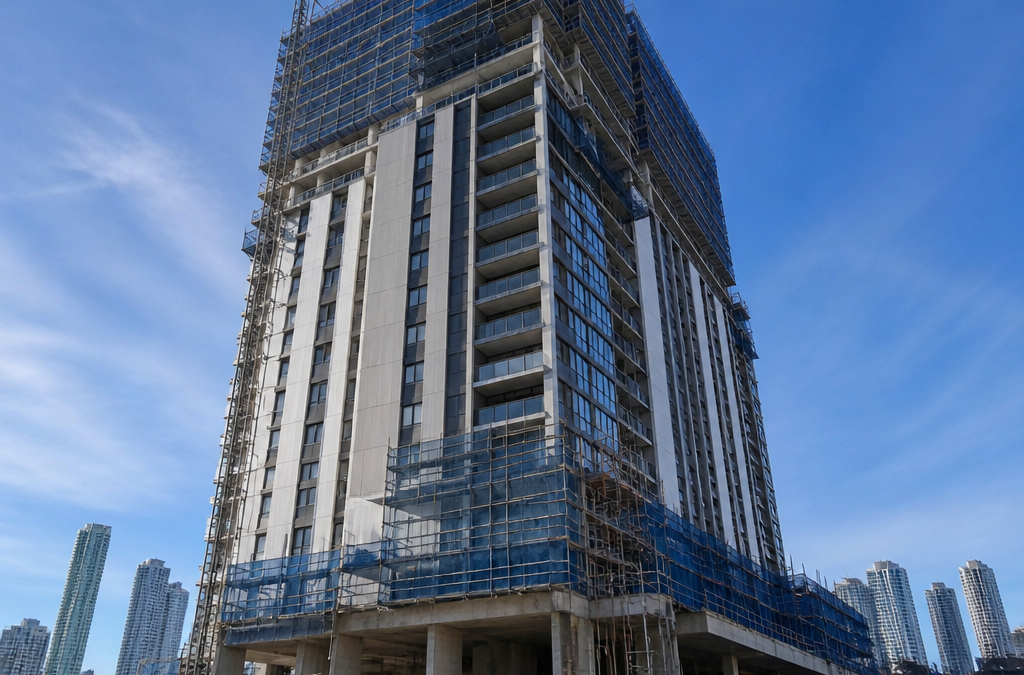
When a developer reaches practical completion on a 120-unit tower in Brisbane’s inner suburbs, they do not have the same inspection problem as someone handing over a house in Logan. They have 120 separate defect reports to produce, 120 sets of buyers waiting on settlement, and a single compressed timeline in which every delay costs money. Generic inspection services built around residential houses fail at exactly this point. A high rise inspection Brisbane service that works for individual buyers but has no structured program for developers leaves builders scrambling to coordinate multiple providers, inconsistent report formats, and no clear accountability trail across trades. That is the gap GoInspect was built to close.
Table of Contents
- Quick Takeaways
- Why High-Rise Inspections Are Fundamentally Different
- What a Developer Defect Report Actually Needs to Contain
- How GoInspect Supports Builders at Scale
- Common Defects Found in Brisbane High-Rise Developments
- Comparing Inspection Approaches for Unit Developments
- Frequently Asked Questions
- References
Quick Takeaways
| Key Insight | Explanation |
|---|---|
| High-rise inspections require a different checklist entirely | Fire door compliance, balcony waterproofing, inter-tenancy sound attenuation, and common property interfaces are not on any standard residential housing checklist. Applying a house checklist to an apartment building produces an incomplete and legally unreliable report. |
| Each unit in a multi-unit development requires its own report | Developers and project managers typically arrange bulk inspection schedules across an entire building or stage. A single building-wide summary is not sufficient for individual lot settlements. |
| Same-day reporting removes settlement bottlenecks | When dozens of apartments are settling within a short window, report turnaround time is a commercial issue, not just a convenience. GoInspect’s same-day reporting is directly relevant to developers managing staged settlements. |
| Photo-enhanced reports assign trade responsibility clearly | A defect listed as “paint finish substandard” tells a builder nothing actionable. A report that photographs the defect, locates it precisely, and names the responsible trade drives faster rectification and cleaner accountability. |
| Queensland statutory warranty periods create long-term exposure | New buildings in Queensland carry a 6-year and 6-month statutory warranty period for structural defects under the QBCC Act. Comprehensive pre-handover reports establish a documented baseline that protects both the buyer and the developer. |
| GoInspect covers the full South East Queensland development corridor | Brisbane, Gold Coast, Logan, Ipswich, and Redland Bay are all within GoInspect’s service area, which matches where the majority of Queensland’s new unit developments are being delivered. |
| Licensed inspectors are not optional on high-rise defect reports | Unlicensed operators may offer lower prices, but their reports carry no professional weight in a QBCC dispute or legal proceeding. For developers with multiple lots at risk, this is a false economy. |
Why High-Rise Inspections Are Fundamentally Different
The most expensive mistake a builder or developer can make when organizing pre-handover inspections for a unit development is to treat it as a scaled-up version of a house inspection. It is not. The physical elements being assessed in a high-rise are categorically different, and the reporting structure needs to reflect that.
A unit development inspection must cover common property interfaces alongside each individual lot. That means assessing lift lobby finishes, corridor fire doors, car park waterproofing, and mechanical ventilation systems, none of which appear on a standard residential checklist. If an inspector walks into an apartment building with a checklist designed for a detached house, they will produce a report that is incomplete in ways the buyer may not discover until years later.
The specific elements that separate apartment inspections from house inspections
Fire door compliance is one of the most frequently missed categories in inadequate apartment inspections. Gaps that exceed code tolerances on fire doors are a life-safety issue, not just a finish defect, and they require a specific measurement process that differs entirely from checking door clearances on a bedroom door in a house.
Balcony waterproofing failures are another category that only shows up in multi-level buildings. In a ground-floor house, a waterproofing failure under a balcony is annoying. In an apartment building, the same failure can cause water ingress through multiple floors below, affecting several lots simultaneously and triggering disputes that are far harder to resolve once settlement has occurred. The same logic applies to wet area waterproofing in bathrooms above lower-floor units.
Inter-tenancy sound attenuation, mechanical ventilation adequacy, and the condition of common-area finishes all require assessment at each unit’s walls, ceilings, and entry points. These are elements specific to the stacked and shared-wall nature of apartment construction, and they require an inspector with genuine high-rise experience to assess correctly.
The purpose of a pre-handover inspection is not to tick a box. It is to create a documented record of the building’s condition at the moment of transfer, with enough specificity to drive actual rectification and protect every party involved.
What a Developer Defect Report Actually Needs to Contain
A developer defect report that is genuinely useful to a builder managing rectification across a full development is structured completely differently from a report produced for an individual buyer. The builder does not need to know that Unit 12B has a defective door handle in isolation. They need a report format that allows the site manager and subcontractors to identify every defect across all units, assign each one to the relevant trade, and track rectification progress without cross-referencing multiple unconnected documents.
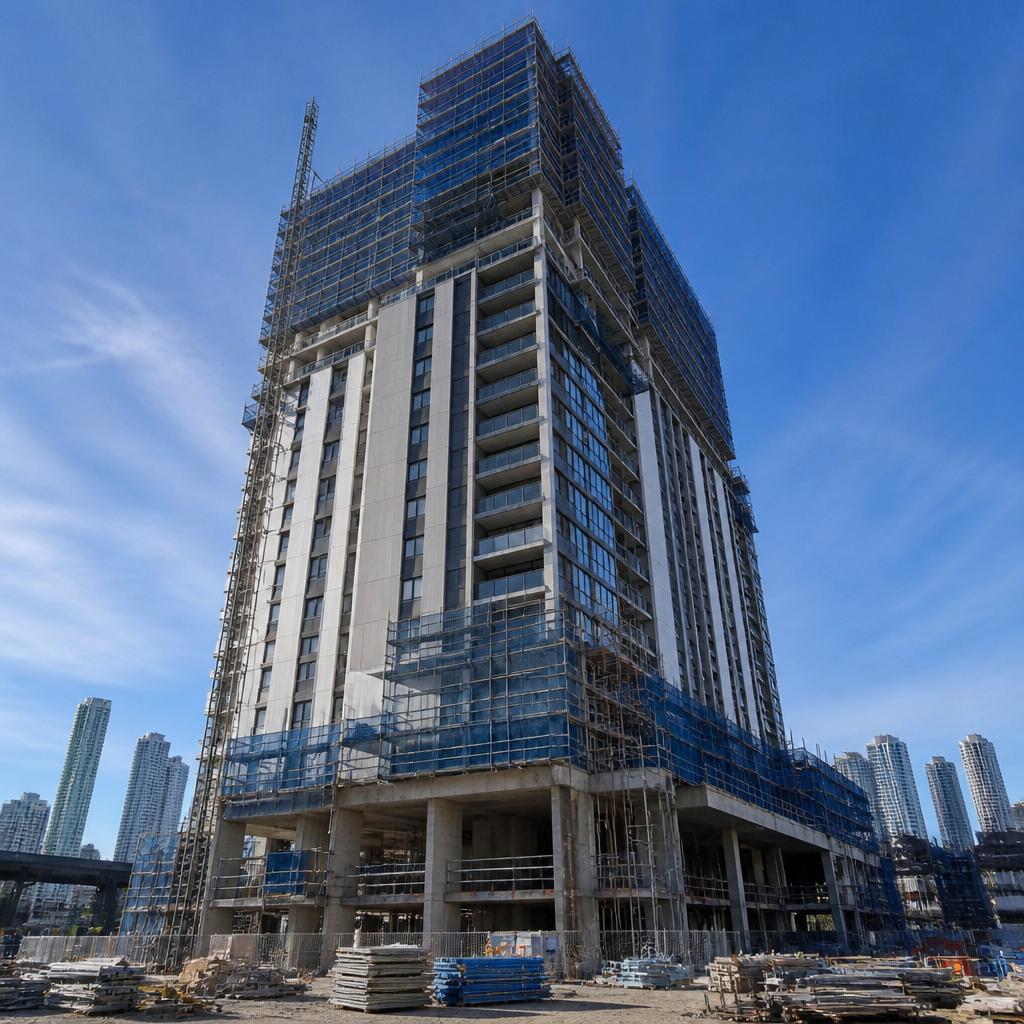

Photo documentation tied to trade responsibility
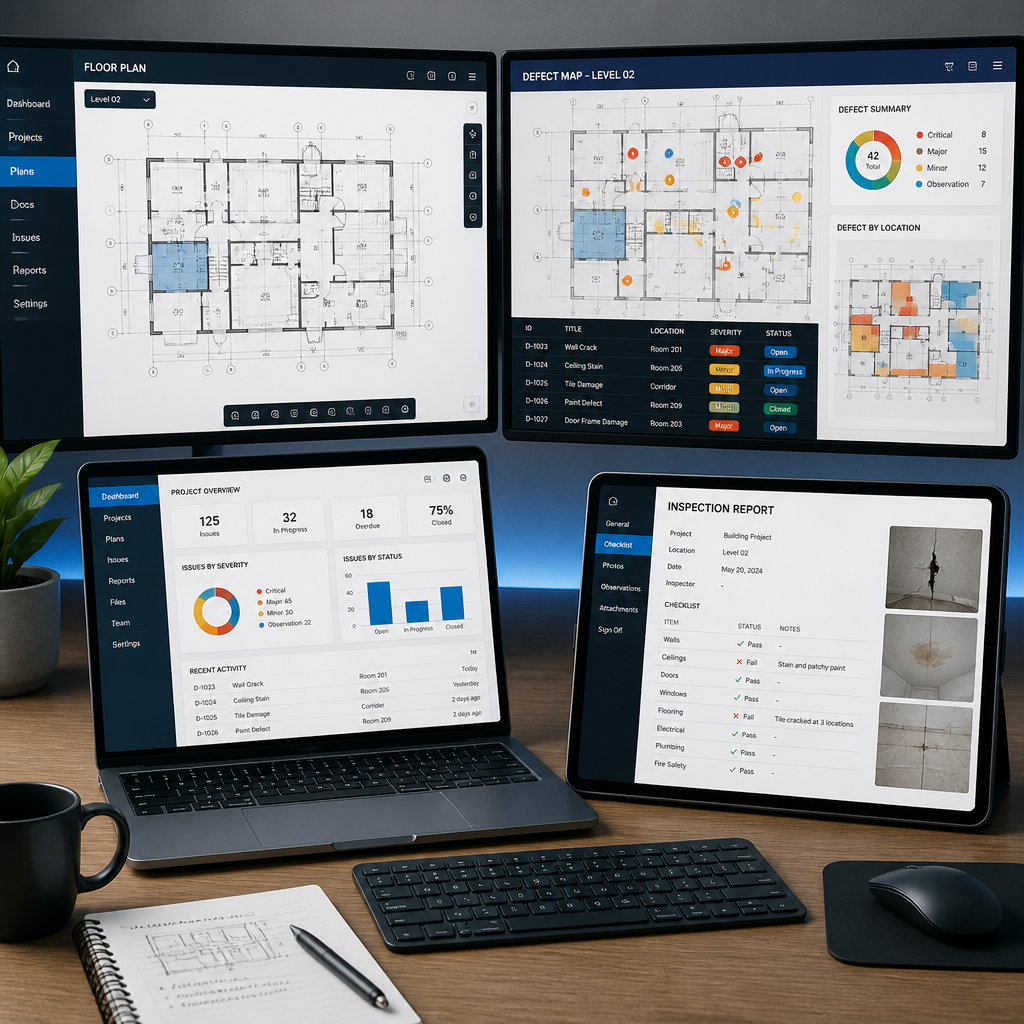
GoInspect’s photo-enhanced reporting approach addresses this directly. Every defect identified is photographed, located precisely within the unit, and attributed to the specific trade responsible. This matters because a defect list that says “cracking to internal wall surface in bedroom” without further attribution leaves the builder in a dispute between the plasterer, the painter, and whoever did the framing. A report that photographs the crack, notes its location and dimensions, and identifies it as a plastering defect removes that dispute before it starts.
For a developer managing rectification across a 60-unit building, the difference between a report that drives efficient subcontractor action and one that generates arguments is a commercial issue. Time spent resolving attribution disputes is time the building is not being rectified, and every day of delayed rectification extends the settlement schedule for buyers waiting on completed lots.
Individual unit reports within a coordinated program
Each lot in a multi-unit development requires its own individual report for settlement purposes. Buyers settling on individual apartments cannot rely on a building-wide summary, and individual strata title registrations require lot-specific documentation. At the same time, developers managing the rectification process need the ability to view defects across all lots simultaneously to prioritize trade scheduling.
GoInspect’s customised inspection programs for high-rise developments are structured to deliver both. Individual unit reports are produced for each lot, formatted for buyer settlement use, while the underlying defect data is organized in a way that allows the developer to manage trade accountability across the whole building. This is not a feature available from inspection providers who only operate on a single-buyer, single-property model.
Pro tip: When booking inspections for a staged settlement, coordinate the inspection schedule at least two weeks before the first settlement date, not the last. The builder’s notification of practical completion should arrive at least two to three weeks out with formal written notice of at least five days. Use that window to brief GoInspect on the settlement schedule so reports can be sequenced in the order settlements will occur.
How GoInspect Supports Builders at Scale
Builders and developers in South East Queensland are not a homogenous group. A boutique developer delivering a 12-unit townhouse complex in Redland Bay has different operational needs from a commercial developer settling a 200-unit tower in Brisbane’s inner north. GoInspect’s approach to high-rise and unit development inspections is designed to accommodate this range without defaulting to a one-size product.
Customised programs for housing projects and high-rise developments
For housing projects where multiple lots are settling in sequence, GoInspect provides coordinated inspection scheduling across the development, with reports produced in the order the builder needs them for handover meetings. This removes the coordination overhead that builders otherwise face when managing multiple buyers who have each independently engaged different inspectors with different availability and different report formats.
For high-rise developments, the customisation goes further. GoInspect’s reports for apartment buildings are structured to address the specific inspection categories relevant to multi-storey construction, including common property interfaces, fire safety compliance points, and balcony and wet area waterproofing, rather than applying a residential housing template. This is not a minor formatting adjustment. It is the difference between a report that an experienced defect manager can act on immediately and one that creates more questions than it answers.
Same-day reporting and settlement timing
For developers managing settlements across a building, report turnaround is a genuine commercial constraint. If a buyer’s settlement is scheduled and the defect report is not available in time for the buyer to review it before the handover meeting, the settlement either proceeds without the buyer having proper information, or it is delayed. Neither outcome is good for the developer’s program.
GoInspect’s same-day reporting capability is directly relevant here. When inspections are conducted on a building with a compressed settlement schedule, same-day delivery means buyers receive their reports while the inspection findings are still actionable before settlement, not after it. For developers settling multiple lots per week during a tower’s settlement campaign, this is a material operational advantage.
Pro tip: Never rely on the builder’s site supervisor to capture defects on behalf of buyers during a handover walkthrough. The site supervisor’s role is to facilitate handover, not to identify defects in the buyer’s interest. Their commercial relationship with the builder means their incentives are not aligned with the buyer’s. An independent licensed inspector has no such conflict.
Coverage across the South East Queensland development corridor
GoInspect’s service area covers Brisbane, Gold Coast, Logan, Ipswich, and Redland Bay, which corresponds directly with where the majority of South East Queensland’s new unit development activity is concentrated. Developers with projects across multiple sites within this corridor can coordinate inspection programs through a single provider rather than managing relationships with different local operators in each location.
Common Defects Found in Brisbane High-Rise Developments
Understanding the most common defect categories in Brisbane high-rise developments matters because it determines what a competent inspection program needs to look for, and where an inadequate checklist will miss issues that will generate warranty claims later.
Internal water leaks, cracking to internal and external structures, and water penetration from outside are consistently among the most frequently reported defect categories in multi-unit buildings. In a Brisbane high-rise context, these categories manifest in specific ways that require targeted assessment during a pre-handover inspection.
Waterproofing failures above lower floors
Car park waterproofing failures are a particularly common finding in Brisbane developments. These failures often do not become apparent until after the first major rain event following settlement, at which point the builder’s pre-handover obligation has technically been met and rectification becomes a QBCC warranty dispute. Identifying waterproofing deficiencies at the pre-handover stage, before settlement, keeps the rectification obligation clearly within the builder’s pre-settlement scope.
Balcony waterproofing and wet area waterproofing in bathrooms and laundries above lower-floor units follow the same logic. A defect that would be a minor inconvenience in a standalone house becomes a multi-party dispute in an apartment building when water travels through the floor to affect the unit below.
Fire safety compliance and finish defects
Fire door gaps that exceed code tolerances are a standard finding in high-rise apartment inspections and one of the defect categories most likely to be missed by inspectors without specific multi-storey building experience. These are not cosmetic defects. They are compliance failures with life-safety implications, and they need to be documented and rectified before handover rather than left to be identified in a post-settlement warranty claim.
In lobby and corridor areas, finish defects that do not match the builder’s specifications are frequently identified during high-rise inspections. These are sometimes dismissed as cosmetic, but the specifications in a contract are legally binding, and a developer’s obligation to deliver what was contracted does not diminish because a finish defect is in a common area rather than inside an individual unit.
Queensland’s QBCC Act provides a 6-year and 6-month statutory warranty period for structural defects in new buildings and 12 months for non-structural defects. A comprehensive, photo-documented pre-handover report establishes the building’s condition at settlement and protects both the buyer and the developer from ambiguous post-settlement warranty disputes about when a defect originated.
Comparing Inspection Approaches for Unit Developments
Not all inspection providers in the Brisbane and South East Queensland market approach high-rise and unit development inspections the same way. Builders and developers evaluating providers need to understand the meaningful differences before committing to a program across a full development.
| Inspection Approach | Suitable For | Limitations for Unit Developments |
|---|---|---|
| Single-buyer residential inspection (individual booking, standard checklist) | Individual buyers purchasing one house or apartment with no coordination requirement | No coordinated program across multiple lots. Inconsistent report formats across different buyers’ inspectors. No high-rise-specific checklist. No trade accountability structure in reporting. Delayed turnaround creates settlement timing problems. |
| GoInspect customised unit development program | Developers and builders managing high-rise towers, townhouse complexes, and multi-unit projects across Brisbane, Gold Coast, Logan, Ipswich, and Redland Bay | Requires coordination between the developer’s project manager and GoInspect to schedule inspections in settlement-sequence order. Best suited for developers who engage early in the pre-handover timeline rather than at the last minute. |
| Builder’s own internal defect walkthrough (site supervisor led) | Internal quality control check before presenting to buyers, not a substitute for independent inspection | Not independent. Site supervisor’s incentives are aligned with the builder, not the buyer. Findings are not legally equivalent to a licensed independent inspector’s report. Cannot be used by buyers as a settlement document or in a QBCC dispute. |
The cost difference between these approaches is not the right lens for evaluating them. The correct comparison is the cost of engaging a structured, licensed program like GoInspect’s against the cost of a single post-settlement waterproofing dispute or fire safety compliance failure across a building with 80 lots. One unresolved structural defect in a multi-unit building can generate warranty claims across multiple lots simultaneously, with compounding legal and repair costs that dwarf the inspection program cost several times over.
Frequently Asked Questions
Does every unit in a high-rise development need its own inspection report?
Yes. Each unit in a multi-unit or high-rise development requires its own inspection and defect report for settlement purposes. A building-wide summary is not a substitute for an individual lot report when a buyer is settling on a specific strata title property. Developers and project managers typically arrange bulk inspection schedules across the entire building or development stage to manage this efficiently.
What does GoInspect’s high-rise inspection cover that a standard house inspection does not?
High-rise inspections with GoInspect cover common property interfaces, fire door compliance, balcony and wet area waterproofing, mechanical ventilation adequacy, inter-tenancy sound attenuation, and lift lobby finishes. These are inspection categories specific to multi-storey apartment construction that do not appear on a residential housing checklist. Applying a standard house checklist to an apartment building produces an incomplete report that will miss defects a competent inspector would identify.
How does GoInspect’s same-day reporting benefit developers during a settlement campaign?
When multiple apartments are settling within a compressed window, report turnaround time directly affects whether buyers receive their inspection findings before or after their handover meeting and settlement. Same-day reporting means buyers can review documented defects, raise them with the builder at the handover meeting, and negotiate rectification before settlement rather than after. For developers with a staged settlement schedule, this prevents delays caused by buyers waiting on inspection reports.
Can GoInspect coordinate inspections across a full development rather than each buyer booking separately?
Yes. GoInspect provides customised inspection programs for high-rise developments and housing projects, producing individual unit reports that developers and investors can use to manage defect rectification efficiently across an entire building. This approach removes the coordination problem that arises when multiple buyers independently engage different inspectors with different availability, different report formats, and no shared accountability structure across the development.
What are the most commonly missed defects in Brisbane high-rise apartment inspections?
Fire door gaps exceeding code tolerances are one of the most frequently missed categories when inspectors without specific high-rise experience conduct apartment inspections. Balcony waterproofing failures, car park waterproofing deficiencies that only become apparent after rain, and inter-tenancy sound attenuation failures are also commonly missed by inspectors applying residential house checklists to apartment buildings. These are not cosmetic defects. They carry compliance, life-safety, and long-term structural implications that the buyer and developer both need documented before settlement.
What is GoInspect’s service area for high-rise and unit development inspections?
GoInspect covers Brisbane, Gold Coast, Logan, Ipswich, and Redland Bay. This service area covers the primary South East Queensland development corridor where the majority of new unit development and high-rise construction is currently being delivered. Developers with projects across multiple sites within this corridor can coordinate inspection programs through GoInspect as a single provider.
How does a pre-handover defect report protect a developer under Queensland’s statutory warranty provisions?
Under the QBCC Act, new buildings in Queensland carry a 6-year and 6-month statutory warranty period for structural defects and 12 months for non-structural defects. A comprehensive, photo-documented pre-handover report establishes a clear baseline of the building’s condition at the point of settlement. This record protects both the buyer and the developer in any post-settlement warranty dispute by removing ambiguity about whether a defect pre-existed settlement or emerged afterwards.
Have you managed a multi-unit settlement in South East Queensland or dealt with a post-handover defect dispute? Share your experience below and let us know what made the difference in how the inspection process was handled.
References
- Queensland Building and Construction Commission: Practical Completion Inspection requirements and defects list process for new home builds in Queensland
- Understanding building defects in strata properties under Queensland law, including QBCC Act warranty periods and body corporate obligations
- Research on the most common defect categories in apartment buildings in Australia, including data on waterproofing, structural cracking, and fire safety failures
- Independent assessment of handover inspection requirements for new builds in Brisbane, covering off-the-plan apartments and construction defect trends