
Most Brisbane homeowners building a granny flat focus almost entirely on council approvals and builder quotes. The inspection process, the part that actually determines whether your finished dwelling is safe, legal, and defect-free, gets treated as an afterthought. That is a costly mistake. A new build granny flat carries the same construction risks as any full home: plumbing joins that leak behind walls, electrical work that fails certification, tiling that cracks at movement joints, and waterproofing that simply was not applied correctly. A professional granny flat inspection in Brisbane is the mechanism that catches all of this before you hand over final payment and lose your best opportunity to demand rectification.
Table of Contents
- Why Granny Flat Inspections Are Different from Standard Home Inspections
- Queensland Building Rules Every Secondary Dwelling Owner Must Understand
- What a Granny Flat Inspection Actually Covers
- Inspection Types Compared: Which One Do You Need?
- Defect Liability and Your Rights Under Queensland Law
- Common Defects Found in New Build Granny Flats
- Choosing an Inspector for Your Secondary Dwelling
- Frequently Asked Questions
- References
Why Granny Flat Inspections Are Different from Standard Home Inspections
A granny flat, or secondary dwelling as it is formally called in Queensland planning documents, is a fully self-contained living unit on the same lot as a primary home. It has its own kitchen, bathroom, laundry connections, electrical circuits, and in most cases a separate entry. That means it carries every defect risk of a standard new home, compressed into a smaller footprint with even less margin for error.
The trades involved in a secondary dwelling build are identical to those on a full house: concreters, framers, roofers, bricklayers or cladders, waterproofers, tilers, plumbers, and electricians. Each of those trades can produce defects. Because the floor plan is compact, a waterproofing failure in a wet area bathroom can affect adjacent walls and floors faster than it would in a larger home. There is simply less buffer between one trade’s work and another’s.
A secondary dwelling inspection also carries a specific regulatory dimension. A certificate of occupancy must be issued before the dwelling can be lawfully occupied or rented. That certificate is issued by a licensed building certifier who has conducted mandatory stage inspections during construction. But the certifier is checking code compliance, not build quality in the detailed sense. The certifier will not flag a poorly blended paint finish, a door that binds in its frame, or a skirting board with gaps at the joins. That is what a pre-handover building inspector does, and the two roles do not overlap.
Pro tip: Do not assume the certifier’s final certificate means the build is defect-free. The certificate confirms the structure meets the National Construction Code. It says nothing about workmanship quality, cosmetic finishes, or whether every item listed in your building contract has actually been delivered.
Queensland Building Rules Every Secondary Dwelling Owner Must Understand
Before you even think about inspections, you need a baseline understanding of what the Queensland regulatory framework actually requires for secondary dwellings. The rules have changed in recent years, and a lot of homeowners are working from outdated information.
Building Approval Is Not Optional
A licensed private building certifier must assess structural compliance with the National Construction Code, issue a building permit, conduct mandatory inspections at key build stages, and issue a final certificate of occupancy before the dwelling can be lawfully occupied. There is no pathway around this. Whether your granny flat is a detached studio, a converted garage, or a purpose-built unit, building approval applies.
A building approval is required, covering structural compliance with the National Construction Code, including the 7-star NatHERS energy rating that has applied to all new dwellings in Queensland since 1 May 2024. If your builder or designer is not mentioning this energy rating requirement, treat that as a warning sign.
Renting Your Granny Flat: What Changed in 2022
An amendment took effect on 26 September 2022 that removed restrictions on who can live in secondary dwellings across Queensland, enabling homeowners to rent out secondary dwellings, such as granny flats, to anyone. This was a significant shift. Previously, granny flats had to be occupied by a family member.
The catch: if the use of a single dwelling with a secondary dwelling changes to a single dwelling with a rented out secondary dwelling, then additional fire and sound transmission requirements of the building code will apply. If you are planning to rent rather than house family, your pre-handover inspection needs to confirm these additional requirements have been met.
What a Granny Flat Inspection Actually Covers
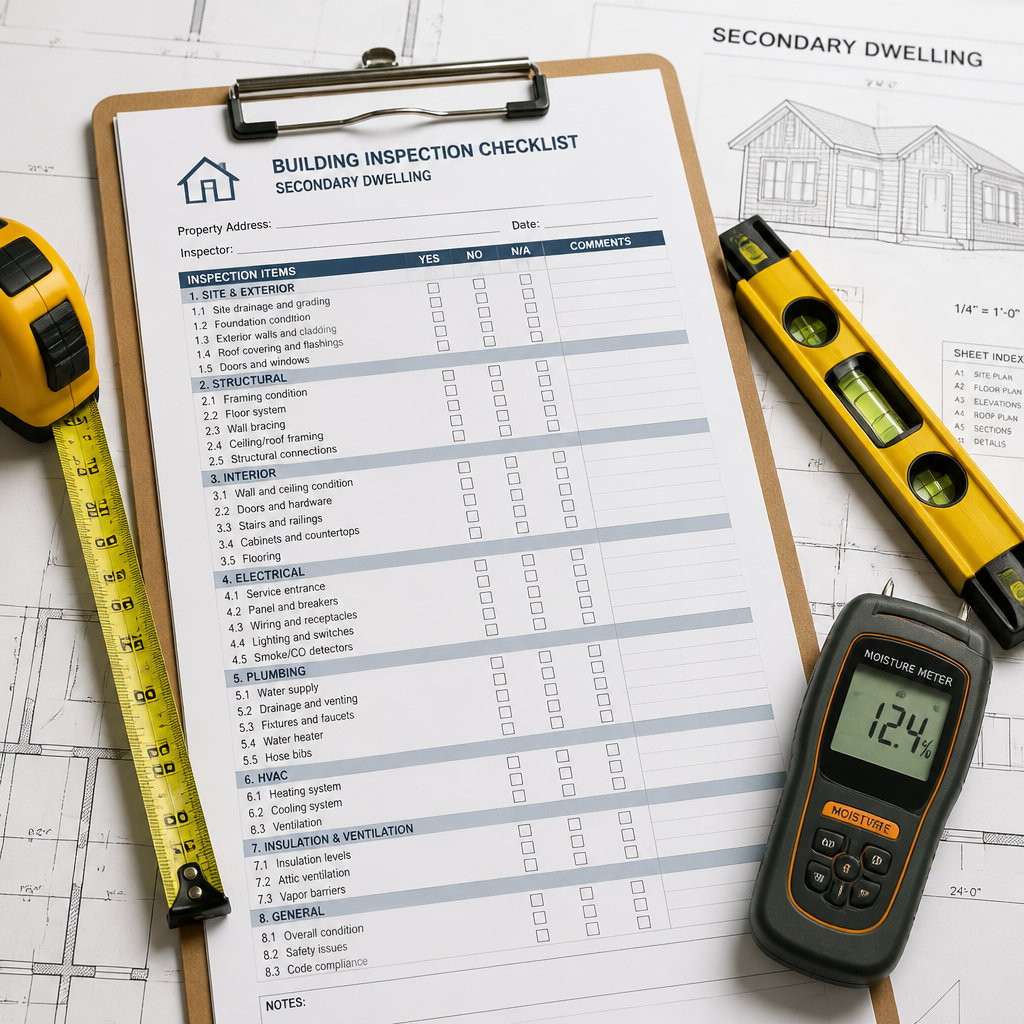
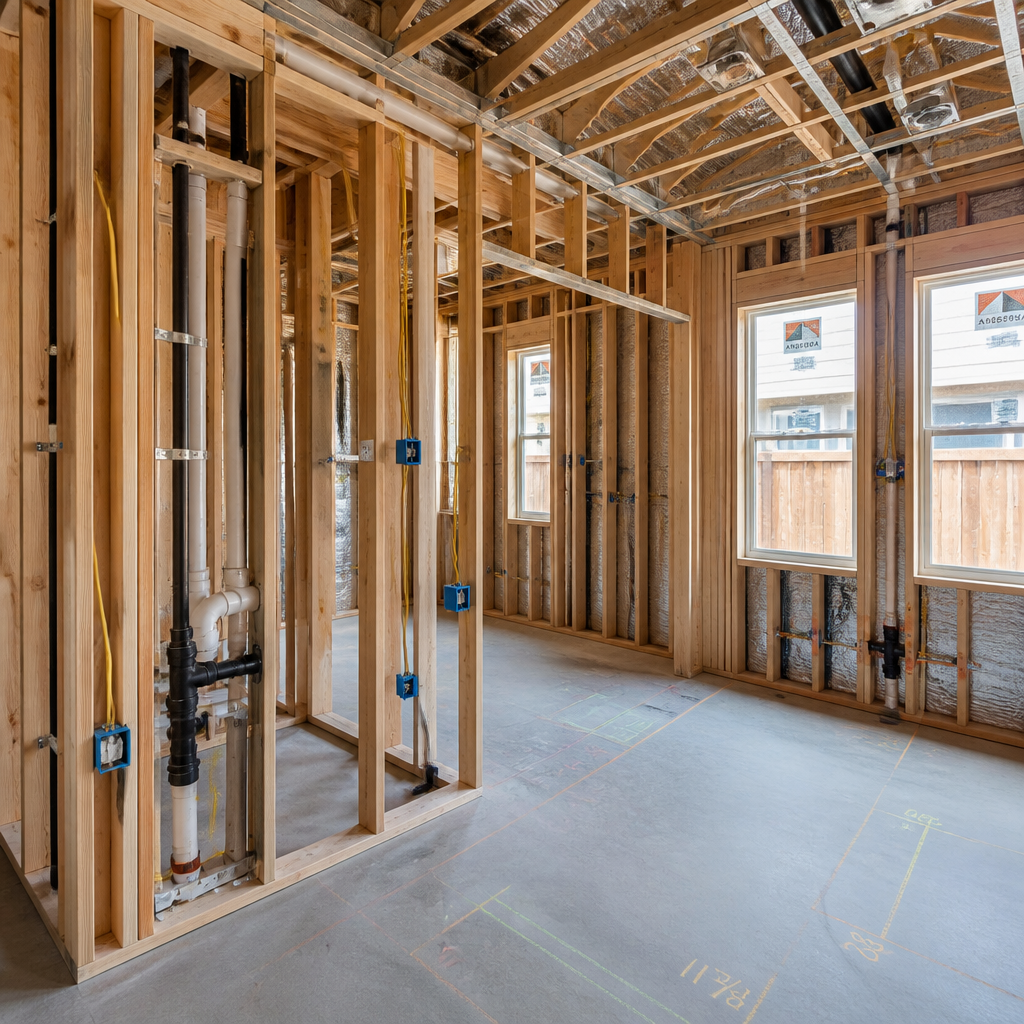
A thorough pre-handover inspection of a new build granny flat examines the completed structure against both the building contract and applicable Australian standards. The inspector is not just looking for things that are visually wrong. They are assessing whether the work has been done correctly by each individual trade, and their report should assign defects to the responsible trade so the builder can direct rectification to the right subcontractor.
Structural and External Elements
The inspector will assess the concrete slab or subfloor structure for visible cracking, settlement, or inadequate drainage around the perimeter. External cladding, brickwork, or rendered surfaces are checked for cracks, poor joints, inadequate weep holes, and incorrect installation. The roof is examined for correct flashing at penetrations, adequate overlap on roof sheets or tiles, and proper fastening. Gutters and downpipes are assessed for fall and connection to stormwater.
Wet Areas and Waterproofing
This is the highest-risk area in any compact dwelling. Waterproofing failures are among the most expensive defects to rectify once tiling is complete, because the tiles have to be removed before the membrane can be repaired. A professional inspector will check that waterproofing membranes have been applied to the correct height, that upstands meet the required dimensions, and that the grout and silicone joints are correctly finished. Shower screens, baths, and laundry tub connections are all examined.
Plumbing, Electrical, and Mechanical
All tapware, toilet suites, showerheads, and waste fittings are checked for operation and leaks. Power points, light switches, exhaust fans, and the hot water unit are tested. The inspector will confirm the smoke alarm is installed and functional, the switchboard is correctly labelled, and safety switches are present. For granny flats being prepared for rental, confirming safety switch compliance is not optional.
Internal Finishes and Joinery
Door frames, window reveals, skirting boards, cornices, and cabinetry are inspected for straight lines, correct gaps, and consistent finishes. Paint is assessed for coverage, roller lines, runs, and blemishes. Floor coverings are checked for correct installation and any bubbling, lifting, or poor joins.
Pro tip: Bring your building contract to the inspection and specifically ask your inspector to cross-reference inclusions against what has actually been installed. Builders occasionally substitute specified fixtures or fittings without notifying the owner, and a photo-enhanced defect report will document exactly what is present versus what was contracted.
Inspection Types Compared: Which One Do You Need?
The three inspection types most relevant to new build granny flats each serve a different purpose and protect you at a different point in the construction or purchase process. Understanding which one applies to your situation is straightforward once you know what each one does.
| Inspection Type | When It Happens | What It Protects You Against |
|---|---|---|
| Pre-Handover / Practical Completion Inspection | Before you accept the keys from the builder | Defects, incomplete work, missing inclusions, and non-compliant finishes in the completed build |
| Pre-Settlement Inspection | Before settlement when buying a property with an existing granny flat | Confirming the property’s condition has not deteriorated since contract exchange and that the secondary dwelling is as represented |
| Defect Liability Period Inspection | Around 11 months after practical completion (within the 12-month defect liability period) | Defects that have emerged during occupation, including settlement cracks, plumbing drips, and electrical faults, before the builder’s obligation expires |
For most Brisbane homeowners commissioning a new build granny flat, the pre-handover inspection is the most important single engagement. A practical completion inspection is your final opportunity to identify any defects, incomplete work, or quality issues before accepting your new home from the builder. The same principle applies directly to a secondary dwelling: once you have accepted the keys and paid the final progress payment, your negotiating position for rectification changes significantly.
The moment you accept handover without a documented defect list is the moment the burden of proof shifts from the builder to you. A photo-enhanced inspection report gives you the evidence base to hold each trade accountable, not just the head contractor.
The 11-month inspection is underused by Brisbane homeowners and investors. It exists specifically because some defects, particularly those related to movement, moisture, and thermal cycling, only become visible after the building has been through a full seasonal cycle. Booking an inspection in the month before the defect liability period expires gives you a documented list of issues that the builder is still legally obligated to rectify.
Defect Liability and Your Rights Under Queensland Law
Queensland law gives homeowners meaningful protections after a new build, but those protections are time-bound and require you to act correctly. Knowing the framework is not optional if you want to enforce your rights.
The 12-Month Defect Liability Period
Your builder has a 12-month statutory defect liability period after you take possession of your new house during which they must fix any defective work. The date of practical completion starts this clock. You must notify the builder of defects in writing. Verbal conversations are not sufficient and will not be enforceable if the matter escalates.
The builder is responsible for all structural and non-structural defects on the property. If they do not accept responsibility and rectify the defects, then you can make a complaint to the QBCC. The QBCC, the Queensland Building and Construction Commission, is the regulatory body that licenses builders and handles disputes about defective residential work.
The Queensland Home Warranty Scheme
The Queensland Home Warranty Scheme is a statutory insurance program that protects homeowners from financial loss caused by defective or incomplete residential building work, administered by the QBCC. This scheme provides a longer backstop beyond the 12-month defect liability period for serious structural issues. However, the defect must arise within 6 years and 6 months from the premium payment, and the claim must be lodged within 3 months of discovering the defect.
The practical implication: do not delay getting defects inspected or documented. A defect you discover and ignore for months before lodging a claim may be outside the lodgement window by the time you act. An inspection report with a dated photograph is your timestamped evidence.
QBCC Escalation
If a builder refuses to rectify defects identified in your inspection report, the QBCC complaint process is your next step. Having a third-party inspection report from a licensed, independent inspector carries significantly more weight than a homeowner’s personal list of complaints. The builder cannot simply dismiss a report that documents each defect with a photograph, a trade attribution, and a reference to the relevant Australian standard.
Common Defects Found in New Build Granny Flats
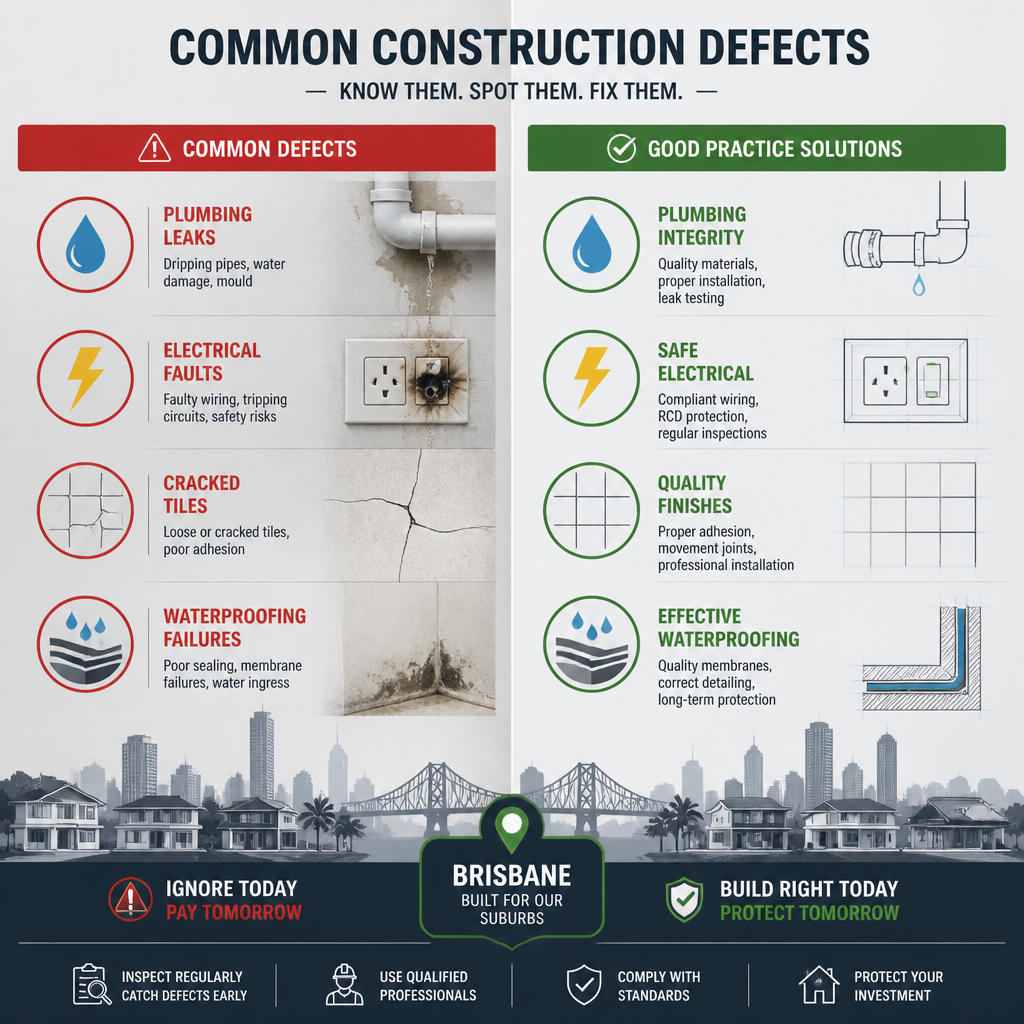
In practice, certain defect categories appear consistently across secondary dwelling builds in the Brisbane region. Understanding these patterns helps you know what to focus on during your own walkthrough before the formal inspection, and helps you ask the right questions of your inspector afterward.
Waterproofing and Wet Area Failures
Compact granny flat floor plans often place a bathroom adjacent to the main living area or bedroom, with very little structural separation. A waterproofing membrane applied at insufficient thickness, or without the correct upstand height at shower walls, will allow moisture to migrate into adjacent framing and flooring. These failures are not visible at handover. They become visible six to eighteen months later as paint bubbles, mould appears, or floor coverings lift. A competent inspector checks membrane upstands, grout joint completeness, and silicone application quality at every wet area junction.
Drainage and Site Works
Granny flats are frequently built toward the rear of a residential lot, and site drainage from the secondary dwelling must connect correctly to the stormwater system without creating ponding around the primary dwelling’s footings. Inspectors check that surface drainage grades away from the structure, that stormwater pipes are connected and not crushed, and that the finished ground level does not create subfloor moisture problems.
Electrical and Plumbing Installation
Electrical defects can include faulty wiring, improper installation of electrical components, inadequate grounding, or outdated electrical systems. In a granny flat, where the electrical supply is often sub-metered or separately connected from the main dwelling, confirming correct circuit protection and safety switch installation is fundamental. Dead power points and poorly connected plumbing waste fittings are among the most frequently identified issues at handover inspections for compact new builds.
Door and Window Alignment
Compact structures with shorter wall runs are particularly sensitive to frame alignment issues. Doors that bind, windows that do not seal correctly, and sliding doors that jump their tracks are common in new granny flat builds. These are not merely cosmetic issues. A window that does not seal properly is a weather and security deficiency, and a door that cannot close squarely may indicate a framing problem that should be investigated further.
Internal Finishes
The most frequently identified issues include misaligned cabinetry doors and drawers, incomplete grouting, faulty plumbing connections, dead power points, and drainage issues. In a granny flat kitchen where the full cabinetry run fits into a compact space, even minor installation errors are highly visible and affect daily usability.
Choosing an Inspector for Your Secondary Dwelling
Not every building inspector has the same level of experience with secondary dwelling builds. A secondary dwelling inspection requires someone who understands the specific build sequence, the relevant Australian standards for compact dwellings, and the Queensland regulatory framework for occupation certification. Here is what to look for and what to avoid.
Licensing and Qualifications
In Queensland, residential building inspection work must be carried out by a person with the appropriate QBCC licence. Choose QBCC-licensed professionals with relevant experience and insurance. Confirm the inspector holds current professional indemnity and public liability insurance. If anything is missed and you suffer loss, insurance is what makes the inspector’s liability meaningful rather than theoretical.
Photo-Enhanced Reporting and Same-Day Turnaround
A defect list without photographs is nearly useless in a builder dispute. Builders and their subcontractors will contest verbal or text-only descriptions. A photo-enhanced defect report that shows each issue in context, identifies the responsible trade, and references the applicable standard gives you a document that is difficult to dismiss and easy to use as a rectification schedule. Same-day reporting is important because it ensures your builder receives the report while the defects are still fresh and before any final payment milestone is reached.
Experience with Secondary Dwellings Specifically
A granny flat is not just a small version of a detached house. The space constraints, the proximity of wet areas to living spaces, and the specific requirements around fire and sound separation for rentable secondary dwellings all require an inspector who understands these builds. Ask specifically whether the inspector has experience with secondary dwelling pre-handover inspections rather than general residential property inspections.
GoInspect operates across Brisbane, Gold Coast, Logan, Ipswich, and Redland Bay, with fully licensed inspectors who produce photo-enhanced defect reports that assign responsibility to specific trades. For a new build granny flat, the combination of same-day reporting and trade-attributed defect lists makes the rectification conversation with your builder significantly more straightforward. Inspections start from $550 including GST.
Pro tip: When comparing inspection services, ask for a sample report. A good granny flat inspection report should include photographs of every defect, a location reference (room or elevation), a plain-English description of what is wrong, and a trade attribution. If a sample report is vague, the actual inspection will be too.
Frequently Asked Questions
Do I need a building inspection for a granny flat if it has already been certified by a building certifier?
Yes. The building certifier’s role is to confirm the structure complies with the National Construction Code and the conditions of the building permit. The certifier does not assess workmanship quality, cosmetic finishes, or whether every item in your building contract has been delivered. A pre-handover inspection by an independent building inspector covers those elements and gives you a documented defect list before you accept the keys.
What is the difference between a practical completion inspection and a defect liability inspection?
A practical completion inspection happens before you accept handover from the builder and identifies defects in the finished build. A defect liability inspection is typically conducted around the 11-month mark after practical completion, within the 12-month defect liability period, to capture defects that have emerged during occupation such as settlement cracks or plumbing drips, while the builder is still legally required to rectify them.
Can a granny flat be rented out in Brisbane and does this affect the inspection requirements?
Since the September 2022 Queensland planning amendments, secondary dwellings can be rented to anyone regardless of their relationship to the primary dwelling occupants. However, changing the use to a rental secondary dwelling triggers additional fire and sound transmission requirements under the building code. A pre-handover inspection for a granny flat intended for rental should specifically confirm these requirements have been met, and you should discuss this with your inspector before they attend.
How much does a granny flat inspection cost in Brisbane?
Pricing varies between inspection providers. GoInspect’s pre-handover inspections for new builds start from $550 including GST. When comparing quotes, consider what is included: whether the report is photo-enhanced, how quickly it is delivered, and whether defects are attributed to specific trades or simply listed generically. A cheaper report that gives you a vague defect list without photographs or trade attribution is worth considerably less in a builder dispute than a detailed same-day report.
What are the most common defects found in new granny flats in Brisbane?
The most consistently identified issues are waterproofing failures in wet areas, drainage problems at the perimeter of the slab, door and window alignment defects, incomplete or poorly finished internal joinery, dead power points or safety switch omissions in the electrical installation, and cosmetic finish deficiencies such as paint runs, uneven coverage, and gaps in skirting and cornice. Waterproofing defects are often invisible at handover but among the most expensive to rectify once tiling is in place.
Does GoInspect inspect granny flats specifically, or only full homes?
GoInspect inspects all types of new residential builds across Brisbane, Gold Coast, Logan, Ipswich, and Redland Bay. This includes detached homes, townhouses, apartments in high-rise developments, and secondary dwellings such as granny flats. The inspection process and reporting format, including photo-enhanced defect reports with trade attributions and same-day delivery, apply equally to secondary dwelling inspections.
Have you gone through a granny flat pre-handover inspection in Brisbane or elsewhere in Queensland? Share what you found, or any questions you still have, in the comments below.
References
- Queensland Building and Construction Commission: Practical Completion Inspection rights and builder obligations for homeowners
- Queensland Government Department of Housing and Public Works: Secondary dwelling granny flat planning rules and 2022 rental amendments
- Granny flat building approval requirements in Queensland including certifier obligations and NatHERS energy ratings
- Complete guide to defective building work in Queensland including the 12-month defect liability period and QBCC complaint process
- QBCC Queensland Home Warranty Scheme timeframes and homeowner protections explained