
Settling on a new home and then discovering a major defect is one of the most financially painful experiences a property owner can face. The problem is not that building defects are rare. They are common. The QBCC’s 2025 Industry Snapshot confirmed that 5,771 defective building work complaints were recorded across Queensland in 2024-25, and the defects that cause the most financial damage are almost always the ones that were hiding in plain sight at handover. Identifying these expensive building defects before you sign off changes everything, because the moment you settle, the cost and effort of rectification shifts firmly onto your shoulders.
Table of Contents
- Why Post-Settlement Defects Cost So Much More
- Quick Takeaways
- Defect 1: Waterproofing Failures in Wet Areas
- Defect 2: Slab and Footing Problems
- Defect 3: Roof Cladding and Flashing Defects
- Defect 4: Stormwater and Site Drainage Failures
- Defect 5: External Waterproofing and Wall Cladding Defects
- How to Spot These Defects Before Settlement
- Defect Detection: Approach Comparison
- Frequently Asked Questions
- References
Why Post-Settlement Defects Cost So Much More
Before settlement, your builder is contractually obligated to fix defects at their expense. After settlement, that dynamic changes. You are now the owner of a completed asset, and while statutory warranties under Queensland law provide some protection, pursuing rectification through the QBCC or the courts takes time, money, and energy that most homeowners did not budget for.
The financial reality is stark. According to QBCC data, each residential bathroom claim finalised under the Queensland Home Warranty Scheme during the 2024-25 financial year averaged almost $25,000 in rectification costs. That figure covers one defect category, in one room. Multiply that across a home with multiple overlooked issues and the numbers become genuinely alarming.
Post-settlement building defects also tend to compound. Water gets in through a failed membrane and damages the framing behind it. A drainage problem that looked cosmetic in year one causes subfloor moisture and structural movement by year three. The defect you could have had fixed for nothing before handover becomes a project requiring demolition, remediation, and rebuilding. Catching these issues at the pre-handover inspection stage is always cheaper, faster, and less stressful than pursuing them afterwards.
Quick Takeaways
| Key Insight | Explanation |
|---|---|
| Waterproofing failures are the costliest single defect category | Queensland Home Warranty Scheme bathroom claims averaged nearly $25,000 per claim in 2024-25. These start as invisible membrane failures and end as full bathroom strip-outs. |
| Roof cladding and flashing issues are the most reported defect in Queensland | QBCC 2025 data lists steel roof sheet cladding, flashing, and capping as the top reported defect category with 540 defect items across 201 cases in one year alone. |
| Slab and footing defects are rare but catastrophic | Structural movement caused by substandard pier and beam footings or slab pours can cost six figures to remediate and may render a home uninsurable until fixed. |
| Drainage problems are silent until they are catastrophic | Stormwater drainage pipework appeared in the QBCC’s top 10 defect list. Undetected drainage failures cause erosion, subfloor flooding, and long-term structural damage. |
| External cladding and wall waterproofing failures are increasing | QBCC’s August 2026 data lists external waterproofing membranes and wall cladding among the top 5 structural defect reports. Both are almost invisible at a casual handover walk-through. |
| A pre-handover inspection report gives you documented leverage with your builder | A photo-enhanced defect report that assigns trade responsibility converts vague disputes into specific, actionable rectification requests that builders cannot easily dismiss. |
| Same-day reporting matters for settlement timelines | Brisbane and South East Queensland settlements move fast. A report delivered on the same day as the inspection gives you time to act before handover is finalised. |
Defect 1: Waterproofing Failures in Wet Areas
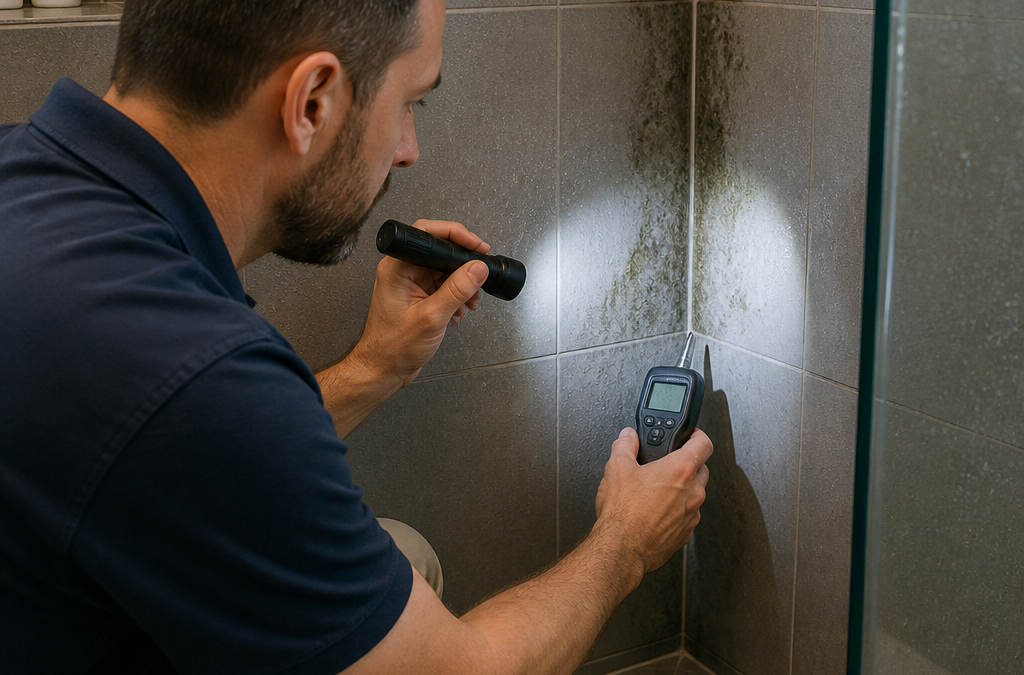
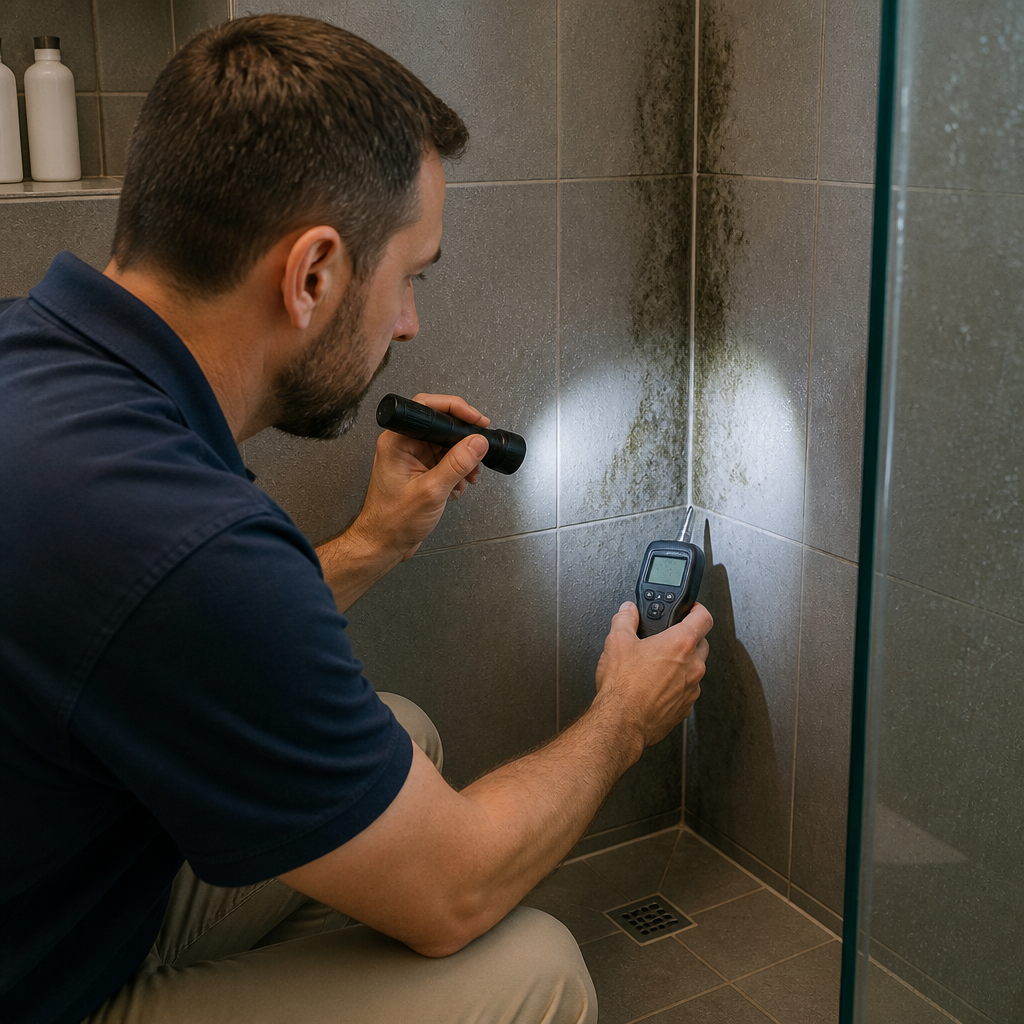
Waterproofing failures in bathrooms, ensuites, laundries, and balconies are the single most financially damaging defect category for new home buyers in Queensland. The QBCC has specifically called out waterproofing as a persistent, costly, and preventable problem. According to QBCC data for the 2024-25 period, each residential bathroom claim under the Queensland Home Warranty Scheme averaged almost $25,000 in rectification costs.
The reason these defects are so expensive post-settlement is structural. A failed waterproofing membrane in a shower recess allows water to migrate into the wall cavity and subfloor over months and years. By the time visible signs appear, such as damp patches, bubbling paint, or tile movement, the damage extends well beyond the surface. Rectification typically means stripping the entire wet area back to the substrate, treating the framing for moisture and mould, reapplying a compliant membrane, re-tiling, and reinstating all fittings. It is not a repair. It is a rebuild.
What Causes Waterproofing to Fail in New Builds
The QBCC has identified the primary causes: incorrect membrane application, insufficient upstands at junctions and penetrations, using products outside their approved application scope, and inadequate curing time before tiling commences. These are all workmanship problems that happen during construction, not after.
At a pre-handover inspection, an experienced inspector looks at tile fall (whether water drains toward the outlet rather than pooling), grout joint integrity, the condition of junctions at wall-floor intersections, and visible signs of premature tiling over uncured membranes. None of this requires invasive testing. It requires methodical inspection by someone who knows what failure looks like before the damage becomes visible.
Pro tip: Ask your inspector to specifically check the upstand height at the bottom of shower screens and at balcony thresholds. These are the two most commonly deficient membrane termination points in new Queensland homes, and they are responsible for a disproportionate share of waterproofing claims.
Defect 2: Slab and Footing Problems
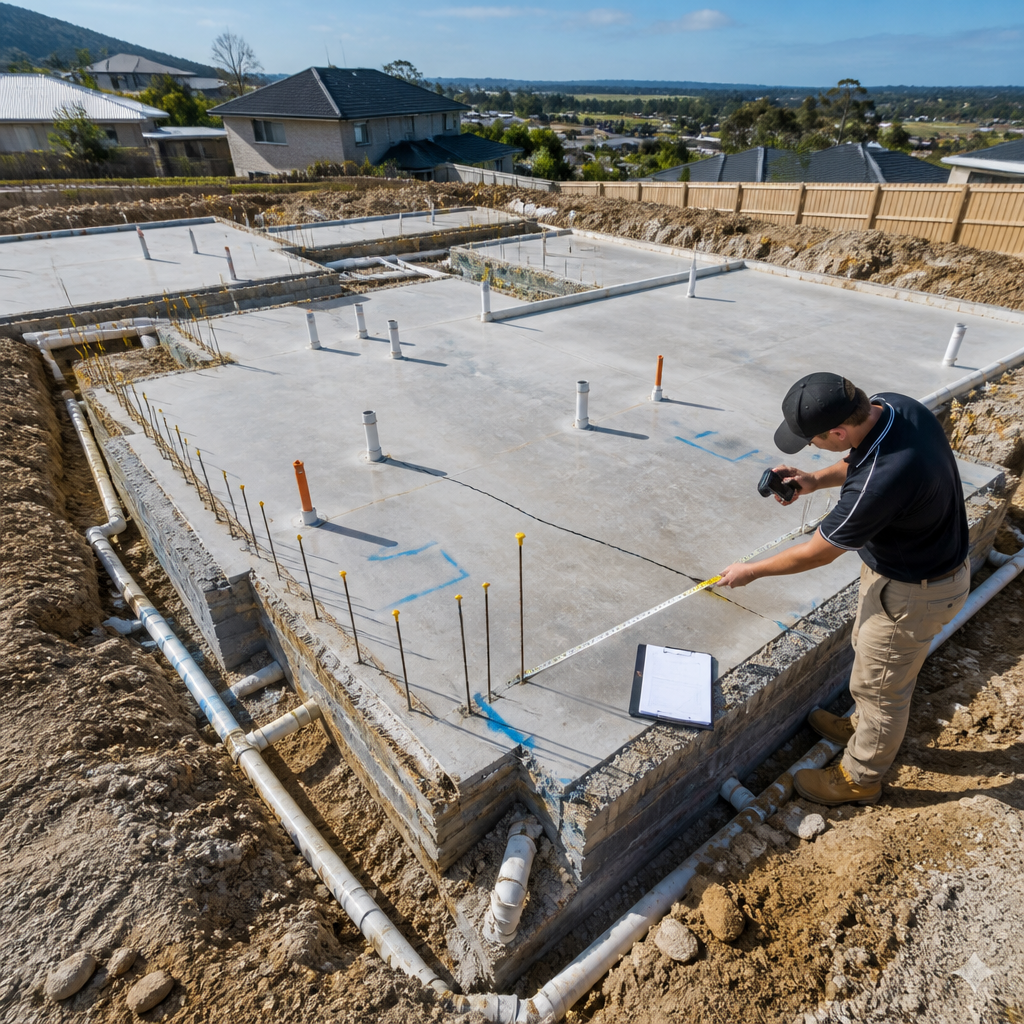
Structural defects in slabs and footings ranked in the QBCC’s top 10 reported defect categories for 2024-25, with pier and beam footings and slabs accounting for 222 defect items across 11 cases. The relatively low case count obscures the severity: slab and footing defects are rare compared to finishes issues, but when they occur, the rectification costs are among the highest of any defect category.
In South East Queensland, residential construction typically uses either a conventional slab-on-ground or a suspended slab with pier and beam footings. Both systems are vulnerable to specific failure modes: inadequate concrete cover over reinforcement, insufficient slab thickness at edges and penetrations, incorrect steel placement, and subgrade preparation that does not account for reactive soil conditions. Brisbane and the surrounding regions have significant areas of reactive clay soil, which amplifies the consequences of any footing system that was not designed or constructed to manage soil movement.
Signs of Slab Problems You Can Identify Before Settlement
Visible cracking in the slab itself, particularly diagonal cracking at re-entrant corners and step cracking at doorways, is a flag worth investigating before you sign anything. Cracking in rendered or plastered surfaces that follows a diagonal pattern from window and door corners can indicate differential movement in the slab or footing system beneath.
Doors and windows that do not open and close smoothly in a brand-new home are a related signal. In a new build, these should operate without resistance. Binding frames in a newly completed home can indicate that the structure has already moved, which points back to the foundation.
A defect found before settlement is the builder’s problem to fix. A defect found after settlement is a dispute you have to fund, manage, and survive, often against a builder who has moved on to the next project.
A licensed building inspector assessing a new home will check slab edges for honeycombing, verify that any visible cracking is within acceptable tolerances under Australian Standards, and flag anything that warrants further investigation by a structural engineer before settlement proceeds.
Defect 3: Roof Cladding and Flashing Defects
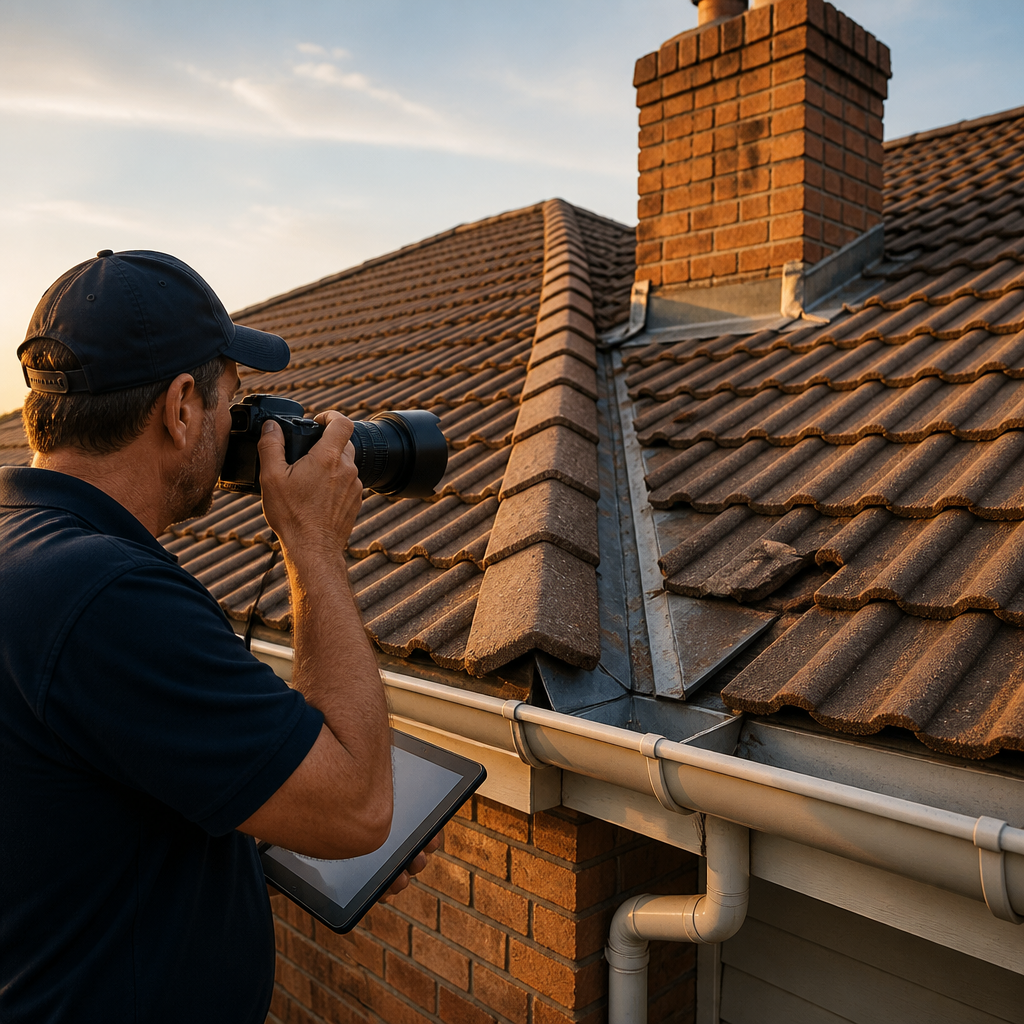
Roof defects are the most reported building defect category in Queensland. The QBCC’s 2025 Industry Snapshot recorded 540 defect items across 201 cases related to steel roof sheet cladding, flashing, and capping in 2024-25. They are also consistently listed among the top structural defect reports in more recent QBCC data covering 2026. That combination of high frequency and continued prevalence tells you something important: this problem is not being solved at the trade level, which means it needs to be caught at inspection.
Roof defects in new homes cluster around a few specific failure points. Flashings at penetrations (pipes, skylights, ridge caps, and eaves) are improperly lapped or left without adequate sealant. Roof sheets are incorrectly fixed, with insufficient or excessive screws, or screws installed at angles that create stress points. Ridge capping is inadequately secured. Valley gutters are installed with incorrect fall, causing water to back up rather than drain.
Why Roof Defects Are So Expensive After Settlement
A roofing defect that allows water ingress even in moderate South East Queensland rainfall can damage ceiling linings, insulation batts, timber framing, electrical fittings, and internal wall linings in a single rain event. The repair bill for the entry point, typically a poorly sealed flashing, is modest. The repair bill for everything the water damaged on its way through the building is not.
In some cases, internal linings need to be removed to dry out and treat affected framing before any reinstatement can occur. If mould has established in the insulation or wall cavity, remediation requirements under the National Construction Code add scope and cost. The roofing trade defect that cost a builder a few hours to fix before handover becomes a project worth many thousands of dollars after settlement.
Roof and concealed-area coverage depends on the agreed inspection scope and safe access. GoInspect’s standard residential inspection does not include an external roof inspection. A drone roof inspection can be arranged for an additional fee. Confirm any roof-void, subfloor or other specialist access requirements before booking; an inspection cannot assess every concealed element.
Defect 4: Stormwater and Site Drainage Failures
Stormwater drainage pipework appeared on the QBCC’s top 10 defect list for 2024-25 with 116 defect items across 69 cases. Drainage defects occupy a frustrating middle ground: they are not glamorous, they are not immediately visible, and they rarely appear on a builder’s defect list after a casual walk-through. But when they fail, the consequences run from nuisance-level ponding in the first wet season to serious structural damage over time.
In South East Queensland, where the summer storm season brings intense, concentrated rainfall, a drainage system that does not perform to design can be overwhelmed in a single event. Incorrect fall on stormwater pipework, incorrectly connected downpipes, blocked or absent drainage pits, and poorly graded site surfaces that direct water toward the building rather than away from it are all common findings in new homes that have passed a cursory builder walk-through.
What Drainage Failures Do to a New Home Over Time
The visible consequences of drainage failure take time to appear, which is exactly why they become expensive post-settlement defects. Water that ponds against a foundation slowly saturates the subgrade. In reactive clay soils common across Brisbane, Logan, and Ipswich, this creates soil movement that translates into slab movement. That slab movement eventually shows as cracking in the structure, which is now a much more complex and expensive problem than the original drainage defect.
At a pre-handover inspection, a good inspector walks the site perimeter after confirming surface grades, checks downpipe connections at ground level and at collection points, and identifies any obvious low spots or ponding areas. Asking the builder to demonstrate that stormwater outlets flow freely and connect properly to the drainage system is a reasonable pre-handover request that should be documented in the inspection report.
Defect 5: External Waterproofing and Wall Cladding Defects
The QBCC’s most recent data, covering the financial year to date as of August 2026, places external waterproofing membranes and wall cladding in the top 5 structural defect report categories alongside roof cladding, internal wet area waterproofing, and drainage. The fact that these two categories appear together reflects a related failure pattern: cladding systems that are not properly integrated with the waterproofing envelope allow water to enter the wall cavity, where it is trapped and causes long-term damage.
In new homes across Brisbane, the Gold Coast, and the surrounding growth corridors, a range of cladding systems are in use, including fibre cement sheet, lightweight rendered systems, and various proprietary composite panels. Each of these systems requires specific detailing at windows, doors, control joints, and penetrations to maintain weather resistance. Shortcuts in these details are the most common source of external water ingress in new buildings.
Why These Defects Are Particularly Hard to Find Without an Inspector
External waterproofing and cladding defects are designed to be hidden. Flashings are covered by cladding. Junctions are rendered over. The detail that was incorrectly executed is not visible from the outside. What is visible is the finished surface, which on a new home looks clean and complete regardless of what is happening behind it.
A building inspector who understands cladding system requirements knows where to look for the details that indicate whether the system was installed correctly. Gap sizes at junctions, the presence and condition of weep holes, sealant application at penetrations, and the condition of window head flashings are all checkpoints that a practitioner familiar with these systems can assess without invasive testing.
These are also the defects that interact most destructively with the Queensland climate. Intense UV exposure, high humidity, and the temperature cycling of South East Queensland summers accelerate the degradation of any cladding detail that was not correctly installed. What might take a decade to show consequences in a cooler climate can become a visible problem within a few years of handover here.
How to Spot These Defects Before Settlement
The most reliable way to identify all five of these defect categories before settlement is to engage a fully licensed, independent building inspector for a pre-handover inspection or practical completion inspection before you accept the keys. That is not a general statement. It is the specific, practical answer to a specific question, and there is no viable alternative.
A builder’s own walk-through before handover, or a site supervisor’s sign-off, is not an independent assessment. The builder has a financial interest in handover proceeding. Defects that require additional trade time and materials before settlement represent costs the builder bears. Defects that become post-settlement disputes are problems the homeowner manages. The incentive structure does not favour the homeowner.
What a Pre-Handover Report Should Include
A report that is genuinely useful for rectification does more than list defects. It photographs each defect, identifies its location precisely, assigns responsibility to the relevant trade, and references the applicable standard or contract requirement that has not been met. This specificity is what converts a defect list into an actionable document that a builder cannot dismiss as subjective.
GoInspect’s pre-handover inspection reports for homes across Brisbane, the Gold Coast, Logan, Ipswich, and Redland Bay are delivered the same day as the inspection, which matters when settlement dates are fixed and time between practical completion and handover is short. The report format assigns trade responsibility for each defect, which accelerates the rectification process by removing ambiguity about who needs to return to the site.
For investors and developers managing multiple properties or high-rise developments, GoInspect also provides customised inspection formats that work across units in a single development, making it practical to manage defect documentation at scale rather than inspecting each apartment as a standalone exercise.
Defect Detection: Approach Comparison
| Approach | What It Covers | Limitations for These 5 Defect Categories |
|---|---|---|
| Builder’s internal walk-through | Cosmetic finishes, missing fittings, paintwork, visible surface damage | Does not systematically assess wet area waterproofing, roof access, slab condition, drainage fall, or cladding detailing. Conflict of interest limits objectivity on rectifiable defects. |
| Owner self-inspection on handover day | What is visible to an untrained eye at a single visit, typically aesthetics and obvious functional failures | Without technical knowledge of NCC requirements, waterproofing membrane standards, roof fixing specifications, and drainage grades, the five most expensive defect categories are almost always missed. |
| GoInspect independent inspection | Checks of visible and safely accessible work within the agreed scope, with photographic findings and trade allocation where appropriate. Standard residential reports are generally provided the same day. | Confirm the service area, scope, site access and available date before booking. Use the current residential quote calculator, or request a builder or developer project quote. Pricing depends on the service, property and location. |
Frequently Asked Questions
What is the most expensive building defect to fix after settlement in Queensland?
Waterproofing failures in wet areas are consistently the most costly single defect category. According to QBCC data for the 2024-25 financial year, each residential bathroom claim under the Queensland Home Warranty Scheme averaged almost $25,000 in rectification costs. That figure reflects the real-world cost of stripping, treating, and reinstating a wet area after a membrane failure has allowed water ingress into the wall and subfloor structure.
Can I still make a claim through QBCC if I find defects after settlement?
Yes, Queensland’s statutory warranty framework provides some protection after settlement. However, the process requires you to first seek rectification directly from the builder, then escalate to QBCC if the builder does not respond or disputes the defect. This takes time and effort, and the outcome is not guaranteed. Pre-settlement inspection is always the more efficient path because it keeps the builder financially responsible for rectification before ownership transfers.
How early before settlement should I book a pre-handover inspection?
The inspection should be scheduled before you are asked to sign off on practical completion, not on the handover day itself. In practice, you want the inspection completed and the report in hand at least several working days before settlement so there is time for the builder to acknowledge defects and commit to a rectification schedule. Booking as soon as the builder advises practical completion is approaching gives you the best timeline flexibility.
Do these defects only apply to houses, or are apartments and townhouses also at risk?
All five defect categories apply across houses, townhouses, and apartments. In high-rise and multi-unit developments, waterproofing failures on balconies and in wet areas are particularly significant because water from one level can damage multiple units below it. Roof cladding and external waterproofing defects affect the whole building rather than just one lot. GoInspect provides customised inspection and reporting formats specifically designed for high-rise and multi-unit developments to manage this complexity.
What should a quality pre-handover inspection report include for these defects?
A quality report should identify each defect with a photograph, specify the location precisely, describe the defect and why it does not meet the applicable standard or contract requirement, and assign responsibility to the relevant trade. For the five defect categories covered in this article, the report should specifically address wet area membrane condition, roof access findings, visible slab and structural condition, site drainage, and external cladding detailing. Vague defect lists without photographs or trade attribution are difficult to use when requesting rectification from a builder.
Is a pre-handover inspection worth it if my builder says the home has already passed council inspection?
Yes, and this is one of the most common misconceptions among new home buyers. A council or certifier inspection confirms that mandatory hold points in the construction process were signed off. It does not assess the full quality of workmanship across all trades, and it does not produce a defect report you can use to request rectification. An independent licensed inspector assesses the finished home against the NCC, the building plans, and the construction contract, which covers a much broader scope than a certifier’s statutory inspections.
Have you found a building defect in your new home before or after settlement? Share your experience in the comments below.
References
- QBCC 2025 Industry Snapshot: Queensland’s most reported building defects and rectification costs
- QBCC guidance on waterproofing defects and why they keep going wrong in new construction
- QBCC Construction Connect: top structural defect categories reported across Queensland in 2026
- Common issues found during pre-settlement inspections in Australian new homes