
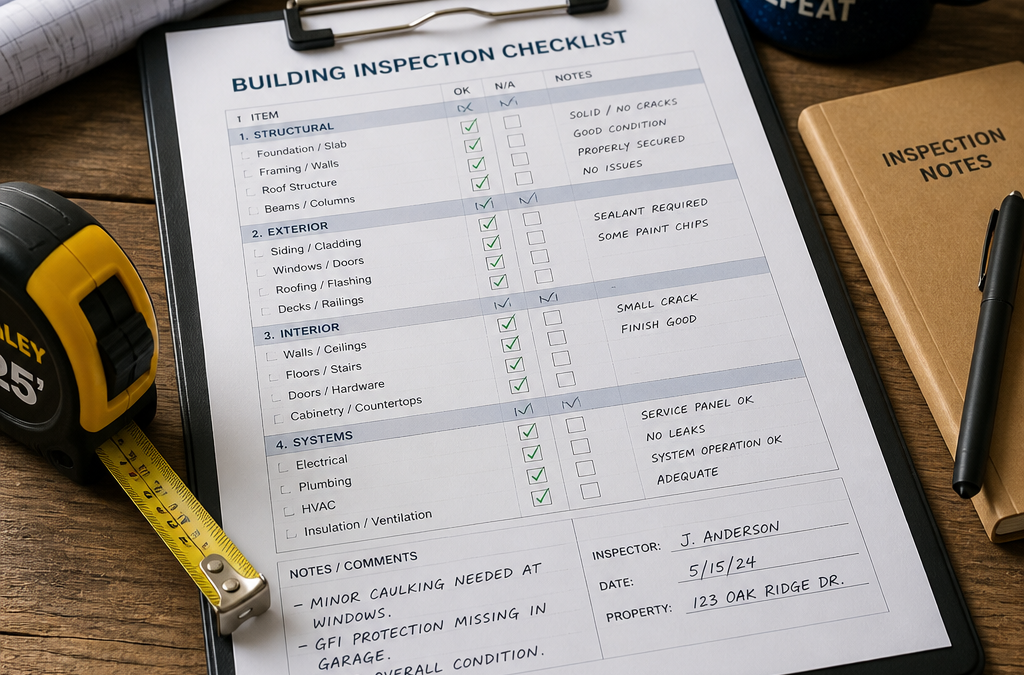
Most Queensland homeowners are genuinely surprised when they discover how much a defect can cost to fix after settlement. A single missed waterproofing fault can run into the tens of thousands, yet the inspection that could have caught it costs a fraction of that. Understanding handover inspection cost Queensland is not about finding the cheapest option. It is about knowing exactly what you are paying for and whether it protects your most significant financial asset. This article breaks down real pricing, what drives cost differences, and where buyers and investors consistently get it wrong.
Table of Contents
- Quick Takeaways
- What Does a Handover Inspection Cost in Queensland?
- What Drives the Price Up or Down?
- Building Inspection Price Brisbane vs. Other Regions
- Comparing Inspection Service Types and What They Actually Include
- How Much Does a New Home Inspection Cost vs. What It Saves?
- What a Quality Report Must Contain to Justify the Fee
- Frequently Asked Questions
- References
Quick Takeaways
| Key Insight | Explanation |
|---|---|
| Entry-level price in Queensland | Expect to pay from $550 including GST for a standard new home handover inspection from a licensed inspector. |
| High-rise and multi-unit inspections cost more | Larger or more complex builds, including high-rise developments, attract higher fees due to scope and report customisation requirements. |
| Same-day reporting adds real value | Providers offering same-day photo-enhanced defect reports allow builders to act faster, reducing rectification delays before settlement. |
| Not all inspectors are licensed to the same standard | In Queensland, inspectors should hold a licence under the Queensland Building and Construction Commission (QBCC). Always verify before booking. |
| Trade-level defect attribution matters | Reports that identify which trade is responsible for each defect are significantly more actionable for builders and project managers than generic lists. |
| Cheap inspections frequently miss structural and waterproofing defects | Low-cost providers often produce template reports with minimal photos. These routinely miss the defects that are most expensive to fix post-settlement. |
| The cost of not inspecting is far higher | Rectification work after settlement is typically 3 to 10 times more expensive than identifying and fixing defects before handover. |
What Does a Handover Inspection Cost in Queensland?
For a standard single-dwelling new home inspection in Queensland, pricing from licensed providers starts at approximately $550 including GST. This is the market entry point for a properly conducted practical completion or pre-handover inspection covering a house or townhouse in the South East Queensland region including Brisbane, Gold Coast, Logan, Ipswich, and Redland Bay.
Prices can range from around $400 at the lower end from unlicensed or lightly experienced operators to $1,200 or more for comprehensive inspections on larger homes with detailed photographic defect reporting. Mid-range inspections from established providers typically sit between $550 and $800 for standard residential dwellings.
For high-rise apartment developments and multi-unit projects, fees are structured differently. These inspections require customised reporting, individual unit scheduling, and trade-level defect attribution across entire buildings. Developers and project managers should request a specific quote based on unit count and scope, as bulk pricing arrangements are common in this segment.
Pre-Settlement vs. Practical Completion: Are They Priced Differently?
In practice, pre-settlement inspections and practical completion inspections are often priced similarly because the scope of work is comparable. Both require a full walk-through of the completed home, systematic documentation of defects, and a written report. The primary difference is timing and who commissions the inspection.
Practical completion inspections are typically arranged by the builder at the end of construction to formally hand over the property. Pre-settlement inspections are arranged by the buyer or their representative shortly before settlement. Some providers price these identically. Others charge a slight premium for buyer-commissioned inspections because the reporting must be more detailed and legally defensible.
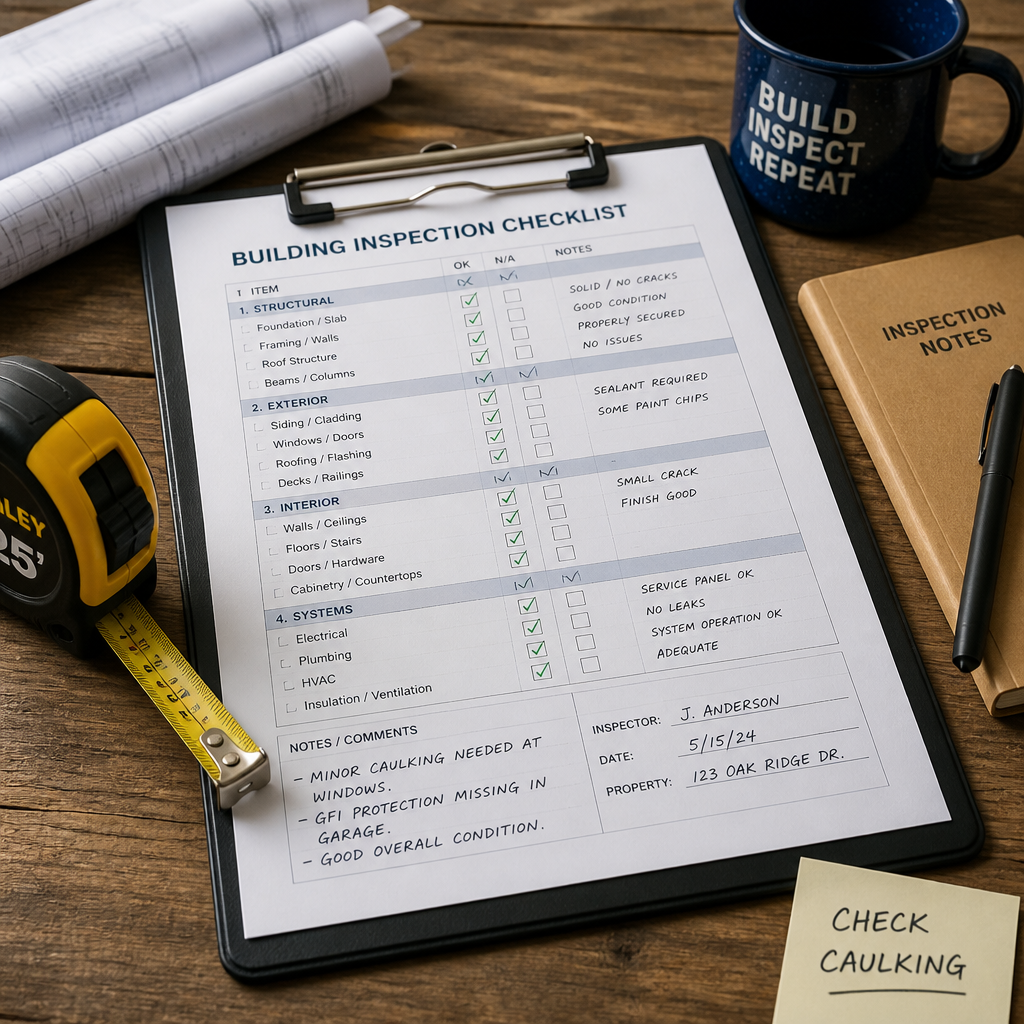
Pro tip: Always confirm whether the quoted fee includes a written photo-enhanced report or just a verbal walkthrough. Verbal-only inspections offer almost no protection in a builder dispute and are worth nothing once you leave the site.
What Drives the Price Up or Down?
Several variables directly affect what you pay for a new home handover inspection in Queensland. Understanding these helps you compare quotes accurately rather than choosing purely on headline price.
Property Size and Complexity
A 200 square metre three-bedroom house and a 450 square metre five-bedroom double-storey home are not the same inspection. Larger homes take longer, involve more systems, more surfaces, and more potential defects. Expect pricing to scale upward for larger homes, typically adding $50 to $150 to base fees depending on the provider.
Complexity also matters. Homes with multiple bathrooms, large outdoor entertaining areas, in-ground pools, or second-storey balconies require more inspection time and more detailed waterproofing checks. These features increase both inspection duration and the probability of finding significant defects.
Report Quality and Depth
This is where the most significant price differentiation exists in the Queensland market. A photo-enhanced defect report that documents every defect with images, assigns each to a responsible trade, and provides a same-day written summary is a genuinely different product from a two-page checklist with tick boxes.
Higher-quality reports cost more to produce and justify higher fees. If a quote seems unusually low, ask specifically about the number of photos included, whether trades are identified, and how quickly the report is delivered. These questions separate serious providers from operators cutting corners.
Inspector Licensing and Experience
Queensland requires building inspectors to hold a QBCC licence. Inspectors operating without proper licensing expose their clients to reports that may not be legally recognised. Fully licensed inspectors with substantial site experience typically charge more than newer entrants, but the difference in defect identification rates is significant.
A common mistake is treating this as a commodity purchase. The cheapest licensed inspector available is not necessarily competent at finding the defects that matter most, particularly waterproofing, structural framing, and drainage issues that are concealed at completion stage.
Building Inspection Price Brisbane vs. Other Regions
The building inspection price Brisbane is broadly consistent with the rest of South East Queensland, though minor variations exist based on travel time and local market competition. Brisbane inspections from established providers start from around $550, which is the same benchmark applicable across the Gold Coast, Logan, Ipswich, and Redland Bay corridors.
Rural and regional Queensland is a different story. Properties located outside South East Queensland may attract travel surcharges of $50 to $150 or more, depending on distance from the inspector’s base. For new home developments in outer growth corridors like the northern Gold Coast or southwestern Logan, confirm with your provider whether additional fees apply before booking.
The data consistently shows that South East Queensland has the highest concentration of new residential construction in the state, which also means the highest competition among inspection providers. This keeps pricing relatively stable but makes quality differentiation more important, not less.
“The Queensland Building and Construction Commission received over 4,000 complaints about defective building work in a recent 12-month period. The majority involved work that was either not inspected or not adequately documented at completion stage.” – Queensland Building and Construction Commission Annual Report
Pro tip: If you are purchasing a new home in a master-planned community on the Gold Coast or in the Logan growth corridor, ask your inspection provider whether they have existing relationships with the relevant builders. Providers who regularly work in those corridors understand local construction standards and common defect patterns specific to those areas.
Comparing Inspection Service Types and What They Actually Include
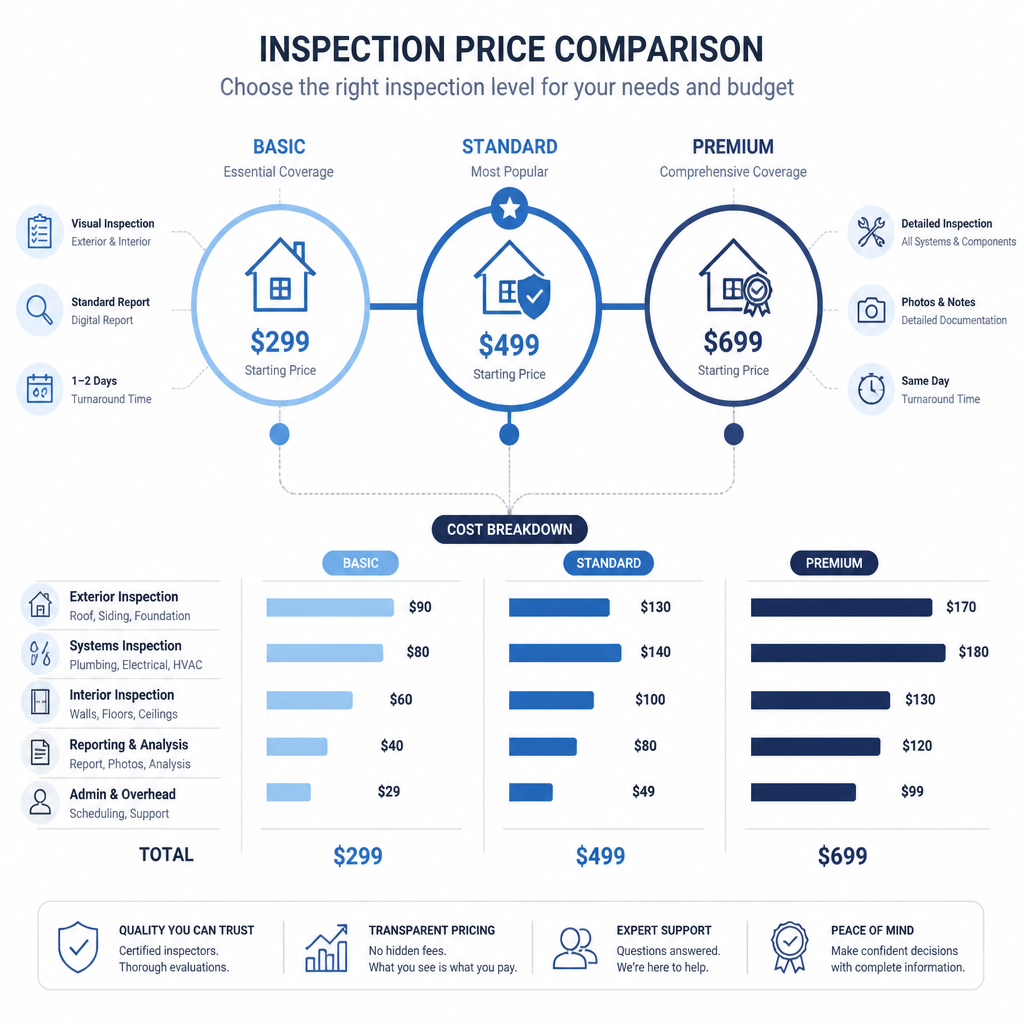
Not every inspection product in the Queensland market is equivalent. The table below compares three distinct service tiers you are likely to encounter when researching providers.
| Service Tier | Typical Price Range | What It Actually Includes |
|---|---|---|
| Basic Template Report | $350 to $499 | Checklist-style report, limited photos, no trade attribution, generic defect descriptions. Often produced by inspectors without full QBCC licensing or with minimal construction experience. |
| Standard Licensed Inspection | $550 to $750 | Full written report with photo documentation, defects identified and described clearly, delivered same-day or within 24 hours. Suitable for most standard residential new builds. Represents the GoInspect entry-level service. |
| Comprehensive Development Inspection | $800 to $1,200 and above | Customised reporting for high-rise or multi-unit projects, trade-level defect attribution, scheduling coordination across multiple units, suitable for developers and project managers handling large handovers. |
The mistake most first-home buyers make is selecting the cheapest option without understanding what the report actually contains. A template-style report that does not specify which trade is responsible for each defect gives a builder plausible deniability and makes rectification harder to enforce.
How Much Does a New Home Inspection Cost vs. What It Saves?
The direct answer to how much does a new home inspection cost in Queensland is between $550 and $800 for most standard residential properties. The more important question is what it saves relative to what it costs.
Rectifying a waterproofing defect discovered before settlement typically costs the builder $500 to $2,000 in labour and materials. The same defect discovered after settlement, once tiling and fit-out have been completed over it, can cost $8,000 to $25,000 to fix correctly. That ratio alone justifies the inspection fee on a single defect.
The Cost of Disputed Defects Without Documentation
When buyers attempt to claim rectification on defects identified after settlement without a pre-settlement inspection report, they face a much harder legal and practical path. Builders routinely dispute claims that lack photographic evidence from before handover. The cost of legal or QBCC complaint processes can easily exceed $2,000 to $5,000 in time, professional fees, and stress.
A well-documented same-day report with photographic evidence of defects as they existed at handover removes that uncertainty. It establishes a clear record that is admissible in QBCC processes and builder dispute resolution.
Investors and Developers: The ROI Calculation Is Even Clearer
Property investors purchasing new builds as rental properties or for resale have an even stronger financial case for comprehensive inspections. A defective new home that generates a tenant complaint within 12 months of settlement creates both financial cost and reputational exposure for the investor.
Developers managing multi-unit handovers who invest in systematic inspection and defect documentation reduce their post-settlement warranty claims materially. The data consistently shows that builders who use structured inspection reporting at practical completion spend less on warranty rectification because defects are caught and fixed before handover rather than after.
What a Quality Report Must Contain to Justify the Fee
Paying for a new home inspection in Queensland and receiving a quality report are not the same thing. Here is what a report must contain to actually be worth the fee you paid.
Every defect must be accompanied by a clear photograph taken at the site on the day of inspection. Descriptions without photos are nearly impossible to enforce with a builder. The photo must show the defect clearly, in context, with enough surrounding detail to identify its location within the property.
The report must identify which trade is responsible for each defect. Painting defects, tiling defects, waterproofing failures, plumbing rough-ins, and electrical work are all completed by different subcontractors. A report that simply lists defects without trade attribution forces the builder’s project manager to do the diagnostic work you paid the inspector to do.
Delivery timeline matters significantly. A same-day report gives the builder, project manager, and client the ability to act immediately. Reports delivered three to five days after inspection lose practical urgency and can delay settlement timelines unnecessarily.
Finally, the inspector must be fully licensed under QBCC. This is not optional and it is not difficult to verify. Ask for the licence number and check it directly on the QBCC public licence register before booking any inspection.
Frequently Asked Questions
What is the minimum I should expect to pay for a handover inspection in Queensland?
The realistic minimum for a properly conducted handover inspection from a fully licensed inspector in South East Queensland is $550 including GST. Prices below this threshold typically reflect unlicensed operators, template reports with minimal photos, or severely limited inspection scope. These cheaper options create more risk than they mitigate.
Is a handover inspection the same as a building and pest inspection?
No. A handover inspection, also called a practical completion inspection or pre-settlement inspection, focuses specifically on construction defects in a newly built home. It evaluates workmanship, materials, and compliance with contracted specifications. A building and pest inspection is typically conducted on established homes and includes assessment of pest activity and structural damage from wear, weather, or infestation. New homes rarely require pest inspection at handover, but do require detailed defect documentation.
Can I conduct my own handover inspection instead of hiring a professional?
You can walk through the property yourself, but doing so is not a substitute for a licensed inspection. Experienced inspectors identify defects that are invisible to untrained eyes, particularly issues with waterproofing membranes, subfloor drainage, roof flashing, and structural framing. A self-conducted walkthrough will not produce a legally admissible report usable in a QBCC complaint or builder dispute. The risk of missing significant defects is simply too high to justify the saving.
How long does a new home handover inspection take?
For a standard three to four-bedroom house, expect the on-site inspection to take between two and four hours depending on property size, the number of defects identified, and the inspector’s documentation process. Larger homes and those with multiple bathrooms, outdoor areas, or two storeys will take longer. Same-day report delivery means total turnaround from inspection to written report is completed within the business day.
Do I need a separate inspection for each unit in a multi-unit development?
Yes, each unit in a multi-unit or high-rise development requires its own inspection and defect report. Developers and project managers typically arrange bulk inspection schedules across an entire building or development stage. Providers like GoInspect offer customised reporting for high-rise developments that integrates individual unit reports into a cohesive defect management framework for the builder’s trades team.
What happens if the builder disputes the defects identified in my inspection report?
A photographic report from a licensed inspector carries significant weight in QBCC dispute resolution processes. If the builder disputes findings, the QBCC can be engaged to conduct their own inspection and assessment. Reports that clearly document defects with dated photographs, trade attribution, and a licensed inspector’s signature are the strongest starting point for any formal dispute process. Reports without photos, without trade identification, or from unlicensed operators are routinely dismissed.
How do I verify that an inspector is properly licensed in Queensland?
Ask the inspector for their QBCC licence number and verify it directly on the QBCC public licence register at www.qbcc.qld.gov.au. A legitimate licensed inspector will provide this immediately and without hesitation. Any reluctance to share a licence number is a clear signal to look elsewhere. GoInspect operates with fully licensed inspectors, and licence details are available on request before booking.
Have you recently gone through a new home handover in Queensland? Share your experience with the inspection process below and let us know what you found most valuable or most frustrating about the cost and quality of the inspection you received.
References
- Queensland Building and Construction Commission: official licensing, complaint, and building standards information for Queensland
- Queensland Legislation: official source for the Queensland Building and Construction Commission Act and related building regulation legislation
- Forbes: real estate and property investment analysis including new construction quality and buyer protection strategies
- Statista: housing construction data and residential building approval statistics for Australia and Queensland
- Australian Bureau of Statistics: residential construction activity data including new dwelling approvals and completions across Queensland